
累购期权

Search documents
以先锋模范之力服务实体经济
Qi Huo Ri Bao Wang· 2026-01-29 03:17
Core Insights - Financial derivatives have become essential tools for real enterprises to manage market risks and achieve stable development, evolving from niche instruments to critical components in the financial landscape [1][2] - The company has actively engaged with over 400 real enterprises, customizing more than 100 options solutions and facilitating over 3,000 OTC options transactions since the beginning of 2024 [1] - The company emphasizes understanding the real needs of industry clients to provide precise and effective risk management solutions, ensuring that financial derivatives serve as powerful tools for the real economy [2] Industry Challenges - The steel trading sector faces significant challenges due to the traditional practice of winter storage, which has been disrupted by unexpected price drops, leading to a loss of confidence among traders and increased sales pressure on steel mills [3] - The dilemma of "traders not daring to store, and steel mills not daring to sell" has emerged, creating a core contradiction that hampers the smooth operation of the steel industry at the beginning of the year [3] Innovative Solutions - Traditional futures hedging is limited to locking in price risks and does not enhance efficiency; thus, innovative derivative tools are crucial for breaking the deadlock in the steel industry [4] - The introduction of "cumulative" options tools allows enterprises to hedge against price risks while also benefiting from option volatility and time value, achieving both risk mitigation and profit enhancement [4] - A tailored solution involving "downside insurance" was designed, where steel mills sell at current prices while providing traders with out-of-the-money put options, ensuring mutual benefits in fluctuating markets [4] Case Study: Soybean Meal Industry - In the soybean meal sector, significant market disruptions led to extreme fluctuations in basis, with the basis moving from -200 CNY/ton to 1000 CNY/ton, creating operational challenges for traders and feed enterprises [5] - A comprehensive risk management solution was developed, combining "cumulative purchase options, basis pricing, and sales linkage," which allowed traders to maintain familiar procurement processes while effectively managing basis risk [6] - A major soybean meal trader benefited from this solution, achieving a pricing advantage of 120 CNY/ton below market rates, resulting in a profit increase of nearly 4 million CNY based on their sales volume [6] Future Directions - The company aims to continue leveraging its expertise in both financial tools and industry dynamics to provide customized risk management solutions, contributing to the high-quality development of the real economy and supporting national strategies [8]

期货工具为制造业装上“稳压器” | “期货赋能产业创新”优秀投教案例
Qi Huo Ri Bao· 2025-11-14 07:50
Group 1 - The core viewpoint of the articles emphasizes the role of futures companies in providing innovative financial tools to help manufacturing enterprises manage market volatility and enhance their operational resilience [1][2][3][4][5] Group 2 - A lithium carbonate wet recovery company in East China faced significant profit erosion due to price fluctuations in lithium carbonate, a key raw material for the booming electric vehicle industry [1] - Nanhua Futures customized a hedging system for the lithium carbonate company, enabling them to achieve a selling price of 82,490 yuan/ton through an options strategy, which was 490 yuan/ton higher than direct futures selling [2] - Dongwu Futures provided a "price lock without quantity lock" trade solution for a cable company, helping them save 1.2 million yuan in procurement costs by delivering 2,600 tons of aluminum ingots [3] - Guotai Junan Futures assisted a group company in Ningbo, Zhejiang, in managing high funding costs by recommending the use of 30-year government bond futures, which could lower annual funding costs by 0.95% [4][5] - The shift in mindset from passive risk acceptance to proactive risk management is highlighted, showcasing the transformative impact of futures tools on enterprise operations [5]


活用期权工具 助力企业风险管理
Qi Huo Ri Bao Wang· 2025-10-20 00:46
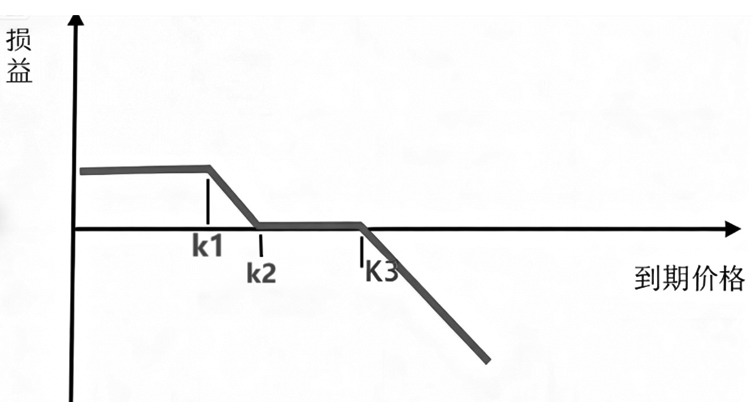
Core Viewpoint - The use of options tools has accelerated in recent years, helping companies manage risks related to raw material procurement prices, product sales prices, and exchange rates, thereby enhancing efficiency and reducing costs [1] Group 1: Risk Management with Options - A stainless steel company faces inventory value fluctuation risks and seeks to hedge against potential depreciation using financial instruments [1] - The company requires a solution that allows for profit generation when inventory values rise, which traditional futures contracts cannot provide, leading to the use of options [1][2] - A specific options strategy, known as the "seagull option," is proposed to mitigate risks while keeping costs low [4] Group 2: Seagull Option Strategy - The seagull option involves buying a put option with a strike price of 12,500 yuan/ton, selling a call option with a strike price of 14,000 yuan/ton, and selling another put option with a strike price of 11,000 yuan/ton [4] - This strategy allows the company to protect against inventory value declines while not incurring additional losses during slight price increases [4][5] - However, the strategy has limitations, including exposure to significant price drops below 11,000 yuan/ton and price increases above 14,000 yuan/ton [5] Group 3: Cost Reduction through Accumulated Purchase Options - A large stainless steel processing company plans to use accumulated purchase options to lock in lower procurement prices while managing the risk of rising costs [6] - The accumulated purchase option has specific terms, including an execution price of 14,050 yuan/ton and a knock-out price of 14,480 yuan/ton, allowing for flexible purchasing based on market conditions [6] - The company successfully saved 9,550 yuan in procurement costs by utilizing this strategy over a 30-day observation period [7] Group 4: Advantages and Risks of Accumulated Purchase Options - Accumulated purchase options are suitable for investors who are optimistic about the long-term outlook but uncertain about short-term price movements [8] - The mechanism of "periodic mandatory purchases" helps investors avoid emotional trading behaviors, promoting disciplined investment habits [8] - However, the primary risk lies in continuous price declines, which can lead to increasing losses for investors [8] Group 5: Importance of Tailored Options Strategies - Companies must accurately assess risk types and select appropriate options products and terms to design personalized hedging solutions in collaboration with professional financial institutions [9]
累计期权应用,解构及持仓风险应对
Qi Huo Ri Bao· 2025-05-09 13:40
Core Viewpoint - Accumulated options play a significant role in helping production and trading companies reduce costs and improve efficiency, particularly in volatile markets where locking in higher selling prices or lower purchasing prices is essential [1][19]. Summary by Sections Accumulated Options - Accumulated options, also known as cumulative options, allow investors to buy or sell a specified quantity of an underlying asset at predetermined price conditions over a future period [2]. - Common elements of accumulated options include the underlying asset, contract duration, initial price (S0), knock-out price (H), exercise price (K), and leverage factor (N) [2]. Example of Accumulated Options - An example of a sugar cumulative put option specifies that if the closing price (St) is equal to or exceeds 6000 CNY/ton, the investor receives 2 times the SR501 short position at that price [3]. - The structure also includes fixed payout cumulative options, which provide fixed compensation within a specified range, potentially leading to excessive hedging risks for some companies [3]. Risk and Return Characteristics - Accumulated options can be viewed as a series of options that expire on each observation day, allowing for a structured approach to risk management [4]. - The advantages of using exchange-traded options to replicate accumulated options include transparency in pricing and the ability to adjust positions dynamically [5]. Application Scenarios - Accumulated options are suitable for scenarios with low tail risk, where the probability of significant price movements is minimal, thus enhancing returns or reducing costs [7]. - For instance, a sugar trader may use a cumulative put option to manage inventory while waiting for favorable price movements [7]. Considerations for Using Accumulated Options - Volatility is a critical factor when considering the use of accumulated options, as higher volatility can lead to increased payouts [8]. - The choice of exercise price and knock-out price significantly impacts the risk and return profile of the options [9][10]. Risk Control Measures - Companies must be cautious of insufficient hedging when the underlying price drops significantly below the knock-out price, which can lead to unprotected positions [11]. - Effective risk management strategies include accurately assessing hedging needs and selecting appropriate option structures to avoid excessive hedging [12][13]. Conclusion - Accumulated options are beneficial for locking in favorable prices in a fluctuating market, but caution is advised in trending markets to avoid potential losses [18].
