
未来教育

Search documents
打造“深肇样本”,福田携手广宁开启“托管帮扶”新篇章
Nan Fang Du Shi Bao· 2026-01-29 15:01
Core Perspective - The establishment of Xi'an Jiaotong-Liverpool University Foundation Education Group Foreign Language Senior High School at Guangning No.1 Middle School marks a significant collaboration aimed at enhancing educational quality in the region, with a focus on integrating advanced educational philosophies and management practices from the university [1][2]. Group 1: School Management and Educational Philosophy - Xi'an Jiaotong-Liverpool University Foundation Education Group will fully manage Guangning No.1 Middle School starting from the spring semester of 2026, aiming to implement a research-oriented, Sino-Western integrated educational philosophy [1]. - The school will focus on building a distinctive curriculum system, enhancing teacher training, and creating diverse platforms for student development, with the goal of becoming a high-quality, exemplary high school in the western Guangdong region [1][2]. Group 2: Educational Collaboration and Development - The collaboration is expected to improve governance capabilities and educational quality at Guangning No.1 Middle School by adopting advanced educational concepts and international teaching models from Xi'an Jiaotong-Liverpool University [2]. - The partnership is part of a broader initiative to implement the "High-Quality Development Project for Counties, Towns, and Villages" in Guangdong Province, aiming to create a replicable model for quality education in rural areas [3]. Group 3: Implementation Strategies - A professional management team and core teaching staff will be established to implement an integrated management model, focusing on optimizing governance systems and operational mechanisms [3]. - Innovative teaching methods such as project-based learning and interdisciplinary thematic teaching will be promoted, alongside the opening of Xi'an Jiaotong-Liverpool University's unique curriculum resources [3]. - The initiative will also include a comprehensive teacher development platform and a diverse evaluation system to support the holistic development of students [3].
多地大学建设未来学习中心 高等教育“未来式”长啥样
Ren Min Ri Bao· 2026-01-19 22:36
Core Viewpoint - The article discusses the rapid development and implementation of future learning centers in various Chinese universities, emphasizing the transformation of learning spaces and teaching methods through digitalization and technology integration [1][2][3]. Group 1: Future Learning Centers Implementation - The Ministry of Education and nine other departments have outlined plans to explore the construction of cloud schools, intelligent manufacturing spaces, and future learning centers by 2025 [1][2]. - Future learning centers are being established in universities such as Beijing University of Posts and Telecommunications, East China Normal University, and Shandong University, marking a shift in educational practices [3][4]. Group 2: Changes in Teaching Methods - The new teaching environments feature smart classrooms where students and AI can collaborate in real-time, enhancing interactive learning experiences [5][6]. - East China Normal University has created a physical future learning development center to integrate resources across various departments, promoting shared learning experiences [7]. Group 3: Student-Centric Design and Collaboration - Beijing University is involving students in the design and operation of future learning centers, ensuring that their needs and preferences shape the educational environment [9][10]. - The focus on student-led initiatives fosters a culture of exploration, collaboration, and sharing among peers [18][19]. Group 4: Challenges and Considerations - There are concerns regarding the effective utilization of advanced technologies and resources in future learning centers, with some institutions facing challenges in resource availability and quality [11]. - The role of teachers is evolving, requiring them to adapt to new technologies and redesign teaching processes to enhance student engagement [12]. Group 5: Educational Philosophy and Goals - The exploration of future learning centers aims to cultivate human-centric values in education, emphasizing the importance of personal development and social emotional skills in the age of AI [16][17]. - The ultimate goal is to create an educational ecosystem that balances technology with the nurturing of critical thinking and creativity among students [21].
多地大学校园建设未来学习中心 高等教育的“未来式”长什么样
Huan Qiu Wang· 2026-01-14 02:29
Core Insights - The article discusses the transformation of educational spaces and teaching methods through the establishment of future learning centers, emphasizing the integration of technology and the need for human-centered approaches in education [1][2][7]. Group 1: Future Learning Centers - The Ministry of Education and nine other departments have outlined plans to explore the construction of cloud schools, intelligent manufacturing spaces, and future learning centers by 2025, aiming to promote changes in learning methods [2][3]. - Several universities, including Beijing University of Posts and Telecommunications, East China Normal University, and Shandong University, are rapidly implementing future learning centers, leading to a transformation in learning environments and teaching methodologies [2][3][4]. Group 2: Changes in Teaching Methods - The new learning environments feature smart classrooms where students and AI can collaborate in real-time, enhancing the learning experience [3][4]. - East China Normal University has created a future learning development center to integrate resources across various departments, promoting collaborative learning and shared access to facilities [3][4]. Group 3: Challenges and Solutions - There are challenges in transitioning from merely establishing these centers to effectively utilizing them, including issues of usability and resource availability [5][6]. - Teachers need to adapt to new roles and redesign teaching processes, while educational evaluation systems must evolve to recognize skills developed in interdisciplinary projects [5][6]. Group 4: Educational Philosophy - The exploration of future learning centers aims to cultivate human-centric values in education, focusing on developing critical thinking and social emotional skills in the context of AI advancements [7][8]. - The shift from traditional teaching to personalized empowerment is evident, with institutions aiming to create collaborative ecosystems that foster interdisciplinary thinking [8][9]. Group 5: Practical Applications - Students at East China Normal University are actively engaging with resources to develop interactive AI agents, demonstrating the potential of future learning centers to enhance creativity and collaboration [9]. - Even universities without dedicated future learning centers are embedding elements of this approach into various educational contexts, indicating a broader cultural shift towards learner-centered education [9].
多地大学校园建设未来学习中心 高等教育的“未来式”长啥样
Ren Min Ri Bao· 2026-01-14 00:48
Core Viewpoint - The Ministry of Education and nine other departments have outlined plans to accelerate the digitalization of education by 2025, emphasizing the construction of future learning centers that reshape learning spaces and teaching methods, integrating technology while focusing on human growth [1][9]. Group 1: Development of Future Learning Centers - Future learning centers are being rapidly established in several universities, including Beijing University of Posts and Telecommunications, East China Normal University, and Shandong University, marking a significant shift in learning environments and teaching methodologies [2][3]. - The new learning spaces feature smart classrooms and specialized laboratories, allowing for collaborative interactions between students and AI, enhancing the learning experience [3][4]. Group 2: Changes in Teaching Methods - The transformation from traditional classrooms to future learning centers involves not only hardware upgrades but also a redefinition of teaching practices, where students can engage with AI experts during discussions and conduct experiments individually [3][5]. - Various universities are adopting different strategies, such as integrating resources across departments and encouraging student participation in the design of learning spaces [5][6]. Group 3: Challenges in Implementation - There are challenges in ensuring that the newly built learning centers are effectively utilized, with concerns about usability and the quality of educational resources available in virtual spaces [6][7]. - Teachers face the challenge of adapting to new roles and technologies, necessitating a redesign of teaching processes and evaluation systems to better reflect the demands of future education [7][9]. Group 4: Educational Expectations and Goals - The exploration of future learning centers aims to cultivate human subjectivity and values in education, emphasizing the importance of personal growth and social emotional skills in the age of AI [9][10]. - The focus is on creating a learning culture centered around students, promoting inquiry, collaboration, and sharing, which is seen as essential for fostering creativity and engagement in educational settings [10][11].

学者共议:AI时代,当知识“通货膨胀”学校意义何在?
Xin Lang Cai Jing· 2025-12-15 06:05
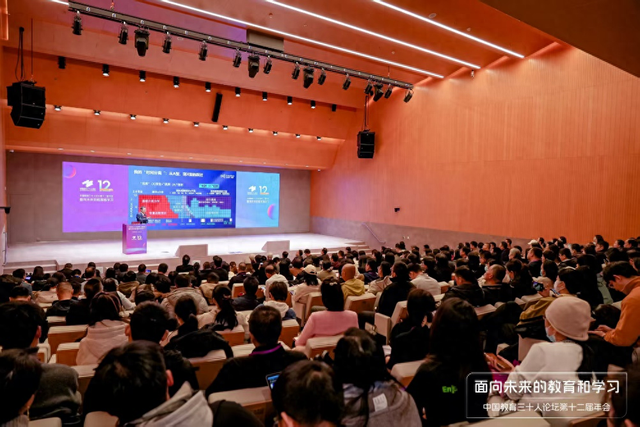
Core Viewpoint - The education sector is facing unprecedented challenges due to the advent of artificial intelligence, necessitating a redefinition of educational content, teacher roles, and teaching methods to better prepare students for the future [3][4][5] Group 1: Educational Transformation - Experts at the China Education Thirty Forum emphasized the need to return learning to students and redefine education, schools, curricula, and teaching methods in the context of AI [3][5] - The current education system often separates cognition from emotion, focusing excessively on scores and admission rates, which contradicts the fundamental goal of nurturing character [4][9] - The future of education must integrate practical life experiences to address challenges posed by AI, such as the compression of physical space and emotional engagement [4][9] Group 2: Challenges and Opportunities - The education system is at a crossroads, facing choices between maintaining traditional industrial models or fostering future-oriented individuals [4][5] - The rise of AI has led to a fundamental shift in the logic of education, where knowledge sharing has become equitable, and traditional schooling may no longer be the only path to learning [5][6] - The traditional education model, based on knowledge scarcity, is being disrupted by AI, which has made knowledge ubiquitous, leading to a "knowledge inflation" phenomenon [5][6] Group 3: New Educational Paradigms - The focus of education must shift from merely imparting knowledge to fostering human qualities such as ethics, aesthetics, and creativity, allowing individuals to thrive in an AI-driven world [6][10] - Educational reform should prioritize student interests and active learning, moving away from a system that primarily rewards academic performance [7][11] - A new assessment system is needed that emphasizes personalized growth paths for students rather than binary right or wrong judgments [10][14] Group 4: Implementation Strategies - Schools must undergo systemic restructuring to facilitate effective learning, focusing on diverse learning processes and respecting each student's emotional and developmental needs [12][13] - Innovative teaching methods, such as inquiry-based and project-based learning, should be adopted to cultivate creative talents [7][12] - The integration of cross-disciplinary approaches and collaborative teaching roles is essential to ensure that educational goals align with students' diverse learning paths [13][14]
越南启动“更优选择奖”促进创新生态系统建设
Shang Wu Bu Wang Zhan· 2025-08-08 12:23
Core Points - The launch of the "Better Choice Award 2025" (BCA 2025) by the Vietnam National Innovation Center (NIC), the Ministry of Finance, and VCCorp signifies the robust development of Vietnam's innovation ecosystem [1] - BCA 2025 aims to create a transparent, efficient, and distinctive market by bringing together hundreds of innovative enterprises, startups, research organizations, and investment funds, focusing on areas such as artificial intelligence, green technology, digital finance, and future education [1] Award Categories - BCA 2025 features four main awards: Smart Consumer Choice Award (recognizing tech devices and solutions serving consumers), Automotive Choice Award (products and brands in the automotive sector), Digital Innovation Choice Award (innovative initiatives on digital platforms), and Consumer Financial Innovation Award (financial solutions for Vietnamese consumers) [1] - The event will also include a series of seminars on cutting-edge technologies such as artificial intelligence, semiconductors, and quantum technology, with government leaders and top experts in the tech field participating [1] Event Details - The BCA 2025 award ceremony is scheduled to take place on October 3 in Hanoi [1]