权力分立

Search documents
关税权力的边界之战
Sou Hu Cai Jing· 2026-02-25 03:17
Core Viewpoint - The U.S. Supreme Court ruled that the Trump administration's use of the International Emergency Economic Powers Act to impose tariffs was illegal, emphasizing that the President does not have unchecked authority to impose tariffs simply by declaring a national emergency [1][3][6] Group 1: Company Impact - VOS Selections, a small wine importer based in New York, became the lead plaintiff in the lawsuit against the tariff policy, highlighting the resilience of individual businesses within a larger power structure [3][4] - The company has incurred significant costs due to tariffs, paying six-figure amounts since April of the previous year, which underscores the tangible financial impact of such policies on small businesses [4][6] - The victory of VOS Selections in court illustrates how small enterprises can influence policy and challenge larger power dynamics [9][10] Group 2: Industry Implications - The ruling reaffirms the constitutional principle that tax authority belongs to the legislative branch, thereby maintaining the stability of the separation of powers [6][9] - The evolution of U.S. trade laws has allowed for the delegation of certain trade powers to the executive branch, but the ruling serves as a reminder of the potential risks associated with such delegation [6][9] - Despite the ruling, other legal avenues for imposing tariffs still exist, indicating that the threat of tariffs may persist in different forms [7][10] Group 3: Broader Context - The case reflects the ongoing tension within the U.S. political system regarding the balance of power between the executive and legislative branches, particularly in trade matters [9][10] - The Supreme Court's decision may prompt Congress to reconsider the extent of trade authority granted to the President, potentially leading to clearer checks and balances in the future [9][10] - The complexities of global trade and the intertwining of trade policy with domestic politics are highlighted, suggesting that tariffs can serve multiple roles beyond mere economic policy [9][10]

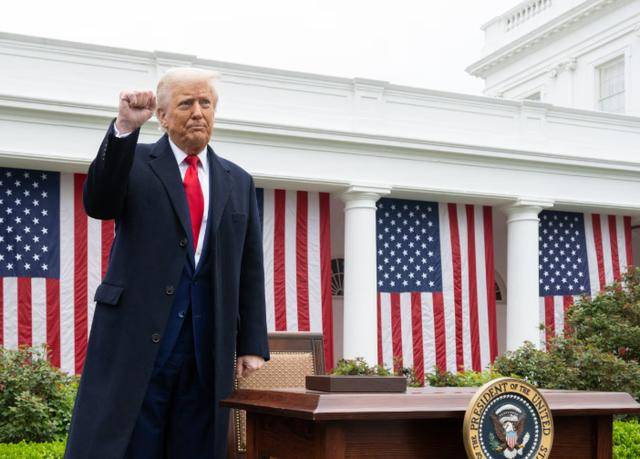
特朗普再加征关税,对中国有多大影响?
Sou Hu Cai Jing· 2026-02-24 07:41
Core Viewpoint - The U.S. Supreme Court's decision to overturn parts of the Trump administration's tariff policies has led Trump to announce a 10% tariff on goods from all countries, emphasizing the constitutional separation of powers in U.S. trade policy [2] Group 1: Legal and Political Implications - The Supreme Court's ruling reaffirms the exclusive constitutional authority of Congress over taxation, clarifying the boundaries of presidential power in trade [2] - This decision indicates that the Trump administration will need to find alternative methods to maintain high tariff policies [2] Group 2: Impact on U.S.-China Trade - According to Liu Ying from Renmin University, the immediate impact of the new 10% tariff on U.S.-China trade is expected to be limited [2] - Liu notes that 2023 is a year of tariff stabilization for U.S.-China relations, with the new tariff not increasing or decreasing the existing tariff levels [2] - The primary effect will be on the processes for companies applying for tariff exemptions or refunds, rather than on the overall tariff landscape [2]

决定特朗普关税命运时刻来了,美最高院公开庭辩,法官对关税合法性深表怀疑
Hua Er Jie Jian Wen· 2025-11-05 18:33
Core Viewpoint - The U.S. Supreme Court is debating the legality of President Trump's tariffs, which could have significant economic implications for the country if ruled against the administration [1][2]. Group 1: Legal Context - The core dispute revolves around whether Trump can invoke the International Emergency Economic Powers Act (IEEPA) to impose tariffs on trade partners, a power not explicitly granted for tariff imposition [1][2]. - If the court rules against the Trump administration, it may have to rely on more limited tariff laws and could face refund claims amounting to hundreds of billions of dollars [2]. Group 2: Supreme Court Proceedings - Chief Justice John Roberts questioned the government's reliance on a precedent that does not pertain to tariffs, emphasizing Congress's core power over taxation [3]. - Justices Barrett and Gorsuch expressed skepticism about the government's arguments, particularly regarding the broad application of tariffs to numerous countries [4][5]. Group 3: Government's Defense - The government's chief lawyer argued that the tariffs are regulatory rather than revenue-generating, asserting that they are necessary to address significant economic issues [6]. - The government faced challenges from liberal justices who pointed out the historical context of the IEEPA and questioned the interpretation of its powers [6]. Group 4: Opposition's Argument - The opposing lawyers argued that tariffs are indeed taxes and that the IEEPA should not undermine the established global tariff framework [7]. - They highlighted the disproportionate tariffs imposed on certain countries, such as a 39% tariff on Switzerland despite a trade surplus, and projected that these tariffs could generate an additional $3 trillion for the U.S. by 2035 [7]. Group 5: Case Background - The case was brought by a group of small businesses and 12 states, challenging Trump's authority to impose tariffs under the IEEPA [8].
DLS MARKETS回顾亚洲市场:市场物理与政治引力的碰撞
Sou Hu Cai Jing· 2025-09-16 10:14
Core Viewpoint - The upcoming Federal Reserve meeting is perceived as a political showdown rather than a mere monetary policy discussion, with a strong likelihood of a 25 basis point rate cut and ongoing speculation about a potential 50 basis point cut [2][3] Group 1: Market Reactions - Asian stock markets have reached new highs, oil prices have slightly increased, and the dollar remains stable, indicating a cautious positioning by investors ahead of the Fed's decision [2] - The market is not overly optimistic but is instead adopting a "gambler's calm," anticipating a 25 basis point cut while recognizing the pressure from Trump for more aggressive easing [3] Group 2: Political Dynamics - The Federal Reserve is increasingly viewed as a political entity, with decision-makers seen as representatives of political stances rather than purely academic backgrounds, leading to a potential loss of direction for the Fed [3][4] - The possibility of a "four-way split" vote at the Fed could symbolize a significant political drama, indicating a fracture in the institution's decision-making process [4][5] Group 3: Rate Cut Scenarios - DLSMARKETS outlines various potential outcomes for the Fed's rate decision, with a 47.5% probability of a dovish 25 basis point cut being the most likely scenario, which would be interpreted positively by the market [6][8] - A 50 basis point cut is seen as a double-edged sword, with potential market reactions ranging from panic to a surge in risk assets, depending on how the cut is perceived [9]