
楼市区域分化

Search documents
深圳房价普跌下,这些片区竟逆势上涨?
Sou Hu Cai Jing· 2025-11-06 10:54
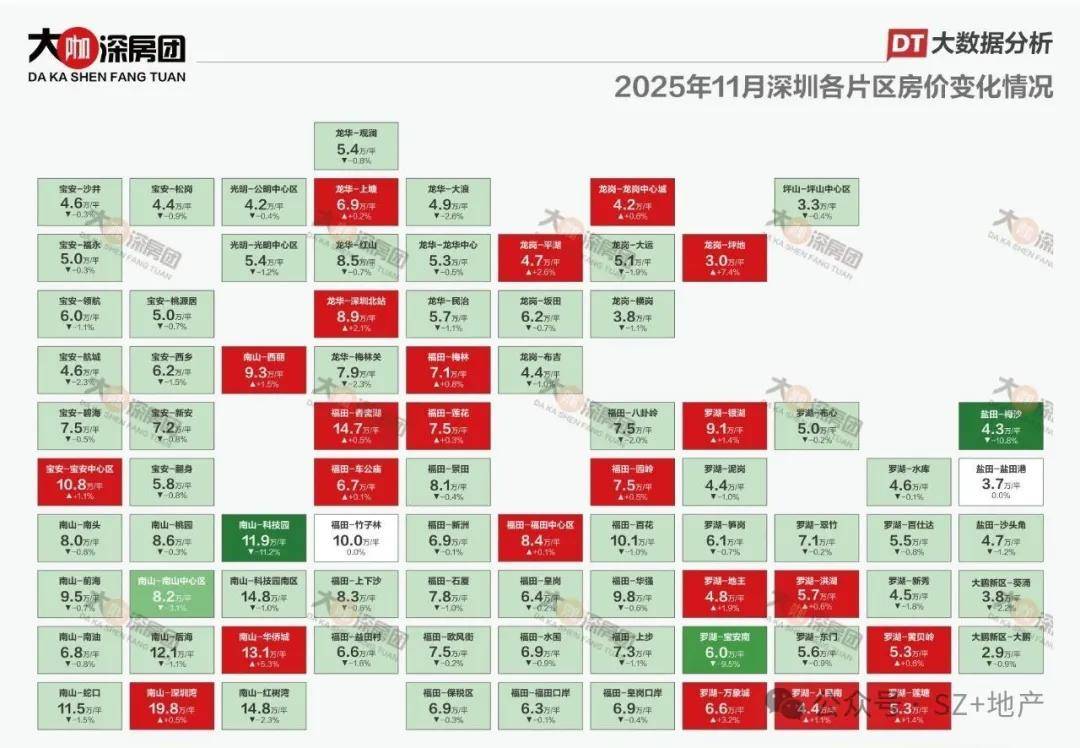
Core Viewpoint - The Shenzhen real estate market is currently experiencing a downward trend, with increasing market pressure and significant regional differentiation [1][2][3] Market Overview - In November, out of 86 districts in Shenzhen, only 23 saw price increases, accounting for less than 30% of the total, while 61 districts experienced price declines, indicating a buyer's market [2][3] - The overall market is characterized by small fluctuations in both rising and falling districts, with most price adjustments being moderate and no panic selling observed [3][4] Price Decline Analysis - The largest price drop was observed in the Nanshan Technology Park area, with an 11.2% decrease, bringing the average price to 119,000 yuan per square meter [4][5] - The Meisha area in Yantian also saw a significant decline of 10.8%, with prices dropping to 43,000 yuan per square meter, attributed to the cooling demand for tourism real estate [4][5] - The Baoan South area experienced a 9.5% drop, influenced by development planning and changes in market supply and demand [5] Price Increase Analysis - The Longgang Pingdi area led the price increases with a 7.4% rise, currently priced at 30,000 yuan per square meter, benefiting from its affordability and strong demand from first-time buyers [6][8] - The Nanshan Overseas Chinese Town area saw a 5.3% increase, supported by its mature infrastructure and attractive living environment [6][7] - Other areas like Luohu's MixC area and Longgang Pinghu also reported modest increases, highlighting the appeal of well-equipped and conveniently located districts [7][8] Market Logic Behind Regional Differentiation - The differentiation in the Shenzhen real estate market reflects changes in market demand structure, with high-end areas like Nanshan and Futian experiencing larger declines compared to more stable, affordable areas like Longgang and Longhua [9][10] - Buyers are increasingly favoring properties that are reasonably priced and practical, leading to a shift in demand towards lower-priced districts [9][10] Buyer and Seller Sentiment - The market is in a deep adjustment phase, with sellers adjusting their expectations and prices to facilitate transactions, while buyers are adopting a cautious approach [10][11] - The ongoing adjustments in the market are expected to continue, with sellers needing to set competitive prices to attract buyers [11][12] Future Outlook - As the traditional sales season approaches, developers and sellers may further adjust pricing strategies to stimulate sales, but overall market confidence is expected to take time to recover [11][12] - The current market adjustments provide buyers with more options and negotiation opportunities, but careful evaluation of property value and market conditions is essential [12]

国庆新房二手房走势分化,这些城市成 "黑马"
3 6 Ke· 2025-10-09 02:20
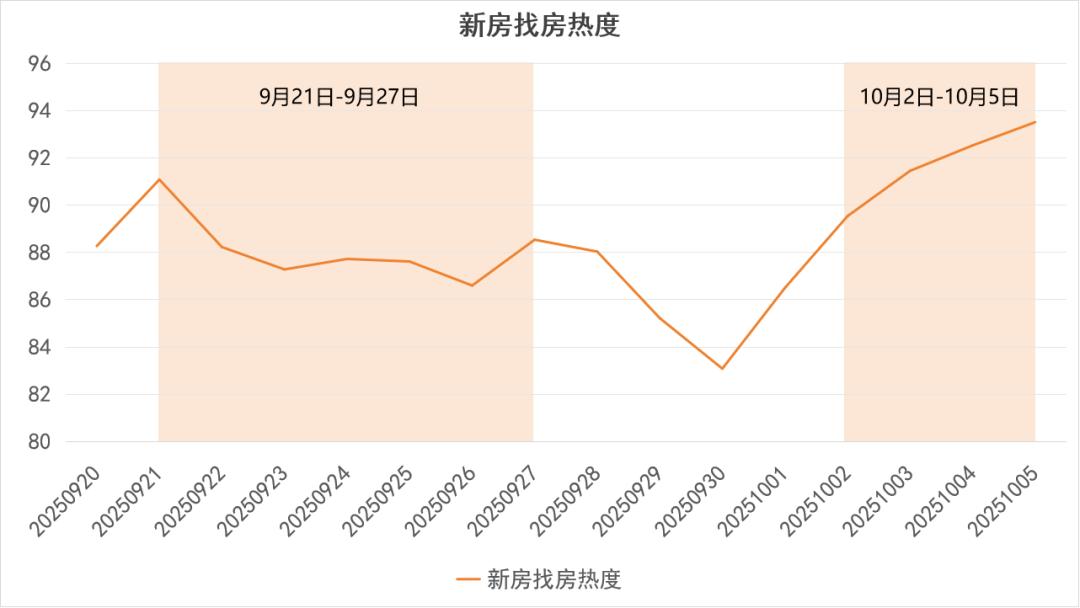
Core Insights - The National Day holiday period serves as a critical window for property viewing and purchasing, with market data indicating a "year-on-year cooling and month-on-month differentiation" in housing demand across various cities [1][16]. Overall Market Performance - The overall housing market saw a 10% year-on-year decline in average daily housing search heat for both new and second-hand homes during the first five days of the National Day holiday, reflecting a continued downward trend in the market [2][16]. - In contrast, the new housing market experienced a slight month-on-month increase of 4% in search heat, driven by promotional activities from developers and the release of pent-up demand from returning residents [2][16]. - The second-hand housing market, however, saw a month-on-month decrease of 1% in search heat, primarily due to the holiday's impact on viewing behaviors [4][16]. City-Level Performance - There is a significant disparity in housing search heat across different city tiers, with core cities' surrounding third-tier cities showing notable increases in new housing search heat [6][7]. - The top three cities with the highest month-on-month increases in new housing search heat include Huizhou (15.32%), Luoyang (13.83%), and Nantong (12.16%) [8]. - Conversely, cities like Harbin and Guiyang experienced slight declines in new housing search heat [11]. Second-Hand Housing Insights - The second-hand housing market's heat is concentrated in new first-tier cities and key provincial capitals, with Jinan (13.58%) and Guangzhou (9.80%) leading the month-on-month increases [12][13]. Market Trends - The data from the National Day holiday not only reflects short-term market conditions but also reveals deeper trends, indicating that the overall market remains in a downward cycle with no significant signs of recovery [16]. - The holiday period continues to serve as a window for assessing real demand potential in cities that effectively leverage returning residents and optimize transaction experiences [16]. - The phenomenon of "regional differentiation" has become the norm, characterized by a split between core and peripheral cities, as well as north-south variations in housing demand [17].
2025下半年房价涨跌出现四个变化,买不买心里有数了!快来看看
Sou Hu Cai Jing· 2025-09-14 17:16
Core Insights - The real estate market in China is undergoing significant changes in the second half of 2025, influenced by four major trends that are reshaping home-buying decisions [1] Group 1: Mortgage Rates - Mortgage rates are at a historic low, with the average first-home loan rate dropping to 3.8%, down 0.5 percentage points from the beginning of the year, marking the lowest level in nearly a decade [2] - In major cities like Shanghai and Beijing, rates have fallen below 3.6%, significantly reducing monthly payments and total interest costs for homebuyers [2] - The decline in rates is attributed to the central bank's loose monetary policy, including two cuts in the reserve requirement ratio, releasing over 1.2 trillion yuan in long-term funds [2] Group 2: Regional Disparities - There is an increasing regional disparity in the real estate market, with first-tier cities seeing a 2.3% year-on-year increase in new home prices, while third and fourth-tier cities experienced a 3.1% decline [3] - Cities like Shenzhen, Shanghai, and Hangzhou are witnessing price increases, while resource-dependent cities are facing significant downward pressure on prices [3] - Population trends are closely linked to price movements, with first-tier cities experiencing a net population increase of 435,000 in the first half of 2025, contrasting with a population decline of 287,000 in Northeast China [3] Group 3: Developer Promotions - Developers are under financial pressure, leading to unprecedented promotional activities, with sales for the top 100 real estate companies down 17.6% year-on-year [4] - Various aggressive sales strategies are being employed, including "zero down payment" and "buy one get one free" offers, particularly in second and third-tier cities [4] - The average discount offered by developers ranges from 8% to 15%, with some projects offering discounts as high as 20% [4] Group 4: Policy Adjustments - Real estate policy adjustments are becoming more precise and differentiated, moving away from a one-size-fits-all approach [6] - As of early September, 32 cities have adjusted their purchase restrictions based on local conditions, with first-tier cities tightening controls while many third and fourth-tier cities have relaxed restrictions [6] - The overall sales area of commercial housing from January to August 2025 was 860 million square meters, down 5.8% year-on-year, but the rate of decline has been narrowing, indicating potential market stabilization [8] Group 5: Rational Home Buying - The current market emphasizes rational home buying, focusing on actual housing needs and asset allocation rather than speculative investments [10][12] - The national housing vacancy rate has risen to 16.8%, indicating that the overall housing supply meets the residential needs of the population [12] - Experts predict that while first and second-tier cities may see stable or rising prices, many third and fourth-tier cities will continue to face downward pressure [12]
北京楼市成交上涨 “好房子”促市场分化
Zheng Quan Shi Bao· 2025-06-29 17:59
Core Insights - The Beijing real estate market shows strong demand for new homes, with significant sales activity reported even during weekdays [1] - The overall transaction volume for new homes in Beijing increased by 20.7% year-on-year in the first half of the year, with a total of 18,085 units sold [2] - The market is characterized by a clear regional differentiation, with high demand in areas like Haidian and lower interest in districts such as Fangshan [3][4] New Home Market - A specific new project in Beijing's Changping District achieved sales of 7-8 units per day during weekdays, indicating robust interest [1] - The average price for new homes in this project ranges from 55,000 to 61,000 yuan per square meter, with total prices between 4 million and 15 million yuan [1] - The average transaction price for new homes in the first half of the year reached 7.8 million yuan, showing a significant increase compared to the previous year [1] Second-Hand Home Market - The second-hand home market also saw a notable increase, with approximately 86,964 units sold in the first half of the year, reflecting a year-on-year increase of 17.7% [2][3] - The trend of "price for volume" is prevalent in the second-hand market, with some areas experiencing price declines while others remain stable due to demand for smaller units in desirable locations [4][5] Market Outlook - Analysts expect that if new policies such as credit easing or purchase subsidies are introduced, it could stimulate demand and lead to a recovery in second-hand home prices and transaction volumes [5] - The overall market is anticipated to stabilize in the second half of the year, potentially leading to a temporary peak in transactions [5]