
模型容器

Search documents
美图公司(01357.HK):国际化和生产力驱动订阅延续较快增长
Ge Long Hui· 2026-03-29 21:39
Core Insights - The company reported FY25 adjusted net profit of 970 million, exceeding expectations, driven by an increase in high-margin subscription services and cost reduction efforts [1] - Subscription revenue grew by 42% to 3 billion, with MAU increasing by 4% to 276 million and paid users rising by 34% to 16.91 million, indicating strong growth in international markets and productivity tools [1][2] Performance Review - FY25 revenue from continuing operations increased by 29% to 3.9 billion, although it fell short of expectations due to the cessation of beauty solutions and lower-than-expected advertising revenue [1] - Adjusted net profit increased by 65% to 970 million, outperforming forecasts primarily due to a higher proportion of subscription revenue and efficiency improvements [1] Development Trends - The company is experiencing rapid growth in subscriptions, with international market revenue increasing by 37%, now accounting for 38% of total revenue [1] - Productivity tool revenue has risen to 19%, with paid users increasing by 67% to 2.16 million, driven by the success of Meitu Design Studio and Kaipai [1] - The company anticipates subscription revenue growth of over 30% in FY26, supported by ongoing increases in paid user rates [1] AI and Product Development - The company has established a multi-role "AI team" focused on high-value e-commerce material production and video content, with products like Meitu Design Studio and Kaipai already deployed [2] - The introduction of the "model container + AI Agent" architecture is expected to enhance ARPU growth potential [2] Profitability Forecast and Valuation - The company maintains its revenue and profit forecasts for FY26 and introduces new forecasts for FY27, projecting revenue of 5.6 billion and adjusted net profit of 1.4 billion [2] - The target price has been reduced by 39% to 6.6 HKD, reflecting a 40% upside potential from the current stock price, with current trading at 16/13 times FY26 and FY27 Non-IFRS P/E [2]
美图:大模型冲击下的垂类AI生存样本
Ge Long Hui· 2025-12-30 06:48
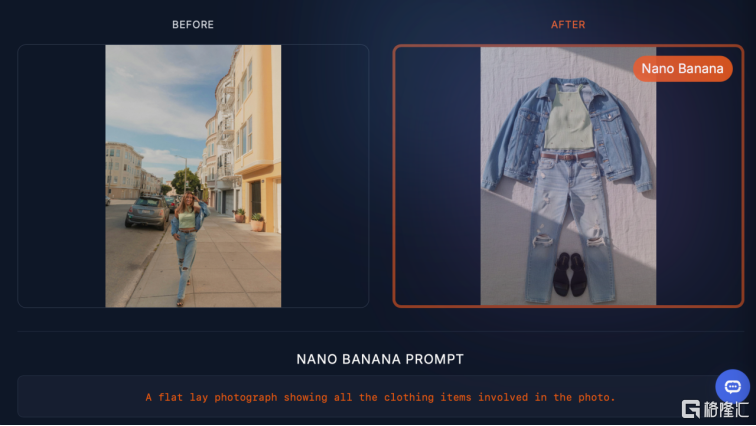
Core Viewpoint - The rapid evolution of AI models and applications is leading to a narrative where vertical AI applications, like Meitu, face challenges from general models, resulting in declining valuations and poor market performance in the second half of the year [1]. Group 1: Impact of General Models on Vertical Applications - The launch of Google's Nano Banana model signifies a major event in the AI landscape, combining advanced image generation capabilities with logical reasoning, surpassing previous models like ChatGPT [3]. - Meitu, a representative of vertical applications, experienced a significant stock price drop following the rise of Nano Banana, indicating market concerns about the impact of general models on specialized applications [7][9]. - Despite the challenges posed by general models, Meitu's overseas products have seen substantial growth, with a reported 63% increase in overseas application revenue in November [9]. Group 2: Meitu's Strategic Positioning - Meitu positions itself as an AI application company, utilizing a "model container" strategy to integrate various models without developing foundational models, thus avoiding high costs [11]. - The company's competitive advantage lies in its understanding of user aesthetics and preferences, allowing it to tailor its products effectively to different markets [18][19]. - Meitu's growth strategy focuses on enhancing user engagement through core functionalities that meet specific user needs, which has proven effective in maintaining its market position [22]. Group 3: Product Development and Market Trends - Meitu's product matrix is shifting towards productivity tools, with a focus on addressing specific user pain points in design and video production [28][30]. - The introduction of AI capabilities in products like Meitu Design Studio and Kaipai reflects the company's strategy to leverage AI for enhancing user experience and operational efficiency [32]. - The competitive landscape in the productivity tools market is intensifying, with major players vying for dominance, making Meitu's ability to adapt and innovate crucial for its long-term growth [32].

美图秀秀等AI产品引领2024中国AI效率工具创新潮流
Sou Hu Cai Jing· 2025-05-07 15:05
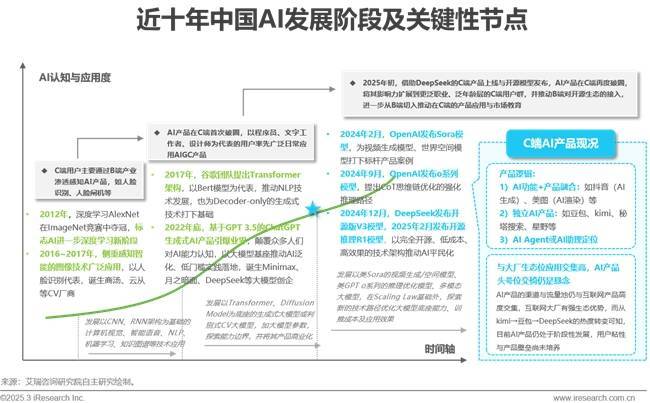
Core Insights - The report by iResearch highlights the latest developments in China's artificial intelligence (AI) industry for 2024, emphasizing the competitive landscape and growth potential [1][2] Group 1: Industry Trends - The AI application market is expected to experience intensified competition among vendors by 2025, with pricing and traffic becoming core competitive factors [1] - The Chinese AI industry is projected to grow at a compound annual growth rate (CAGR) of 32.1% from 2025 to 2029, potentially exceeding a market size of 1 trillion yuan by 2029 [1] - Current applications of AI in China span content creation, intelligent dialogue, emotional companionship, efficiency tools, and audio-video generation, predominantly utilizing a "free + subscription" business model [1] Group 2: Company Highlights - Adobe, ByteDance, Kuaishou, and Meitu are noted for their outstanding performance in the AI efficiency tools sector, with Meitu leading innovation in AI image and video applications through products like Meitu Xiuxiu, Wink, Meitu Design Studio, and WHEE [1] - The ability to integrate different models and enhance scene implementation value is identified as a key focus for AI companies, with Meitu's exploration of the "model container" concept being particularly noteworthy [2]
行业跑马圈地升级,Adobe、字节、美图等打响AI效率工具“争夺战”
Zheng Quan Shi Bao Wang· 2025-05-07 09:32
Core Insights - The report by iResearch highlights that major companies like Adobe, ByteDance, Kuaishou, and Meitu are leading the AI efficiency tools sector, with Meitu's products being recognized for their innovative approach in AI image and video applications [1] - The Chinese AI industry is projected to maintain a compound annual growth rate (CAGR) of 32.1% from 2025 to 2029, potentially exceeding a market size of 1 trillion yuan by 2029 [1] - A shift in competitive strategies is noted, with AI application vendors beginning to adopt a "land grab" approach starting in 2025, focusing on pricing and traffic as core competitive strategies [1] Industry Trends - The AI application market is experiencing a differentiation in vendor ecosystems, with both internet tech giants and niche tech firms launching various AI products targeting specific customer segments [1] - Current AI products in China span content creation, intelligent dialogue, emotional companionship, efficiency tools, and audio-video generation, primarily utilizing a "free + subscription" business model [1] Product Development - Visual modality products are advancing faster commercially compared to language modality products, with companies like ByteDance and Meitu leading the charge [2] - Some consumer-facing AI products face challenges such as user stickiness and sustainability of fees, indicating that the leading position in the AI product market remains uncertain [2] - The industry is transitioning from a "large model arms race" to a "scene landing decisive battle," emphasizing the importance of model integration and scene application value by 2025 [2] - Meitu's introduction of the "model container" concept exemplifies the trend of enhancing model landing capabilities through practical applications [2]
