水危机

Search documents
我们生活在一个“水不安全的时代”
Xin Lang Cai Jing· 2026-01-29 21:59
Group 1 - The global water crisis is recognized as one of the top three risks to human development, potentially more severe than climate change [3][4] - Water is essential for sustainable development and is a central issue in international relations, with conflicts arising over shared water resources [3][4] - The lack of strong international governance for transboundary rivers has led to increasing tensions and potential conflicts over water resources [4] Group 2 - Approximately one in nine people globally lacks access to safe drinking water, and about one-third lack sanitation facilities, exacerbating poverty, especially among women [5] - Major droughts and floods have highlighted the critical role of water in shaping societies and livelihoods, leading to both social losses and opportunities for cooperation [6] - The uncertainty surrounding water issues, including climate change impacts, is prompting governments and organizations to develop emergency plans to enhance resilience against water-related challenges [6] Group 3 - The management of water resources is becoming a key factor in global political dynamics, with control over water cycles influencing power relations [7] - Water plays a central role in various belief systems and ideologies, complicating the management of water crises and leading to diverse opinions on water governance [8] - The debate over water management reflects a broader ideological struggle, with some advocating for increased control and others calling for the preservation of natural water systems [8]

印度政府高调宣布超越中国,印媒一针见血
Huan Qiu Shi Bao· 2026-01-05 23:24
Core Viewpoint - India has surpassed China to become the world's largest rice producer, with projected production of 150.18 million tons by 2025 compared to China's 145.28 million tons, marking a significant shift in global agricultural dynamics [2][6]. Group 1: Production Achievements - India's rice production has reached a historic milestone, transitioning from a food-deficient nation to a key food exporter, with rice now being an important tool in India's foreign policy [2][6]. - The achievement challenges the long-held belief that China was the largest rice producer, as this is the first time India has outproduced China in rice [2][6]. Group 2: Agricultural Challenges - Despite the production success, there are concerns about the sustainability of rice farming in India, particularly regarding the depletion of groundwater resources, which has led farmers to incur significant debt to drill deeper wells [3][7]. - In key rice-producing states like Haryana and Punjab, groundwater levels have significantly declined, requiring drilling depths of 24 to 61 meters compared to just 9 meters a decade ago [3][7]. Group 3: Yield Comparisons - Although India has a larger area dedicated to rice cultivation than China, its yield per hectare remains significantly lower, with projections estimating an average yield of 4,390 kg per hectare by 2025-2026, still below the global average and China's yield of approximately 7,100 kg per hectare [4][8]. - Historical data shows that India's rice yield has improved over the decades, from 668 kg per hectare in 1950-1951 to 2,809 kg per hectare in 2021-2022, but the gap in productivity compared to global standards raises concerns about the sustainability of its leading position [4][8].
全球或将面临比石油危机更严峻的灾难,俄罗斯却手握先天优势
Sou Hu Cai Jing· 2025-12-08 08:42
Core Insights - The world is facing a severe water crisis, potentially more serious than the oil crisis, with global freshwater resources projected to decline from 750 cubic meters per capita annually to 450 cubic meters by 2050, affecting around 80% of countries [1] - Russia is in a unique position with abundant freshwater resources, boasting over 4,000 cubic kilometers of freshwater, which is significantly higher than the global average [5] Water Scarcity Issues - Approximately 300 regions globally are at risk of water resource conflicts, particularly in countries sharing major river basins, such as the Nile conflict between Egypt and Ethiopia [1] - The situation in the Middle East is dire, with India and Pakistan facing severe water resource challenges, including India's unilateral suspension of the 65-year-old Indus Water Treaty [3] - In Europe, major rivers like the Danube and Rhine are at historic low water levels, with significant environmental implications [3] Russia's Water Resource Advantage - Russia's per capita freshwater availability exceeds 20,000 cubic meters, far above the global average, and it holds over 10% of the world's freshwater resources, ranking second globally after Brazil [5] - The country has a renewable water resource reserve of 4,565 cubic kilometers, which is 8.1% higher than the long-term average [5]
为什么现在洪水、暴雨、干旱越来越多了?
虎嗅APP· 2025-07-29 13:36
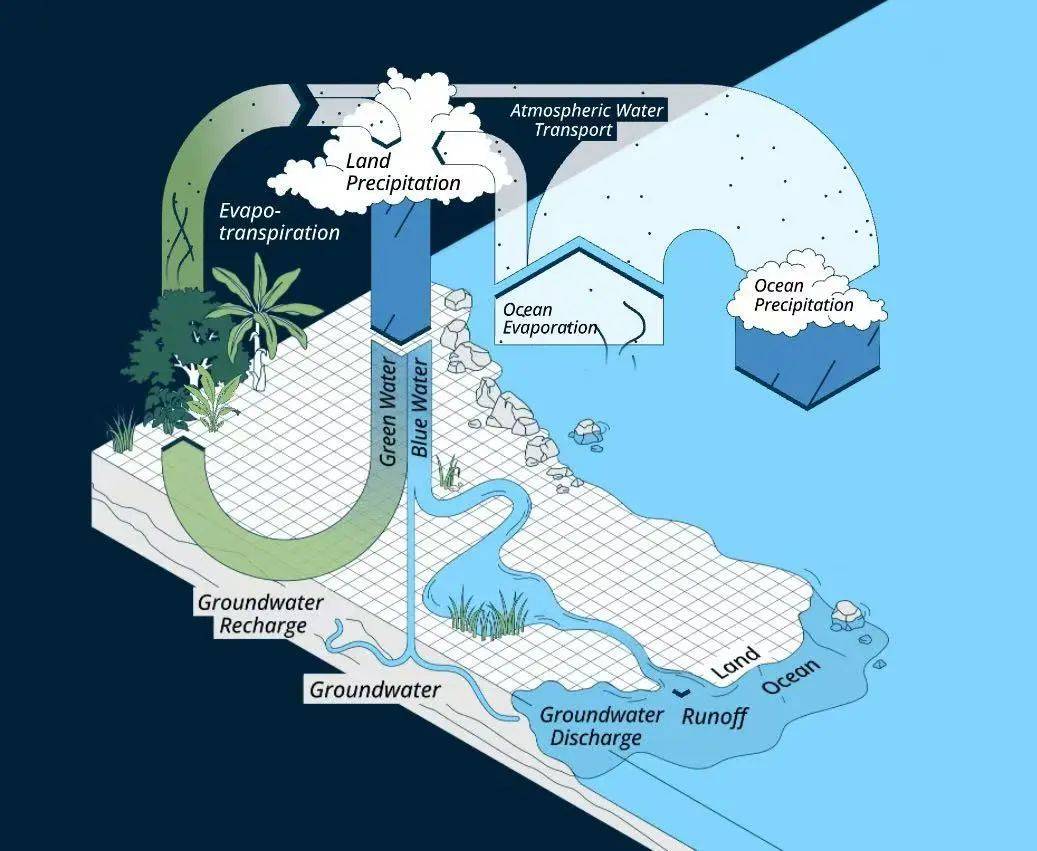
Core Viewpoint - The article discusses the urgent state of global water systems, highlighting the impact of human activities and climate change on water cycles, leading to increased water-related disasters and a looming water crisis that threatens food security and economic stability [3][4][10]. Group 1: Water Crisis and Its Implications - Thailand's recent flooding in Chiang Mai, attributed to heavy rainfall and exacerbated by deforestation and land use changes, reflects a broader trend of increasing water-related disasters globally [3][4]. - The Global Water Economy Commission (GCEW) report indicates that human activities have disrupted the global hydrological cycle for the first time in history, making natural rainfall less reliable as a freshwater source [4][9]. - By 2050, the water crisis is projected to threaten over half of global food production, with potential GDP losses averaging 8% worldwide, and up to 15% in low-income countries [12][18]. Group 2: Green Water and Its Role - Green water, which constitutes nearly half of terrestrial rainfall, is often overlooked in water management policies that focus primarily on blue water (surface and groundwater) [6][12]. - The report emphasizes the need for a holistic approach to water management that includes both blue and green water, as changes in land use can significantly affect rainfall patterns in other regions [8][13]. - In China, the disparity in water distribution, with 80% of water resources in the south but half the population and two-thirds of arable land in the north, highlights the urgent need for improved water management strategies [12][14]. Group 3: Economic and Policy Recommendations - The GCEW report advocates for viewing water as a public good and integrating economic, social, and environmental sustainability in water resource management [17][18]. - Recommendations include reforming water pricing, investing in public goods for better water data transparency, and promoting sustainable water resource allocation [18]. - The report calls for a revolution in food systems, protection of natural habitats, and the reuse of water to address the impending water crisis effectively [18].
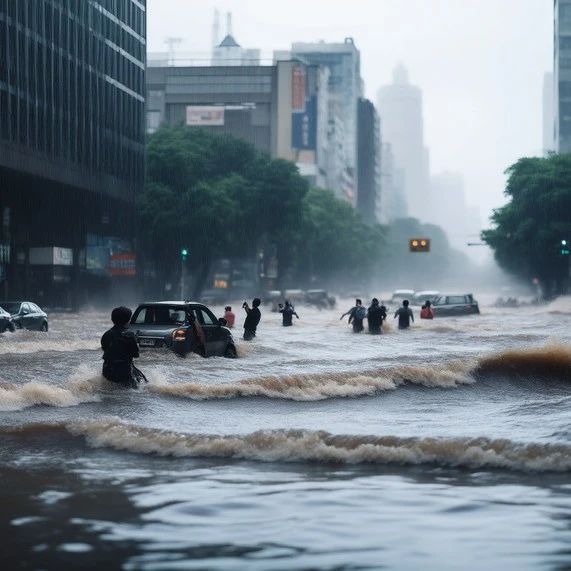
为什么现在洪水、暴雨、干旱越来越多了?
Hu Xiu· 2025-07-29 01:31
Group 1: Flooding in Thailand - Chiang Mai, a popular tourist city in Thailand, has recently experienced severe flooding, the worst in fifty years, due to continuous heavy rainfall, affecting ancient city corners, residential areas, and tourist attractions, leading to casualties and stranded tourists [1] - At least 23 provinces in Thailand have been affected by flooding since the onset of the monsoon season [1] - Local media attribute the severity of the flooding to deforestation and agricultural land expansion, which have made the region more vulnerable to heavy rains [1] Group 2: Global Water Crisis - Scientists warn that the world is in a water-related emergency, with ecosystems suffering from long-term damage due to the underestimation of water [2] - The Global Commission on Water Economics (GCEW) has reported that human activities have "for the first time in history" disrupted the global hydrological cycle [3] - Poor land use and global warming have placed immense pressure on the Earth's water systems, making natural rainfall as a freshwater source unreliable [4] Group 3: Water Cycle Dynamics - The GCEW report emphasizes the importance of understanding the water cycle, which includes both land and ocean precipitation processes [6] - It highlights that policies have historically focused on managing blue water (rivers, lakes, groundwater) while neglecting green water (soil and vegetation), which contributes nearly half of the rainfall on land [8] - The report calls for a global perspective on water management, recognizing the interconnectedness of water resources across regions and the impact of land use changes on rainfall patterns [9] Group 4: Impacts of Water Imbalance - The imbalance in the water cycle has been linked to increased risks of droughts, floods, and extreme weather events, with significant implications for food and water security [11] - The GCEW predicts that by 2050, water crises could threaten over half of global food production, with potential GDP losses averaging 8% worldwide, and up to 15% in low-income countries [12] - In northern China, a significant water crisis is evident, with a stark contrast in water distribution, where four-fifths of the water is in the south, while half the population and two-thirds of arable land are in the north [13] Group 5: Agricultural Water Management - Experts emphasize the need for improved water management strategies that consider both blue and green water to ensure food security [16] - The report suggests that maintaining soil moisture should be a key component of climate mitigation strategies, as it is crucial for both water and food security [12] - Innovative agricultural practices, such as drip irrigation and soil moisture conservation techniques, are recommended to enhance water use efficiency [18] Group 6: Economic and Policy Recommendations - The GCEW report advocates for viewing water as a public good and integrating economic, social, and environmental sustainability in water management [22] - It suggests that governments should implement appropriate pricing and subsidies for water resources to encourage sustainable and equitable distribution [22] - The report highlights the need for interdisciplinary collaboration to address the complex challenges posed by extreme weather and water-related disasters [21]