水资源危机

Search documents
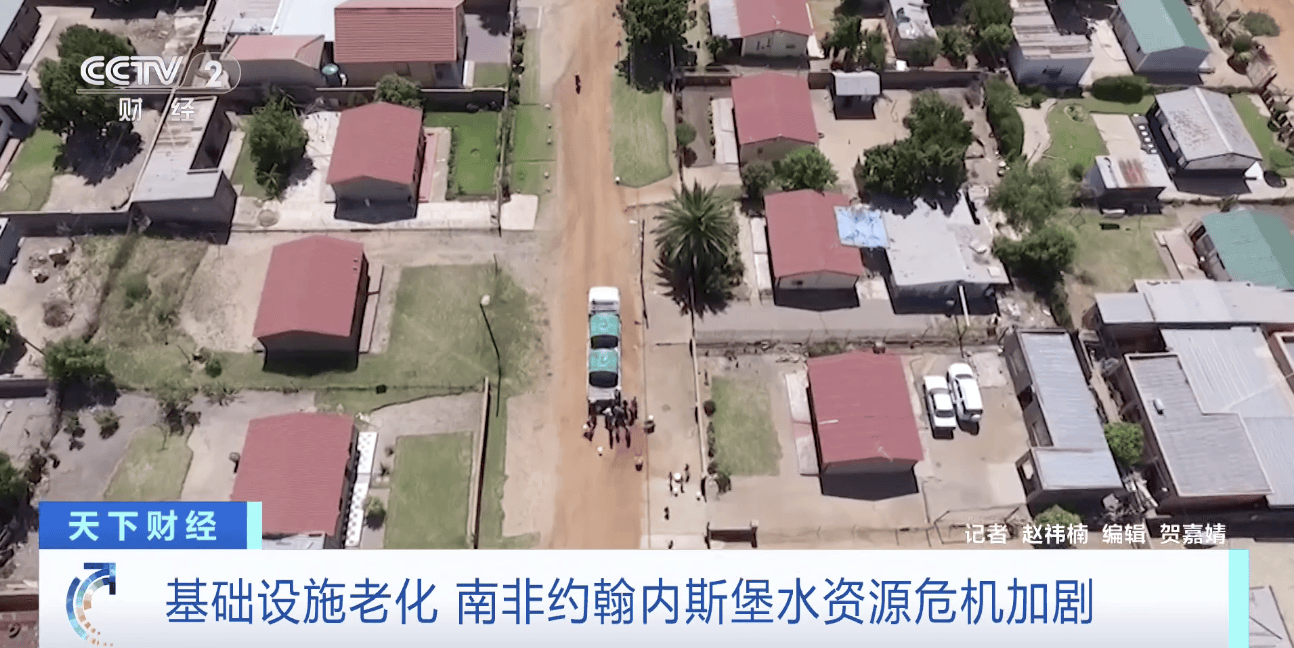
南非约翰内斯堡水资源危机加剧,基础设施升级资金缺口约117亿元
Sou Hu Cai Jing· 2026-02-09 16:19
Core Viewpoint - The water crisis in Johannesburg, South Africa, continues to impact the city's operations and residents' daily lives, with significant infrastructure issues leading to systemic risks in the water supply system [1][3]. Group 1: Current Situation - Over 40% of the water supply in Johannesburg is lost during transportation due to aging infrastructure, broken pipelines, and illegal connections [3]. - There are 21 out of 98 reservoirs in the city that urgently need repairs, with a funding gap for infrastructure upgrades amounting to 270 billion Rand, approximately 11.7 billion RMB [3]. Group 2: Impact on Residents and Industry - The ongoing water crisis has noticeably affected the daily lives of Johannesburg residents, industrial production, and overall city operations [3]. - Local communities are demanding transparency from the water utility company regarding the progress of crisis management and have expressed that emergency water supply trucks are only a temporary solution [5]. Group 3: Calls for Action - The "Water Crisis Committee," composed of social organizations and professionals, has stated that the water supply issues have exceeded the local government's capacity to respond and is calling for national-level intervention [5]. - Recommendations include repairing damaged pipelines, restoring municipal budgets, and improving governance systems to stabilize water supply [5].

大摩:AI不仅“缺电”,还“缺水”!
美股IPO· 2025-11-27 10:28
Core Insights - The report from Morgan Stanley reveals that the water consumption of AI data centers is expected to exceed 100 billion liters by 2028, highlighting a significant risk due to the inability to transport water across regions like electricity [1][9][10] - The focus on energy consumption overlooks the critical issue of water scarcity, which is becoming a local project killer for data centers [6][12] Water Consumption Projections - By 2028, the direct cooling and electricity production consumption of AI data centers is projected to reach 106.8 billion liters [9] - In an optimistic scenario, this figure could rise to 148.5 billion liters, while even in a pessimistic scenario, it would still be 63.7 billion liters [10][11] Localized Water Resource Risks - The real bottleneck is not the total water consumption but the localized availability of water resources, which cannot be easily transported [12][14] - Recent examples include Amazon's "Project Blue" being rejected in Tucson, Arizona, due to high water and electricity demands, and opposition to AI data center plans in North Lincolnshire, UK, due to existing water supply issues [14][15] Technological Adaptation - Tech giants are being forced to innovate to survive in a water-scarce environment, focusing on technologies that significantly reduce Water Usage Efficiency (WUE) [16] - Examples of emerging technologies include microchannel cooling plates and the use of natural cooling sources, such as Google's project in Finland utilizing seawater [17][18] Regulatory Landscape - Regulatory bodies are increasingly focused on water usage standards for data centers, with regions like Singapore and Malaysia setting strict WUE targets, and the EU planning mandatory minimum performance standards by 2026 [19][20][21] Beneficiaries of Water Solutions - Companies specializing in water treatment solutions, such as Ecolab, Toray Industries, Veolia, and DuPont, are expected to benefit from the rising demand for water resource management as data center operators strive for water sustainability [22]

伊拉克和土耳其签署水资源合作文件
Xin Hua She· 2025-11-02 22:34
Core Points - Iraq's Foreign Minister Hussein signed a water resource cooperation framework agreement with Turkish Foreign Minister Fidan to address Iraq's severe water crisis [1] - The agreement aims to provide sustainable solutions through large-scale cooperative projects [1] - Iraqi President Rashid called for fair water distribution policies from Turkey to ensure adequate water allocation for the Tigris and Euphrates rivers [1] Water Resource Crisis - Iraq is experiencing its most severe water crisis since 1933 due to insufficient rainfall and reduced upstream water flow [1] - Water shortages have led to a reduction in arable land and increased soil salinization, posing significant challenges to agricultural development [1]
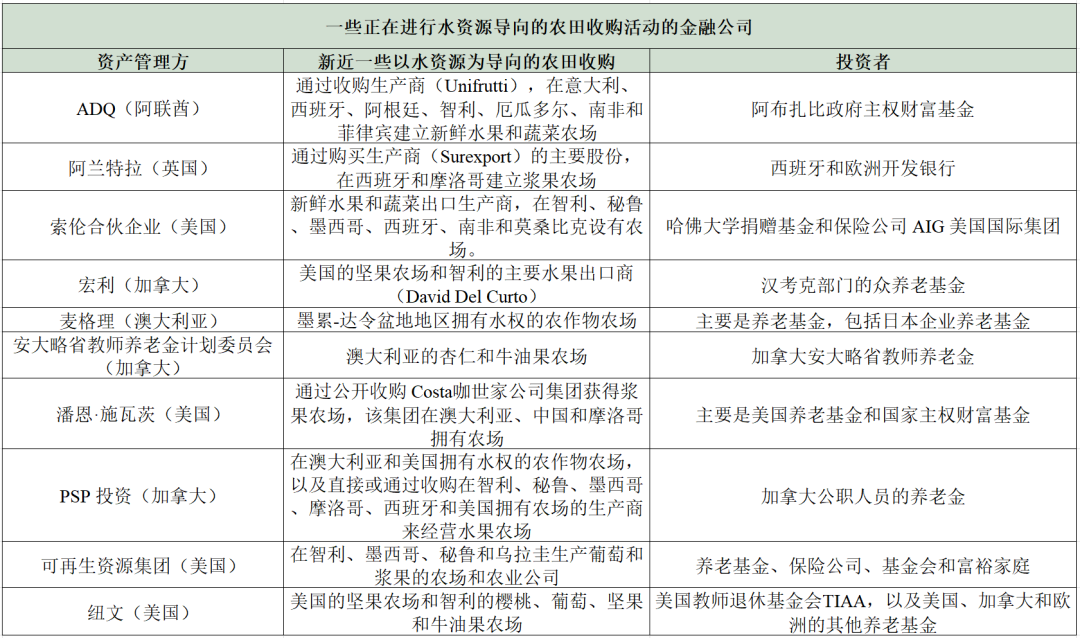
“这不是旱灾,而是抢劫”:金融资本攫取下的水资源危机
Hu Xiu· 2025-05-15 08:12
Core Viewpoint - The auction of the water surface management rights of the Hongmen Reservoir in Jiangxi has raised concerns about the privatization of public assets and the global water resource crisis driven by financial capital and industrial agriculture [1][3]. Group 1: Water Resource Crisis - The global water resource crisis is exacerbated by industrial agricultural expansion, leading to conflicts between agricultural companies and local communities over water access [2][5]. - Over one-third of the global population is affected by water scarcity, with many communities facing severe impacts from climate change [4]. - Agricultural water use accounts for approximately 70% of global water consumption, and many key agricultural regions are experiencing severe water shortages [5]. Group 2: Financial Capital and Agriculture - Financial capital, including pension funds and private equity firms, is aggressively acquiring land with irrigation water rights, often prioritizing short-term profits over sustainable practices [6][9]. - Companies like PSP Investments have been at the forefront of acquiring farmland globally, often leading to conflicts over water resources in regions like Peru and California [9][16]. - The strategy of these financial firms often involves extracting as much water as possible for high-value crops, disregarding the long-term sustainability of local water resources [8][17]. Group 3: Case Studies - The PSP investment in a blueberry farm in Peru highlights the misallocation of water resources, where local communities are deprived of water intended for their use [10]. - In California's San Joaquin Valley, financial companies have exacerbated water scarcity by over-extracting from already depleted aquifers [16][17]. - The situation in Spain's Huelva region illustrates how financial investments in berry production have led to significant depletion of local water sources, despite awareness of the impending crisis [12][13]. Group 4: Community Impact and Protests - Local communities are increasingly facing water shortages due to the prioritization of industrial agriculture, leading to protests against water privatization and the exploitation of resources [2][30]. - The protests in France against water resource privatization reflect a broader global movement against the commodification of water and the impacts of industrial agriculture on local communities [30]. - The situation in Mexico's Jalisco state demonstrates the severe consequences of industrial farming on local water supplies, with communities struggling to reclaim their water rights [27][28].