
微通道冷板

Search documents
汽车行业双周报(20260105-20250116):英伟达 Rubin 平台发布,液冷环节核心增量有哪些?-20260118
Hua Yuan Zheng Quan· 2026-01-18 14:22
Investment Rating - The industry investment rating is "Positive" (maintained) [1] Core Insights - The report highlights the rapid progress and optimistic outlook for the liquid cooling industry, particularly focusing on the core increments of the Rubin liquid cooling solution, which includes microchannel technology, CDU enhancements, and manifold integration [4][5][10]. Summary by Sections 1. NVIDIA Rubin Platform Release - The Rubin platform adopts a 100% liquid cooling solution, expected to be delivered in the second half of 2026. It features a modular design with a power consumption exceeding 200KW, compared to the GB300's 80% liquid cooling [8][10]. 2. Core Change 1: Microchannel Cold Plate Material and Process Upgrades - The adoption of microchannel technology is expected to become the mainstream cooling method, significantly enhancing cooling efficiency by reducing thermal resistance and increasing heat flow density [13][18]. - Key material considerations include the use of oxygen-free copper for its superior thermal conductivity and structural strength [19]. - Connection methods must ensure quality and sealing to prevent flow channel deformation or blockage, with techniques such as laser welding and brazing being utilized [20][23]. - Flow channel processing requires high precision, with various methods like precision milling and laser processing being employed to achieve the necessary micro-level accuracy [24][29]. 3. Core Change 2: CDU Power and Control Requirements Enhancement - The CDU's overall power will increase in line with the cabinet's power, with enhanced control requirements to accommodate higher cooling demands. This is expected to elevate the CDU's overall value [27][28]. 4. Core Change 3: Manifold Integration Design - The design of the manifold has evolved to be more integrated and intelligent, featuring larger pipe diameters and the inclusion of valves and sensors to improve stability and reduce leakage risks [30][31].

海外AI算力需求预期回归
傅里叶的猫· 2026-01-15 15:58
Group 1 - The AI hardware sector has seen a resurgence due to two main factors: Goldman Sachs' strategy meeting indicating a demand of 25 million units for 1.6T optical modules and 70 million units for 800G optical modules by 2026, and TSMC's fourth-quarter earnings report showing a 35% year-over-year profit increase, exceeding expectations and marking the eighth consecutive quarter of profit growth [1][2]. - TSMC's projected capital expenditure for 2026 is between $52 billion and $56 billion, following a total capital expenditure of $40.9 billion in 2025 [1]. - Macquarie's report highlights a constraint in the DRAM industry, stating that new capacity in the next two years can only support approximately 15GW of AI data center construction, which may lead to delays and reshuffling in global AI expansion plans [2]. Group 2 - Major companies provide core suppliers with demand and share guidance for the following year in November-December, allowing suppliers to prepare inventory. Optical modules are essential components for AI computing servers, and changes in their demand can reflect the overall demand for data centers [4]. - The anticipated demand for 800G and 1.6T optical modules is expected to remain strong, particularly for overseas computing needs, which serves as a response to Macquarie's report [4]. - Concerns regarding overseas computing demand for 2026-2027 have been alleviated by recent events, potentially leading to upward revisions in order expectations for liquid cooling manufacturers [5]. Group 3 - Updates in the liquid cooling industry include NV utilizing microchannel cold plate technology, with samples sent to a leading company [7]. - Google is expected to place orders exceeding $1 billion with a mainland liquid cooling leader in 2026, significantly higher than the previous expectation of $500-600 million [13]. - A whitelist for NV liquid cooling-cold plates may include names of certain mainland listed companies by March [13].


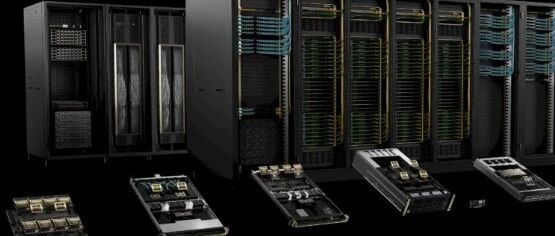
郭明錤指路微通道冷板,蓝思科技重塑液冷格局
Cai Fu Zai Xian· 2026-01-08 01:08
Group 1 - The introduction of micro-channel cold plates by Nvidia's Rubin platform (VR200) signifies a shift from traditional cooling components to precision micro-nano devices, aligning with the competitive advantages of Lens Technology (300433.SZ)(06613.HK) and Yuan Shi (Pinda) [1] - Traditional cold plates rely on skiving processes, which have reached their physical limits, while micro-channel technology requires the creation of micron-level high-density flow channels on copper plates, an area where Lens Technology excels [1] - Lens Technology's expertise in photolithography, chemical etching, and laser micro-machining in the glass/ceramic sector can be directly applied to metal micro-channel manufacturing, offering superior precision compared to traditional CNC methods [1] Group 2 - Yuan Shi Technology, as an exclusive OEM for Pinda's liquid cooling, holds the rare Nvidia RVL certification and micro-channel thermal design IP, addressing the entry barrier issue [2] - Lens Technology leverages its automated production capacity to solve the large-scale delivery challenge, enabling it to take on millions of micro-channel cold plate orders for the Rubin platform [2] - The transformation in cooling technology represents a replacement of traditional hardware with precision manufacturing, allowing Lens Technology to capitalize on this technological upgrade through its partnership with Pinda and Yuan Shi [2]

大摩:AI不仅“缺电”,还“缺水”!
美股IPO· 2025-11-27 10:28
Core Insights - The report from Morgan Stanley reveals that the water consumption of AI data centers is expected to exceed 100 billion liters by 2028, highlighting a significant risk due to the inability to transport water across regions like electricity [1][9][10] - The focus on energy consumption overlooks the critical issue of water scarcity, which is becoming a local project killer for data centers [6][12] Water Consumption Projections - By 2028, the direct cooling and electricity production consumption of AI data centers is projected to reach 106.8 billion liters [9] - In an optimistic scenario, this figure could rise to 148.5 billion liters, while even in a pessimistic scenario, it would still be 63.7 billion liters [10][11] Localized Water Resource Risks - The real bottleneck is not the total water consumption but the localized availability of water resources, which cannot be easily transported [12][14] - Recent examples include Amazon's "Project Blue" being rejected in Tucson, Arizona, due to high water and electricity demands, and opposition to AI data center plans in North Lincolnshire, UK, due to existing water supply issues [14][15] Technological Adaptation - Tech giants are being forced to innovate to survive in a water-scarce environment, focusing on technologies that significantly reduce Water Usage Efficiency (WUE) [16] - Examples of emerging technologies include microchannel cooling plates and the use of natural cooling sources, such as Google's project in Finland utilizing seawater [17][18] Regulatory Landscape - Regulatory bodies are increasingly focused on water usage standards for data centers, with regions like Singapore and Malaysia setting strict WUE targets, and the EU planning mandatory minimum performance standards by 2026 [19][20][21] Beneficiaries of Water Solutions - Companies specializing in water treatment solutions, such as Ecolab, Toray Industries, Veolia, and DuPont, are expected to benefit from the rising demand for water resource management as data center operators strive for water sustainability [22]

申菱环境:公司有包括水冷板,微通道冷板,热管相变冷板等不同种类的冷板散热技术研究
Zheng Quan Ri Bao Wang· 2025-09-18 10:16
Core Viewpoint - The company, Shenling Environment, is actively researching various cooling plate technologies, including water-cooled plates, microchannel plates, and heat pipe phase change plates, anticipating increased commercialization opportunities due to rising chip thermal density [1] Group 1 - The company has multiple types of cooling plate technologies under research [1] - There is an expectation for more gradual commercialization opportunities in the future [1] - The driving factor for these opportunities is the increasing thermal density of chips [1]
申菱环境(301018.SZ):有包括水冷板,微通道冷板,热管相变冷板等不同种类的冷板散热技术研究
Ge Long Hui· 2025-09-18 07:27
Group 1 - The company, Shenling Environment (301018.SZ), is engaged in research on various cooling plate technologies, including water-cooled plates, microchannel cold plates, and heat pipe phase change cold plates [1] - The company anticipates that as chip thermal density increases, there will be more opportunities for gradual commercialization in the future [1]