汽车经销商库存

Search documents
汽车早报|长安汽车已就两起自媒体涉嫌网络侵权行为提起诉讼 日本七大车商预计2025财年共计净利润减35.5%
Xin Lang Cai Jing· 2026-02-14 00:43
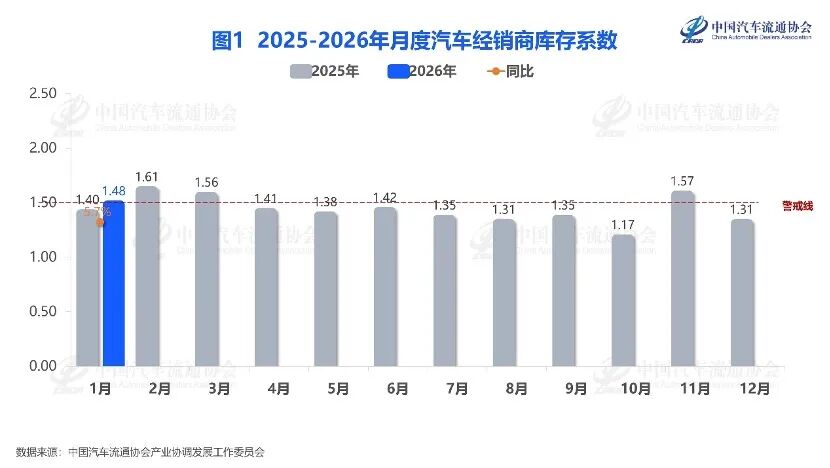
Group 1: Used Car Market - In January 2025, the national used car market transaction volume reached 1.7292 million units, showing a year-on-year increase of 18.33% but a month-on-month decrease of 7.59% [1] - The transaction amount for January was 110.612 billion yuan, indicating a robust market performance across various vehicle types, particularly in passenger cars and commercial vehicles [1] - The demand for MPVs continued to rise significantly, contributing to the overall market growth, while the commercial vehicle sector also showed positive year-on-year growth in both passenger and cargo vehicles [1] Group 2: Automotive Dealer Inventory - The comprehensive inventory coefficient for automotive dealers in January was reported at 1.48, reflecting a month-on-month increase of 13.0% and a year-on-year increase of 5.7% [2] Group 3: Pickup Truck Market - In January 2026, the pickup truck market saw sales of 49,000 units, marking a year-on-year growth of 22.5%, the highest level in the past five years [3] - Pickup truck production in January was 52,000 units, with a year-on-year increase of 29.3%, while exports reached 28,000 units, showing a year-on-year increase of 12% [3] Group 4: Xiaomi Automotive - Xiaomi Automotive announced the delivery of the last unit of the first-generation SU7, with production halted to prepare for the next generation, expected to launch in April [4] - The company will continue to provide maintenance and spare parts for the first-generation SU7 for at least 10 years [4] Group 5: Changan Automobile Legal Action - Changan Automobile has filed lawsuits against two media outlets for alleged online infringement, which have been accepted by the court [5] Group 6: Zeekr Automotive - Zeekr Automotive has established a new sales service company in Shenzhen with a registered capital of 10 million yuan, focusing on the sale of new energy vehicles and related services [6] Group 7: Great Wall Motors - Great Wall Motors' chairman confirmed that the company is successfully promoting its MPV models in the U.S. market through intermediaries [7] Group 8: Japanese Automakers' Profit Forecast - Seven major Japanese automakers, including Toyota and Honda, expect a 35.5% decrease in net profits for the fiscal year 2025, totaling approximately 3.765 trillion yen (about 169.7 billion yuan) [8] - Specific forecasts include a 25.1% profit reduction for Toyota and a 64.1% decrease for Honda, with Nissan anticipating a net loss of 650 billion yen [8]


中国汽车流通协会:1月汽车经销商综合库存系数为1.48 同比上升5.7%
智通财经网· 2026-02-13 03:13
Core Viewpoint - In January 2026, the comprehensive inventory coefficient for automotive dealers in China increased, indicating a rise in inventory levels due to various market factors and policy changes [1][3]. Group 1: Inventory Coefficient Trends - The inventory coefficient for January was reported at 1.48, reflecting a month-on-month increase of 13.0% and a year-on-year increase of 5.7% [1]. - The inventory coefficient for high-end luxury and imported brands decreased to 1.04, down 23.0% month-on-month, entering a reasonable range [6]. - Conversely, the inventory coefficient for joint venture brands rose to 1.48, up 5.7% month-on-month, while the coefficient for domestic brands increased to 1.56, up 23.8% month-on-month, exceeding the warning line [6]. Group 2: Market Conditions and Consumer Behavior - The adjustment of the new energy vehicle purchase tax from "exemption" to "half exemption," along with the optimization of the "two new" policies, contributed to a heightened consumer wait-and-see sentiment, leading to underperformance in the automotive market in January [3]. - The China Automobile Dealers Association decided not to disclose brands with high inventory levels this month due to the complex market environment and significant short-term factors affecting inventory coefficients [7]. - The association will issue letters to manufacturers for brands with inventory coefficients exceeding two months, urging them to monitor dealer inventory closely and optimize production and sales rhythms [7]. Group 3: Future Market Expectations - The automotive market is expected to enter a traditional off-season in February due to the Spring Festival holiday, with ongoing consumer hesitation stemming from policy changes [8]. - The China Automobile Dealers Association recommends that dealers rationally estimate market demand based on actual conditions and manage inventory levels accordingly [8]. - There is an emphasis on promoting "trade-in and scrapping renewal policies" and ensuring consumer service during the holiday period [8].

中国汽车流通协会:11月份我国汽车经销商综合库存系数为1.57 环比上升34.2%
Zhi Tong Cai Jing· 2025-12-10 09:21
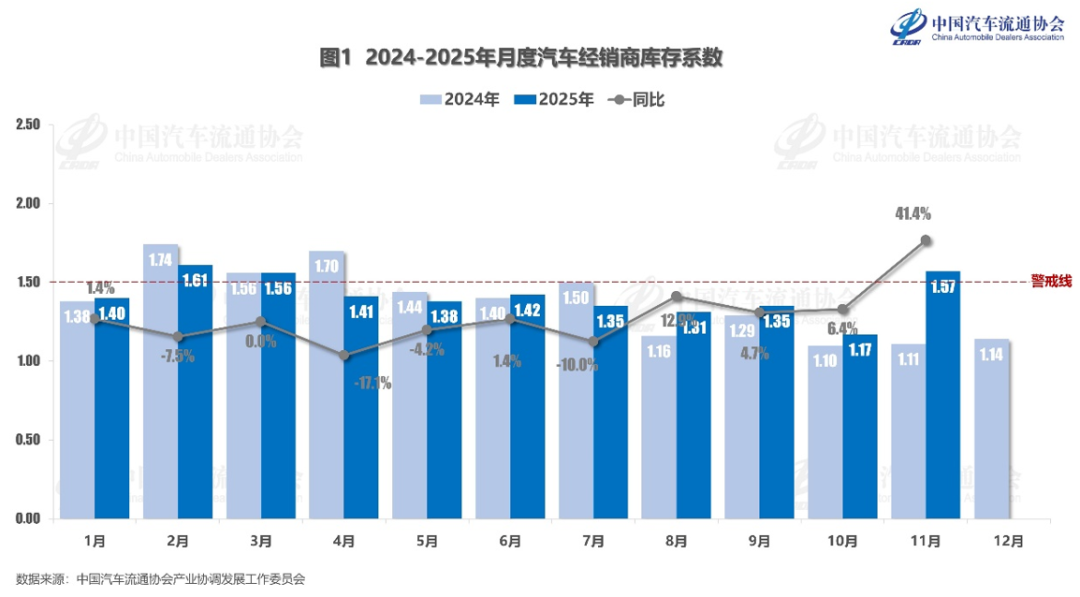
Core Viewpoint - The automotive dealer inventory coefficient in China increased significantly in November 2025, indicating a rising inventory level above the warning line and higher than the reasonable range [1]. Group 1: Inventory Trends - The comprehensive inventory coefficient for automotive dealers in November was 1.57, up 34.2% month-on-month and 41.4% year-on-year [1][2]. - The total inventory of automotive dealers is estimated to be around 3.5 million vehicles by the end of November, based on a terminal sales figure of 2.225 million vehicles [5]. Group 2: Market Dynamics - The passenger car market showed a low-to-high trend in November, but the expected year-end "tail effect" did not significantly materialize due to various factors, including preemptive consumption in previous months and tightening subsidy policies [4]. - Over 80% of dealers held a pessimistic outlook for November, although the market began to recover in the latter half of the month due to promotions and new car launches [4]. Group 3: Brand-Specific Inventory - The inventory coefficients for high-end luxury and imported brands rose to 1.58, up 37.4% month-on-month; for joint venture brands, it reached 1.70, up 41.7%; and for domestic brands, it was 1.51, up 30.2% [6][8]. Group 4: Future Market Expectations - December is expected to see a mild recovery in terminal consumption, driven by increased promotions from manufacturers and dealers, as well as the gradual release of pre-holiday purchasing demand [11]. - The China Automobile Dealers Association suggests that dealers should rationally estimate actual market demand and enhance the promotion of "trade-in and scrapping policies" to boost consumer confidence [11].
中国汽车流通协会:10月份汽车经销商综合库存系数为1.17 同比上升6.4%
Zhi Tong Cai Jing· 2025-11-10 08:23
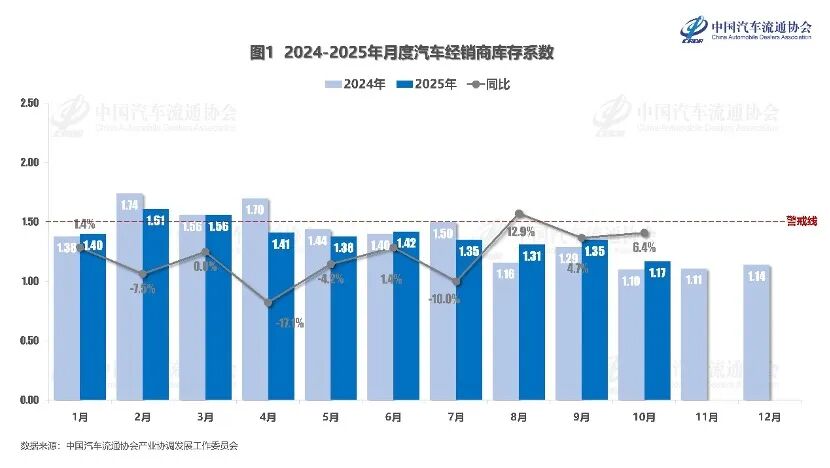
Group 1 - The core viewpoint of the article indicates that the comprehensive inventory coefficient of automotive dealers in October 2025 is 1.17, which represents a month-on-month decrease of 13.3% and a year-on-year increase of 6.4%, placing inventory levels below the warning line and within a reasonable range [1] Group 2 - In October, the inventory coefficient increased year-on-year but decreased month-on-month, reflecting a seasonal trend in the automotive market [2] - The automotive market maintained a strong performance during the "Golden September and Silver October" period, driven by local subsidies, promotional events during the National Day auto show, and the launch of new models, leading to a significant increase in orders in the first half of the month [4] - Despite a cyclical decline in consumer demand post-holiday, the effects of policy measures, such as the impending expiration of the new energy vehicle purchase tax exemption, have prompted manufacturers to enhance promotional efforts [4] Group 3 - The inventory coefficients for high-end luxury and imported brands decreased month-on-month, with high-end luxury & imported brands at 1.15 (down 19.0%), joint venture brands at 1.20 (down 13.0%), and domestic brands at 1.16 (down 12.1%) [5][7] Group 4 - The brands with the highest inventory depth in October were predominantly low, with only two brands exceeding two months of inventory; the top three brands with the highest inventory depth were FAW Hongqi, GAC Trumpchi, and Dongfeng Nissan [8] Group 5 - Looking ahead to November 2025, the market demand is expected to improve compared to October, supported by the Double Eleven shopping event, the Guangzhou Auto Show, and the launch of new models [10] - The adjustment of the new energy vehicle purchase tax exemption policy from "full exemption" to "half exemption" is anticipated to drive demand, with companies like NIO, Xiaomi, and Li Auto implementing bottom-line policies to secure orders [11] - The China Automobile Dealers Association advises that due to increasing market uncertainties, dealers should rationally estimate actual market demand and enhance promotion of "old-for-new and scrapping policies" to boost consumer confidence while prioritizing cost reduction and efficiency [11]
工信部等六部门联合部署开展汽车行业网络乱象专项整治行动;理想汽车CEO李想入驻B站 | 汽车早参
Mei Ri Jing Ji Xin Wen· 2025-09-10 22:33
Group 1 - The Ministry of Industry and Information Technology and five other departments have launched a three-month special action to rectify online chaos in the automotive industry, focusing on illegal profit-making, exaggerated and false advertising, and malicious defamation [1] - This initiative aims to enhance the quality and effectiveness of handling online issues related to automotive companies, promote standardized marketing practices, and create a favorable public opinion environment to support high-quality development in the automotive sector [1] - The action is expected to improve industry transparency and consumer trust, potentially boosting automotive consumption willingness and fostering a healthier market environment for sustainable development [1] Group 2 - In August, the comprehensive inventory coefficient of automotive dealers in China was reported at 1.31, reflecting a month-on-month decrease of 3.0% but a year-on-year increase of 12.9%, indicating inventory levels below the warning line but above the reasonable range [2] - The positive performance of the car market in August suggests that September's retail sales of passenger cars may see steady month-on-month growth, which could alleviate current inventory pressures and enhance consumer confidence [2] - The signs of industry recovery may provide support for the stock market and contribute to a more optimistic market atmosphere [2] Group 3 - Hongmeng Zhixing Law announced that over 500 accounts from four MCN institutions under a cultural media company and 36 accounts from 25 MCN institutions under a technology company have been held legally accountable as of September 10 [3] - The company emphasizes its commitment to responding to national initiatives aimed at purifying the online environment and combating black public relations, which could enhance consumer trust in brands [3] - Continued enforcement of these rectification trends may create a more favorable development environment for Hongmeng Zhixing and its industry peers, aiding in the enhancement of brand value [3] Group 4 - Li Xiang, CEO of Li Auto, has officially joined Bilibili and released his first video, indicating his engagement with the younger consumer demographic [4] - This move is expected to attract potential customers and enhance brand loyalty, as Li Auto increases its investment in social media [4] - The company's efforts in social media are likely to improve market recognition and positively impact brand communication and sales [4]

工信部等六部门联合部署开展汽车行业网络乱象专项整治行动;理想汽车CEO李想入驻B站
Mei Ri Jing Ji Xin Wen· 2025-09-10 22:32
Group 1 - The Ministry of Industry and Information Technology and five other departments have launched a three-month special action to rectify online chaos in the automotive industry, focusing on illegal profit-making, exaggerated and false advertising, and malicious defamation [1] - This initiative aims to enhance the effectiveness of handling online issues related to automotive companies, promote standardized marketing practices, and create a favorable public opinion environment to support the high-quality development of the automotive industry [1] - The action is seen as a positive signal for the automotive market, as it aims to improve industry transparency and boost consumer confidence, potentially leading to increased automotive consumption [1] Group 2 - In August, the comprehensive inventory coefficient of automotive dealers in China was reported at 1.31, reflecting a month-on-month decrease of 3.0% but a year-on-year increase of 12.9%, indicating that inventory levels are below the warning line but above the reasonable range [2] - The automotive market in August performed better than expected, and it is anticipated that retail sales of passenger cars will see steady month-on-month growth in September, which could alleviate current inventory pressures and further enhance consumer confidence [2] - The signs of industry recovery may provide support for the stock market and contribute to a more optimistic market atmosphere [2] Group 3 - Hongmeng Zhixing Law announced that over 500 accounts from four MCN organizations under a cultural media company and 36 accounts from 25 MCN organizations under a network technology company have been held legally accountable, reflecting a commitment to combating online public relations chaos [3] - This action aligns with national initiatives to maintain a healthy online business environment and protect brand rights, which could enhance consumer trust in brands [3] - If the trend of rectification continues, it may create a more favorable development environment for Hongmeng Zhixing and its industry peers, aiding in the enhancement of brand value [3] Group 4 - Li Xiang, CEO of Li Auto, has officially joined Bilibili and released his first video, indicating his active engagement with the younger consumer demographic [4] - This move is expected to attract potential customers and enhance brand loyalty, as Li Auto increases its investment in social media [4] - The engagement on platforms like Bilibili is likely to improve market recognition and positively impact brand communication and sales [4]
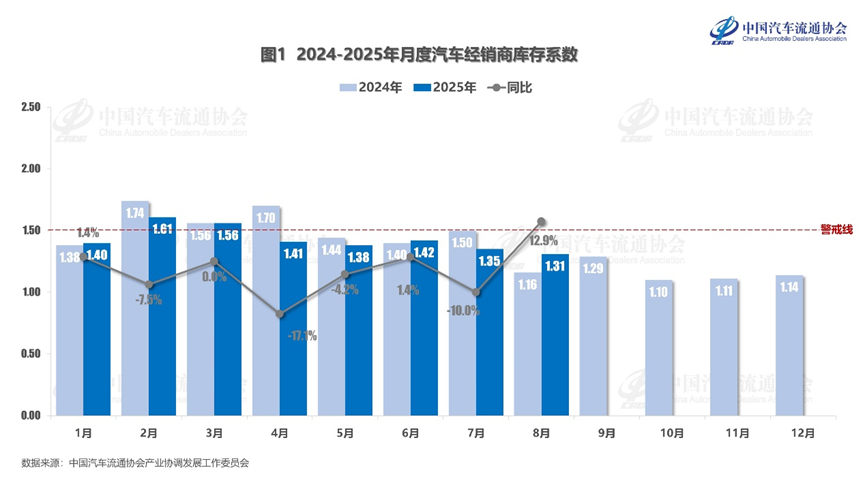
中国汽车流通协会:8月份中国汽车经销商综合库存系数为1.31 环比下降3.0%
Zhi Tong Cai Jing· 2025-09-10 09:01
Group 1 - The comprehensive inventory coefficient of automotive dealers in August was 1.31, a month-on-month decrease of 3.0% but a year-on-year increase of 12.9%, indicating that inventory levels are below the warning line but above the reasonable range [1] - The automotive market in August performed better than expected, driven by factors such as the back-to-school car purchase demand, promotional activities during the 818 car purchase festival, and the release of new models, alongside the gradual resumption and optimization of the third batch of trade-in subsidies [4] - The estimated total inventory of automotive dealers at the end of August was approximately 2.6 million vehicles, based on a terminal sales figure of 1.995 million passenger cars [4] Group 2 - The inventory coefficients for high-end luxury and imported brands was 1.48, a month-on-month decrease of 5.1%; for joint venture brands, it was 1.28, a decrease of 0.8%; and for independent brands, it was 1.30, a decrease of 3.0% [7] - The automotive market demand in September is expected to accelerate due to the "Golden September and Silver October" peak season effect, the deepening of trade-in policies, and increased subsidies in cities like Shanghai, Anhui, and Chengdu, along with concentrated demand for family car purchases and self-driving during the National Day holiday [8] - It is anticipated that the terminal retail of passenger cars in September will achieve steady month-on-month growth, with market performance expected to surpass that of August [8]
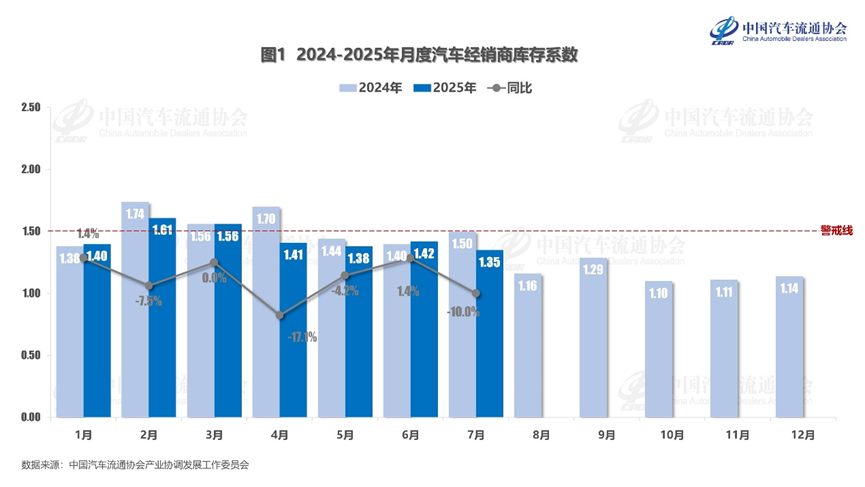
中国汽车流通协会:7月份汽车经销商综合库存系数为1.35 环比下降4.9%
智通财经网· 2025-08-11 08:49
Group 1 - The core viewpoint of the article indicates that the inventory level of automobile dealers in July 2025 is below the warning line but higher than the reasonable range, with a comprehensive inventory coefficient of 1.35, reflecting a month-on-month decrease of 4.9% and a year-on-year decrease of 10.0% [1][2] - The estimated terminal sales of passenger vehicles in July are 1.826 million units, leading to an approximate total inventory of 2.47 million vehicles at the end of July [1][4] - The overall automotive market in July entered a traditional off-season, with a stable performance despite the issuance of a new subsidy policy for vehicle trade-ins [4][9] Group 2 - The inventory coefficient for high-end luxury and imported brands increased by 13.0% to 1.56, while the inventory coefficient for joint venture brands rose by 2.4% to 1.29; in contrast, the inventory coefficient for domestic brands decreased by 10.7% to 1.34 [6] - No brand had an inventory depth exceeding 2 months in July, with brands like Hongqi and Dongfeng Honda showing relatively high inventory depth [7] - The automotive market is expected to remain stable in August, with potential growth in terminal sales due to the release of pent-up demand and promotional activities [9][10]
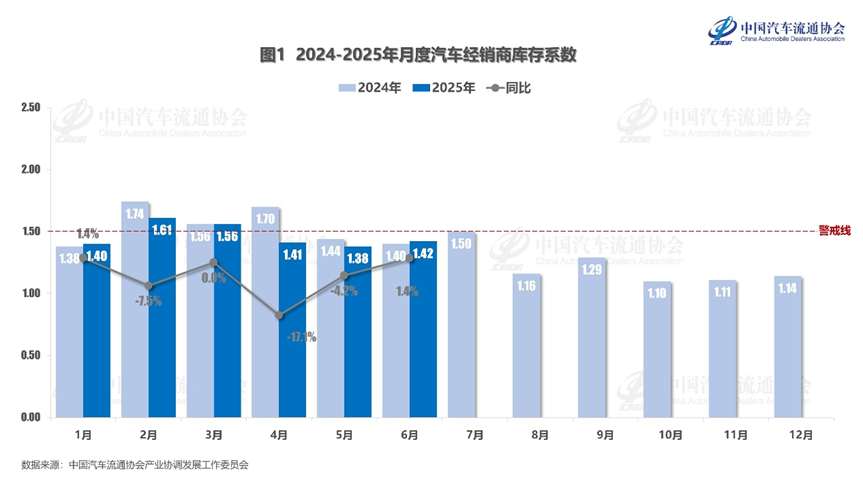
中国汽车流通协会:6月份汽车经销商库存系数为1.42 环比上升2.9%
智通财经网· 2025-07-09 09:03
Core Viewpoint - The inventory levels of automobile dealers in China have increased in June 2025, indicating a cautious outlook for the market in July due to seasonal factors and promotional activities in June [1][2][10] Group 1: Inventory Levels - The comprehensive inventory coefficient for automobile dealers in June was 1.42, which represents a month-on-month increase of 2.9% and a year-on-year increase of 1.4% [1] - The estimated total inventory of automobile dealers at the end of June is approximately 2.95 million vehicles, based on a terminal sales figure of 2.084 million passenger cars [1] Group 2: Sales and Promotions - Dealers increased promotional efforts in June to meet mid-year targets, leveraging the Dragon Boat Festival and the "6·18" shopping event to boost terminal sales [4] - Despite challenges from seasonal factors such as farming activities and extreme weather, the retail market for passenger vehicles maintained an upward trend due to ongoing subsidies for vehicle trade-ins [4] Group 3: Brand-Specific Inventory - The inventory coefficient for high-end luxury and imported brands rose to 1.38, an increase of 5.3% month-on-month; for joint venture brands, it was 1.26, up 4.1%; while the coefficient for domestic brands slightly decreased to 1.50, down 0.7% [5][7] Group 4: Market Outlook - July is traditionally a slow month for automobile consumption, and the combination of high temperatures, rainy weather, and the effects of June's promotions is expected to weaken market demand [10] - The China Automobile Dealers Association suggests that dealers should rationally estimate actual market demand and enhance the promotion of trade-in and scrapping policies to boost consumer confidence [10]
中国汽车流通协会:5月份汽车经销商综合库存系数为1.38 环比下降2.1%
智通财经网· 2025-06-18 08:56
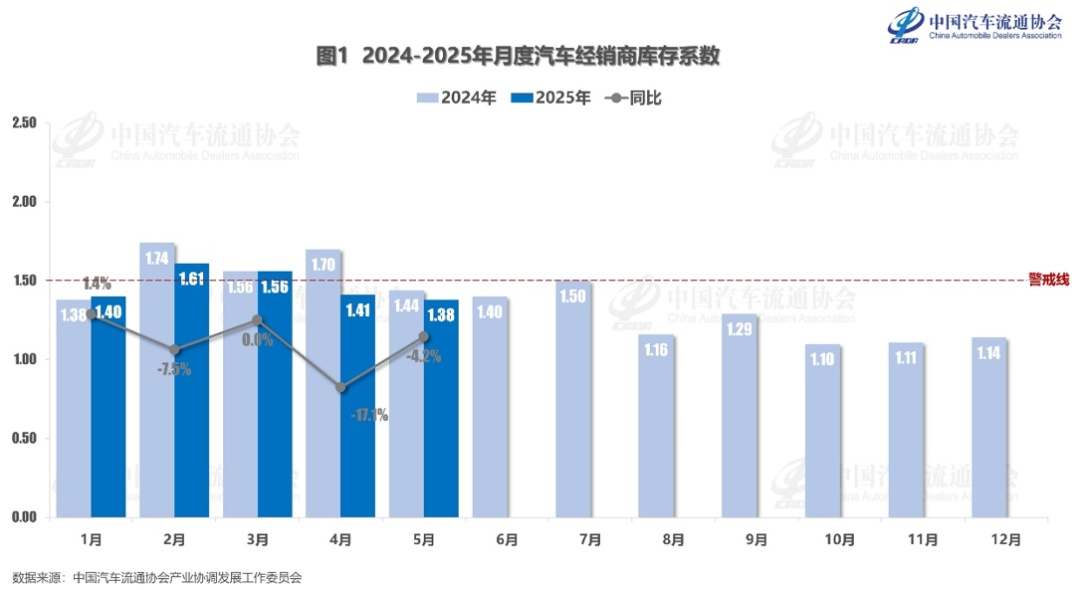
Group 1 - The core viewpoint of the article indicates that the inventory level of automobile dealers in China is within a reasonable range, with a comprehensive inventory coefficient of 1.38 in May 2025, showing a month-on-month decrease of 2.1% and a year-on-year decrease of 4.2% [1][2] - In May, the automotive market experienced a "high-low-high" trend, driven by various factors such as the concentration of family car purchases during the holiday season and the implementation of policies promoting trade-ins and local consumption [4] - The total inventory of automobile dealers at the end of May is estimated to be around 2.55 million vehicles, remaining stable compared to the previous month, while the inventory level has been continuously decreasing over the first four weeks of May [4] Group 2 - The inventory coefficients for high-end luxury and imported brands decreased month-on-month, with high-end luxury and imported brands at 1.31 (down 1.5%) and joint venture brands at 1.21 (down 11.7%), while the inventory coefficient for domestic brands increased to 1.51 (up 2.7%) [5][7] - Looking ahead to June, the automotive industry is expected to enter a traditional off-season, with a potential decrease in consumer foot traffic, although there are still supportive factors such as the Dragon Boat Festival travel demand and the consumption potential from graduation season [8] - The China Automobile Dealers Association suggests that dealers should rationally estimate actual market demand and enhance the promotion of trade-in and scrapping policies to boost consumer confidence while prioritizing cost reduction and efficiency [9]