消费代际变迁

Search documents
中国商业的新答案,从这里找
3 6 Ke· 2025-12-04 02:41
Core Insights - The article discusses the transformation of Thailand's real estate market post-1997 financial crisis, highlighting the shift from new developments to the revitalization of existing assets, which has become a model for urban commercial redevelopment globally [3][4] - In China, the focus is increasingly on the renovation of existing commercial properties due to structural oversupply and changing consumer dynamics [5][6] Group 1: Historical Context - The 1997 Asian financial crisis led to over 600 halted real estate projects in Thailand, with a significant increase in vacancy rates and a drop in rental prices by 30%-50% in Bangkok [3][4] - The crisis prompted a fundamental shift in the Bangkok real estate market, moving developers' focus from new construction to the value reconstruction of existing assets [3][4] Group 2: Current Market Dynamics in China - China's commercial real estate market is facing severe structural oversupply, with the number of shopping centers increasing from 5,851 in early 2022 to 7,245 by the end of 2024, averaging over 400 new centers annually [6][8] - Shanghai's per capita commercial area is 3.8 square meters, significantly higher than Hong Kong's 2.4 square meters, indicating a mismatch between supply and consumer spending power [6][7] Group 3: Changing Consumer Behavior - The aging population in China is expected to exceed 15% by 2025, leading to a rise in "silver economy" consumption patterns, which are more pragmatic and focused on community-oriented services [12][13] - The increase in single-person households, which accounted for 25.39% in 2020, is driving trends in "lonely consumption" such as pet ownership and solo dining [12][13] Group 4: Future Trends in Commercial Real Estate - The article predicts a bifurcation in the commercial real estate market, with high-end and community-focused shopping centers likely to thrive, while mid-tier centers may struggle [20][22] - Successful projects will be those that can articulate their unique value propositions and cater to specific community needs, as evidenced by successful smaller-scale developments in cities like Shanghai and Hangzhou [22][23]


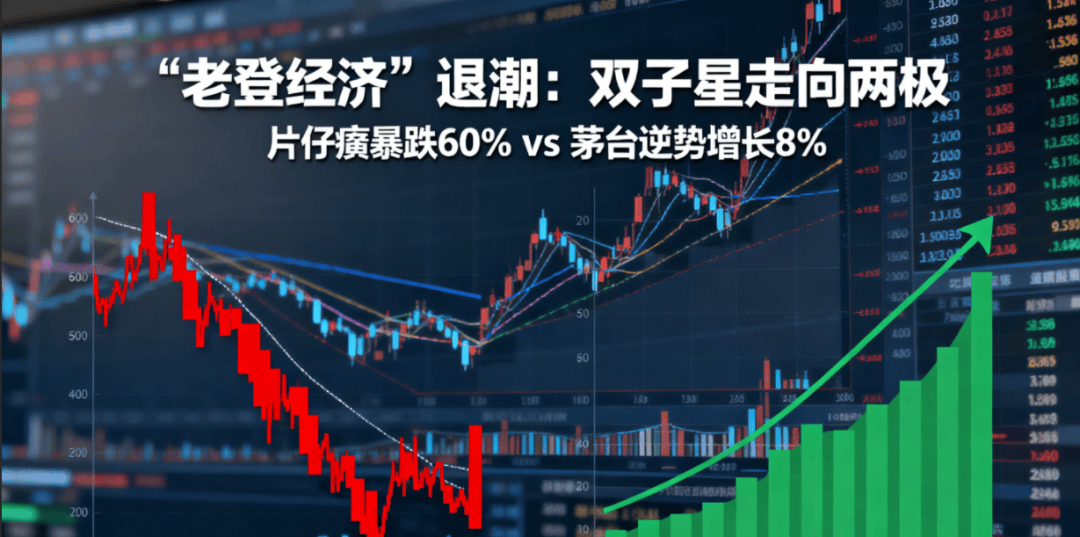
片仔癀暴跌60%,茅台逆势增长8%!双子星为何走向两极?
Sou Hu Cai Jing· 2025-11-20 12:32
Group 1: Performance Overview - The performance of Pian Zai Huang has significantly declined, with a 11.93% drop in revenue and a 20.74% decrease in net profit for the first three quarters of 2025, marking the worst performance in a decade [3][4] - In contrast, Moutai has shown resilience, achieving an 8.09% increase in revenue and an 8.88% rise in net profit during the same period, maintaining a solid growth trajectory despite industry pressures [12][13] Group 2: Market Dynamics - Pian Zai Huang's stock price has plummeted from 473 yuan to 176 yuan, resulting in a market capitalization loss exceeding 200 billion yuan, while the company has underperformed the market by approximately 31% [4][7] - The price of Pian Zai Huang's core product has collapsed, with market prices dropping from 1600 yuan per piece in 2021 to around 400-500 yuan, leading to significant inventory accumulation [8][10] Group 3: Regional Performance - Revenue has declined across most regions for Pian Zai Huang, with only South China and Northwest regions showing slight growth, indicating a broader market contraction [9][11] - Moutai, however, has maintained its market leadership and brand loyalty, effectively navigating the challenges posed by declining prices and overall market conditions [16][18] Group 4: Consumer Behavior Changes - The decline of the "Old Deng Economy" has led to a significant reduction in traditional consumption scenarios, with a 23% drop in terminal opening rates and nearly 30% decrease in wedding and business banquet settings [20][22] - Younger consumers show a lack of interest in traditional high-end liquor and health products, with only 15% of Gen Z engaging in liquor consumption compared to 40% of older generations [22][23] Group 5: Future Strategies - Pian Zai Huang needs to refocus on its core pharmaceutical value, emphasizing clinical research and product innovation to adapt to market changes [25] - Moutai aims to balance its high-end positioning while expanding into broader consumer markets, enhancing its global presence and product offerings to meet diverse consumer needs [26]