涉外金融法治建设

Search documents
立法+司法+港澳联动!多方共探涉外金融法治建设
2 1 Shi Ji Jing Ji Bao Dao· 2025-10-29 07:51
Core Viewpoint - The 2025 Financial Street Forum emphasizes the importance of legal frameworks in promoting innovation and transformation in the financial sector, particularly in the context of international financial law and cross-border regulation [1][2]. Group 1: Legal Framework and Financial Development - The financial system in China has rapidly developed over the past 40 years, particularly since the 18th National Congress of the Communist Party, leading to a comprehensive legal framework that supports the stability and health of the financial industry [1]. - Key financial laws have been established, including the People's Bank of China Law, Commercial Bank Law, and Securities Law, among others, providing a solid legal foundation for financial operations [1]. - There is a call for further research into international legal issues in finance to safeguard national financial security and enhance China's role in international financial rule-making [1]. Group 2: Judicial Cooperation and Cross-Border Issues - The Supreme People's Court emphasizes the need for a balanced approach between domestic and international legal frameworks in financial civil and commercial trials [1]. - There is a focus on expanding international judicial cooperation and research on cross-border financial legal issues to support high-level openness and contribute to a fair global financial governance system [1]. - The Beijing Financial Court has handled 1,080 cross-border financial cases since its establishment in 2021, involving 38 countries and regions, including 23 Belt and Road Initiative countries [1]. Group 3: Hong Kong's Role in Financial Law - Hong Kong's legal experience as an international financial center is highlighted, showcasing a multi-faceted enforcement mechanism that addresses various risks and violations in the financial market [2]. - The Securities and Futures Commission in Hong Kong focuses on regulating the securities and futures sectors, while other agencies handle cases involving commercial fraud or corruption [2]. - Hong Kong is positioned to serve as a financing platform for Beijing-based enterprises and to provide insights for the development of financial legal services in Beijing [2].
我国涉外金融法治建设有望进一步完善
Zheng Quan Ri Bao· 2025-10-28 17:28
Core Viewpoint - The forum emphasized the importance of legal frameworks in ensuring financial security, market vitality, and order through rule of law, highlighting the need for improved foreign-related financial legal systems in China [1][2]. Group 1: Legal Framework and Development - The financial legal system in China has been continuously improving, providing strong support for the stable and healthy development of the financial industry [2]. - Recent legislative progress includes the drafting of the Financial Stability Law and amendments to key financial laws, which are part of the legislative planning for the 14th National People's Congress [2]. - The National People's Congress aims to enhance the quality of financial legislation to support high-quality financial development and legal construction [2]. Group 2: Judicial Support for Financial Development - The Supreme People's Court is focused on building a specialized and modern financial trial system to provide stable, fair, and transparent judicial guarantees for market participants [3]. - The court has introduced multiple judicial documents to support the implementation of policies that promote the private economy and capital markets [3]. - A database of over 130 financial-related cases has been established to unify judgment standards and stabilize market expectations [3]. Group 3: High-Level Foreign-Related Financial Law - High-level foreign-related financial law is crucial for attracting global resources and maintaining national economic security [4]. - The Beijing Financial Court has actively engaged in foreign-related financial trials, reflecting the depth and breadth of China's financial openness [4]. - The court's rulings in cross-border securities disputes demonstrate China's commitment to protecting domestic investors and participating in international financial governance [4]. Group 4: Capital Market and Regulatory Framework - The China Securities Regulatory Commission (CSRC) is prioritizing the development of a foreign-related legal framework for capital markets to facilitate high-level openness [5]. - The CSRC plans to enhance cross-border regulatory collaboration and maintain a zero-tolerance policy towards cross-border illegal activities [5]. - The State Administration of Foreign Exchange is working towards a more convenient, open, secure, and intelligent foreign exchange management system to support cross-border trade and investment [5].
优化营商环境 法治助力涉外金融发展
Sou Hu Cai Jing· 2025-10-28 17:02
Core Viewpoint - The forum emphasizes the importance of legal frameworks in promoting innovation, transformation, and restructuring in the financial sector, particularly in the context of China's modernization efforts and the evolving global economic landscape [1] Group 1: Legal Framework and Financial Development - Legal frameworks are essential for global collaboration, risk prevention, and inclusive growth, serving as a foundation for resilient and responsible global financial governance [3] - Beijing has established itself as a leading financial hub in China, with the highest indicators in terms of financial institutions, personnel, total assets, insurance density, and depth [3] - The establishment of various financial market platforms in Beijing, such as the Beijing Stock Exchange and the International Big Data Exchange, has facilitated innovative cross-border financial services benefiting numerous multinational corporations [3] Group 2: Cross-Border Financial Services - High-quality cross-border financial services are crucial for achieving a high level of openness, with banks playing a key role in providing these services and managing foreign exchange risks [4] - The State Administration of Foreign Exchange is implementing reforms to enhance banks' cross-border settlement services while ensuring compliance and risk management [4] Group 3: Financial Risk Prevention - A specialized and modern financial adjudication system is necessary to provide stable, fair, and transparent judicial guarantees for market participants [5] - Preventing systemic financial risks is a core function of financial law, requiring collaborative efforts to optimize the financial ecosystem [6] Group 4: Hong Kong's Role in Legal Cooperation - Hong Kong can serve as a financing platform for enterprises based in Beijing and provide valuable insights for enhancing financial legal frameworks [6] - The enforcement mechanisms in Hong Kong are designed to cover various risks and violations, ensuring confidence in the financial system [6] Group 5: Judicial Innovations in Financial Law - The Beijing Financial Court is actively exploring judicial innovations to align with the legal trends and governance challenges of financial system openness [7] - Discussions at the forum included topics such as facilitating cross-border investment and financing, legal protections for multinational securities financing, and establishing preferred locations for resolving cross-border financial disputes [7]

优化营商环境,以法治助力涉外金融发展
Bei Jing Shang Bao· 2025-10-28 14:44
Core Viewpoint - The forum emphasizes the importance of legal frameworks in promoting innovation, reform, and restructuring in the financial sector, particularly in the context of China's modernization efforts and the evolving global economic landscape [1] Group 1: Legal Framework and Financial Development - Legal frameworks are essential for global collaboration, risk prevention, and inclusive growth, serving as a foundation for resilient and responsible global financial governance [2] - Beijing's financial sector leads the nation in various metrics, including the number of financial institutions and total assets, highlighting its role in attracting international financial entities [2] - The establishment of innovative cross-border financial services and products in Beijing has benefited 107 multinational corporations [2] Group 2: Cross-Border Financial Services - High-quality cross-border financial services are crucial for facilitating China's ongoing dual-opening strategy, with banks playing a key role in providing these services [3] - The State Administration of Foreign Exchange is implementing reforms to enhance banks' cross-border settlement services while ensuring compliance and risk management [3] - Continuous improvement of foreign exchange regulatory capabilities is being prioritized to combat illegal activities in the foreign exchange sector [3] Group 3: Financial Risk Management - A specialized and modern financial adjudication system is necessary to provide stable, fair, and transparent judicial support for market participants [4] - Legal measures are vital for preventing systemic financial risks, which remain a core focus of financial governance [4] - Collaborative governance is essential for optimizing the financial ecosystem, requiring joint efforts from various stakeholders [4] Group 4: Hong Kong's Role in Financial Law - Hong Kong can serve as a financing platform for enterprises based in Beijing looking to expand internationally and can provide insights for Beijing's financial legal framework [5] - The enforcement mechanisms in Hong Kong are designed to cover all risks and violations, which is crucial for maintaining public confidence in financial systems [4][5] Group 5: Judicial Innovations and Global Governance - The Beijing Financial Court is actively exploring judicial innovations to align with global financial governance trends and challenges [6] - The court aims to support a competitive financial ecosystem by integrating domestic and international regulations [6] - Discussions at the forum included topics such as cross-border investment facilitation and legal protections for multinational securities financing [6]
2025金融街论坛|优化营商环境,以法治助力涉外金融发展
Bei Jing Shang Bao· 2025-10-28 14:04
Core Viewpoint - The forum emphasizes the importance of legal frameworks in promoting financial development and addressing challenges in cross-border finance, highlighting the need for a robust legal environment to support China's modernization efforts [1][3]. Group 1: Legal Framework and Financial Development - Legal frameworks are essential for global cooperation, risk prevention, and inclusive growth, serving as a foundation for resilient global financial governance [3]. - Beijing has established itself as a leading financial hub in China, with the highest indicators in terms of financial institutions, personnel, and total assets [3]. - The establishment of various financial platforms in Beijing has facilitated innovative cross-border financial services, benefiting 107 multinational corporations [3]. Group 2: Cross-Border Financial Services - High-quality cross-border financial services are crucial for China's ongoing dual-opening strategy, with banks playing a key role in providing these services [4]. - The State Administration of Foreign Exchange is implementing reforms to enhance banks' cross-border settlement services while ensuring risk prevention [4]. - Regulatory measures are being strengthened to combat illegal activities in the foreign exchange sector, including the revision of foreign exchange management regulations [4]. Group 3: Collaborative Legal Efforts - The establishment of a specialized financial judiciary is necessary to support high-quality financial development and provide stable legal guarantees for market participants [5]. - Systematic risk prevention is a core function of financial law, emphasizing the need for collaborative governance to optimize the financial ecosystem [5]. - Hong Kong's legal framework serves as a reference for Beijing, enhancing the legal standards for cross-border financial activities [6]. Group 4: International Cooperation and Knowledge Sharing - Hong Kong can act as a financing platform for enterprises based in Beijing, providing insights and expertise for financial legal service talent development [6]. - The forum included discussions on facilitating cross-border investment and financing, as well as legal protections for multinational securities financing [6].

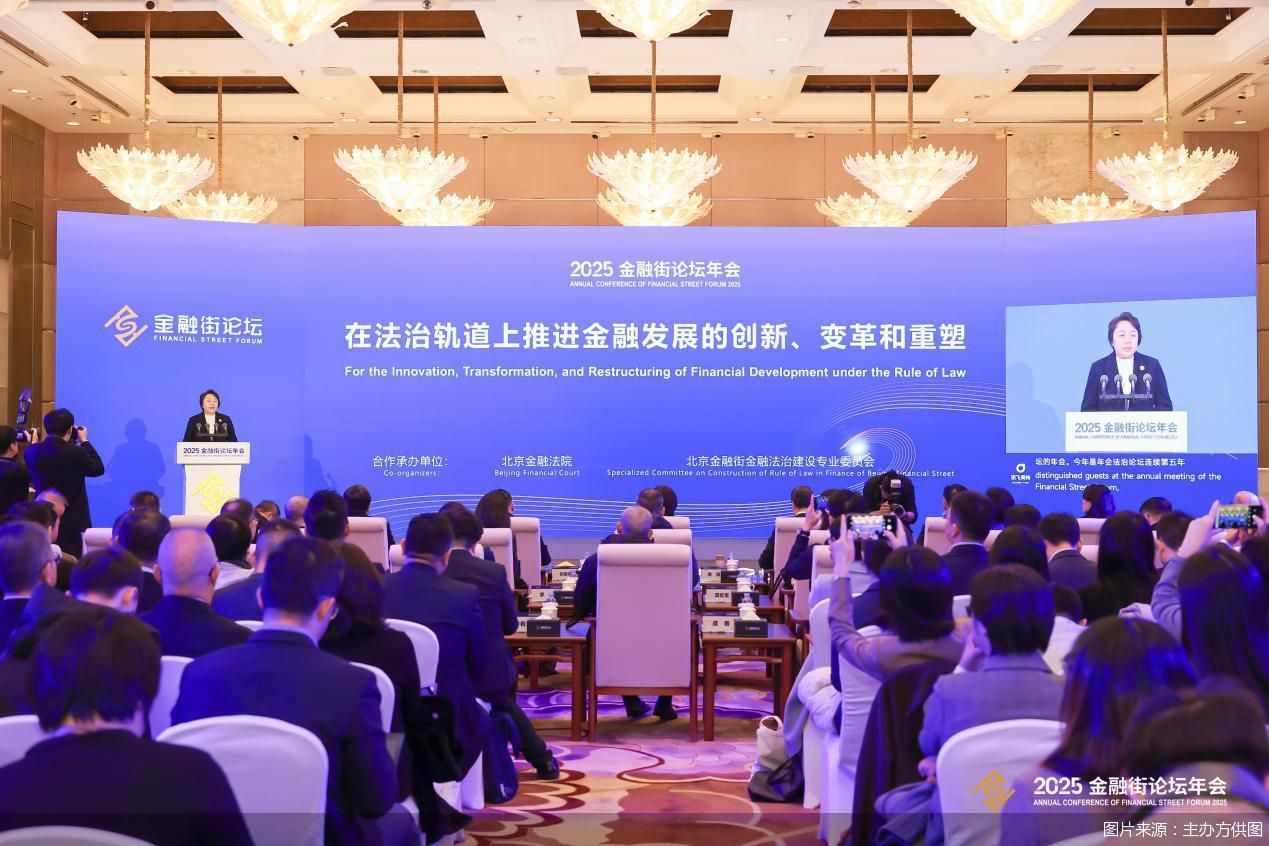
2025金融街论坛|北京金融法院院长张雯:围绕涉外金融法治建设进行了一系列积极探索
Bei Jing Shang Bao· 2025-10-28 07:08
Core Viewpoint - The Beijing Financial Court is actively exploring the construction of foreign-related financial legal systems to support the implementation of national financial strategies and promote healthy economic development [1][3] Group 1: Judicial Frontiers - The Beijing Financial Court is focusing on understanding the legal trends and governance challenges related to the financial system's opening-up, particularly in areas such as securities false statements, financial borrowing, and entrusted wealth management contract disputes, which are the top three types of foreign-related cases it handles [3] - Other significant disputes include insurance, independent guarantees, and arbitration judicial reviews, indicating a diverse range of legal challenges in the financial sector [3] Group 2: Global Competitive Financial Ecosystem - The court aims to create a market-oriented, law-based, and international first-class business environment by conveying rule concepts through specific judgments and demonstrating institutional effectiveness in individual cases [3] Group 3: Systematic Analysis and Forward-Looking Responses - The foreign-related legal framework serves as a legal shield for maintaining national sovereignty, security, and development interests, while also acting as a strategic tool for participating in global governance and shaping international rules [3] - The establishment of ten specialized policy research teams, including a foreign-related financial team, allows for in-depth research into industry, enterprises, and products, focusing on legal challenges encountered during the "bringing in" and "going out" processes [3] - Key issues being addressed include the governance of cross-border collateral for digital assets and the latest developments in the minimum standards principle, showcasing the court's proactive approach to emerging legal challenges [3]