
资本市场双向开放

Search documents
坚持做强主场 推进资本市场高水平双向开放
Shang Hai Zheng Quan Bao· 2026-01-26 19:16
Group 1 - The China Securities Regulatory Commission (CSRC) emphasizes the importance of strengthening the domestic market while promoting high-level two-way opening of the capital market, including optimizing the Qualified Foreign Institutional Investor (QFII) system and enhancing cross-border investment and financing convenience [1] - The capital market in China is becoming more open and inclusive, attracting foreign capital through improved access conditions and encouraging long-term investments, which enhances the market's vitality and resilience [1] - The launch of the first interconnectivity China Securities Index A500 ETF on the Singapore Exchange in January 2026 provides foreign investors with direct access to core A-share assets, while the expansion of the Shanghai-Hong Kong and Shenzhen-Hong Kong ETF interconnectivity has increased the number of products significantly [1] Group 2 - The CSRC has approved the QFII qualifications for Lianqiao Bank and Castle Advisors Singapore, and has expanded the range of futures options available for foreign investors, indicating a shift towards a more diversified asset allocation strategy [2] - Experts believe that the optimization of the QFII system and the expansion of specific futures products will significantly alter the structure and depth of foreign capital participation in the Chinese capital market, leading to a shift from a focus on stocks and bonds to a more comprehensive asset allocation including spot, futures, and derivatives [2] - The regulatory framework for overseas listings is being standardized and streamlined, which reduces compliance costs for companies and mitigates risks related to data security and technology outflow [3] Group 3 - The dual opening of the capital market is reshaping China's international role, with active participation in international financial governance and efforts to align rules in areas such as information disclosure and risk prevention [3] - The establishment of a transparent and unified process for overseas listing management is expected to eliminate policy uncertainties and provide a stable international regulatory environment for companies seeking to list abroad [3] - Cross-border regulatory cooperation is essential for maintaining market fairness and providing a predictable environment for overseas listings, focusing on audit regulation, law enforcement collaboration, and information sharing [3]
今日视点:中国资本市场双向开放呈现新图景
Xin Lang Cai Jing· 2026-01-22 23:09
Core Viewpoint - The China Securities Regulatory Commission (CSRC) has set a clear direction for the capital market's opening in 2026, emphasizing the need for a deeper and higher level of dual-directional opening in the capital market [1][6]. Group 1: Introduction of Foreign Capital - Foreign institutions are no longer just "landing" in China but are focusing on "rooting" themselves in the market, with 15 foreign securities firms currently operating in China [2][7]. - Major foreign players include Goldman Sachs (China) Securities and JPMorgan Securities (China), which represent international investment banks, as well as Standard Chartered Securities (China) and DBS Securities (China), which represent commercial banks [2][7]. - Foreign firms are expanding beyond traditional securities business into asset management and wealth management, with differentiated entry points [2][7]. Group 2: Going Global - Chinese securities firms are transitioning from merely "going out" to building a global service ecosystem, enhancing international competitiveness and contributing to high-level openness [3][8]. - Currently, 38 domestic securities firms have established overseas subsidiaries, and the international business revenue of highly internationalized firms accounts for about 25% of their total revenue, indicating significant growth in this sector [3][8]. Group 3: Synergistic Effects - The dual-directional opening creates significant synergies, with foreign institutions driving domestic firms to enhance their professional capabilities and service levels [4][9]. - Innovations in cross-border financial products are being facilitated by this dual opening, exemplified by the recent listing of the Southern Eastern Southern CSI A500 Index ETF in Singapore [4][9]. - Mechanisms such as the Shanghai-Hong Kong Stock Connect and the expansion of the Cross-Border Wealth Management Connect are improving market connectivity and providing efficient channels for capital flow [4][9].
中航证券首席经济学家董忠云:以高水平双向开放筑牢资本市场主场竞争力
Zheng Quan Ri Bao Wang· 2026-01-21 05:22
Core Viewpoint - The China Securities Regulatory Commission (CSRC) has outlined a direction for capital market openness in 2026, emphasizing the importance of dual-directional opening to enhance global resource allocation efficiency and financial influence [1] Group 1: Capital Market Opening Strategy - The 2026 capital market opening measures will feature a dual characteristic of "institutional opening" and "quality improvement," transitioning from "single-point breakthroughs" to "systematic promotion" [2] - The measures will include expanding specific futures products, incorporating REITs into the Shanghai-Hong Kong Stock Connect, and standardizing overseas listing filing [2] - The focus will shift from merely attracting foreign capital to enhancing quality through simplified foreign institution qualification applications and improved hedging tools [2] Group 2: Impact on Market Competitiveness and Real Economy - The introduction of foreign long-term institutional investors will optimize the A-share investor structure, reduce speculative volatility, and foster a "long money long investment" ecosystem [3] - Foreign participation will elevate the standards for information disclosure and corporate governance among listed companies, improving market pricing efficiency and transparency [3] - Dual-directional opening will provide strong support for enterprises by broadening financing channels through overseas listings and various bond issuances, facilitating technological research and global expansion [3] Group 3: Challenges and Recommendations - The "bring in" strategy faces challenges such as insufficient institutional adaptability and input risks, with foreign institutions experiencing difficulties in operational expansion despite easier access [4] - The "go out" strategy is limited by the weak cross-border service capabilities of Chinese financial institutions and high compliance costs due to differing disclosure standards and tax policies [4] - Recommendations include accelerating the implementation of QFII/RQFII optimization plans, simplifying approval processes, and enhancing cross-border regulatory cooperation to ensure a safe and controllable opening process [4]
“引进来、走出去”合力提升中国资本市场影响力
Zheng Quan Ri Bao· 2026-01-20 16:12
Group 1: Core Views - The listing of the Southern Eastern Ying Southern CSI A500 Index ETF on the Singapore Exchange marks a significant achievement in the collaboration between the Shenzhen Stock Exchange and the Singapore Exchange, reflecting China's commitment to high-level capital market opening [1] - The China Securities Regulatory Commission has set a clear direction for capital market opening in 2026, emphasizing the need for deeper and higher-level bilateral openness [1] - Experts suggest that the core of achieving deep and high-level bilateral openness lies in constructing a new pattern of "internal and external coordination" [1] Group 2: Internal Market Activation - Foreign capital is a crucial participant in China's capital market, bringing long-term stable funding and advanced investment concepts [2] - Upgrading the "bringing in" strategy is essential for high-level capital market openness, requiring enhanced internal stability through improved information disclosure and investor protection [2] - There is a need to cultivate a more vibrant group of quality listed companies, focusing on effective corporate governance and predictable dividend mechanisms [3] Group 3: Institutional Opening and Investment Environment - Accelerating the institutional opening process is vital for optimizing the investment ecosystem and enhancing the attractiveness of investing in China [3] - Current institutional mismatches pose challenges for foreign capital, necessitating improvements in the QFII/RQFII systems to enhance cross-border capital efficiency [4] - A dual regulatory system combining macro-prudential and micro-regulation is recommended to stabilize exchange rate expectations and enhance monitoring of cross-border capital flows [4] Group 4: Cross-Border Development - The capital market's high-level opening should also focus on enhancing the effectiveness of "going out" strategies, which are crucial for increasing China's international influence [5] - Recent years have seen a rapid increase in China's capital market "going out," with various products and institutions expanding internationally [6] - Challenges remain for domestic institutions in overseas markets, including regulatory differences and high operational costs [7] Group 5: Enhancing Global Influence - To improve China's capital market's voice in global capital allocation, strengthening financial infrastructure and expanding the application of the CIPS is essential [8] - Promoting the internationalization of the RMB and integrating high-credit bonds into mainstream international indices can attract more passive investment [8] - Supporting quality domestic enterprises in overseas listings and financing through diverse methods will facilitate global investment in Chinese assets [8]
深交所与新交所联合举办深新资本市场合作交流会
Xin Lang Cai Jing· 2026-01-20 08:38
Core Viewpoint - The Shenzhen Stock Exchange (SZSE) and the Singapore Exchange (SGX) are enhancing bilateral capital market cooperation, focusing on cross-border investment opportunities and the introduction of new financial products [1] Group 1: Event Overview - The "Shenzhen-Singapore Capital Market Cooperation Exchange Conference" was held on January 20, 2026, in Shenzhen, with approximately 120 representatives from both markets attending [1] - The conference discussed topics such as the overseas expansion of Shenzhen-listed companies and the deepening of the SZ-SG ETF mechanism [1] Group 2: New Product Launch - During the conference, the South China East Ying South China CSI A500 Index ETF was launched as a new cross-border ETF product, marking the first time this index ETF has been made available internationally [1] - This launch is expected to inject new momentum into the financial cooperation between China and Singapore [1] Group 3: Historical Context and Future Plans - The SZSE and SGX have established a multi-layered cross-border cooperation framework, with core index cross-listing initiated in 2020 and the formal opening of the ETF mutual access in 2022 [1] - A total of six distinctive ETF mutual access products have been successfully listed, providing diversified cross-border investment tools for investors [1] - The SZSE plans to further deepen its regular cooperation with the SGX under the guidance of the China Securities Regulatory Commission, enhancing bilateral collaboration and promoting high-level two-way opening of capital markets [1]
非银金融行业跟踪周报:短期调整无损投资价值,继续看好保险、券商估值提升-20260118
Soochow Securities· 2026-01-18 09:55
Investment Rating - Maintain "Overweight" rating for the non-bank financial sector, with a focus on insurance and brokerage firms [1] Core Insights - Short-term adjustments do not diminish investment value; the outlook for insurance and brokerage remains positive [1] - The non-bank financial sector has experienced a decline, with all sub-sectors underperforming compared to the CSI 300 index in recent trading days [9][10] - The insurance sector is expected to benefit from a strong start in 2026, with improved premium growth and regulatory changes enhancing asset-liability management [25][26] - The brokerage sector shows signs of recovery with increased trading volumes and favorable regulatory developments [15][22] - The multi-financial sector is transitioning to a stable growth phase, with trust and futures industries adapting to market changes [31][38] Summary by Sections Non-Bank Financial Sector Performance - All sub-sectors of non-bank financials underperformed the CSI 300 index recently, with declines of 2.29% in securities, 3.19% in multi-financials, and 3.64% in insurance [9] - Year-to-date, the multi-financial sector has performed the best, with a 2.53% increase, while the insurance sector has slightly declined by 0.04% [10] Securities Sector Insights - Trading volume has increased significantly, with an average daily trading amount of 35,539 billion yuan in January, up 161.20% year-on-year [15] - The China Securities Regulatory Commission (CSRC) has outlined five key tasks for 2026 to enhance market stability and service quality [19] - The average price-to-book (PB) ratio for the securities industry is projected at 1.2x for 2026, indicating potential for further valuation improvement [23] Insurance Sector Insights - The insurance industry reported a 9.2% year-on-year increase in original premiums for the first 11 months of 2025, with a notable improvement in November's performance [25] - Regulatory changes in asset-liability management are expected to strengthen the industry's stability and long-term growth prospects [26][28] - The insurance sector's valuation is currently at historical lows, with estimates ranging from 0.65 to 0.86 times the expected P/EV for 2026 [29] Multi-Financial Sector Insights - The trust industry has seen a 20.11% year-on-year growth in total assets, indicating a stable transition phase [31] - The futures market experienced a significant increase in trading volume and value, with December 2025 figures showing a 45.17% increase in volume and a 58.55% increase in value year-on-year [38] - The focus on innovative risk management services is expected to drive future growth in the futures sector [42] Industry Ranking and Recommendations - The recommended ranking for investment is insurance > securities > other multi-financials, with key companies including China Life, Ping An, New China Life, China Pacific Insurance, and CITIC Securities [45]
证监会工作会议部署2026:深化改革强监管 巩固市场向好态势
2 1 Shi Ji Jing Ji Bao Dao· 2026-01-17 04:03
Core Viewpoint - The China Securities Regulatory Commission (CSRC) held a meeting to summarize the past year and plan for 2026, focusing on enhancing the resilience of the capital market and addressing complex challenges to promote high-quality development in service of the national economy [1]. Review of 2025: Market Resilience and Regulatory Reforms - In 2025, the CSRC successfully promoted market development amidst multiple risks, enhancing market resilience and achieving significant breakthroughs in attracting medium- and long-term capital [4]. - The CSRC strengthened regulatory enforcement, addressing financial fraud and illegal activities in private equity funds, with 701 cases investigated and fines totaling 15.47 billion yuan [4]. - Market reforms included the introduction of the "1+6" policy for the Sci-Tech Innovation Board, the activation of a third set of standards for the Growth Enterprise Market, and the initiation of public fund reforms, with total cash dividends and buybacks reaching 2.68 trillion yuan [4]. - The IPO and refinancing totaled 1.26 trillion yuan, with bond issuance at 16.3 trillion yuan and the introduction of 18 new futures and options products [4]. Deployment for 2026: Five Key Tasks - The CSRC emphasized a focus on stability and quality improvement, outlining five key tasks for 2026 [5]. - The first task is to maintain market stability through enhanced monitoring and counter-cyclical adjustments, strict regulation of trading and information disclosure, and prevention of market volatility [6]. - The second task involves advancing reforms to improve the quality of services for high-quality development, including enhancing the inclusiveness of the multi-tiered equity market and promoting the integration of various market segments [6]. - The third task focuses on strict legal enforcement to deter serious violations such as financial fraud and insider trading, while improving regulatory capabilities through technology [6]. - The fourth task aims to strengthen the foundation for listed companies' value growth by implementing new governance standards and enhancing shareholder return mechanisms [7]. - The fifth task is to promote higher levels of openness in the market, optimizing foreign investor access and enhancing cross-border investment convenience [7].

视频丨证监会:去年A股IPO与再融资合计1.26万亿元
Sou Hu Cai Jing· 2026-01-17 02:36
Group 1 - The core viewpoint is that China's capital market is expected to progress towards new and better development by 2025, despite facing multiple risks and challenges, with enhanced resilience and vitality [1] Group 2 - In 2025, the total cash dividends and buybacks of listed companies reached 2.68 trillion yuan, indicating a further accumulation of high-quality development momentum [3] - The total amount raised through IPOs and refinancing was 1.26 trillion yuan, while the bond market issued various bonds totaling 16.3 trillion yuan, reflecting a recovering market [3] - The China Securities Regulatory Commission (CSRC) aims to consolidate the market's stable upward trend and prevent significant fluctuations by implementing counter-cyclical adjustments and cracking down on market manipulation [3][5] Group 3 - The CSRC plans to deepen comprehensive reforms in capital market investment and financing by 2026, enhancing the market's stability, adaptability, and competitiveness [3] - There will be a focus on improving the inclusiveness and adaptability of the multi-tiered equity market, including reforms in the Growth Enterprise Market and the Science and Technology Innovation Board [3] - The CSRC emphasizes the importance of combating financial fraud, price manipulation, and insider trading, while enhancing regulatory capabilities through technology [3] Group 4 - The company will strengthen the operational standards of listed firms, enhance constraints on controlling shareholders and actual controllers, and improve systems for dividends, buybacks, and employee stock ownership [5] - There is a push to invigorate the mergers and acquisitions market and improve the regulatory framework for restructuring to promote high-quality development of listed companies [5] - The capital market will advance towards deeper and higher levels of openness, optimizing the Qualified Foreign Institutional Investor (QFII) scheme and expanding the range of futures products available for foreign investment [5]
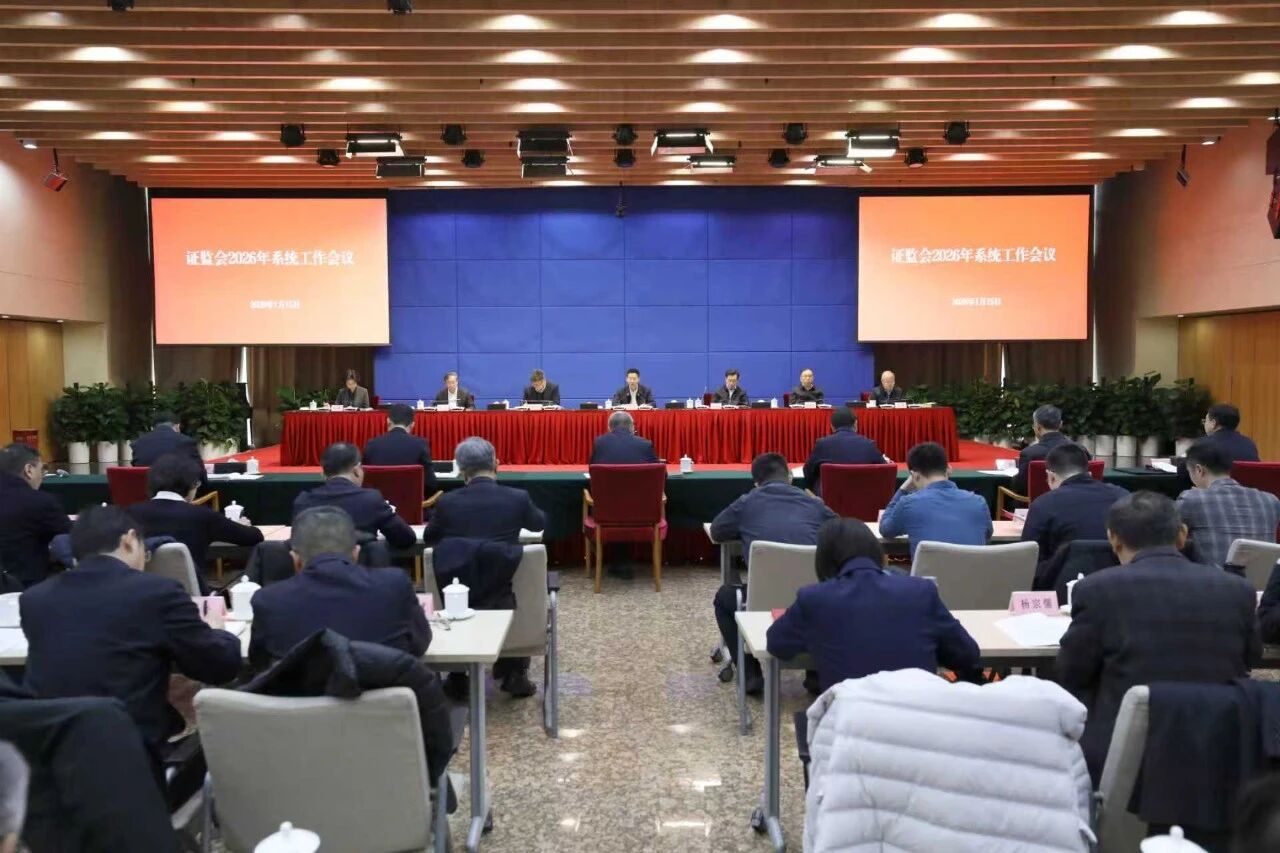
证监会召开2026年系统工作会议提出:及时做好逆周期调节 坚决防止市场大起大落
Zhong Guo Zheng Quan Bao· 2026-01-17 01:45
Core Viewpoint - The China Securities Regulatory Commission (CSRC) emphasizes the need for comprehensive reforms in the capital market to enhance stability, improve regulatory effectiveness, and promote high-quality development in 2026 [1][2][4]. Group 1: Market Stability and Reform - The CSRC aims to consolidate the market's positive momentum by deepening public fund reforms and expanding channels for long-term capital sources [1][4]. - The implementation of the entrepreneurship board reform and the promotion of the Sci-Tech Innovation Board reforms are prioritized to enhance refinancing convenience and flexibility [1][4][5]. - The CSRC plans to strengthen market monitoring and warning systems, ensuring timely counter-cyclical adjustments and maintaining trading fairness [1][4]. Group 2: Regulatory Effectiveness - The CSRC is committed to enhancing the effectiveness and deterrence of regulatory enforcement, focusing on combating financial fraud, price manipulation, and insider trading [5][7]. - In 2025, the CSRC handled 701 cases of securities and futures violations, imposing fines totaling 15.47 billion yuan, indicating a significant increase in regulatory enforcement quality [3][5]. - The establishment of a comprehensive punishment and prevention system for financial fraud is underway, alongside a special campaign against illegal activities in private equity funds [3][5]. Group 3: Capital Market Development - The total cash dividends and buybacks by listed companies reached 2.68 trillion yuan in 2025, reflecting a growing momentum for high-quality development [3][5]. - The total amount of IPOs and refinancing in the capital market was 1.26 trillion yuan, with bond issuances reaching 16.3 trillion yuan, showcasing the robust functionality of the multi-level capital market [3][5]. - The CSRC is also focused on enhancing the governance and operational standards of listed companies, with plans to introduce new regulations for corporate governance [5][6]. Group 4: Internationalization and Openness - The CSRC is pushing for deeper and higher-level openness in the capital market, including optimizing the Qualified Foreign Institutional Investor (QFII) scheme and expanding the range of futures products available for foreign investment [6][7]. - Efforts are being made to improve the regulatory framework for overseas listings, enhancing transparency and standardization in the management of foreign investments [6][7].
证监会确定2026年资本市场五方面工作任务 坚决防止市场大起大落
Shang Hai Zheng Quan Bao· 2026-01-17 01:31
Core Viewpoint - The China Securities Regulatory Commission (CSRC) held a meeting to summarize 2025's work and outline key tasks for 2026, focusing on stabilizing the market, enhancing service quality for high-quality development, improving regulatory effectiveness, promoting the growth and governance of listed companies, and advancing the opening of capital markets to a deeper and higher level [1][2]. Group 1: Market Stability and Development - The CSRC emphasized the need to consolidate the market's positive momentum and enhance monitoring and regulatory measures to prevent excessive speculation and market manipulation [3][4]. - In 2025, the capital market showed resilience and vitality despite facing multiple risks, with significant breakthroughs in attracting medium- and long-term funds [2]. - The total cash dividends and buybacks from listed companies reached 2.68 trillion yuan, while the total IPOs and refinancing amounted to 1.26 trillion yuan [2]. Group 2: Regulatory and Reform Initiatives - The meeting outlined five key areas of focus, including strengthening market monitoring, enhancing the quality of services for high-quality development, and improving the effectiveness of regulatory enforcement [3][4]. - A comprehensive system to combat financial fraud was established, resulting in the investigation of 701 securities and futures violations, with fines totaling 15.47 billion yuan [2]. - The CSRC plans to deepen public fund reforms and expand channels for long-term investment, promoting a market environment conducive to long-term and value investments [3]. Group 3: Governance and Corporate Development - The CSRC aims to enhance the governance of listed companies by implementing new regulations and improving the operational standards of these companies [4][5]. - Measures will be taken to strengthen the constraints on controlling shareholders and actual controllers, as well as to stimulate the vitality of mergers and acquisitions [4]. - The meeting also highlighted the importance of improving the regulatory framework for private equity funds and enhancing the governance of the capital market [4]. Group 4: International Engagement and Open Markets - The CSRC is focused on advancing the opening of capital markets, including optimizing the Qualified Foreign Institutional Investor (QFII) scheme and expanding the range of futures products available to foreign investors [4]. - Efforts will be made to enhance the regulatory and risk prevention capabilities in an open environment, as well as to participate actively in international financial governance [4].