液体冷却

Search documents
Eaton (NYSE:ETN) Conference Transcript
2025-12-02 15:42
Summary of Eaton Conference Call - December 02, 2025 Company Overview - **Company**: Eaton (NYSE:ETN) - **Industry**: Multi-Industry, focusing on electrical components, data centers, and aerospace Key Points and Arguments Strategic Direction - **Leadership Change**: Paulo Ruiz took over as CEO in mid-2025, indicating a shift towards growth verticals, highlighted by the acquisition of Boyd Thermal [6][8] - **Three Strategic Pillars**: 1. **Lead for Growth**: Emphasizes customer-centricity and agility in decision-making [7] 2. **Execute for Growth**: Focus on operational excellence and strong management to seize market opportunities [7] 3. **Invest for Growth**: Commitment to invest in high-margin, high-growth sectors, particularly data centers and utilities [8][9] Market Performance - **Order Growth**: Significant increase in orders from Electric Americas, rising from approximately $3.4 billion to over $4 billion in a quarter [16] - **Data Center Market**: Projected growth in U.S. data center capacity from 20 gigawatts to nearly 40 gigawatts by the end of 2023, with a backlog of 165 gigawatts in announced projects [20][22] - **Year-over-Year Orders**: Data center orders increased by 70% year-over-year in Q3 [22] Backlog and Revenue Growth - **Backlog Analysis**: Current backlog is 34%-35% of revenue, more than double historical levels, driven by strong end-market demand rather than lead time issues [26][28] - **Growth Expectations**: Anticipated market growth of around 7% in 2026, with Eaton planning to outperform this [98] Acquisitions and Market Position - **Acquisition of Boyd Thermal**: Expected to enhance Eaton's capabilities in liquid cooling and data center solutions, with Boyd projected to grow 70% next year [53][55] - **Differentiation**: Eaton's comprehensive portfolio from utility feeders to chips sets it apart from competitors, with a strong focus on integrated solutions [40][42] Financial Outlook - **Valuation Discussion**: Expected EBITDA multiple to decrease to single digits due to high growth rates (40% CAGR from 2026 to 2029) [68][70] - **Incremental Margins**: Anticipated recovery of incremental margins as operational inefficiencies are addressed by the end of 2026 [82][134] Challenges and Considerations - **Market Dynamics**: The transition to AI and high-voltage data centers presents both opportunities and challenges, requiring continuous innovation [29][67] - **Pension and Corporate Costs**: Potential negative impacts on financials due to pension adjustments and acquisition-related costs [100][102] Conclusion - **Future Growth**: Eaton is positioned for strong growth in the data center market and beyond, with a clear strategy focused on operational excellence, strategic acquisitions, and market leadership [132][134]

全球AI功耗正在迅速失控
半导体芯闻· 2025-09-28 09:47
Core Insights - By 2030, the energy consumption of AI racks is expected to be 20 to 30 times that of traditional racks, with individual AI racks potentially consuming up to 1MW of power [1][4]. Group 1: Energy Consumption and Capacity - The average power capacity of data center racks is projected to rise to 30-50kW, reflecting an increase in computing density, particularly in comparison to AI workloads [2]. - The energy demands of AI racks will necessitate new requirements for power delivery and cooling infrastructure [3]. Group 2: Cooling Solutions - Cooling has become a central focus in the industry due to increased computing density and AI workloads, with a growing interest in liquid cooling methods [3]. - Current cooling methods, such as cooling plates, have limitations, prompting companies like Microsoft to explore microfluidic technology for more efficient cooling solutions [5]. Group 3: Industry Collaboration and Innovation - There is a notable increase in collaboration among manufacturers, engineers, and end-users to address complex cooling challenges [5]. - Smaller operators may find competitive opportunities in the market due to potential delivery bottlenecks faced by larger operators, emphasizing agility and innovation as key advantages [6].


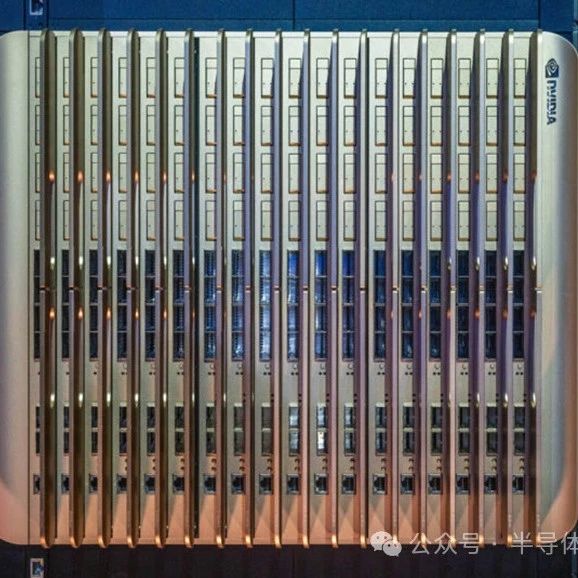
NVIDIA Rubin NVL576 Kyber 中板,非常巨大
半导体行业观察· 2025-03-29 01:44
Core Viewpoint - NVIDIA is leveraging a new midplane design in its next-generation AI server, the Rubin NVL576, to enhance computing density and efficiency in the competitive AI server market [1][6]. Group 1: Design Innovations - The NVIDIA Rubin NVL576, codenamed "Kyber," features a new rack design that removes the cable box and relocates fans and power supplies outside the rack to increase computing density [1]. - The new midplane design includes 18 columns and 4 rows of connectors, allowing for improved internal connectivity [5]. - Liquid cooling is employed throughout the rack, enabling the midplane design without the need for airflow considerations, which traditionally limited density [6]. Group 2: Performance Enhancements - The new design allows for a significant increase in copper interconnect coverage, which can save substantial power and enhance optical reliability [8]. - The updated backplane design facilitates more silicon connections through copper interconnects within the same rack, which is essential for the next generation of AI clusters [8].