
火箭重复使用技术

Search documents
朱雀三号即将再次回收试验,我国火箭重复使用技术有望突破
Changjiang Securities· 2026-03-03 00:49
Investment Rating - The industry investment rating is "Positive" and maintained [6] Core Viewpoints - On February 25, Blue Arrow Aerospace announced that its Zhuque-3 reusable launch vehicle plans to conduct another recovery test in the second quarter of this year, aiming for its first recovery flight in the fourth quarter [3][4] - The successful recovery of reusable rockets is expected to significantly reduce launch costs, accelerating the development of China's commercial aerospace industry [4][9] - The Zhuque-3's first recovery test, although unsuccessful, provided valuable real-world data that can be used to improve technology through a cycle of testing and refinement [4][9] - Multiple Chinese commercial aerospace companies are expected to conduct their first flights or recovery tests within the year, indicating a shift from technological breakthroughs to large-scale development in the industry [4][9] Summary by Sections Event Description - Blue Arrow Aerospace plans to conduct a recovery test for the Zhuque-3 in the second quarter and aims for its first recovery flight in the fourth quarter [3] Event Commentary - The Zhuque-3's first recovery test provided critical data despite its failure, which will aid in refining technology for future tests [4] - The timeline for Zhuque-3's recovery flight could be significantly shorter than that of SpaceX, showcasing China's rapid advancements in commercial aerospace [4] - Other companies like CAS Space and Tianbing Technology are also set to conduct significant tests this year, reflecting a broader trend in the industry towards frequent and cost-effective operations [4]
朱雀三号即将再战回收试验,无论成败“坚持就是胜利” | 每经热评
Mei Ri Jing Ji Xin Wen· 2026-02-25 12:09
Core Viewpoint - Blue Arrow Aerospace is set to conduct a second recovery test of its reusable Zhuque-3 rocket in the second quarter of this year, aiming for its first recovery flight in the fourth quarter, following a previous unsuccessful attempt [1][3]. Group 1: Technical Developments - The Zhuque-3 rocket's first recovery attempt faced challenges, specifically a failure in the final braking phase, which highlights the complexities of aerospace technology [3]. - The upcoming recovery test will focus on improvements based on data collected from the previous flight, particularly addressing abnormal data [5]. - The Zhuque-3 has already achieved significant milestones, including the first domestic flight verification of high-precision return navigation, guidance, and control technology for orbital-class reusable rockets [4]. Group 2: Industry Implications - The repeated testing and improvement cycle is essential for refining technology solutions and enhancing system reliability in the competitive commercial aerospace sector [5]. - The development of reusable rocket technology is crucial for reducing the cost of access to space, transforming rockets from consumables into transportation tools, which is key to building core competitiveness in the space industry [4]. Group 3: Societal and Cultural Aspects - The process of trial and error in aerospace innovation reflects a broader cultural shift towards resilience and continuous improvement, emphasizing the importance of learning from failures [4][6]. - The public is encouraged to adopt a rational perspective on the complexities of high-tech innovation, recognizing that both successes and failures contribute to the overall advancement of technology [5][6].

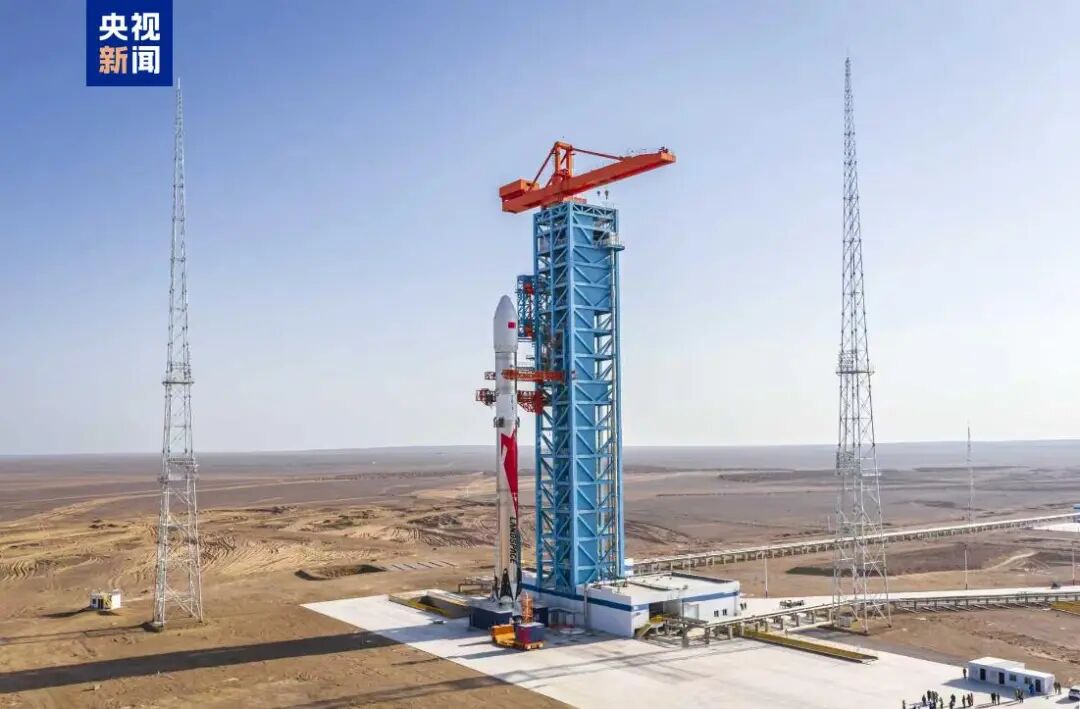
朱雀三号回收验证火箭重复使用技术,距离地面几公里的位置,出现异常燃烧,未能实现软着陆
Yang Shi Xin Wen· 2025-12-14 06:03
Core Viewpoint - The successful maiden flight of the Zhuque-3 reusable launch vehicle marks a significant milestone in China's aerospace industry, despite the failure of the first stage rocket recovery, showcasing advancements in reusable rocket technology and laying a foundation for future improvements [1][7][10]. Group 1: Flight Details - The Zhuque-3 rocket was launched on December 3, achieving a successful flight with the second stage entering orbit, while the first stage attempted a vertical recovery [3][10]. - The first stage experienced challenges during the "supersonic re-entry aerodynamic gliding phase," ultimately failing to achieve a soft landing due to an abnormal combustion during the final ignition [5][7]. Group 2: Technical Innovations - The Zhuque-3 features several domestic firsts, including the integration of a nine-engine parallel liquid oxygen-methane propulsion system and the use of stainless steel for the rocket body, which enhances durability and reusability [10][15]. - The choice of stainless steel is attributed to its strength, heat resistance, and lower material costs, making it suitable for mass production and repeated use [12][17]. Group 3: Fuel and Performance - The rocket utilizes liquid oxygen and methane as fuel, which is noted for its clean combustion and favorable cooling and ignition characteristics, making it ideal for reusable rockets [19][21]. - The current version of the Zhuque-3 has a payload capacity of approximately 13-14 tons for single use and around 10 tons for reuse, depending on the orbital requirements [14]. Group 4: Industry Context and Future Prospects - The development of reusable rockets is a global trend, driven by the need for lower launch costs and increased frequency of launches, particularly for satellite constellations [22][24]. - The Chinese government has initiated projects to develop liquid oxygen-methane reusable launch vehicles, collaborating with commercial aerospace companies to enhance technological capabilities [24][25]. - Successful recovery is just the first step; the focus will shift to ensuring the rockets can be reused effectively and economically, which is crucial for the future of the aerospace industry [27].

美“星舰”实施第11次试飞
Xin Hua She· 2025-10-14 03:51
Core Points - SpaceX's Starship successfully completed its 11th test flight on October 13, 2023, with both the first and second stages landing as planned [1][2] - The mission focused on testing new landing burn techniques for the booster, the spacecraft's re-entry trajectory, and the thermal protection system's durability [1][2] Group 1 - The Starship rocket, approximately 120 meters long and 9 meters in diameter, consists of two reusable stages: the 70-meter "Super Heavy" booster and the Starship spacecraft [2] - The mission included the deployment of eight Starlink prototype satellites, which burned up upon re-entry [1] - The spacecraft performed a dynamic maneuver test and validated subsonic guidance algorithms, aiming to gather critical data for the development of the next-generation "Super Heavy" booster and future recovery of the spacecraft [2]