燃料短缺

Search documents
澳大利亚部分地区出现油荒
财联社· 2026-03-22 15:23
Core Viewpoint - The Australian government assures that despite disruptions in fuel imports due to the conflict in Iran, fuel supply remains adequate and there are no plans for quantitative rationing at this time [1][2]. Group 1: Fuel Supply Status - As of the 21st, Australia's reserves of gasoline, diesel, and aviation fuel are sufficient for 38 days, 30 days, and 30 days respectively, indicating a strong fuel supply [1]. - The country relies on imports for 90% of its fuel, primarily from the Asia-Pacific region, and is currently facing disruptions in oil transport due to military actions affecting the Strait of Hormuz [1]. Group 2: Government Response - Prime Minister Anthony Albanese has urged the public to consume fuel rationally and avoid panic buying, as some remote areas are experiencing fuel shortages [2]. - A special task force has been established, led by former head of the National Energy Regulator, Ancia Harris, to address fuel shortages in certain regions and optimize the domestic supply chain [3].

古巴正在制定应对严重燃料短缺计划
Shang Wu Bu Wang Zhan· 2026-02-12 15:51
Core Viewpoint - The Cuban government is formulating a plan to address severe fuel shortages, with details to be announced soon [1] Group 1: Energy Capacity and Renewable Initiatives - By 2025, Cuba aims to restore over 900 megawatts of distributed generation capacity and has initiated the repair and maintenance of thermal power plants [1] - The construction of 49 photovoltaic power stations will add over 1,000 megawatts of solar power capacity, increasing the share of renewable energy in the national power generation structure from 3% to 10% [1] Group 2: Current Challenges and Strategic Adjustments - Due to intensified external blockades and extreme shortages of funds and fuel, the electricity situation in Cuba is critically severe, preventing the positive effects of many construction achievements from being realized [1] - Since December 2025, Cuba has been unable to obtain fuel from abroad due to U.S. pressure, leading to a month-long shutdown of distributed generation units with a total installed capacity of approximately 1,300 megawatts [1] - The Cuban government has strategically shifted its power supply policy from prioritizing residential daytime electricity to prioritizing strategic economic activities such as agricultural production and exports to ensure the economy does not stagnate [1]
以色列能源部长:能源部门运作顺利,没有燃料短缺。
news flash· 2025-06-20 09:04
Core Viewpoint - The Israeli Energy Minister stated that the energy sector is operating smoothly and there is no fuel shortage [1] Group 1 - The energy sector in Israel is functioning effectively without any disruptions [1] - There are no indications of fuel shortages within the country [1]
以色列能源部:预计不会出现燃料短缺。
news flash· 2025-06-17 12:25
Core Insights - The Israeli Ministry of Energy has stated that there is no expected fuel shortage in the country [1] Industry Summary - The Israeli energy sector is currently stable, with assurances from the government regarding fuel availability [1]
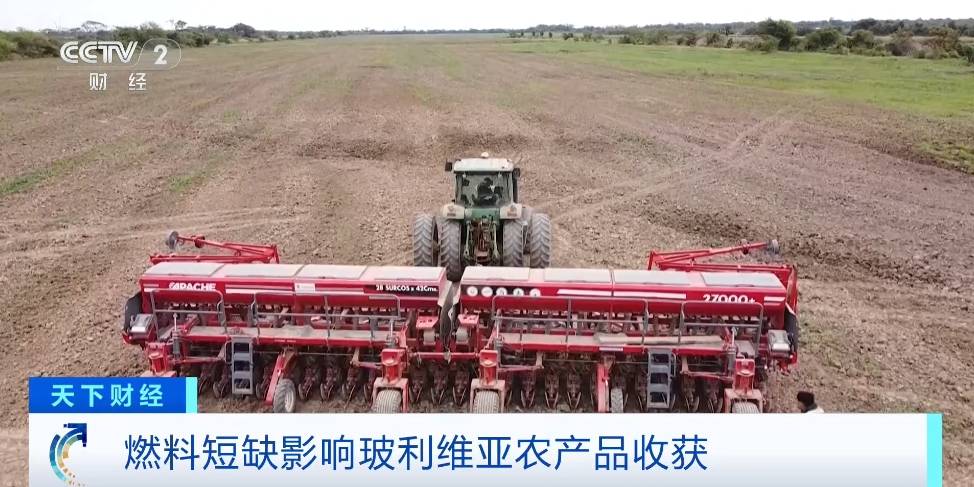
燃料短缺影响玻利维亚农产品收获,部分食品价格暴涨90%
Sou Hu Cai Jing· 2025-06-11 14:09
Group 1 - Bolivia is experiencing a severe fuel shortage due to insufficient domestic energy reserves and limited fuel imports, significantly impacting agricultural harvests and sales [1][7] - In the economic center of Santa Cruz, fuel shortages have persisted for five weeks, affecting farmers' ability to operate machinery for harvesting crops like sunflowers and chia seeds [3][5] - The decline in natural gas exports has led to rising expenditures on imported fuel, with foreign exchange reserves only covering six weeks of import needs [7] Group 2 - Long queues at gas stations across Bolivia have resulted in protests, with demonstrators blocking key city access points, further exacerbating the fuel shortage and disrupting food and fuel transportation [7] - The agricultural sector is incurring significant losses due to road blockades caused by protests, with daily losses estimated at $610,000 (approximately 4.38 million RMB) [7] - Bolivia's inflation rate reached 5.9% in the first four months of 2025, with essential food items like onions and tomatoes seeing price increases of around 90%, severely affecting the purchasing power of low-income households [9]