
爱国精神

Search documents
活成大写的人(远航的书架)
Ren Min Wang· 2026-02-05 01:13
Core Insights - The article highlights the life and contributions of Academician Wang Zhenyi, emphasizing his role in leukemia treatment and medical education, showcasing his dedication to improving patient outcomes and nurturing future medical talent [1][2][3] Group 1: Contributions to Medicine - Wang Zhenyi is recognized as a pioneer in hematology in China, credited with the "Shanghai Plan" for leukemia treatment, which has significantly impacted patient recovery rates [2][3] - The biography details his innovative approach to medical challenges, including his willingness to conduct controversial experiments and his refusal to patent successful treatments to benefit a broader patient population [2][3] Group 2: Educational Philosophy - Wang Zhenyi introduced the "parabolic theory" of talent cultivation, prioritizing the development of younger medical professionals over personal accolades [2] - His commitment to education is illustrated by his continuous engagement with academic literature and mentorship of young doctors, demonstrating a lifelong dedication to knowledge sharing [2][3] Group 3: Personal Values and Legacy - The narrative emphasizes Wang Zhenyi's belief in serving others and his pursuit of knowledge as a means to improve the world, reflecting a deep-rooted sense of patriotism and responsibility [3] - The biography serves as a testament to the values of humility, perseverance, and the importance of asking questions, encouraging readers to embody these principles in their own lives [3][4]
闻一多的变与不变
Xin Lang Cai Jing· 2026-01-28 21:00
Core Viewpoint - The article discusses the life and ideological evolution of Wen Yiduo, highlighting his transformation from a poet and scholar to a democratic fighter, driven by a deep love for his country and people [1][6]. Group 1: Early Life and Education - Wen Yiduo, born in 1899 in Hubei, was a prominent figure in the early Chinese Democratic League and a representative poet of the New Moon Society [1]. - After the May Fourth Movement, he studied in the United States, where he became a poet influenced by Western literature, creating patriotic works like "Seven Sons' Song" [1][2]. Group 2: Shift to Academic Focus - Upon returning to China, Wen felt disillusioned by the turbulent social conditions and retreated into academia, focusing on classical literature while still expressing his patriotism through poetry [2]. - His research during his two years in Qingdao marked a transition from poet to scholar, although he maintained a stance aligned with the Nationalist Party [2]. Group 3: Response to War and Political Awakening - The outbreak of the full-scale war led to a significant change in the circumstances of intellectuals like Wen, prompting him to reflect on his previous detached lifestyle [3]. - His long journey from Beijing to Kunming deepened his understanding of the suffering of the Chinese people, leading him to reassess his role and the realities of Chinese society [3]. Group 4: Political Engagement and Ideological Transformation - In 1943, Wen met Hua Gang, a member of the Communist Party, which significantly influenced his political views and led him to participate in discussions about the Party's policies [4]. - By 1944, Wen joined the Democratic League and began actively fighting for democracy and against dictatorship, marking a complete ideological shift [4]. Group 5: Legacy and Impact - Wen Yiduo's transformation reflects the broader journey of 20th-century Chinese intellectuals from reformism to revolution, embodying a collective evolution towards modern revolutionary ideals [6]. - His enduring love for his country and people remained the core of his identity, as he transitioned from a poet to a scholar and finally to a committed democratic fighter [6].
小英雄雨来智勇事迹激励新时代少年
Xin Lang Cai Jing· 2025-12-27 23:52
Group 1 - The core message emphasizes the qualities of bravery and wisdom exemplified by the character Yu Lai, who serves as a role model for the youth in contemporary society [1][2] - Yu Lai's bravery is rooted in his deep love for his homeland and fellow countrymen, showcasing that true heroism stems from a sense of patriotism [1] - The narrative illustrates that real courage is not just about physical strength but also involves calmness and intelligence in the face of danger, as demonstrated by Yu Lai's quick thinking during a confrontation with enemies [1] Group 2 - Yu Lai is portrayed as a relatable and admirable figure, highlighting that heroes are not born but forged through trials and challenges [2] - The story encourages the youth to adopt Yu Lai's qualities of intelligence, resilience, and loyalty as guiding principles in facing modern challenges [2]
(抗战胜利80周年)战地女记者张郁廉之子忆母:奔走于硝烟中的芳华
Xin Lang Cai Jing· 2025-12-19 14:23
Core Viewpoint - The article highlights the life and contributions of Zhang Yulian, a war correspondent, emphasizing her dedication to documenting the struggles and resilience of the Chinese people during wartime [1]. Group 1: Background and Early Life - Zhang Yulian was born in 1914 and lost her mother at the age of 2, later being adopted by a Belarusian couple [3]. - The outbreak of the Lugou Bridge Incident in 1937 forced her to interrupt her studies at Yenching University and flee to Wuhan, where she joined the Hankou branch of TASS due to her proficiency in Russian [3]. Group 2: War Reporting Experience - Zhang Yulian's first significant reporting experience was during the Battle of Xuzhou, where she, at the age of 24, risked her life to cover the front lines alongside a Soviet journalist [3]. - She documented the aftermath of the Battle of Taierzhuang and the morale of Chinese soldiers and civilians, enduring a perilous 21-day journey to escape encirclement by Japanese forces [3][4]. Group 3: Documentation of Struggles - Her writings captured the suffering of the Chinese people under Japanese occupation, as well as their resilience and cultural richness [4]. - Zhang Yulian's work included vivid descriptions of the devastation caused by war, the spirit of idealistic youth in Yan'an, and the determination of ordinary citizens to resist invaders [4]. Group 4: Personal Reflections and Legacy - Zhang Yulian viewed her role as a war correspondent as a normal duty for any Chinese person during national crises, often downplaying her experiences [5]. - Her son, Sun Yuli, noted that she maintained a simple and orderly lifestyle, later teaching landscape painting in the U.S., reflecting her deep connection to her homeland [5].

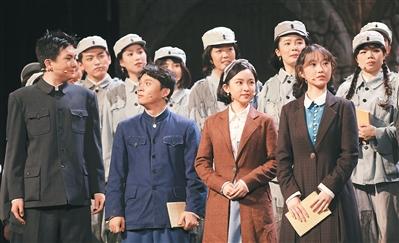
“小我”也能担大义(抗战烽火中的华侨华人)
Ren Min Ri Bao Hai Wai Ban· 2025-12-07 22:54
Core Viewpoint - The article highlights the story of Chen Fangxin, who performed in the play "Shanbei School," portraying her grandmother Chen Rimei, a patriotic figure who contributed to the anti-Japanese war and the construction of New China, emphasizing the importance of inheriting the spirit of patriotism from previous generations [2][6][10]. Group 1: Historical Context - The play "Shanbei School" is set against the backdrop of the full-scale outbreak of the Anti-Japanese War, telling the story of the Shanbei School's establishment during a time of national crisis and its role in training revolutionary leaders [4]. - Over a short period, Shanbei School trained more than 6,000 anti-Japanese cadres, who immediately went to the front lines to join the national united front against Japan [4]. Group 2: Personal Connection - Chen Fangxin's portrayal of her grandmother in the play serves as a personal connection to the historical narrative, allowing her to experience a "reunion" with her grandmother through performance [4][7]. - Chen Rimei's journey from Malaysia to Yan'an in 1938, influenced by the book "The Road to Yan'an," reflects the actions of many overseas Chinese who contributed to the war effort [5]. Group 3: Themes of Patriotism and Legacy - The article emphasizes the theme of patriotism, with Chen Fangxin stating that her grandmother's story is a microcosm of many overseas Chinese youths who acted for their country [10]. - The play includes poignant moments that evoke the sacrifices made by young revolutionaries, reinforcing the idea that ordinary individuals can become heroes in critical moments [7][11]. Group 4: Cultural Significance - The performance aims to educate audiences about the contributions of overseas Chinese during the Anti-Japanese War, highlighting the importance of remembering one's roots and the sacrifices made for the nation [10][11]. - Chen Fangxin expresses a desire to pass on her grandmother's spirit of perseverance and dedication to future generations, emphasizing the need to cherish the present while honoring the past [10][11].
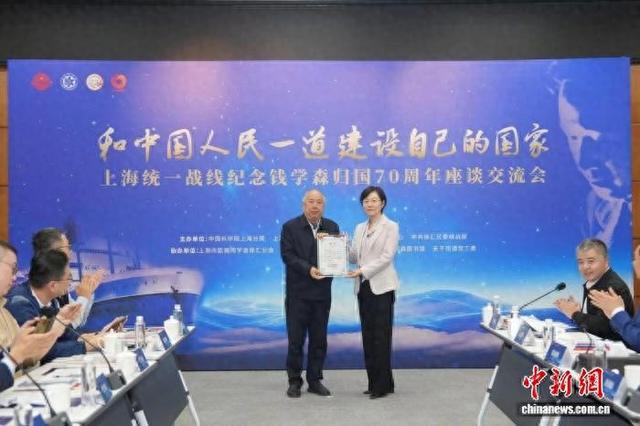
上海统一战线举办纪念钱学森归国70周年座谈交流会
Zhong Guo Xin Wen Wang· 2025-10-26 12:34
Core Viewpoint - The event commemorates the 70th anniversary of Qian Xuesen's return to China, emphasizing his significant impact on the country's innovation and entrepreneurship, and aims to harness the power of the united front to support economic and social development during the 14th Five-Year Plan period [1][3]. Group 1 - The event highlights Qian Xuesen's return as a catalyst for a wave of overseas intellectuals returning to China, which laid a solid foundation for the country's aerospace industry [3]. - The gathering included discussions that honored historical contributions while encouraging contemporary youth and scientists to share their experiences, thereby promoting patriotism and the spirit of scientists [3][5]. - The meeting called for the continuation of the glorious tradition of studying abroad for the benefit of the country, urging intellectuals to focus on national prosperity and the well-being of the people [5]. Group 2 - The event featured notable speakers, including Qian Xuesen's son, Qian Yonggang, and other prominent figures from academia and industry, who shared insights on the importance of scientific contributions to national development [3][7]. - A new initiative titled "Science and Technology for the Country" was launched, aiming to enhance the cultural resources of the united front and promote collaboration among intellectuals [7][8]. - The event concluded with a visit to the exhibition "People's Scientist Qian Xuesen," further emphasizing the legacy and ongoing relevance of his contributions [7].
星落苍穹 薪火永燃——送别杨振宁
Xin Hua She· 2025-10-24 15:25
Core Points - The article commemorates the life and contributions of Yang Zhenning, a renowned physicist and Nobel laureate, who passed away on October 24, 2023 [1][2][3] - Yang Zhenning is celebrated for his significant scientific discoveries and his dedication to advancing basic scientific research in China [3][4] Group 1 - Yang Zhenning's funeral was attended by family, friends, and numerous individuals from Tsinghua University and the broader community, reflecting his impact and legacy [2][3] - His contributions to physics include the Yang-Mills theory and the Yang-Baxter equation, which have had a profound influence on the field [2][3] - Yang Zhenning's life journey is described as a "circle," symbolizing his commitment to ideals and contributions to science and his country [2][3] Group 2 - The article highlights Yang Zhenning's lifelong dedication to nurturing scientific talent in China and his desire for the country's scientific advancements to reach global prominence [3][4] - His passing has prompted reflections on his character and the inspiration he provided to generations of scientists, emphasizing his patriotism and commitment to scientific integrity [3][4] - Memorials and tributes have been organized in various locations, including Tsinghua University and his birthplace, showcasing the widespread admiration for his contributions [4]
杨振宁的爱国精神深深影响了我们
Huan Qiu Wang Zi Xun· 2025-10-22 12:38
Core Insights - The passing of Yang Zhenning is a significant loss for both the Chinese scientific community and the global physics community [1][2] Group 1 - Yang Zhenning's influence on the choice of physics and scientific research as a lifelong career is highlighted, emphasizing his role in strengthening experimental condensed matter physics at Tsinghua University [1] - The team’s discovery of the quantum anomalous Hall effect was greatly supported by Yang's keen insight and judgment, which provided confidence to the researchers [1] - Yang Zhenning's recognition of the team's work as a "Nobel Prize-level physics paper" from a Chinese laboratory served as a major encouragement for the researchers [1] Group 2 - A memorable dinner with Yang Zhenning allowed for sharing of experiences and stories from other prominent scientists, bridging the gap between students and physics masters [2] - Yang's pursuit of high academic standards and his teachings have inspired many scientists to seek unique and challenging scientific problems [2] - The deep patriotic spirit expressed by Yang Zhenning is seen as a significant source of strength for scientific workers in China [2]
校馆弦歌丨从家书中感受时代记忆的回响 走进中国人民大学家书博物馆
Yang Shi Xin Wen· 2025-10-21 22:16
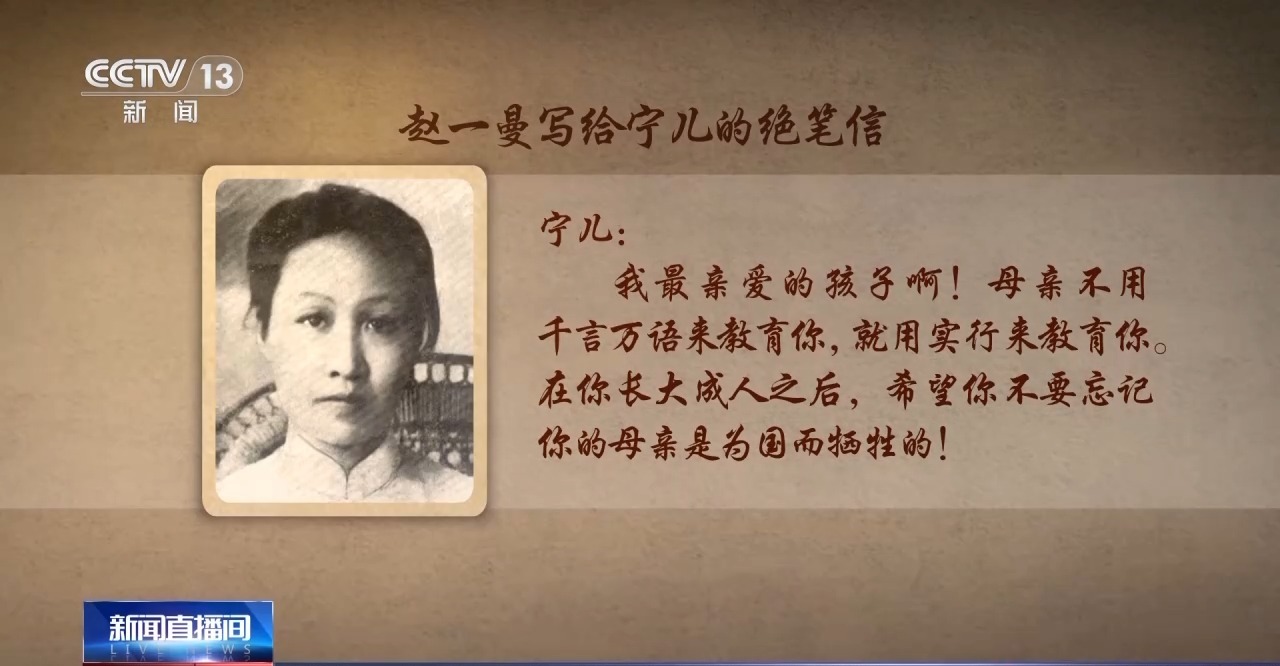
Core Viewpoint - The China Renmin University Family Letter Museum is the first museum in China dedicated to family letters, housing over 80,000 letters that reflect personal emotions, historical memories, and the university's educational philosophy of cultural cultivation [1] Group 1: Museum Overview - The museum features nine exhibition units, including ancient family letter culture, national family letters, and cross-strait family letters, allowing visitors to connect with historical narratives through the lens of family correspondence [1] - Student volunteers play a crucial role as narrators and transmitters of cultural heritage, enhancing the visitor experience [1][8] Group 2: Educational Impact - The museum serves as a practical educational base, organizing activities such as reading sessions of wartime family letters and thematic class meetings to engage students with the historical significance of these letters [12] - The emotional depth and authenticity of family letters resonate with students, fostering a connection between personal growth and national destiny [12][16] Group 3: Personal Stories and National Spirit - Letters from wartime heroes and ordinary citizens intertwine themes of patriotism, sacrifice, and familial love, illustrating the profound emotional landscape of the era [8][10] - The letters convey messages of responsibility, national pride, and the importance of family values, encouraging students to reflect on their own roles in society [12][16] Group 4: Legacy and Inspiration - The museum highlights the enduring spirit of sacrifice and heroism, inspiring contemporary youth to embrace these values in their own lives [14] - Family letters serve as a bridge connecting past and present, allowing students to engage in a dialogue with historical figures and understand the significance of their sacrifices [14][16]
全省重走抗联路主题活动启动
Liao Ning Ri Bao· 2025-10-09 01:23
Core Viewpoint - The event "Rewalking the Anti-Japanese United Army Road" aims to commemorate history and promote the spirit of resistance among the public, especially the youth, in the context of revitalizing the region [1] Group 1: Event Overview - The event is co-hosted by the Provincial Culture and Tourism Department and the Benxi Municipal Government [1] - The theme of the event is "Following the Heroic Path, Advancing in a New Journey" [1] - Activities include immersive performances that reenact historical battles of the Anti-Japanese United Army [1] Group 2: Activities and Participation - The main activities took place at the "Secret Transportation Station" and "Secret Barracks" of the Anti-Japanese United Army [1] - A hiking team consisting of students and visitors walked along a 10-kilometer route to experience the determination of revolutionary predecessors [1] - The event featured a dialogue performance titled "The Country is Safe, the Next Generation Will Carry On," connecting historical figures with modern university students [1] Group 3: Educational Aspects - Red-themed narrators from local museums shared heroic stories, including those of the "Iron-Blooded Youth Camp" and notable figures like Yang Jingyu [1] - A thematic route map was released, linking various Anti-Japanese United Army sites across Liaoning Province to promote patriotic spirit [1]