物理极限

Search documents
引入LPU的英伟达,是在补强,还是在拆自己的护城河?丨GTC观察
雷峰网· 2026-03-31 13:54
Core Insights - The article discusses the emergence of the "Inference Era" in AI, highlighting the significance of the LPU (Logic Processing Unit) introduced by NVIDIA, which is designed specifically for AI inference tasks and is expected to reduce costs and latency in processing [5][6][28] - The shift from economic bottlenecks to physical bottlenecks in computing is emphasized, with a focus on energy efficiency and the advantages of SRAM architecture over DRAM in this new context [5][6][22] Group 1: Inference Era and LPU - The introduction of the LPU, a chip designed for AI inference, marks a significant development in the industry, with its architecture allowing for reduced data transfer times and improved energy efficiency [5][6][28] - The LPU's SRAM architecture, previously sidelined due to cost, is now being reconsidered as energy consumption becomes a more critical factor than cost [5][6][22] - The potential market value of the LPU is highlighted, suggesting that its introduction could significantly expand the Total Addressable Market (TAM) for AI applications [9][27] Group 2: Architectural Innovations - NVIDIA's strategy of enhancing "whole rack computing" reflects its intent to solidify its position in the inference market, addressing the increasing demand for computational power driven by larger AI models [13][14] - The MoE (Mixture of Experts) model architecture is discussed as a solution to rising computation costs, necessitating efficient communication between multiple chips [13][14] - The challenges of building supernodes for efficient chip communication are acknowledged, with NVIDIA's innovations in assembly time being noted as a competitive advantage [14] Group 3: Software and Ecosystem Development - NVIDIA's introduction of the NemoClaw software stack and the Nemotron open-source model is seen as a strategic move to enhance its ecosystem and support customer applications [17][18] - The importance of open-source strategies in building a robust customer base and ecosystem is emphasized, with comparisons drawn to Google's approach with Android [19][20] - The article suggests that domestic chip companies should focus on integrating resources to build a strong software ecosystem rather than competing individually [20] Group 4: Future Trends and Challenges - The article predicts that the demand for computational power will continue to grow, necessitating a focus on efficiency and innovation within the semiconductor industry [31] - The need for high-end chip production capabilities in China is highlighted, as reliance on external suppliers like TSMC may not meet future demands [29] - The importance of attracting top talent in the semiconductor industry is stressed, with recommendations for companies to focus on niche markets where they can excel [31]



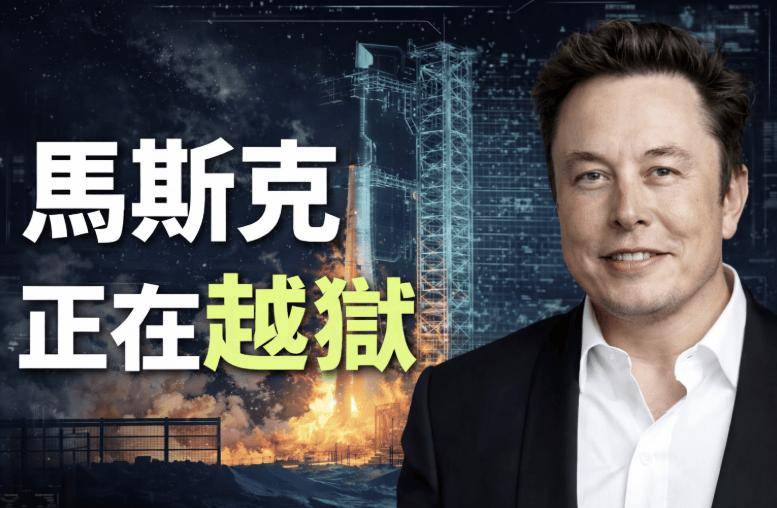
马斯克的“越狱”计划
Sou Hu Cai Jing· 2026-02-09 00:33
Group 1 - The article discusses a significant shift in the AI revolution, emphasizing that the real challenge lies in overcoming physical constraints rather than just improving algorithms [1] - It highlights that robots, particularly those like Musk's Optimus, represent a new era of "self-replicating industrial units," which could disrupt traditional labor cost models [3] - The article warns of an impending "breakpoint" in power supply within 36 months, as computational power grows exponentially while global electricity output remains stagnant [4] Group 2 - Musk's strategy involves moving energy-intensive computing to space to avoid terrestrial political hurdles, thus optimizing efficiency [6][7] - The concept of a vertically integrated "interstellar production line" is introduced, suggesting that competitors will face not just technological gaps but also "dimensional gaps" [8] - The article stresses the importance of energy conversion into productive capacity, indicating that the future of manufacturing will depend on who can efficiently harness and utilize cosmic energy [9] Group 3 - The conclusion emphasizes a pragmatic approach to engineering challenges, suggesting that when systems become bottlenecks, alternatives must be sought, such as moving operations to space [10] - The article notes that solar energy in space is five times more efficient due to the absence of atmospheric interference, and there are no bureaucratic delays in orbit [13] - It outlines a collaborative framework where SpaceX transports energy, space computing provides intelligent fuel, xAI refines digital processes, and Optimus executes physical production on Earth [14]