现金回笼

Search documents
浙商固收:本次春节假期前后资金面的关注点
Sou Hu Cai Jing· 2026-02-08 14:14
Group 1 - The central bank began to inject 14-day reverse repos starting February 5, aligning with expectations for the amount and timing across the Spring Festival holiday [1][3] - The current low deposit certificate and credit spreads reflect a market expectation of stable and loose liquidity, with remaining arbitrage opportunities [1][3] - The Spring Festival holiday's impact on interbank liquidity is primarily driven by changes in M0, with cash withdrawals for "red envelopes" still prevalent despite digital payment methods [1][2] Group 2 - The cash leakage due to residents' withdrawals during the Spring Festival is expected to exceed 1.7 trillion, compounded by a funding gap of over 2.2 trillion before the holiday [2] - The central bank's balance sheet measures M0 changes, which may show smaller increases if the holiday falls mid-month due to cash returning to banks later [2] - The 2026 Spring Festival, lasting 9 days, is anticipated to cause significant cash leakage and delayed cash return to banks, similar to trends observed in previous years [1][4] Group 3 - The central bank's reverse repo operations are expected to total 2.4 trillion if maintained at 300 billion daily from February 9 to February 14, matching the anticipated funding gap [3] - Attention should be paid to the speed of cash return to banks and the potential appreciation of the RMB during the holiday [4] - The 2023 Spring Festival saw a significant increase in residents returning home and delayed work resumption, leading to a tightening of liquidity post-holiday [4]
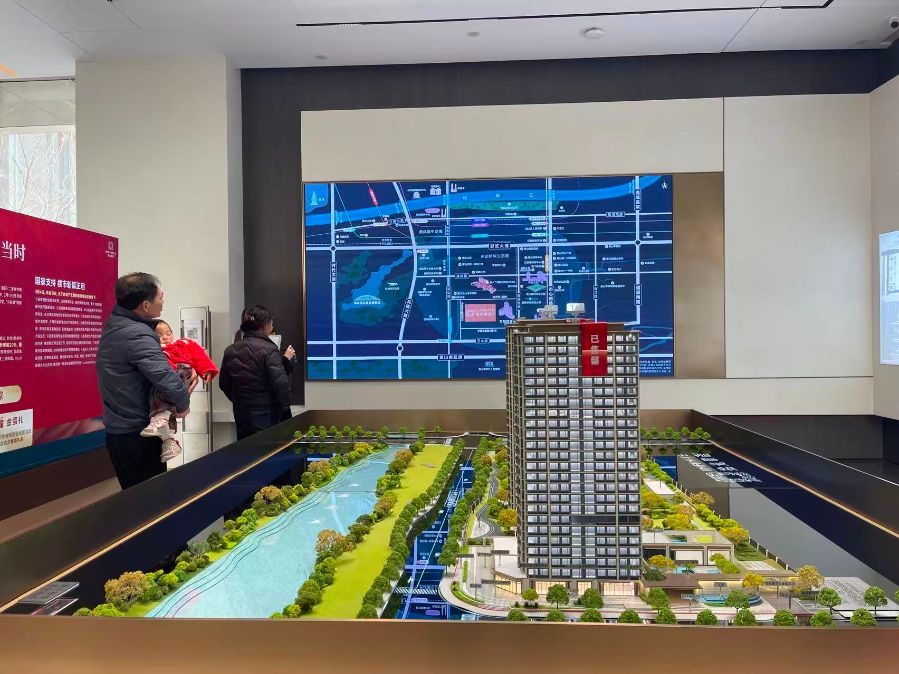
锦上观澜首开让利:杭州“一哥”滨江集团“现金为王”
2 1 Shi Ji Jing Ji Bao Dao· 2025-12-10 14:07
Core Viewpoint - Binjiang Group is implementing a "price for volume" marketing strategy, launching new projects at prices significantly lower than previous expectations to accelerate cash flow and sales [1][6]. Group 1: Project Launch and Pricing Strategy - The new projects, Jinshang Guolan and Haoyunfu, will open with average prices approximately 3000-4000 yuan per square meter lower than earlier projected prices, potentially reducing customer budgets by 300,000-400,000 yuan for a 100 square meter unit [1][3]. - Jinshang Guolan has a total of 650 residential units, with the first batch of 88 units priced at an average of 36,973 yuan per square meter, which is lower than the previous market expectations [3][4]. - The pricing strategy aims to create a favorable market perception and allows for potential price increases in the future if market conditions improve [1][6]. Group 2: Market Context and Competitive Positioning - The average price of Jinshang Guolan is 36,766 yuan per square meter, which is below the previous price limits in the Xiaoshan District (37,500-39,500 yuan per square meter) and more competitive than some second-hand properties [5][6]. - The Haoyunfu project also follows a similar pricing strategy, launching at an average price of 51,168 yuan per square meter, which is 4000 yuan lower than earlier estimates [5][6]. - Binjiang Group's strategy reflects the pressure of high inventory levels and the need for cash flow, as the company has acquired multiple plots in Xiaoshan over the past two years, totaling approximately 17 billion yuan [6][7]. Group 3: Sales Performance and Future Outlook - Binjiang Group's total sales for the year 2025 are projected to reach 94.53 billion yuan, indicating a strong sales performance despite the low pricing strategy [7]. - The company's approach of "price for volume" is seen as a response to tightening liquidity and extended sales cycles in the industry, suggesting a shift in focus towards cash flow management [7].