以价换量

Search documents
2026年3月百强房企销售解读
2026-04-01 09:59
Summary of Key Points from the Conference Call Industry Overview - The conference call discusses the real estate industry in March 2026, focusing on the performance of the top 100 real estate companies in China, highlighting a cumulative sales decline of 24% compared to the previous year, with major companies like China Overseas and Jinmao showing month-on-month growth [1][2]. Sales Performance - In March 2026, the overall sales performance of the top 100 real estate companies exceeded expectations, with a month-on-month increase of 119% but a year-on-year decline of 15%. The cumulative decline for the first quarter was 24%, a significant improvement from over 30% in previous months [2]. - Major companies such as China Overseas, Jinmao, and others reported substantial month-on-month growth, with China Overseas seeing a 237% increase and Jinmao a 78% increase [2]. Supply and Transaction Data - New housing supply in March 2026 was weak, with a 60% year-on-year decline across 50 cities, while transaction volume increased by 89% month-on-month but decreased by 32% year-on-year [1][3]. - The first quarter saw a 35% year-on-year decline in first-tier cities, with cities like Guangzhou showing resilience due to lower previous year baselines [3]. Market Characteristics - Hot-selling projects in the new housing market are characterized by prime locations and strong product appeal, or by competitive pricing strategies. The overall market price remains under pressure, with developers focusing on volume sales rather than price increases [4]. - The second-hand housing market outperformed the new housing market, with a 117% month-on-month increase in transaction volume, although year-on-year growth was only 6% [5]. Price Trends - In Shanghai, the second-hand market showed signs of recovery for lower-priced "old and broken" properties, while mid to high-end properties continued to face downward price pressure [6][13]. - The overall price trend in the second-hand market remains uncertain, with potential downward pressure from mid to high-end properties affecting the lower segment [6][13]. Land Market Dynamics - The land market showed signs of recovery in March 2026, with increased transaction volumes compared to January and February, but the overall sentiment remains cautious among developers, focusing on profitability and certainty in future sales [7][9]. - Developers are adopting a "better not to acquire than to acquire incorrectly" approach, leading to more conservative bidding strategies [7]. Future Market Predictions - The market is expected to cool down in April 2026, with potential declines in transaction volumes for both new and second-hand properties due to the end of the school district window period and previous demand releases [8][9]. - The likelihood of significant national stimulus policies in the first half of 2026 is low, with a focus on stability rather than aggressive market interventions [14]. Conclusion - The real estate market in March 2026 reflects a complex landscape with significant disparities among companies and market segments. The focus on core locations, product quality, and pricing strategies will be crucial for navigating the ongoing challenges in the industry [10][11].
小菜园(00999):——小菜园0999.HK 2025年年报点评:以价换量促增长,26年冲刺千店
EBSCN· 2026-03-27 12:47
Investment Rating - The report maintains a rating of "Accumulate" for the company [1] Core Insights - The company achieved a revenue of 5.35 billion yuan in 2025, representing a year-on-year increase of 2.6%, while the net profit attributable to shareholders was 720 million yuan, up 23.2% year-on-year [4][5] - The company is focusing on expanding its store network, with a total of 807 stores by the end of 2025, an increase of 140 stores year-on-year [5] - The company is implementing a strategy of "price for volume," adjusting prices of key dishes to stimulate customer traffic, resulting in a decrease in same-store sales by 9.4% [5][6] - The company is enhancing its supply chain efficiency and operational capabilities, with plans to reach approximately 1,000 stores by the end of 2026 [7] Financial Performance - The company's cost structure has improved, with the cost of raw materials and consumables accounting for 29.6% of revenue, down 2.3 percentage points year-on-year [6] - The net profit margin for 2025 was 13.4%, an increase of 2.2 percentage points year-on-year, supported by effective cost optimization [6] - The company plans to maintain a high dividend payout ratio, with a proposed final dividend of 0.2125 yuan per share, resulting in an annual payout ratio of 69.8% [6] Future Projections - The net profit forecasts for 2026 and 2027 have been revised down to 622 million yuan and 731 million yuan, respectively, due to significant price reductions [8] - The projected earnings per share (EPS) for 2026, 2027, and 2028 are 0.53 yuan, 0.62 yuan, and 0.70 yuan, respectively [8] - The company is positioned as a leading brand in the affordable dining sector, aligning with current consumer trends for quality and price [8]
全新奇瑞QQ3开启预售,比亚迪方程豹钛3闪充版上市|一周车闻
Di Yi Cai Jing· 2026-03-16 05:20
Group 1 - Chery's new QQ3 EV is officially available for pre-sale with a price range of 68,920 to 89,985 yuan, marking a significant return of the QQ model after 23 years [1] - The new QQ3 aims to enhance Chery's competitiveness in the electric vehicle market through technological innovations in electrification and intelligence [1] - The revival of the QQ model is a strategic move for Chery to fill the gap in the smart and fun small car segment [1] Group 2 - Jietu has launched the Traveler and Free Traveler models with prices ranging from 12.79 to 17.29 million yuan, offering promotional prices to boost sales [2] - The Jietu boxy models have achieved over 60,000 cumulative sales globally, with a strategy focused on increasing volume in the competitive 100,000 to 160,000 yuan off-road market [2] - The company aims to rapidly increase sales to reach an annual target of one million vehicles [2] Group 3 - Lexus is set to globally debut the new generation ES at the Shanghai Auto Show, featuring a new design and options for hybrid and electric versions [3] - The new ES is positioned as a key model in Lexus's future electrification strategy, emphasizing the importance of the Chinese market [3] - The ability of the new ES to maintain its premium pricing and sales performance amidst fierce competition in the domestic electric vehicle market is a critical challenge [3] Group 4 - BYD has launched the Fangcheng Leopard Titanium 3 fast-charging version with prices between 153,800 and 169,800 yuan, alongside the pre-sale of the Titanium 7 EV starting at 220,000 yuan [4] - The introduction of fast-charging technology has led to a price increase of 20,000 yuan compared to the previous model, reflecting rising costs associated with new technology [4] - The competitive price range for new energy vehicles has shifted from 100,000-150,000 yuan to 150,000-200,000 yuan, indicating a structural change in the market [4] Group 5 - Dongfeng Yipai has unveiled new models including the Yipai 008 and 007 Flash Edition, with promotional offers for new and existing customers [5] - The Yipai brand experienced significant sales growth, with January 2026 sales reaching approximately 22,000 units, a 145% year-on-year increase [5] - The competitive landscape in the 150,000 yuan segment for new energy vehicles is intensifying, posing challenges for Dongfeng Yipai to maintain growth [5]

开年房地产微观体感调研
2026-03-04 14:17
Summary of Real Estate Market Research Conference Call Industry Overview - The conference call focuses on the real estate market in 2026, indicating a weak recovery characterized by "price for volume" rather than a substantial rebound [1][2][11]. Key Findings and Arguments - **Market Sentiment**: Industry professionals are extremely cautious about the market bottoming out, with expectations for the second-hand housing market to reach its bottom in approximately 3 years, while the first-hand housing market may take 4-5 years due to premium factors [1][6][13]. - **Purchasing Behavior**: In first-tier cities, home-buying behavior has become more conservative, with down payment ratios in Beijing and Shanghai approaching 50%. There is a clear physical separation between the customer bases for second-hand and first-hand homes, disrupting the traditional "sell old to buy new" chain [1][5][12]. - **Asset Performance**: There is extreme differentiation in asset performance. Luxury homes priced above 30 million yuan are showing independent market behavior due to their safe-haven attributes, while lower-tier assets like "old and dilapidated" properties are experiencing liquidity issues, making them less attractive to institutional investors and REITs [1][7][14]. - **Developer Strategies**: Real estate companies are still in a clearing phase, focusing on core areas with intense competition. The active reduction of balance sheets is expected to lead to a continuous contraction in the supply of first-hand homes in 2026-2027, which could be a potential variable for improving supply-demand balance [1][9][16]. Additional Important Insights - **Micro and Macro Analysis Framework**: The research employs a three-tier framework for market analysis: micro temperature (feedback from industry professionals), medium characteristics (cross-validation with industry data), and macro climate (factors like household balance sheet recovery and income expectations) [2][10][17]. - **Liquidity Characteristics**: The liquidity characteristics are primarily driven by "price for volume." For instance, in January 2026, actual subscription performance in Beijing was better than official online signing figures, but the market still showed signs of low conversion rates and declining second-hand housing prices [4][12]. - **Structural Issues**: The cautious outlook is attributed to prominent structural issues, including significant differences between first-tier and non-first-tier cities, as well as disparities between core and suburban areas [7][13][15]. - **Future Supply Expectations**: The anticipated reduction in first-hand housing supply due to competitive pressures and active balance sheet reductions is a critical factor to monitor for future market dynamics [9][16]. This summary encapsulates the key points from the conference call, highlighting the cautious sentiment in the real estate market and the structural challenges that persist despite any short-term improvements.
固定收益|点评报告:债市后续如何定价春节假期数据?
Changjiang Securities· 2026-02-24 23:30
1. Report Industry Investment Rating No relevant content provided. 2. Core Viewpoints of the Report - The high - frequency data during the 2026 Spring Festival shows that the "quantity" of travel and tourism consumption continued to recover, but the price recovery lagged; the logistics was differentiated, with strong foreign trade resilience and weak production and consumption logistics; the volume of hotels and scenic spots increased while the price decreased, and the box office was weak; the real - estate market continued to be under pressure, with weak transactions in both new and second - hand housing. With the price increase in the second half of last year and the carry - over effect, it is highly likely that the subsequent fundamentals will shift from "trading price for volume" to "trading volume for price". Currently in a low - interest - rate environment in China, minor fundamental changes have limited impact on the bond market, and the view of a volatile bond market is maintained. The short - end of the bond market depends on the central bank, and the carry - trade strategy may continue. The long - end, especially the 30 - year treasury bond, needs to focus on fiscal efforts and the bank's carrying capacity. In the medium - term, the inflation theme should be monitored [1][4][7][77]. 3. Summary by Relevant Catalogs 3.1. Travel: Long holidays release travel demand, and self - driving travel is popular - The demand for family visits and tourism during the Spring Festival was continuously released, and the overall passenger volume remained high. As of the sixth day of the first lunar month, during the first 21 days of the Spring Festival travel rush, the overall passenger volume increased by 6.0% year - on - year. Among different transportation modes, the waterway had the highest growth rate, with railway, civil aviation, highway, and waterway passenger volumes increasing by 5.3%, 5.5%, 6.0%, and 23.1% respectively [10]. - The cross - regional population flow during the Spring Festival travel rush in 2026 reached a new high in recent years, with a significant increase in travel willingness. The peak occurred on the sixth day of the first lunar month, with a 12.3% increase compared to 2025, a 20.6% increase compared to 2024, and a 46.9% increase compared to 2019 [10]. - There was an obvious characteristic of off - peak travel before the festival. The growth compared to 2025 was mainly concentrated in the post - festival peak, while the improvement compared to 2024 started from the 24th day of the twelfth lunar month. The growth compared to 2019 was throughout the whole period, indicating that the long holiday catalyzed the release of residents' travel demand [11]. - The travel choices during the Spring Festival travel rush in 2026 were dominated by self - driving, reflecting residents' preference for short - distance travel. The proportion of non - commercial highway (mainly private cars) flow reached 81.6%, a 11.9 - percentage - point increase compared to 2019 [18]. - The domestic flight volume, passenger volume, and occupancy rate remained prosperous, but the price recovery was weak, and the pattern of "trading price for volume" was difficult to reverse in the short term. The domestic flight volume increased by 4.0% year - on - year, the passenger volume increased by 6.5%, the occupancy rate increased by 1.2%, and the domestic oil - included ticket price decreased by 1.5% [22]. 3.2. Logistics: Foreign trade shows resilience, while production and consumption logistics weaken in advance - The national logistics near the Spring Festival in 2026 showed a pattern of "strong foreign - trade resilience, high - then - low production logistics, and early - weakening consumption logistics". The container throughput maintained a year - on - year positive growth of 9.3% - 12.2% in the four weeks before the festival, but the growth rate of the monitored port cargo throughput fluctuated and declined [34]. - The production logistics was high in the early stage and low in the later stage. The national highway truck traffic volume increased by 4.3% and 2.6% year - on - year in the four and three weeks before the festival respectively, but the growth rate slowed down and turned negative in the last two weeks before the festival, indicating a rapid contraction of production logistics near the holiday [34]. - The consumption logistics contracted in advance. The postal express collection volume declined from 9.2% four weeks before the festival to 0.5% one week before the festival, and the delivery volume declined from 7.9% to 1.4%, suggesting that the peak of New Year goods delivery was earlier than last year [34]. - The railway transportation was stable, and civil aviation continued to grow. The national railway freight volume fluctuated slightly around zero, and the civil aviation flight volume maintained a positive growth of 4.8% - 6.0% [34]. 3.3. Tourism Consumption: Hotels and Scenic Spots See Volume Increase but Price Decrease, and the Box Office is Weak - The hotel occupancy rate increased, but the price was under pressure. The occupancy rate of the overall sample of Chinese mainland hotels increased from 54.7% five weeks before the festival to 64.0% one week before the festival, a year - on - year increase of 11.7%. However, the revenue per available room (RevPAR) and the average daily rate (ADR) decreased compared to last year [40]. - The scenic spots' business improved. The number of tourists in many provincial - level key - monitored scenic spots increased significantly, and the revenue of some popular scenic spots also increased substantially. For example, the revenue of Zhangjiajie Huanglongdong increased by 79% [42][45]. - Hainan's tourism consumption recovered strongly, with both volume and price increasing. The number of passengers at Haikou Meilan Airport increased day by day, and the off - island duty - free shopping also rebounded significantly. From February 15 - 19, the shopping amount, number of people, and per - capita consumption were 13.8 billion yuan, 17.7 million person - times, and 7,797 yuan respectively, with year - on - year increases of 19%, 24.6%, and - 4.5% [45]. - The Spring Festival movie market had a weak performance in both volume and price. The 7 - day cumulative box office from New Year's Eve to the sixth day of the first lunar month was 5.09 billion yuan, with a recovery rate of only 86% compared to 2019, and the average ticket price decreased by 5% year - on - year [47]. 3.4. Real Estate: Both New and Second - hand Housing Transactions are Weak, and the Volume and Price in First - tier Cities are Declining - The new - housing market had a significant decline in transaction volume. The transaction area of commercial housing in 30 large and medium - sized cities in the two months before the Spring Festival in 2026 was significantly lower than the same period in the past five years. In the first week before the festival, it was only 1.102 million square meters, a year - on - year decrease of 36.6%, and during the Spring Festival week, it was 83,000 square meters, a year - on - year decrease of 20.4% [61]. - The second - hand housing market was weak in both volume and price. The 7 - day moving average (7DMA) of the second - hand housing transaction area in 12 cities was only 247,200 square meters in the first week before the Spring Festival, a year - on - year decrease of 15.3%. The national second - hand housing listing price index continued to decline, with a 7.0% year - on - year decrease in the first week before the festival [61]. - The land market was also sluggish. The premium rate of land transactions in 100 large and medium - sized cities was 2.42% in the first week before the festival, significantly lower than 9.86% in the same period last year [62]. 3.5. How will the Bond Market Price the Spring Festival Holiday Data? - The real - estate market is still in a downward pressure channel, with weak sales volume and price, especially in some first - tier cities where housing prices may decline at an accelerated pace. The consumer data shows a rapid recovery in volume but pressure on prices, continuing the "trading price for volume" trend. With the price increase in the second half of last year and the carry - over effect, it is likely that the fundamentals will shift from "trading price for volume" to "trading volume for price" [77]. - In the current low - interest - rate environment in China, minor fundamental changes have limited impact on the bond market. The view of a volatile bond market is maintained. The short - end of the bond market depends on the central bank, and the carry - trade strategy may continue. The long - end, especially the 30 - year treasury bond, needs to focus on fiscal efforts and the bank's carrying capacity. In the medium - term, the inflation theme should be monitored [77].
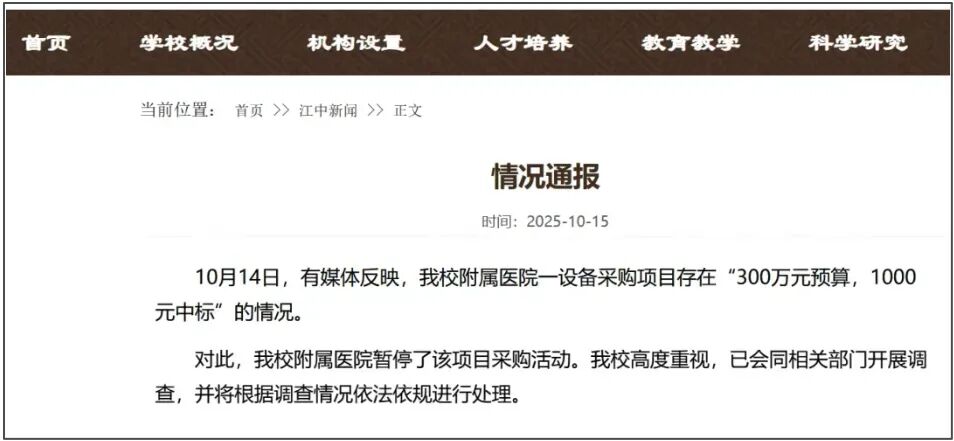
设备白送,耗材翻5倍!医疗采购\"1元中标\"的隐秘生意经还能持续多久?
Xin Lang Cai Jing· 2026-02-24 11:06
Core Viewpoint - The recent notice from Hubei Province addresses the issue of "abnormally low bidding" in government procurement, particularly targeting bids as low as "1 yuan" or "0.01 yuan" [1][19]. Group 1: Government Procurement Issues - The focus on abnormally low bids is not new, with previous regulations implemented in regions like Jiangxi, Guangxi, and Jiangsu, emphasizing scrutiny on bids below 50% of the average price or 45% of the maximum limit [2][10]. - A notable case involved a hospital with a budget of 3 million yuan for medical equipment, which was awarded to a bid of only 1,000 yuan, leading to increased costs for consumables later on [2][19]. Group 2: Market Dynamics and Company Performance - Companies like Wandong Medical have seen high bidding rates in 2025, with CT, MR, and DR equipment winning bids at rates of 47%, 56%, and 50% respectively, but this has come at the cost of profitability [3][20]. - Wandong Medical forecasts a net loss of 199 million to 257 million yuan for 2025, marking the worst annual performance since its listing, while Mindray's gross margin has dropped by 4.59 percentage points to 61.21% [3][15][28]. Group 3: Competitive Strategies and Industry Trends - The intense competition in the in-vitro diagnostics (IVD) sector has led to a significant reduction in the number of companies, from 2,320 to 1,530 between 2023 and 2025, with many resorting to extreme pricing strategies to capture market share [5][23]. - Companies often employ a bundling strategy, offering low-priced equipment while charging high prices for consumables, leading to increased overall costs for hospitals [6][24]. Group 4: Regulatory Responses - The national government has begun to take serious measures against low-cost bidding practices, with new regulations set to take effect in 2026 that will enforce scrutiny on bids significantly below average prices [9][25]. - Hubei Province has established specific thresholds for triggering reviews of abnormally low bids, which may be adjusted based on actual circumstances [11][27]. Group 5: Future Directions for the Medical Equipment Market - Companies are increasingly focusing on international markets and developing differentiated products to navigate the pressures of price competition [16][29]. - The need for innovation is emphasized as the industry shifts from a manufacturing to a creative approach, highlighting the importance of driving growth through new product development [30][31].



成交量大涨45%,大涨:这不是回暖,或是暴跌前最后出逃信号
Sou Hu Cai Jing· 2026-02-12 02:40
Core Viewpoint - The surge in second-hand housing transactions in Shenzhen, with a year-on-year increase of 45.5%, is viewed as a warning signal rather than a sign of market recovery, indicating a potential last escape before a market downturn [1] Group 1: Market Trends - In January 2026, Beijing's second-hand housing transactions remained above 14,000 units for three consecutive months, while Shanghai reached a five-year high with 22,834 units sold in a single month [3] - Shenzhen recorded 6,802 second-hand housing transactions, a nearly 50% year-on-year increase, breaking the traditional seasonal slowdown before the Spring Festival [3] - The new tax policy effective from January 1, 2026, reduced the tax rate on properties held for less than two years from 5% to 3%, saving buyers 40,000 yuan on a 2 million yuan property [3] Group 2: Price Dynamics - The market is characterized by a "price for volume" approach, with properties in Shenzhen selling at prices close to 2017 levels, while buyer interest has increased due to attractive rental yields [3] - In Shanghai, properties priced below 3 million yuan accounted for 60% of transactions, with faster sales of lower-priced homes in areas like Baoshan [3] - The average price of second-hand residential properties in 100 cities fell by 0.85% month-on-month in January, indicating a slight narrowing of declines in major cities like Beijing and Shanghai [6] Group 3: Seller Behavior and Market Sentiment - The number of listings in Shanghai has decreased for nine consecutive months, from 120,000 in April 2025 to 89,000 in January 2026, as some owners choose to withdraw listings or convert to rentals [6] - Owners are adjusting their pricing strategies based on market conditions, with some forming "price protection alliances" to maintain price levels [7] - The rental market's stable returns are influencing sellers' decisions, with some opting to hold onto properties rather than sell at lower prices [9] Group 4: Regional Disparities - There is a clear divergence in market performance, with core urban areas in Shanghai seeing price increases while suburban areas continue to experience price declines [4] - In cities like Xiamen and Foshan, transaction volumes have increased, while third and fourth-tier cities remain sluggish [12] - The decision-making process for buyers is becoming more rational, focusing on factors like transportation, school quality, and rental yields rather than just price fluctuations [12]
春节档票价,19.9元是“引流”还是常态?
Qi Lu Wan Bao· 2026-02-10 08:53
Core Viewpoint - The 2026 Chinese New Year film pre-sale has started with significant price reductions, sparking discussions among audiences about the return of affordable ticket prices, although these low prices are not expected to last long [1][2]. Group 1: Pricing Strategy - The pre-sale phase has introduced ticket prices as low as 19.9 yuan, a stark contrast to the previous years where average prices hovered around 50 yuan, creating a "price shock" in the market [2][6]. - Promotional strategies, including "purchase tickets to enjoy discounts," have led to a surge in pre-sale ticket sales, with some tickets available for as low as 16.9 yuan [2][5]. - However, by February 10, many of the low-priced tickets had disappeared, with prices reverting to a range of 40-60 yuan for popular films, and some premium formats exceeding 100 yuan [4][6]. Group 2: Market Dynamics - The pricing adjustments are dynamic and influenced by pre-sale performance, with cinema staff indicating that prices will fluctuate based on market conditions [5]. - The 2025 Spring Festival box office reached 9.51 billion yuan, with an average ticket price of 50.8 yuan, indicating that even with discounts, the overall market remains sensitive to pricing [6]. - The 2026 Spring Festival is expected to be highly competitive, with six films vying for audience attention, leading to a strategy of "price for volume" to increase viewership and total box office revenue [12][16]. Group 3: Consumer Sentiment - The introduction of low-priced tickets has temporarily activated the pre-sale market, but there are concerns that fluctuating prices may harm consumer trust and market stability in the long run [12][16]. - The industry is exploring additional value-added services to mitigate consumer concerns over pricing, such as affordable packages and enhanced viewing experiences [11].

台铃科技港股递表 两轮车“性价比玩家”谋突围
Jing Ji Guan Cha Bao· 2026-02-07 13:57
Core Viewpoint - Tailin Technology has submitted its IPO application to the Hong Kong Stock Exchange, aiming to expand production capacity and adapt to the smart transformation in the electric two-wheeler market, where it currently ranks third globally with a market share of approximately 5.2% [2][6]. Financial Performance - In the first three quarters of 2025, Tailin Technology reported revenue of 14.84 billion yuan, a year-on-year increase of 38.6%, and a net profit of 823 million yuan, with a growth rate of 122.4% [2][3]. - Revenue figures for 2023, 2024, and the first three quarters of 2025 were 11.88 billion yuan, 13.6 billion yuan, and 14.84 billion yuan respectively, indicating a 14.5% growth in 2024 [3]. - The net profit increased from 286 million yuan in 2023 to 472 million yuan in 2024, reflecting a growth rate of 64.9% [3]. Product Segmentation - Electric bicycles are the core business, contributing 8.35 billion yuan in revenue, accounting for 56.3% of total revenue in the first three quarters of 2025 [3]. - Electric motorcycles generated 2.91 billion yuan, representing 19.6% of total revenue [3]. - The battery business has seen significant growth, with revenue increasing from 1.6% to 20.4% of total revenue from 2023 to the first three quarters of 2025 [4]. Market Position and Competition - Tailin Technology's domestic market share is projected to be 11.7% in 2025, a decline of 2.4 percentage points, making it the only leading brand with a decrease in market share [5]. - The average selling price of Tailin's electric bicycles decreased from 1,297 yuan in 2023 to 1,274 yuan in 2024, contrasting with competitors like Yadea and Aima, whose prices increased [4]. Expansion Plans - The IPO funds will primarily be used for capacity expansion, with plans to add 10.7 million units of production capacity by 2027 across multiple new and existing factories [6][9]. - Tailin aims to open over 500 new retail stores in the next five years, expanding its sales network significantly [7]. Technological Development - Tailin Technology is under pressure to enhance its smart features, as consumer preferences shift towards intelligent design and user experience rather than just long battery life [8]. - The company holds 1,905 patents domestically and 53 internationally, but its innovation in key areas is lagging behind competitors [8]. International Market Strategy - Tailin's flagship model Y33 is primarily targeted at overseas markets, with a production base in Vietnam that is currently operating at a 71% capacity utilization rate [10]. - As of the first three quarters of 2025, overseas revenue accounted for only 2.7% of total revenue, indicating a need for further international market penetration [10].

一汽大众158万辆“销冠”背后,藏着多少焦虑?
Xin Lang Cai Jing· 2026-02-05 05:53
Core Insights - FAW-Volkswagen has faced significant challenges in the automotive market, particularly with the rise of BYD in the new energy vehicle sector, marking a shift in industry dynamics [1] - The company achieved a total vehicle sales of 1.5871 million units in 2025, with a notable performance from its Volkswagen brand, which sold 902,100 units, and Audi, which sold 567,000 units [3][4] - Despite being the only joint venture company to exceed 1.5 million annual sales, FAW-Volkswagen's total sales decreased by approximately 4.3% compared to 2024 [7] Sales Performance - In 2025, the penetration rate of new energy vehicles in China reached 47.9%, a 7 percentage point increase from the previous year, while traditional fuel vehicles still held a significant market share [3] - FAW-Volkswagen's fuel vehicle market share increased by 0.9 percentage points year-on-year, with all three major brands showing positive growth [5] - The company has been able to maintain its position in the fuel vehicle market, but faces increasing competition from new energy vehicles [10] Competitive Landscape - The automotive market is becoming increasingly polarized, with clear distinctions between leading, stable, struggling, and declining companies [5] - FAW-Volkswagen's sedan models, particularly the Sagitar and Magotan, are under pressure from competitors like BYD and Tesla, which are gaining market share in the compact and mid-size sedan segments [8][10] - The company has resorted to aggressive pricing strategies to maintain sales, with significant price reductions on models like the Sagitar and Audi A6L [10][12] Transition to New Energy - FAW-Volkswagen has recognized the need to pivot towards new energy vehicles, launching several plug-in hybrid models in response to market demands [15][21] - The company plans to introduce 13 new models in 2026, with a focus on new energy vehicles, aiming for 60% of sales to come from this segment by 2030 [19][21] - The shift towards hybrid and plug-in vehicles is part of a broader strategy to adapt to changing consumer preferences and market realities [22]