生成引擎优化

Search documents
未来电商会怎么发展?来了美国亚马逊,我得到了一些答案
Sou Hu Cai Jing· 2026-01-17 05:37
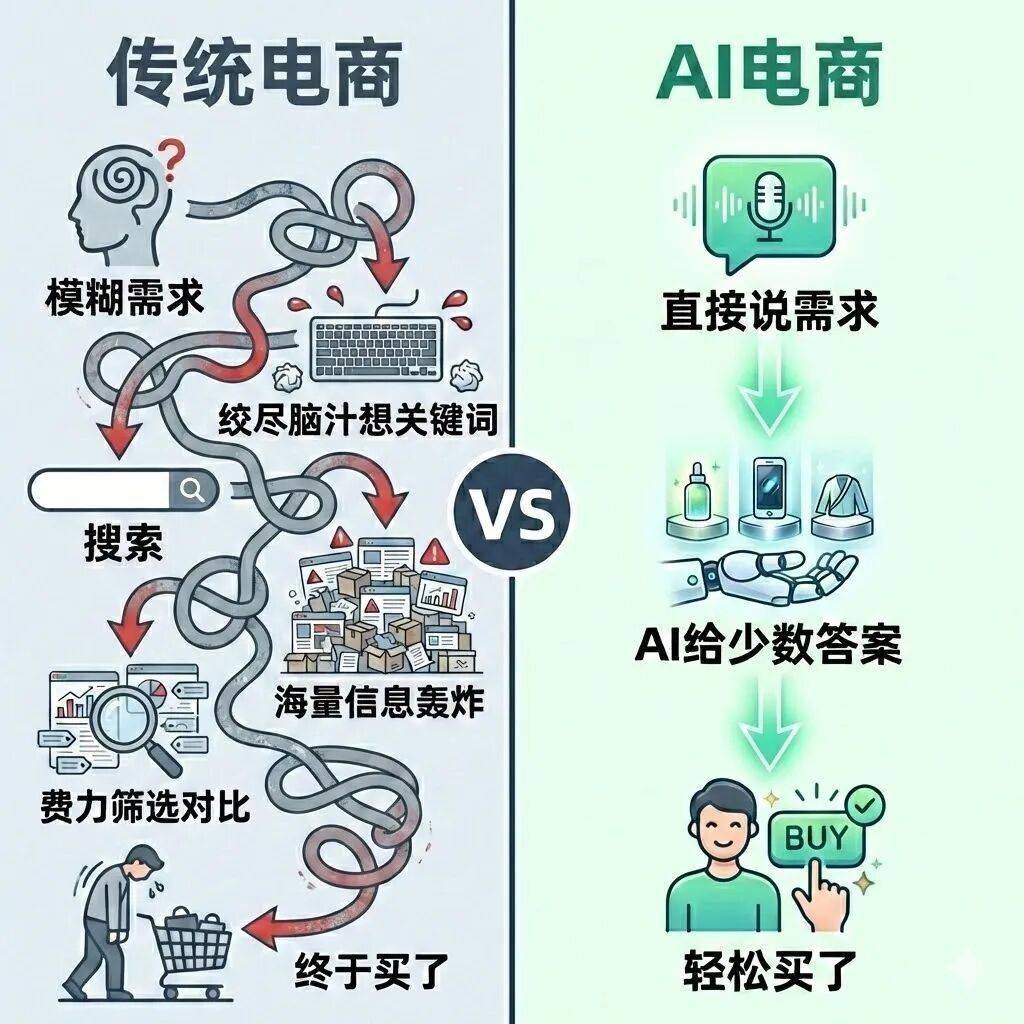
Core Insights - The article discusses the transformative impact of AI on e-commerce, suggesting that the industry is entering an "Answer Era" where AI can provide direct answers to consumer needs rather than just search results [3][5]. Group 1: AI in E-commerce - The shift from traditional e-commerce to AI-driven platforms will change the consumer experience from searching for products to having conversations that yield direct answers [5][17]. - AI can streamline the shopping process by eliminating the need for consumers to translate their needs into keywords and sift through extensive product lists [4][6]. Group 2: User Experience Enhancements - AI will enable users to express their needs in natural language, resulting in a more intuitive shopping experience where they receive a few optimal product recommendations instead of hundreds of options [6][18]. - The AI-driven approach aims to reduce the "transaction cost" of shopping by minimizing the tedious aspects of product comparison while preserving the enjoyment of browsing [19]. Group 3: Implications for Businesses - Businesses will need to adapt their marketing strategies from SEO (Search Engine Optimization) to GEO (Generative Engine Optimization) to align with AI recommendations [21]. - The competitive landscape will shift, as products that do not make it into the top recommendations may face significant visibility challenges, potentially leading to a decline in sales for those items [20][21]. Group 4: Engineering Capabilities - The article emphasizes that companies do not necessarily need to develop large AI models; instead, they should focus on integrating existing AI capabilities effectively into their business processes [24][25]. - Successful implementation of AI features, even simple ones, can lead to substantial revenue increases, as demonstrated by Amazon's experience [26].


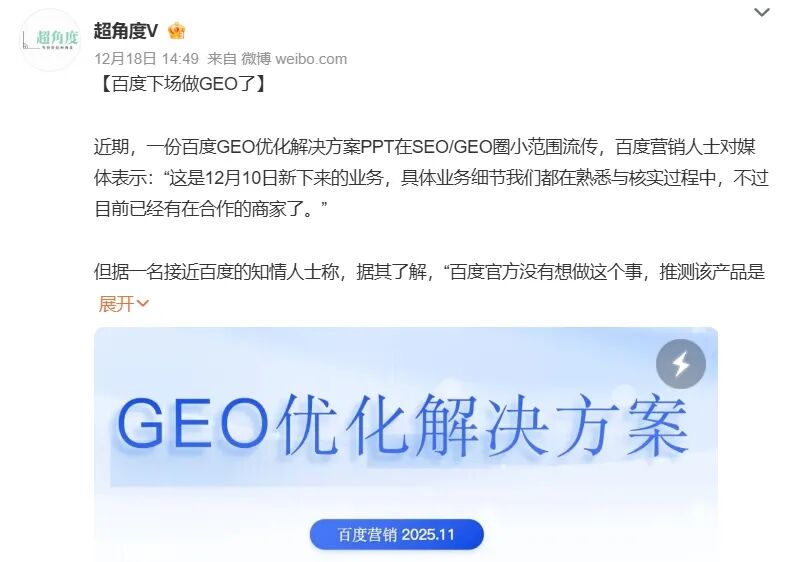
GEO爆火,AI被广告“入侵”
3 6 Ke· 2025-12-29 09:59
Core Insights - The article discusses the emerging trend of Generative Engine Optimization (GEO) in the marketing landscape, particularly focusing on how brands are adapting to AI-driven search behaviors and the potential market growth in this area [1][3]. Industry Overview - The global GEO market is projected to reach 373.9 billion RMB by 2029, with a compound annual growth rate (CAGR) of 139.2% over the next five years [3]. - Traditional search engine optimization (SEO) strategies are being challenged by the rise of AI applications, leading to a shift in marketing dynamics [4][6]. Brand Engagement - Brands are increasingly interested in GEO as a means to enhance their visibility in AI assistants, with many marketing departments actively exploring GEO strategies [4][6]. - The shift in consumer behavior, where users rely on AI for product recommendations rather than traditional keyword searches, is driving brands to adapt their marketing strategies [4][6]. Service Providers - Various service providers are entering the GEO market, including traditional SEO firms transitioning to GEO and new tech-driven startups focused on optimizing content for AI [10][12]. - Pricing for GEO services varies significantly, with some providers offering packages starting at 20,000 RMB for three months of visibility on major AI platforms [9]. Market Dynamics - The GEO market is still in its infancy, with many service providers lacking the ability to guarantee specific outcomes in terms of traffic and conversion [17]. - The opaque nature of AI models, often referred to as the "black box," complicates the effectiveness of GEO strategies, as many factors influence AI-generated responses [17][19]. Challenges and Concerns - The rapid growth of GEO has led to concerns about content quality and the potential for misinformation, as some providers resort to unethical practices to achieve visibility [19][20]. - The lack of transparency and regulatory oversight in the GEO space raises questions about the sustainability and integrity of the marketing practices being employed [22].