生涯教育

Search documents
发挥人工智能在促进大学生高质量充分就业中的作用
Xin Lang Cai Jing· 2026-02-21 20:16
Core Viewpoint - The article emphasizes the importance of restructuring talent cultivation systems, upgrading career education and services, and building a collaborative ecosystem to leverage artificial intelligence (AI) in promoting high-quality and sufficient employment for university graduates [1][2]. Group 1: Talent Cultivation System Reconstruction - The quality of talent cultivation directly impacts university graduates' ability to achieve high-quality employment, with current challenges including rigid disciplinary barriers, outdated course content, and a disconnect between education and industry needs [2]. - AI is seen as a core breakthrough for addressing the imbalance in the job market, necessitating a proactive approach from universities to adapt their professional layouts in line with technological innovation and national strategies [2]. - The curriculum reform should not only focus on professional content but also integrate general education, embedding AI literacy and digital ethics into the curriculum [2][3]. Group 2: Career Education and Employment Services - Current career education and employment guidance face challenges such as weak localized theories and insufficient intelligent service levels, which can be upgraded through AI technology [4]. - There is a need to strengthen localized career education and employment theory research, utilizing AI to analyze the unique characteristics of the Chinese job market and develop a tailored career education and employment guidance system [4][5]. - The establishment of an "AI + Employment" big data center is proposed to integrate various data sources, enhancing the quality of employment services and facilitating precise matching of talent and job opportunities [5]. Group 3: Collaborative Ecosystem Construction - The employment guarantee system currently suffers from insufficient policy coordination, poor data flow, and inadequate stakeholder collaboration, which can be addressed by using AI as a connector [6]. - Enhancing the effectiveness of the employment guarantee system requires collaboration between government and market forces, implementing precise support policies, and reducing costs for enterprises involved in talent cultivation and employment [6]. - A dynamic, multi-dimensional capability framework is suggested to adapt to the rapid changes in technology and job requirements, with a focus on developing a national AI capability certification platform [7]. Group 4: Regional Focus and Implementation - Sichuan province, with its advantages in higher education resources, AI technology research, and digital economy development, is positioned to explore an "AI-enabled" approach to high-quality employment [8]. - The province aims to integrate education, technology, talent, and employment to provide robust support for building a modern industrial system [8].
生涯教育三大转身
Zhong Guo Qing Nian Bao· 2026-01-29 22:54
Core Insights - The integration of AI in career education is becoming essential as it enhances personalized training and adapts to the needs of students in large-scale educational settings [2][5][6] Group 1: AI Empowerment in Career Education - AI serves as a teaching tool, enabling personalized training for large student populations, which traditional methods struggle to achieve [2][3] - Examples include the "Shanxiaoya AI Career Development Assistant" from Shandong University, which generates personalized growth reports for over 18,000 students [2] - The "Mengxi Career" intelligent system from Southwest Petroleum University has assisted over 10,000 students by providing tailored career advice based on industry insights [3] Group 2: Dynamic and Localized Curriculum - Career education is shifting towards a more localized approach, embedding the unique characteristics of each institution into the curriculum [6][10] - Educators emphasize the importance of connecting students' professional choices with national needs, moving away from a one-size-fits-all model [6][10] - The curriculum aims to break stereotypes about professions, showcasing the diverse opportunities available within fields like textiles [7] Group 3: Teaching Methodologies - Educators are adopting interactive teaching methods that encourage students to adapt to changing job markets rather than relying on fixed career plans [8][9] - The "dynamic career ability" concept is introduced, equipping students with skills to navigate their career paths flexibly [8][9] - Courses are designed to empower students to discover their own career directions rather than simply directing them to predetermined paths [9] Group 4: Practical and Real-World Applications - Real-world experiences, such as interviews with industry professionals, are incorporated into the curriculum to provide students with practical insights [8][10] - The focus is on developing a strong understanding of personal conditions and societal needs to guide career choices effectively [10]
新高考生涯教育破局,这场论坛亮出实践 “干货”
2 1 Shi Ji Jing Ji Bao Dao· 2025-12-22 13:23
Core Insights - The forum focused on the construction and innovative practices of career education systems in the context of the new college entrance examination system in China [1] - Beijing Normal University Zhuhai Campus aims to establish a career education demonstration base that serves the Greater Bay Area and the entire country through a new "three-stage four-dimensional" training mechanism [1] - The local government emphasizes the importance of prioritizing education and increasing investment to enhance educational capabilities and support national development through career education [1] Group 1: Theoretical Foundations and Policy Insights - Professor Qiao Zhihong from Beijing Normal University presented a report on the evolution of career education theory, emphasizing the need for diverse learning experiences and the integration of disciplines to support student development [2] - National senior vocational guidance expert Chang Xueliang introduced a five-step method for subject selection guidance based on artificial intelligence and big data, highlighting the importance of matching student interests with professional requirements [2] - Director Cao Liangzhi from Xi'an Jiaotong University discussed the evolution of the Strong Foundation Program and its focus on selecting students with specific qualities, detailing the university's advantages and collaborative training initiatives [2] Group 2: Practical Applications and Innovations - Deputy Director Niu Xiaoyou from Beijing Normal University elaborated on various distinctive enrollment projects, emphasizing the alignment of student interests and long-term academic potential with career planning [3] - Professor Song Chunyan from South China Normal University explored teacher career development in the context of digital transformation, proposing new strategies for professional growth and self-awareness [3] - Wang Yuyun from the Ministry of Education introduced the core functions of the student development center's career platform, providing authoritative tools for career planning and volunteer service [3] Group 3: Case Studies and Experiential Learning - Principal Xu Jian from Hailiang Foreign Language School shared practical cases of cultivating students' sense of purpose and social responsibility through the "e-career" platform and community service [4] - Professor Zhang Wei from South China Normal University discussed the core career competencies needed in the AI era, emphasizing the importance of adapting education to foster innovation and leadership among students [4]
帮助毕业生找到适合自己的工作 职业生涯教育请来AI“助教”
Zhong Guo Qing Nian Bao· 2025-08-13 22:30
Core Viewpoint - The integration of AI tools in universities is enhancing career guidance for graduates, helping them optimize resumes, prepare for interviews, and ultimately improve their job prospects [1][4]. Group 1: AI Applications in Career Guidance - AI is being utilized to assist in repetitive tasks such as information organization, resume optimization, and interview simulation, allowing educators to focus on personalized student support [1]. - Various universities are implementing AI-driven systems, such as resume consultation systems and knowledge graph courses, to aid students in job searching [1][2]. - AI tools help students identify their strengths and weaknesses by allowing them to create and update "growth-oriented" resumes, which can be used for self-reflection and career planning [2][5]. Group 2: Infrastructure and Resources - East China Normal University has installed 12 "AI interview booths" across campus, serving over 5,000 students, providing a private space for interview practice [3]. - Wenzhou University has developed a comprehensive employment service center with over 3,000 square meters of space, including multifunctional interview rooms and AI online interview halls [3]. - Shandong University is developing the "Shanxiaoya" AI career development assistant to analyze student needs and connect them with mentors and industry experts [6]. Group 3: Course Integration and Student Engagement - Career development courses are being enhanced with AI, allowing for more interactive and engaging learning experiences, which have received positive feedback from students [5]. - The focus of career guidance has shifted from traditional methods to teaching students how to effectively interact with AI tools for job matching and preparation [5]. - Shandong University is making career development courses mandatory for freshmen, incorporating practical elements that encourage the use of the "Shanxiaoya" platform for career consultations [6].
开展生涯教育 助力学生就业(稳就业在行动)
Ren Min Ri Bao· 2025-07-31 22:22
Group 1 - The core idea of the articles revolves around the training and development of high-skilled talents at Shenzhen Polytechnic University, particularly through the "Hongzhi Assistance" program, which integrates career education throughout the entire process of recruitment, training, and employment [2][3]. - Shenzhen Polytechnic University has established itself as a national training base for college graduates' employment capabilities, having trained over 4,200 students, with a significant increase in enrollment from the planned 600 to 981 in 2024 [3]. - The university emphasizes practical training and skill competitions, as demonstrated by student Yan Tao, who successfully applied his skills in a national competition and subsequently secured a position with Shenzhen Metro [1][3]. Group 2 - The "Hongzhi Assistance" program includes a comprehensive employment capability training model that features individual diagnostics, skill enhancement, thematic training, expert guidance, and practical exercises to improve students' competitiveness in the job market [2]. - The university's employment guidance center actively assists students in optimizing their resumes and preparing for interviews, ensuring they can effectively present their skills and experiences [2][3]. - The school plans to further develop its curriculum to include training modules focused on emerging fields such as artificial intelligence and smart manufacturing, aiming to ignite students' passion and dreams in vocational education [3].
生涯教育唤醒职业规划意识
Ke Ji Ri Bao· 2025-05-28 01:20
Group 1 - The core idea of the article emphasizes the importance of career planning education in higher education institutions, particularly at Shanxi University of Commerce, which has developed a comprehensive career education system that spans four years [1][4] - The university has introduced innovative programs such as the "Career Experience Week" for freshmen, which engages over 5,000 students annually through gamified activities like "Interest Island Exploration" and "Career Role-Playing" [1][3] - The institution has successfully integrated real-world projects into the curriculum, allowing students to work on practical applications, such as using AI technology for local cultural projects and enhancing training efficiency for companies [2][3] Group 2 - The university's collaborative mechanism includes real projects in classrooms, corporate mentors on campus, and student teams working in enterprises, fostering a strong connection between academic learning and industry needs [3] - The employment and entrepreneurship department has organized various events, including a career planning competition and a simulated job competition, engaging nearly 10,000 participants [3] - The career education system has effectively addressed the issue of students waiting until graduation to seek employment, achieving a satisfaction rate from employers of over 92% for three consecutive years [4]
大学生职业生涯规划意义何在
Zhong Guo Qing Nian Bao· 2025-05-25 23:59
Group 1 - The article emphasizes the importance of career planning education for university students, highlighting that those with clear career goals tend to have better employment outcomes [1][2][4] - The article discusses the need for practical and effective career planning education, as some institutions fail to provide meaningful guidance, leading to a perception of such courses as unhelpful [1][8] - The narrative includes examples of students who have successfully integrated their interests and career goals, demonstrating the positive impact of early and thoughtful career planning [6][7][9] Group 2 - The article points out that career planning should begin earlier than university, with initiatives from the government to guide students in their career choices and personal development [7][8] - It highlights the challenges faced by students in aligning their academic pursuits with their career aspirations, often due to a lack of early guidance and understanding of their interests [6][8] - The significance of competitions, such as the national career planning competition, is noted as a means to encourage students to actively engage in their career planning process and learn from peers [8][9]
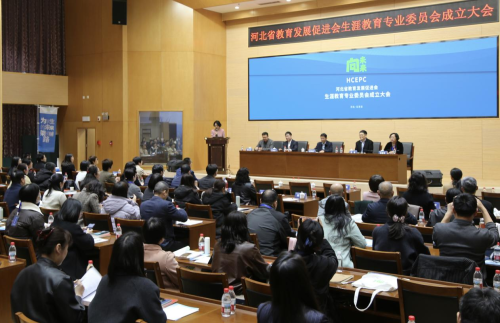
河北省教育发展促进会生涯教育专业委员会成立大会顺利召开
Zhong Guo Chan Ye Jing Ji Xin Xi Wang· 2025-03-31 03:28
Core Points - The establishment of the Hebei Provincial Career Education Professional Committee aims to promote career education research, consultation, guidance, services, and evaluation, creating a platform for collaboration among career education practitioners [3][12] - The committee's core philosophy is "Towards the Future," focusing on the dissemination of scientific theories and methods of career education to the public and fostering interaction and cooperation with other provinces [3][12] Group 1 - The founding meeting of the Hebei Provincial Career Education Professional Committee was held on March 29, 2025, with participation from over 40 units, including leaders, frontline teachers, and renowned experts in career education [1][3] - The committee received six key expectations from the leadership of the Hebei Provincial Education Work Leading Group, emphasizing supervision, internal management, team building, legal compliance, and external cooperation [3] - The committee is seen as a response to national strategic needs, educational reform, and lifelong individual development demands, positioning itself as a resource integrator and innovator [7] Group 2 - The committee will focus on enhancing top-level design, consolidating professional strength, deepening practical innovation, and serving social needs [9] - The meeting included thematic discussions on family education, career education for middle school students, and career education for university students, facilitating extensive exchanges of opinions and suggestions for career education in Hebei [9][10] - The first council and executive council of the committee were elected, with key positions filled by prominent figures in the education sector, including the election of Li Jianqiang as president [10]