
电力数智化

Search documents
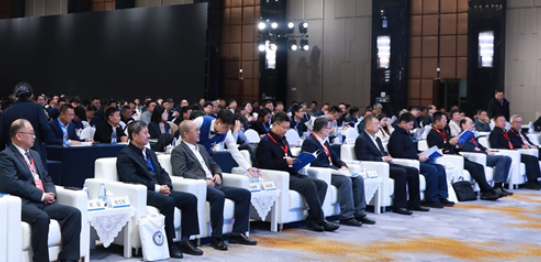
2025电力数智化大会在京召开 分享电力企业数智化转型实践
Jing Ji Wang· 2025-11-24 07:54
大会主论坛现场 电促会党支部书记、会长冯凯表示,"十四五"时期,电力行业抓住新一轮科技革命和产业变革的历 史机遇,加速推进以人工智能为代表的数智技术与能源电力深度融合,服务能源电力保供、绿色低碳转 型、新型电力系统构建、"双碳"目标实现,推动电力高质量发展和高水平安全。电促会自第四届理事会 以来,始终践行"跨界、融合、增值、共享"的服务理念,深入推进协会数字化建设,以实际行动助力数 字中国发展。"十五五"时期,面对新任务、新业态、新模式,电促会将在政府有关部门的大力支持下, 与广大会员单位一道,加深交流合作,群策群力,共同为把我国全面建成社会主义现代化强国、实现第 二个百年奋斗目标贡献自己的一份力量。希望通过本次会议加强会员单位间交流,汇集行业智慧,凝聚 发展共识,推动产业上下游企业协同开放、共享成果、共促发展。 会上,企业和专家代表介绍了各自领域的数智化发展情况。"十四五"时期,国家电网公司以数智技 术和数据要素创新应用为驱动,以业数深度融合为主线,全力实施"163"数字化赋能工程,实现"电网一 张图、数据一个源、业务一条线",推动"三个转型、两个升级",有力支撑新型电力系统建设和公司高 质量发展。面向未来 ...


多数板块机会显现筑底+科技主线回归!节前布局把握主线在哪里?
Sou Hu Cai Jing· 2025-09-24 13:30
Group 1 - The A-share market experienced a downward trend last week, with the Shanghai Composite Index facing significant resistance above 3600 points and heavy profit-taking after recent gains [1] - The upcoming expiration of the 90-day suspension of the 24% reciprocal tariffs between China and the U.S. adds uncertainty to market dynamics, despite ongoing negotiations [1] - The A-share market is expected to continue a "slow bull" trend into the second half of 2025, supported by the "National Nine Articles" policy and similar to the "4 trillion" investment strategy [1] Group 2 - Major sectors with net inflows include semiconductors, domestic software, new energy vehicles, lithium batteries, and military industry [1] - Key concepts with net inflows are artificial intelligence, Huawei supply chain, domestic chips, state-owned enterprise reform, and big data [1] - Top individual stocks with net inflows include Sunshine Power, iFlytek, Luxshare Precision, CATL, OmniVision Technologies, Shanghai Electric, Eastmoney, Changdian Technology, Nanda Optoelectronics, and SMIC [1] Group 3 - The three major telecom operators in China are accelerating their AI applications across various sectors, including mining, agriculture, healthcare, and urban governance, as they compete in the computing power market [3] - Both China Mobile and China Telecom reported AI revenues in the tens of billions, indicating a successful transformation driven by AI applications [4] - The implementation of "Artificial Intelligence + Energy" initiatives is expected to benefit the smart power industry, with a projected market size of approximately 180 billion yuan by 2030 [6] Group 4 - The battery and energy management industry is seeing positive revenue growth due to increased sales of new energy vehicles and global energy storage demand [7] - The capital expenditure in the industry is stabilizing, with some segments beginning to expand capacity [7] - The competitive advantages of leading companies in the lithium battery supply chain are expected to grow, driven by technological innovation and international expansion [7] Group 5 - The Shanghai Composite Index showed signs of recovery with a bullish candlestick, indicating potential support at the 3800-point level, but further upward movement is needed to confirm a trend change [11] - The upcoming expiration of the 90-day tariff suspension marks a critical phase, with potential for continued negotiations but significant uncertainty [11] - The market is anticipated to experience wide fluctuations in September, influenced by long-term capital inflows into sectors such as banking, insurance, technology (AI), and consumer goods with solid fundamentals [11]

长江证券研究所联席所长邬博华:新能源与电力设备行业整体景气指数仍较好
Zheng Quan Shi Bao· 2025-06-25 18:25
Core Viewpoint - The overall outlook for the electric power equipment and new energy sectors remains positive, driven by domestic and international demand synergy, with expectations for continued growth in lithium batteries, wind power, energy storage, and electric power equipment [1][2]. New Energy and Electric Power Equipment - The renewable energy generation capacity in China is expected to reach a historical high in 2024, accounting for over 60% of the global new renewable energy capacity additions, with an anticipated increase of over 300 million kilowatts in wind and solar power installations this year [1]. - By 2024, cumulative wind power capacity in China is projected to reach 520 million kilowatts, while cumulative solar power capacity is expected to hit 890 million kilowatts, marking significant project completions in high-altitude solar and "fishing-light complementary" projects [1]. Lithium Battery Sector - The domestic sales of new energy passenger vehicles continue to show high growth, with a stable profitability outlook for the lithium battery sector, indicating long-term investment opportunities [2]. - The lithium battery industry has experienced a downward adjustment over the past two years, with profitability at historical lows by the end of 2024. However, demand growth is expected to reach 25% to 30% in 2025, driven by increased penetration of new energy vehicles and rising demand in emerging markets [2]. Wind Power Industry - The domestic offshore wind power installation is expected to see high demand from 2025 to 2026, with significant growth anticipated in overseas offshore wind installations in 2026 [2]. - As of early 2023, new offshore wind projects in China have added approximately 5.65 GW, a year-on-year increase of 23%, indicating a robust market for offshore wind power [2]. Energy Storage Sector - The energy storage industry is benefiting from declining costs and improved business models, leading to enhanced economic viability at the end-user level, with global demand expected to continue explosive growth in 2024 [3]. - The sector is transitioning from a low penetration phase to a rapid growth phase, with expectations for high growth in both domestic and overseas markets [3]. Photovoltaic Industry - The photovoltaic sector is showing signs of recovery, with a clear bottoming out in both market sentiment and fundamentals, and potential acceleration in industry clearing due to policy support or technological advancements, with a key turning point to be observed by the end of 2025 [3]. Electric Power Equipment Industry - Despite short-term volatility influenced by export trade conditions, the overall investment in China's power grid remains on an upward trend, with downstream demand showing certainty, presenting opportunities in the digitalization of the electric power sector [3].
