白银时代

Search documents
万科再无郁亮:率先喊出“活下去”的人,先行离场
虎嗅APP· 2026-01-09 10:16
Core Viewpoint - The resignation of Yu Liang marks the end of an era for Vanke, transitioning from a high-growth phase to a more cautious and defensive strategy in the real estate industry [4][5][26]. Group 1: Leadership Transition - Yu Liang, who took over from Wang Shi in 2017, has been a pivotal figure in Vanke's evolution, emphasizing risk management and financial prudence [4][7]. - His departure signifies a shift in Vanke's leadership style, moving away from the previous model established by Wang Shi [5][26]. - The company no longer requires a successor in the mold of Yu Liang, indicating a new phase in its corporate governance [5]. Group 2: Strategic Shifts - Yu Liang warned of a transition from a "golden era" to a "silver era" for the real estate market as early as 2014, advocating for a strategic pivot away from traditional residential development [10][11]. - Under his leadership, Vanke initiated a "de-real estate" strategy, diversifying into urban services and logistics, which included the launch of the "Octopus Plan" in 2015 [11][12]. - The company adopted a defensive strategy during the "black iron era," focusing on cash flow and cutting non-core businesses to ensure survival [15][16]. Group 3: Financial Performance and Market Response - Vanke's stock price faced significant declines, with shares dropping to levels not seen since 2015, reflecting market concerns over its financial health [19]. - The company experienced a substantial increase in bond yields, with some reaching nearly 60%, indicating investor anxiety [19]. - In response to market volatility, Vanke held a rare earnings call to reassure stakeholders of its financial stability and support from local government entities [20]. Group 4: Cost-Cutting Measures - Yu Liang implemented rigorous cost-cutting measures, including a reduction in employee benefits and a focus on minimizing unnecessary expenditures [18][24]. - The company underwent significant asset disposals, including the sale of various projects to streamline operations and improve liquidity [21][22]. - Vanke's internal culture shifted to a more austere environment, emphasizing frugality and efficiency in operations [18][24]. Group 5: Industry Context - The transition from high-leverage growth to a focus on stability and low-profit margins reflects broader trends in the real estate industry, as many firms face similar challenges [26]. - Vanke's evolution under Yu Liang mirrors the industry's shift from rapid expansion to a more cautious approach, emphasizing the need for sustainable practices [26].



“预警者”郁亮,谢幕
Xin Lang Cai Jing· 2026-01-09 06:54
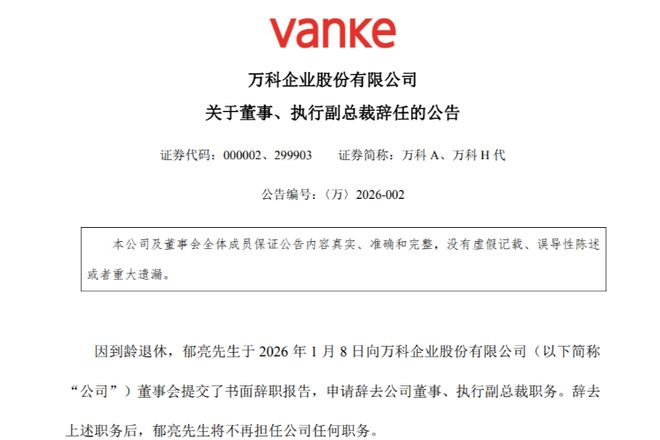
Core Viewpoint - Yu Liang's retirement marks the end of a 35-year career at Vanke, during which he played a crucial role in transforming the company from a billion-yuan enterprise to a leading player in the industry, but also left behind challenges and risks that need to be addressed [1][3][10]. Group 1: Career Overview - Yu Liang joined Vanke in 1990 and quickly rose through the ranks, becoming general manager in 2001 and later chairman in 2017 [4][7]. - Under his leadership, Vanke achieved significant milestones, including becoming the first real estate company in China to surpass 100 billion yuan in sales by 2010 [4][15]. - He implemented major reforms such as the "180 Plan" to streamline operations and the "Partnership System" to align employee and shareholder interests, which contributed to rapid sales growth [5][15]. Group 2: Challenges Faced - Despite the successes, Vanke faced significant challenges, including management and financial risks that accumulated during periods of rapid growth [6][18]. - The company struggled with strategic missteps, particularly in focusing on first- and second-tier cities while missing opportunities in third- and fourth-tier markets, allowing competitors like Evergrande and Country Garden to gain ground [18][19]. - Vanke's financial performance began to decline, with a notable drop in net profit by 45.7% in 2021, and a projected loss of 494.78 billion yuan in 2024 [19][20]. Group 3: Future Outlook - With Yu Liang's departure, Vanke faces the challenge of navigating its current financial difficulties and strategic misalignments while seeking new leadership to guide the company forward [10][21]. - The ongoing support from major shareholder Shenzhen Metro Group, which has provided 30.796 billion yuan in loans, may help alleviate short-term liquidity issues but does not resolve the underlying debt problems [19][20].
从千亿舵手到“活下去” 预警者:郁亮时代落幕
Bei Ke Cai Jing· 2026-01-09 05:29
Core Viewpoint - Yu Liang's retirement marks the end of a 35-year career at Vanke, during which he played a crucial role in transforming the company from a billion-yuan enterprise to a leading player in the real estate industry, but the company now faces significant challenges and uncertainties ahead [1][8]. Group 1: Career and Contributions - Yu Liang joined Vanke in 1990 and quickly rose through the ranks, becoming the general manager in 2001, just seven years after joining [2]. - He was instrumental in Vanke's "Thousand Billion Plan," achieving a sales milestone of over 100 billion yuan within six years, making Vanke the first company in China's real estate history to surpass 100 billion yuan in sales by 2010 [2][3]. - Under his leadership, Vanke's sales surged, reaching 3,647.7 billion yuan in 2016 and 5,299 billion yuan in 2017, with a peak of 7,041.5 billion yuan in 2020 [3]. Group 2: Strategic Decisions and Challenges - Despite the rapid growth, Vanke faced issues related to organizational structure and management, leading to the implementation of the "180 Plan" to streamline operations [3]. - Yu Liang introduced the "Partner System" in 2014 to align employee and shareholder interests, which contributed to Vanke's strong performance during a high-demand period in the real estate market [3]. - However, strategic missteps, such as focusing on first- and second-tier cities and missing opportunities in third- and fourth-tier markets, allowed competitors like Country Garden and Evergrande to gain market share [6]. Group 3: Recent Developments and Future Outlook - Vanke's performance began to decline in 2021, with a reported revenue of 452.8 billion yuan, a mere 8% increase, while net profit dropped by 45.7% to 22.52 billion yuan [6]. - The company is currently facing a severe financial crisis, with a projected loss of 49.48 billion yuan in 2024, prompting support from major shareholder Shenzhen Metro Group [7][8]. - As Yu Liang retires, Vanke must navigate its ongoing challenges and strategize for a new chapter in its corporate history [9].
郁亮到龄退休,35年万科生涯结束!8年前曾喊出“活下去”
Nan Fang Du Shi Bao· 2026-01-08 12:30
Core Viewpoint - The resignation of Yu Liang marks the end of a significant 35-year career at Vanke, with his departure expected to have no immediate impact on the company's operations or board functions [2]. Group 1: Career and Contributions - Yu Liang, born in 1965, has held various key positions at Vanke since joining in 1990, including CEO and Chairman, and has been instrumental in transforming Vanke from a regional player to a leading national real estate company with revenues reaching 700 billion [3]. - Under Yu's leadership, Vanke achieved its "Thousand Billion Plan" ahead of schedule in 2010, becoming the first Chinese real estate company to surpass annual sales of 100 billion [3]. - By 2020, Vanke's contract sales peaked at 704.15 billion, showcasing the company's growth trajectory during Yu's tenure [3]. Group 2: Industry Insights and Strategic Shifts - Yu Liang is recognized for his foresight regarding industry cycles, coining terms like "Silver Era" and "Survive" to guide Vanke's strategic direction amidst changing market conditions [4]. - His predictions have influenced Vanke's transition towards a "development + operation + service" model, providing critical insights for the broader industry [4]. Group 3: Challenges and Market Position - Despite Yu's strategic foresight, Vanke faced challenges in executing its strategies, leading to a significant lag in growth compared to competitors like Evergrande and Country Garden during the "Silver Era" [6]. - Vanke's high land acquisition costs from 2019 to 2021 have become a burden as the real estate market entered a downturn, contributing to a projected loss of nearly 50 billion in 2024, marking the company's first annual loss since its inception [6]. - As Yu departs, Vanke is experiencing its most severe challenges, with ongoing liquidity issues and credit rating downgrades, raising questions about the company's future and its ability to navigate the real estate cycle [6].
银色的落幕与回响
Bei Jing Wan Bao· 2025-10-24 07:51
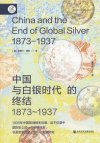
Core Insights - The article discusses the transition from a silver-based monetary system to a gold standard in the late 19th and early 20th centuries, highlighting China's unique position as a major user of silver during this period [3][4][5] - It emphasizes the complex interactions between global monetary changes and China's declining silver economy, revealing how international powers influenced China's monetary system for their own economic benefits [6][8] Group 1: Historical Context - In the late Ming Dynasty, the demand for a stable currency grew due to the flourishing commodity economy, leading to silver becoming the dominant form of currency in China [4] - The Qing Dynasty faced a chaotic monetary system with multiple currencies in circulation, which complicated trade and hindered economic development [5] Group 2: Foreign Influence - Foreign powers, particularly in the late 19th and early 20th centuries, exerted significant control over China's monetary system, using various means to further their economic interests [6][8] - The establishment of foreign banks, such as HSBC, played a crucial role in shaping China's silver trading and financial practices, reflecting the passive position of China's monetary system in the international economic landscape [6] Group 3: National Reforms - The Nationalist government attempted to reform the chaotic monetary system, culminating in the 1935 introduction of a new currency, the "Legal Currency," which centralized currency issuance and marked the end of the silver standard [7] - Despite facing challenges like war and inflation, the reform was a significant step towards modernizing China's monetary system and reducing reliance on silver [7] Group 4: Implications and Lessons - The end of the silver era illustrates both the inevitability and randomness of historical change, driven by external interventions and internal modernization needs [8][9] - The study of this period provides valuable insights into the importance of a stable and autonomous monetary system for national economic development, especially in the context of globalization [9]