石油利益

Search documents
马杜罗在纽约法院首次出庭,对贩毒等指控表示"不认罪"
Hua Er Jie Jian Wen· 2026-01-05 17:42
Core Viewpoint - The case against Venezuelan President Maduro, involving drug-related charges, has raised significant international concerns regarding U.S. sovereignty violations and the motivations behind the prosecution, particularly in relation to oil interests [1][6]. Group 1: Charges and Legal Proceedings - Maduro faces four charges: drug terrorism conspiracy, cocaine smuggling conspiracy, possession of machine guns and explosives, and conspiracy related to possession of machine guns and explosives [2][3]. - The supplementary indictment details Maduro's alleged collaboration with drug traffickers, including providing diplomatic cover for drug operations and involvement in violent acts against those who owed debts [2][3]. - The court proceedings were presided over by Judge Alvin Hellerstein, who emphasized the importance of a fair trial [3][4]. Group 2: Historical Context and U.S. Actions - The U.S. has been planning the prosecution of Maduro since at least 2020, with previous accusations linking him to a drug trafficking organization [5]. - The recent military actions by the U.S. against Venezuela, including the capture of Maduro and his wife, have been framed as part of a broader strategy to exert control over Venezuelan oil resources [5][6]. Group 3: International Reactions - The international community has expressed outrage over the U.S. actions, with various leaders condemning the violation of international law and the potential precedent it sets for global political stability [6][7]. - Maduro's son, Nicolás Maduro Guerra, warned that normalizing the kidnapping of a head of state poses a direct threat to global political stability [7].
纽约时报:特朗普为何选定马杜罗的副总统担任委内瑞拉新领导人
美股IPO· 2026-01-05 04:22
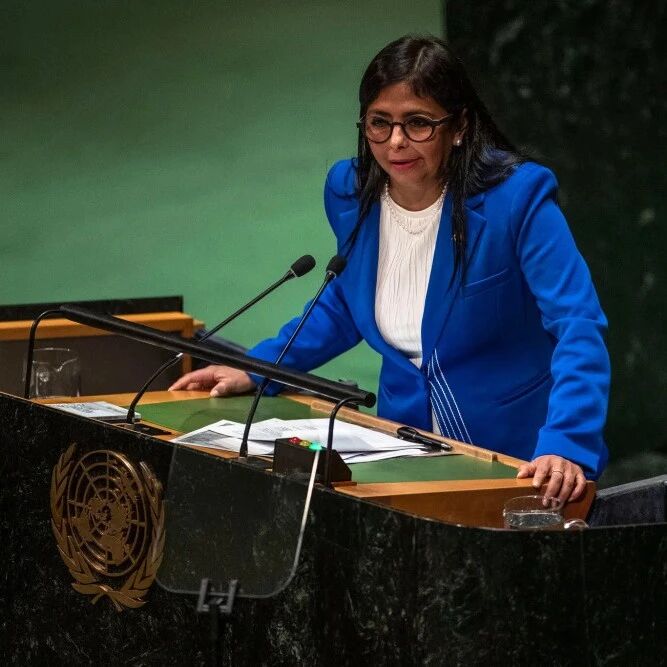
Core Viewpoint - The article discusses the U.S. government's decision to support Venezuelan Vice President Delcy Rodríguez as a more manageable leader compared to Nicolás Maduro, amid escalating tensions and military actions in Venezuela [1][3][4]. Group 1: U.S. Government's Strategy - U.S. officials have identified Delcy Rodríguez as a suitable candidate to replace Maduro, primarily due to her management of Venezuela's crucial oil industry, which has impressed Trump administration officials [7][8]. - The U.S. military conducted a pre-dawn raid in Caracas, capturing Maduro and his wife, which reflects the administration's commitment to military threats against the Maduro regime [5][21]. - Trump has expressed intentions to "control" Venezuela and reclaim U.S. oil interests, marking a significant shift in U.S. foreign policy towards Venezuela [11][12]. Group 2: Delcy Rodríguez's Profile - Rodríguez, who has a background in economic problem-solving, has been credited with stabilizing Venezuela's economy and gradually increasing oil production despite severe U.S. sanctions [16][18]. - She has built alliances with Venezuela's economic elite and foreign investors, positioning herself as a moderate technocrat in contrast to Maduro's more aggressive security officials [18][19]. - Despite her technical approach, Rodríguez has not condemned the oppressive tactics used to maintain Maduro's regime, indicating potential challenges in her governance [18][19]. Group 3: Political Dynamics - The U.S. relationship with Rodríguez's interim government will depend on her adherence to American interests, with the possibility of further military action if she fails to comply [11][15]. - The decision to support Rodríguez over María Corina Machado, a Nobel Peace Prize winner, highlights the complexities of U.S. foreign policy, as Machado has been a vocal critic of Maduro and has sought U.S. support for her political ambitions [12][22][23]. - Machado's recent statements indicate her readiness to lead Venezuela, but Trump has expressed skepticism about her ability to garner sufficient support within the country [23][24].

捅马蜂窝了!特朗普下令开战,俄英法选边站,美本土或陷入大乱
Sou Hu Cai Jing· 2026-01-04 14:33
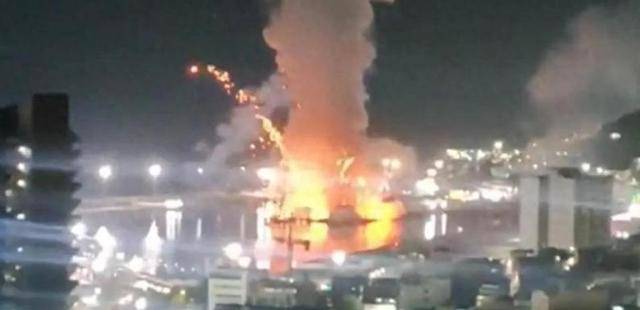
Core Viewpoint - The U.S. military operation to capture Maduro and his wife was executed swiftly but has led to significant backlash both domestically and internationally, revealing vulnerabilities in U.S. foreign policy and alliances [1][3][39] Group 1: Military Operation Details - The operation took only three hours, involving air support and intelligence gathered over six months, including knowledge of Maduro's routine [5][7] - The operation was characterized as a "perfect" tactical success but highlighted strategic weaknesses, as the U.S. avoided attacking Venezuela's oil facilities to ensure Maduro's survival for trial [7][11] Group 2: Political Repercussions - The U.S. faced immediate backlash from traditional allies like the UK, France, and Germany, who distanced themselves from the operation, indicating a loss of diplomatic credibility [21][23] - The operation sparked widespread anti-war protests across the U.S., impacting the Republican Party's standing ahead of midterm elections, with Trump's approval ratings dropping significantly [29][31] Group 3: Economic Impact - The military action caused volatility in the stock market, with investors reacting negatively, leading to a surge in oil prices, which could exacerbate inflation and affect consumer sentiment [35][37] - The rising oil prices, while beneficial for oil companies, pose a risk to ordinary consumers, potentially jeopardizing Trump's political future if inflation rises again [37] Group 4: Geopolitical Consequences - The operation has reignited tensions in Latin America, with countries like Brazil and Argentina condemning U.S. actions, suggesting a potential shift in regional dynamics [27] - The U.S. is perceived as increasingly isolated, with its actions viewed as a revival of outdated imperialistic strategies, raising concerns about future geopolitical stability [27][39]
美国前副总统哈里斯最新表态:对委内瑞拉动武不合法
Xin Lang Cai Jing· 2026-01-04 10:45
Core Viewpoint - The former U.S. Vice President Kamala Harris opposes military intervention in Venezuela, stating it is "wrong and unwise" and does not contribute to U.S. safety or affordability for its citizens [1]. Group 1: Military Intervention - Harris emphasizes that military actions taken by the U.S. in Venezuela are illegal and counterproductive [1]. - She argues that past U.S. interventions, often framed as "displays of power," have led to chaos and have negatively impacted American families [1]. Group 2: Public Sentiment - Harris notes that the American public is weary of being misled regarding military actions and does not support further military interventions [1]. - She highlights that the motivations behind such actions, particularly under the Trump administration, are tied to oil interests and personal ambitions rather than national interests [1].
美国突发!100多个城市,爆发示威!马斯克宣布:免费一个月
券商中国· 2026-01-04 08:15
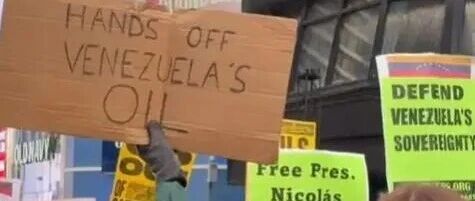
Group 1: U.S. Military Action Against Venezuela - The U.S. launched a large-scale military operation against Venezuela on January 3, capturing President Maduro and his wife, with Trump stating that the U.S. will "manage" Venezuela until a "safe" transition occurs [4] - Former U.S. Vice President Harris criticized the military action as "wrong and unwise," arguing it is illegal and does not enhance U.S. security or affordability for American families [3][4] - New York City Mayor Mamdani expressed opposition to the U.S. actions, labeling them as war crimes and violations of international law [2][4] Group 2: Protests in the U.S. - Over 100 cities in the U.S. held protests on January 3 against the military action in Venezuela, organized by the anti-war coalition "Immediate Action to Stop War and Eliminate Racism" [2] - Protesters displayed banners with messages such as "Defend Venezuela, Free Maduro" and "No War on Venezuela," emphasizing their opposition to U.S. intervention [2] Group 3: Oil Industry Response - ConocoPhillips, one of the major U.S. oil companies, stated it is too early to speculate on involvement in expanding oil production projects in Venezuela [5] - Chevron is currently the only major U.S. oil company operating in Venezuela, with a significant portion of the country's oil production [6] - The U.S. government faces challenges in attracting foreign investment in Venezuela's oil sector due to current global oil price conditions and the need for a stable environment for investment [6]