
石油市场稳定

Search documents
8个主要产油国宣布今年3月份按计划暂停增产
Sou Hu Cai Jing· 2026-02-02 12:43
Group 1 - OPEC and eight major non-OPEC oil-producing countries have decided to maintain their production plan established in November 2025 and continue to suspend production increases until March 2026 [1][3] - The decision to pause production increases is influenced by seasonal factors, with countries like Saudi Arabia and Russia keeping production levels consistent with December 2025 and January-February 2026 [3] - In 2023, these eight major oil-producing countries announced voluntary production cuts totaling approximately 1.65 million barrels per day in April and 2.2 million barrels per day in November to stabilize the market, with these measures being extended multiple times [5] Group 2 - The production strategy was adjusted in 2025, with a decision to gradually increase oil production starting from April 1, 2025, but was reassessed in November 2025, leading to a pause in production increases for the first three months of 2026 [5]

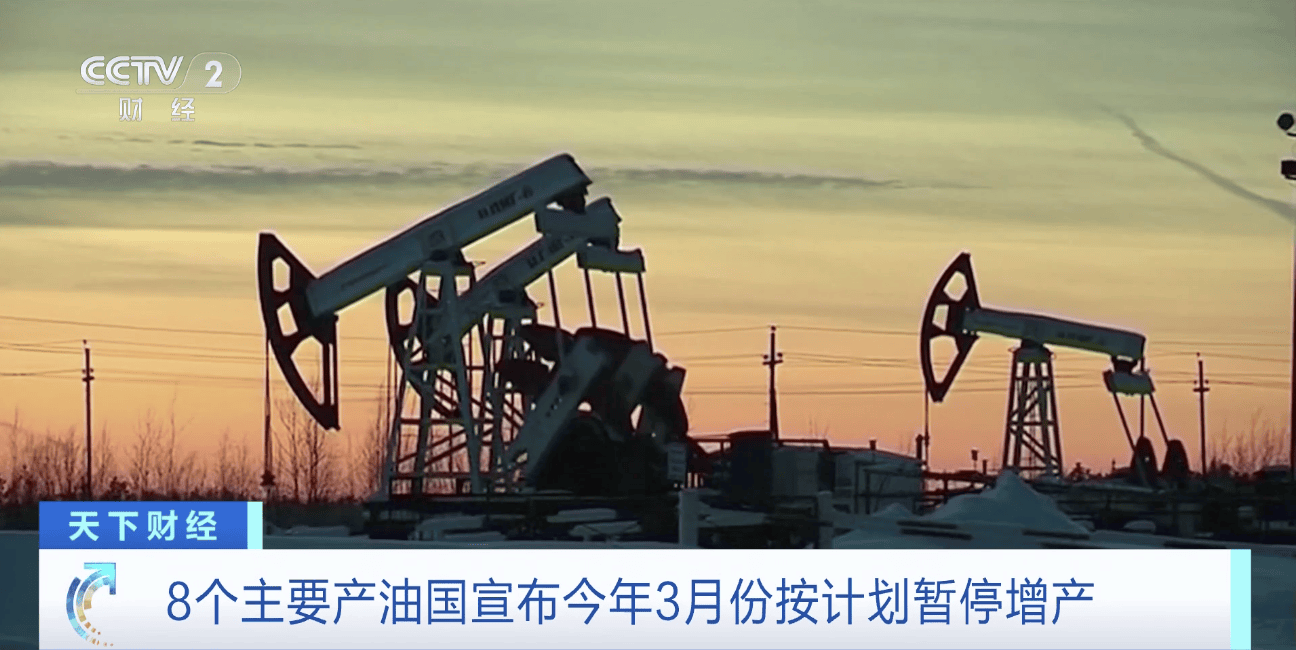
【环球财经】主要产油国宣布3月按计划暂停增产
Xin Hua She· 2026-02-01 22:31
Core Viewpoint - OPEC and eight major non-OPEC oil-producing countries have decided to maintain their production plan established in November 2025 and continue to suspend production increases until March 2026 [1][2] Group 1: Production Decisions - The eight countries, including Saudi Arabia, Russia, Iraq, UAE, Kuwait, Kazakhstan, Algeria, and Oman, held an online meeting to discuss the international oil market situation and outlook [1] - Due to seasonal factors, these countries will keep production levels the same as in December 2025 and January and February 2026 [1] - The eight countries announced voluntary production cuts of approximately 1.65 million barrels per day in April 2023 and an additional 2.2 million barrels per day in November 2023, with these measures being extended multiple times [1] Group 2: Market Dynamics - The production increases decided in March 2025 were gradually implemented starting April 1, 2025, with daily increases of 411,000 barrels in May, 548,000 barrels in June, 547,000 barrels in September, and 137,000 barrels in October, November, and December [1] - During this period, oil production in the U.S. and Canada increased, leading to a loss of market share for OPEC [1]
主要产油国宣布3月按计划暂停增产
Xin Hua She· 2026-02-01 15:54
Group 1 - OPEC and eight major non-OPEC oil-producing countries have decided to maintain their production plan established in November 2025 and continue to suspend production increases until March 2026 [1] - The representatives from Saudi Arabia, Russia, Iraq, UAE, Kuwait, Kazakhstan, Algeria, and Oman held an online meeting to discuss the international oil market situation and outlook [1] - Due to seasonal factors, these countries will keep production levels the same as in December 2025 and January and February 2026 [1] Group 2 - In April 2023, the eight countries announced a voluntary production cut of approximately 1.65 million barrels per day, followed by an additional voluntary cut of 2.2 million barrels per day announced in November 2023 [1] - The two major production cut measures have been extended multiple times, but during this period, oil production in the US and Canada has increased, leading to a loss of market share for OPEC [1] - In March 2025, these eight countries decided to gradually increase oil production starting from April 1, with daily increases of 411,000 barrels in May, 548,000 barrels in June, 547,000 barrels in July, and 137,000 barrels in October, November, and December [1]
欧佩克+声明:3月暂停上调石油产量
Xin Lang Cai Jing· 2026-02-01 15:13
Group 1 - OPEC+ announced that eight member countries will maintain their plan to pause oil production increases in March [1] - The organization reaffirmed its commitment to market stability and indicated a stable global economic outlook [1] - Current oil market fundamentals are healthy, with low inventory levels reported [1]
美媒:海湾国家游说美国别对伊朗动武
Xin Hua She· 2026-01-13 23:31
Core Viewpoint - Gulf Arab countries, including Saudi Arabia, Oman, and Qatar, are lobbying the Trump administration against military action against Iran, citing potential disruptions to the oil market and risks to their domestic stability [1] Group 1: Gulf Arab Countries' Concerns - Gulf Arab nations have warned the U.S. that military action against Iran could destabilize the oil market, ultimately harming the U.S. economy [1] - Saudi officials have assured Iran that they will not be involved in any potential conflict and will not allow the U.S. to use their airspace for strikes [1] Group 2: U.S. Military Options and Iran's Response - President Trump has threatened military intervention in Iran and has canceled all talks with Iranian officials, indicating a shift towards more aggressive military options [1] - Iran's Foreign Minister has expressed readiness for negotiations with the U.S. based on mutual respect, while the Iranian Defense Minister has stated that Iran will respond more forcefully if its territory is violated [1]
光大期货能化商品日报(2026年1月6日)-20260106
Guang Da Qi Huo· 2026-01-06 06:19
1. Report Industry Investment Rating - All the analyzed energy and chemical products, including crude oil, fuel oil, asphalt, rubber, methanol, polyolefins, and PVC, are rated as "volatile" [1][2][4][6]. 2. Core Viewpoints of the Report - The geopolitical situation in Venezuela has led to short - term fluctuations in crude oil prices. OPEC and non - OPEC countries' production plans and Venezuela's actual supply situation will affect the oil market. Overall, short - term downside risks for oil prices are limited [1]. - The fuel oil market is under pressure due to sufficient supply. High - sulfur fuel oil has some demand support, while low - sulfur fuel oil demand is weak. Both high - and low - sulfur fuel oil prices are expected to follow oil price fluctuations [2]. - The asphalt market has bottom support from raw materials and supply, but there is uncertainty in future raw material supply. Prices are expected to stabilize and strengthen [4]. - The rubber market is affected by factors such as heavy - truck sales and overseas production. With minor fundamental contradictions, rubber prices are expected to fluctuate [4]. - The methanol market has a supply - demand balance. A decline in Iranian shipments will support prices, while compressed MTO device profits may put pressure on prices. It is expected to maintain a low - level, strong - side fluctuation [6]. - The polyolefin market has a supply reduction in January and a demand recovery in the first half of the month. However, inventory is expected to increase in the second half of the month, so prices will fluctuate at the bottom [7]. - The PVC market has high - level supply, weak domestic demand, and a weak - reality, strong - expectation structure. Price increases are limited, and it is expected to fluctuate at the bottom [8]. 3. Summary by Relevant Catalogs 3.1 Research Views - **Crude Oil**: On Monday, oil prices rose. WTI February contract closed up $0.10 to $58.32 per barrel, Brent March contract closed up $1.01 to $61.76 per barrel, and SC2602 closed up 1.3 yuan to 428.1 yuan per barrel. OPEC and 8 major non - OPEC countries will maintain the production plan and pause production increases in February and March. Venezuela has large oil reserves, but short - term supply has increased marginally, and medium - term uncertainty remains. Overall, short - term downside risks for oil prices are limited [1]. - **Fuel Oil**: On Monday, the main fuel oil contracts on the Shanghai Futures Exchange declined. Singapore's fuel oil supply is expected to be sufficient in January - February, with high - sulfur and low - sulfur fuel oil supply increasing. High - sulfur fuel oil demand is strong, while low - sulfur fuel oil demand is weak. The market is under pressure, and prices are expected to follow oil price fluctuations [2]. - **Asphalt**: On Monday, the main asphalt contract on the Shanghai Futures Exchange rose. Diluted asphalt port arrivals are stable in the short term, but there is uncertainty in future raw material supply. With winter - storage contracts supporting the bottom, asphalt prices are expected to stabilize and strengthen [4]. - **Rubber**: On Monday, rubber - related contracts on the Shanghai Futures Exchange rose. In December 2025, China's heavy - truck sales decreased by about 16% month - on - month but increased by about 13% year - on - year. Indonesia's rubber exports increased. With minor fundamental contradictions, rubber prices are expected to fluctuate [4]. - **Methanol**: On Monday, methanol - related prices were reported. In January, domestic production is expected to increase slightly, and imports will decline. Demand has certain support. Iranian shipments decline will support prices, while compressed MTO device profits may put pressure on prices. It is expected to maintain a low - level, strong - side fluctuation [6]. - **Polyolefins**: On Monday, polyolefin - related prices were reported. In January, supply will decrease slightly, and demand will recover in the first half of the month but weaken in the second half. Inventory is expected to increase in the second half of the month, and prices will fluctuate at the bottom [7]. - **PVC**: On Monday, PVC market prices in different regions showed narrow fluctuations. Supply remains high, domestic demand slows, and there is a weak - reality, strong - expectation structure. Price increases are limited, and it is expected to fluctuate at the bottom [8]. 3.2 Daily Data Monitoring - The report provides data on the basis of various energy and chemical products, including crude oil, liquefied petroleum gas, asphalt, high - sulfur fuel oil, low - sulfur fuel oil, methanol, urea, linear low - density polyethylene, polypropylene, etc. It shows spot prices, futures prices, basis, basis rates, price changes, and the position of the latest basis rate in historical data [9]. 3.3 Market News - US President Trump stated that US investment in Venezuela's oil industry is a key goal, and the US embargo on Venezuelan oil remains in effect. OPEC and 8 major non - OPEC countries will maintain the production plan and pause production increases in February and March to stabilize the oil market [11]. 3.4 Chart Analysis - **4.1 Main Contract Prices**: The report presents historical price charts of main contracts for various energy and chemical products from 2021 - 2025, including crude oil, fuel oil, low - sulfur fuel oil, asphalt, LPG, PTA, ethylene glycol, etc. [13][14][15]. - **4.2 Main Contract Basis**: It shows historical basis charts of main contracts for various products, such as crude oil, fuel oil, low - sulfur fuel oil, asphalt, ethylene glycol, PP, etc. [30][34][35]. - **4.3 Inter - contract Spreads**: The report provides charts of inter - contract spreads for different products, including fuel oil, asphalt, PTA, ethylene glycol, PP, LLDPE, natural rubber, etc. [42][44][48]. - **4.4 Inter - product Spreads**: It presents charts of inter - product spreads, such as crude oil's internal - external spread, B - W spread, fuel oil's high - low sulfur spread, fuel oil/asphalt ratio, etc. [59][61][63]. - **4.5 Production Profits**: The report shows production profit charts for LLDPE and PP [68]. 3.5 Research Team Member Introduction - The report introduces the members of the energy and chemical research team, including Deputy Director Zhong Meiyan, Research Director Du Bingqin, Natural Rubber/Polyester Analyst Di Yilin, and Methanol/Propylene/Pure Benzene PE/PP/PVC Analyst Peng Haibo, along with their educational backgrounds, honors, and work experiences [72][73][74]. 3.6 Contact Information - The company's address is in the China (Shanghai) Pilot Free Trade Zone, with a phone number, fax number, customer service hotline, and postal code provided [77].
主要产油国宣布!
中国能源报· 2026-01-05 09:05
Core Viewpoint - Major oil-producing countries have decided to maintain their production levels for February and March 2026, following a previously established production plan from November 2025 [3][4]. Group 1: Production Decisions - OPEC and eight major non-OPEC oil-producing countries, including Saudi Arabia, Russia, and Iraq, held an online meeting to discuss the international oil market and decided to keep production levels unchanged for February and March 2026 [3]. - The decision to pause production increases is attributed to seasonal factors, maintaining the same output as in December 2025 and January 2026 [3][4]. - The eight countries had previously announced voluntary production cuts of approximately 1.65 million barrels per day in April 2023 and an additional 2.2 million barrels per day in November 2023, with these measures being extended multiple times [3]. Group 2: Market Dynamics - Despite the production cuts by OPEC, countries like the United States and Canada have increased their oil production, resulting in OPEC losing some market share [3]. - In March 2025, the eight countries decided to gradually increase oil production starting from April 1, 2025, with specific increases in daily production noted for the months following [3].

【环球财经】主要产油国宣布维持2月和3月产量不变
Xin Hua She· 2026-01-04 22:41
Group 1 - OPEC and eight major non-OPEC oil-producing countries have decided to maintain their production plan set in November 2025, continuing to pause production increases in February and March 2026 [1] - The representatives from Saudi Arabia, Russia, Iraq, UAE, Kuwait, Kazakhstan, Algeria, and Oman held an online meeting to discuss the international oil market situation and outlook [1] - The decision to pause production increases is attributed to seasonal factors, with production levels remaining the same as in December 2025 and January 2026 [1] Group 2 - In April 2023, the eight countries announced a voluntary production cut of approximately 1.65 million barrels per day, followed by an additional voluntary cut of 2.2 million barrels per day announced in November 2023 [1] - These production cuts have been extended multiple times, but during this period, oil production in the US and Canada has increased, resulting in OPEC losing some market share [1] - Starting from April 2025, the eight countries decided to gradually increase oil production, with daily increases of 411,000 barrels in May, 548,000 barrels in June, 547,000 barrels in July, and 137,000 barrels in October, November, and December [1]
主要产油国最新宣布!
中国能源报· 2025-12-01 04:33
Core Viewpoint - Major oil-producing countries have decided to maintain their production cut plans for the first three months of 2026, aiming to stabilize the oil market amid a relatively stable global economic outlook [3]. Group 1: Production Decisions - OPEC and eight major non-OPEC oil-producing countries, including Saudi Arabia, Russia, and Iraq, have agreed to keep their production levels unchanged from December 2025 for January, February, and March 2026 [3]. - The decision to pause production increases is attributed to seasonal factors, with the countries aiming to maintain stability in the oil market [3]. Group 2: Historical Context and Market Dynamics - In April 2023, these eight countries announced a voluntary production cut of approximately 1.65 million barrels per day, followed by an additional voluntary cut of 2.2 million barrels per day in November 2023 [3]. - Despite these cuts, the increase in oil production from countries like the United States and Canada has led to OPEC losing some market share [3]. - From April 1, 2023, the eight countries began gradually increasing oil production, with daily increases of 411,000 barrels in May, 548,000 barrels in June, and 547,000 barrels in September, followed by a smaller increase of 137,000 barrels in October, November, and December [3].

八个主要产油国宣布:维持明年前三个月暂停增产计划
Zhong Guo Xin Wen Wang· 2025-12-01 03:22
Group 1 - Eight major oil-producing countries, including Saudi Arabia and Russia, have decided to maintain their production cut plan until the first quarter of 2026, as announced by OPEC on November 30 [1] - The countries reaffirmed their decision to keep production levels the same as December 2025, citing seasonal factors and a stable global economic outlook [1] - These countries will closely monitor market conditions and adjust production rates flexibly to maintain market stability [1] Group 2 - In November 2023, the eight countries announced a voluntary production cut of 2.2 million barrels per day, which has been extended multiple times until March 2025 [1] - The countries had previously decided to gradually increase oil production starting April 1, with varying daily increases over the months [2] - As of November 28, Brent crude oil prices were nearing $63 per barrel, reflecting a year-to-date decline of approximately 15% [2]