石油战争

Search documents
美伊战争大反转?
泽平宏观· 2026-03-24 08:24
Core Viewpoint - The article discusses the recent developments in the US-Iran conflict, highlighting the potential implications for oil prices, inflation, and the upcoming US midterm elections. It suggests that the conflict is influenced by multiple pressures on the US, including high oil prices, political pressures, and military expenditures, which may lead to a shift in strategy towards negotiations with Iran [2][7]. Group 1: Recent Developments - On March 21, Trump demanded Iran to open the Strait of Hormuz within 48 hours or face destruction of its power plants. On March 23, he signaled a willingness to negotiate, announcing a five-day pause in attacks on Iranian energy facilities [2][5]. - Following Trump's announcement, global market panic eased, leading to a significant drop in oil prices, with WTI crude oil contracts falling by 9.53% and Brent crude by 9.44% on the same day [6][7]. - The US is under pressure from high oil prices, which have surged from around $70 per barrel to nearly $120, impacting inflation and economic growth [7][8]. Group 2: Future Scenarios - The article outlines three potential scenarios for the US-Iran conflict: 1. Substantial negotiations leading to a de-escalation of conflict, resulting in a significant drop in energy prices and easing inflation concerns [3][12]. 2. A psychological warfare phase where both sides engage in limited negotiations while maintaining military readiness, potentially leading to fluctuating oil prices [16][20]. 3. A prolonged conflict characterized by strategic deception, where the US aims to weaken Iran without genuine negotiations, possibly leading to a global energy crisis reminiscent of the 1970s [22][24]. Group 3: Geopolitical Implications - The US seeks to maintain dominance in the Middle East by undermining Iran's nuclear capabilities and controlling its energy resources, as Iran holds significant oil and gas reserves [9][10]. - The conflict is viewed as part of a broader resource war, with the US aiming to secure its interests in oil and maintain the "petrodollar" system amidst rising global competition for resources [10][25]. - Historical parallels are drawn to previous oil crises, suggesting that the current situation could lead to similar economic disruptions if the conflict escalates [25][28].


石油战争对资产价格的影响
泽平宏观· 2026-03-08 16:05
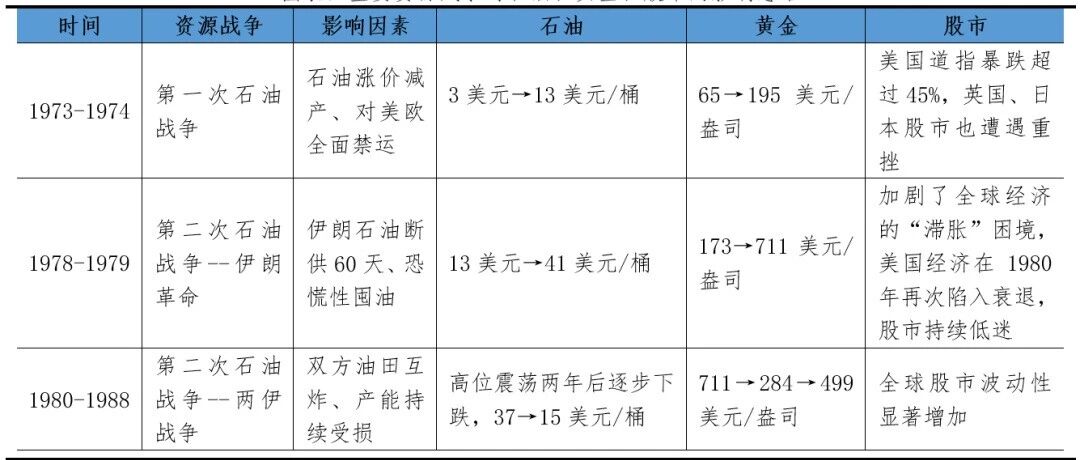
Core Viewpoint - The article discusses the impact and lessons from three oil wars, emphasizing that in times of great conflict, resources are paramount. The first two oil wars in the 1970s and the ongoing conflict between the US and Iran highlight the volatility of oil prices and the broader implications for global markets and economies [2][10]. Summary by Sections First Oil War (1973-1974) - The first oil war was triggered by the Fourth Middle East War, where Arab oil-producing countries used oil as a weapon, leading to a price surge from $3 to $13 per barrel within three months, a 400% increase [10][11]. - This war resulted in severe stagflation in the US, with the stock market experiencing a drop of over 45% [5][11]. - The crisis marked the end of the "cheap oil era" and initiated a decade-long bull market for gold, which increased by 950% from 1973 to 1980 [11]. Second Oil War (1978-1980) - The Iranian Revolution led to a 60-day halt in oil exports, causing prices to rise from $13 to $34 per barrel, followed by a peak of $41 during the Iran-Iraq War [13][15]. - The global economy faced intensified stagflation, with US inflation peaking at 15% and the Federal Reserve raising interest rates dramatically, which further pressured the stock market [19][21]. - The war did not create a long-term bull market for industrial metals, as demand was overshadowed by economic recession [21][22]. Third Oil War: US-Iran Conflict - The potential for a third oil war is indicated by the US's shift in energy strategy, focusing on traditional energy and key minerals, with military and economic means to secure resources [6][24]. - The US aims to control critical resources, including oil and minerals, to maintain its financial hegemony and support domestic manufacturing [25][26]. - The ongoing conflict's duration will significantly influence global asset pricing, inflation expectations, and monetary policy responses [30][31]. Market Implications - Oil prices are expected to rise depending on the conflict's duration, with Brent crude increasing by approximately 28% since the onset of hostilities [30]. - The stock market is likely to face pressure, particularly in sectors sensitive to oil prices, while resource and defense sectors may benefit from rising prices [31]. - The US dollar and treasury bonds are expected to strengthen as investors seek safe-haven assets amid geopolitical tensions [31].
熟悉的剧情一再上演,美国至少5次发动“石油战争”
Zhong Guo Xin Wen Wang· 2026-01-08 09:43
Group 1 - The article discusses the U.S. government's recent military actions in Venezuela, indicating that American leaders plan to allow major U.S. oil companies to enter the Venezuelan market and that Venezuela will transfer tens of millions of barrels of oil to the U.S. [1] - The historical context of U.S. interventions for oil resources is highlighted, noting that the U.S. has engaged in similar actions at least five times over the past 70 years [1][36] - The article references the 1953 CIA-led coup in Iran, which resulted in the overthrow of Prime Minister Mossadegh, who sought to reclaim oil sovereignty, allowing Western energy companies to profit from Iranian oil for 26 years [2][8] Group 2 - The Gulf War is characterized as a "war for oil," with U.S. military actions driven by the desire to control oil prices and resources in the region [13][14] - The article mentions that the U.S. military's invasion of Iraq in 2003 led to the privatization of Iraq's oil industry, benefiting several Western companies [22] - It is noted that since 2003, the U.S. has extracted over 3.3 billion barrels of oil from Iraq [26] Group 3 - The article discusses the ongoing U.S. military presence in Syria, where the U.S. has been accused of seizing oil resources while the humanitarian crisis in the country worsens [32][34] - It is reported that since 2022, U.S. forces have allegedly extracted over one million barrels of oil from Syria, despite the country's limited proven oil reserves of 2.5 billion barrels [33] - The U.S. Secretary of Defense has claimed that the recent actions in Venezuela are fundamentally different from the Iraq War, suggesting a more strategic approach to securing resources with minimal bloodshed [35][36]