
数字人直播

Search documents
电商大促新周期新打法洞察报告:从节点狂欢到常态深耕
艺恩· 2026-03-06 09:50
Investment Rating - The report does not explicitly state an investment rating for the e-commerce industry Core Insights - The e-commerce industry is transitioning from a "market-driven" growth model to an "efficiency-driven" model, focusing on user experience, supply chain resilience, and cross-scenario collaboration [6] - The total sales during the Double 11 event reached 1.62 trillion yuan, with a year-on-year growth of 13% [7] - The promotional strategy is shifting from "impulsive spikes" to "wave-like normalization," allowing platforms to smooth operational pressures and enhance the quality of promotions [8] - Instant retail has emerged as the fastest-growing segment, with sales reaching 670 billion yuan, reflecting a year-on-year growth of over 130% [9] Market Overview - The growth dynamics of the e-commerce market are evolving, with a significant slowdown in growth rates while maintaining a large market size [6] - The consumer mindset is shifting from "impulsive stockpiling" to "rational consumption," driven by changes in economic conditions and consumer behavior [11] - Platforms are simplifying promotional rules and extending promotional periods to reduce the motivation for unnecessary purchases [12] Platform Strategies - Taobao/Tmall dominates high-ticket and decision-heavy categories, contributing nearly 50% of sales from 3C digital and home appliances [15] - JD.com leverages its supply chain advantages to maintain leadership in high-ticket categories, with a focus on customer experience and operational efficiency [22] - Douyin's content-driven approach effectively stimulates interest and conversion in fast-moving consumer goods [39] - Pinduoduo is transitioning from "hundred billion subsidies" to "thousand billion support," focusing on quality supply and sustainable growth [55] Trends Observed - The industry is witnessing a shift towards long-term operations and rational consumption, with platforms focusing on user value and operational efficiency [74] - AI is becoming a core driver of efficiency across the e-commerce value chain, enhancing operational effectiveness and sales conversion [81] - Instant retail is emerging as a critical competitive advantage, with platforms integrating online and offline resources to meet consumer demands [84] Future Insights - The promotional cycle is extending from "one-day events" to "57-day periods," indicating a strategic shift towards long-term planning and operational integration [98] - Competition is evolving from price wars to the ability to meet unfulfilled consumer needs, emphasizing the importance of unique platform strengths [98]


春节档的“甩手掌柜”们,把AI营销这件事玩明白了
Di Yi Cai Jing Zi Xun· 2026-02-24 12:16
Core Insights - The article discusses the impact of the "longest Spring Festival" on businesses, emphasizing the need for merchants to quickly recover lost traffic and opportunities during the holiday season. Those who resume normal operations faster can gain an advantage in Q1 performance [1] - A significant trend is the adoption of AI tools by brands and merchants to enhance marketing strategies and address labor shortages, indicating a shift towards systematic AI solutions in business operations [1][3] Group 1: Business Operations and AI Integration - Many merchants faced challenges during the Spring Festival, struggling with the decision to remain open while managing operational difficulties such as staffing shortages and marketing competition [2][3] - The shift in consumer behavior towards flexible and immediate consumption has led to a broader commitment among various industries to maintain operations during holidays, making it essential for brands to balance continuous operation with holiday relaxation [3] - AI marketing solutions from Baidu, such as the "New Search" and merchant intelligence tools, have been developed to address these operational challenges, providing efficient customer service and marketing support [5][6] Group 2: AI Tools and Marketing Efficiency - Baidu's "New Search" enhances information retrieval efficiency and integrates marketing content into the user decision-making process, aligning with the emotional and situational aspects of Spring Festival marketing [5][7] - The merchant intelligence tool operates 24/7, allowing businesses to maintain service quality and efficiency during peak times, with significant engagement metrics reported during the holiday [5][6] - The digital human live streaming technology has proven effective in maintaining customer engagement and increasing lead conversion rates, showcasing the potential of AI in reducing marketing costs and enhancing service delivery [7][9] Group 3: Support for Small and Medium Enterprises - A significant portion of small and medium enterprises (SMEs) face operational challenges during the Spring Festival, with many expressing a desire to utilize AI but lacking the resources or knowledge to do so effectively [10][11] - Baidu's "Simplified Investment" program aims to make AI marketing accessible to SMEs, reducing setup time and conversion costs, thereby helping businesses maintain momentum during the holiday season [11][12] - The integration of AI tools allows SMEs to automate marketing processes, ensuring that no sales opportunities are missed and enhancing overall operational efficiency [12][17] Group 4: Future of AI in Marketing - The article highlights the importance of understanding "AI team-based marketing" as a competitive advantage in the evolving landscape of business operations, where AI capabilities can be internalized as essential roles within companies [14][17] - The collaboration of various AI marketing products from Baidu demonstrates the potential for significant efficiency gains and the transformation of traditional marketing practices into data-driven strategies [17]

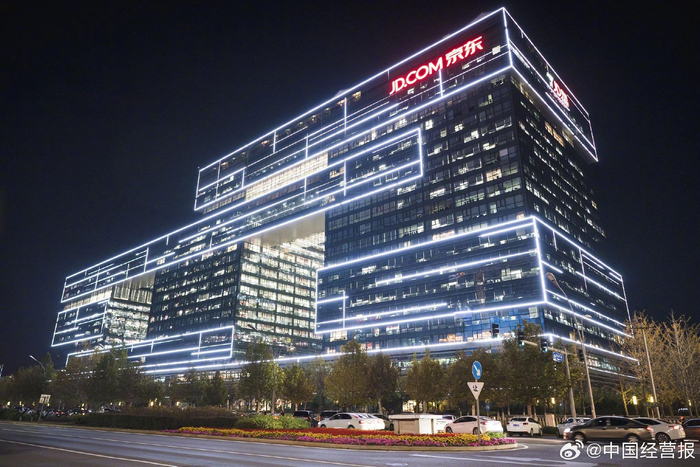
京东披露2025消费数据,AI搜索量激增百倍、5万商家开启数字人直播
Zhong Guo Jing Ying Bao· 2026-01-23 11:40
Core Insights - JD Group's CEO Xu Ran revealed that by 2025, the search volume related to "AI" on JD's platform is expected to increase over 100 times year-on-year, marking 2025 as the "explosion year" for AI consumption [1] - The acceptance of AI functionalities among consumers has significantly risen, with nearly half (46.8%) of consumers believing that products must integrate AI capabilities [1] - JD is leveraging the C2M (Customer-to-Manufacturer) model and its "super supply chain" to convey consumer insights to brands, accelerating product iteration [1] AI Consumption Trends - Sales of smart glasses and smart robots are projected to grow by 10 times and 3 times, respectively, in 2025 [1] - AI technology is being integrated into various applications, including AI shopping assistants and digital human live streaming, generating tangible benefits in e-commerce operations [1] Digital Human Live Streaming - During the 2025 "JD 11.11" shopping festival, the total transaction volume from digital human live streaming exceeded 2.4 billion yuan, with 50,000 merchants utilizing digital human hosts for 24-hour continuous streaming, leading to a 30% increase in overall platform conversion rates [1] AI in Customer Service and Logistics - JD's AI robots in customer service and logistics have achieved large-scale application, enhancing operational efficiency [1] Skills Reskilling Initiative - JD announced its participation in the World Economic Forum's "Reskilling Initiative," becoming the first Chinese company to join this program aimed at training employees to meet the new skill demands of the AI era [2]


中国第二个5万亿城市来了,北京多项部署
2 1 Shi Ji Jing Ji Bao Dao· 2026-01-23 06:06
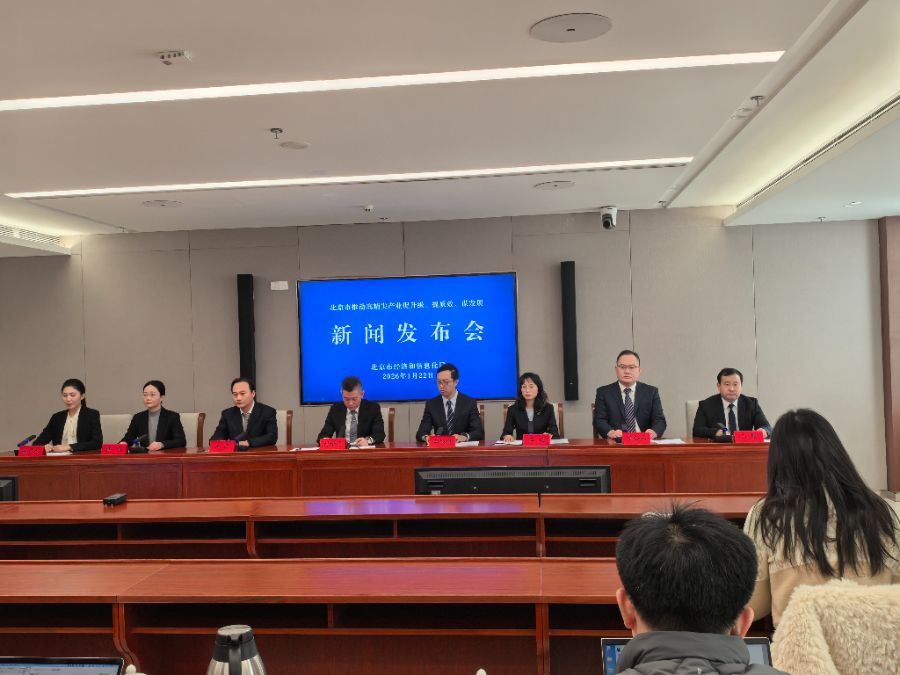
Core Insights - Beijing is projected to achieve a regional GDP of 52,073.4 billion yuan by 2025, marking it as the second "5 trillion city" after Shanghai, indicating a significant shift towards quality growth under strict constraints of "reduction development" [1][3] - The city plans to invest over 1.5 billion yuan in 2026 to support high-precision industries and small and medium-sized enterprises, focusing on over 25 policy support directions across key sectors such as integrated circuits, biomedicine, and digital economy [3][4] Economic Growth and Sector Contributions - In 2025, the information transmission, software, and IT services sectors, along with the financial industry, contributed over 70% to Beijing's economic growth, with the software industry alone achieving a value-added of 12,192.4 billion yuan, growing by 11.0% [2][9] - The manufacturing sector, particularly in computer and electronic equipment, saw a significant increase, with a 20.2% growth in value-added for the computer and communication equipment manufacturing industry [3] Policy Initiatives and Support Measures - The Beijing Municipal Economic and Information Bureau announced a "Create the Future" growth plan for 2026, focusing on six future industries: future information, health, manufacturing, energy, materials, and space [5][6] - The plan includes measures to support innovation in robotics, integrated circuits, and new materials, with specific funding support of up to 50% of project costs for qualifying initiatives [4] Digital Economy and Consumption Trends - The city aims to stimulate digital consumption and support the development of 2-3 leading AIGC digital content companies with revenues exceeding 10 billion yuan [2][10] - There is a strategic focus on integrating ultra-high-definition audio-visual technology with cultural tourism, promoting smart retail, and replicating metaverse business models to enhance service consumption [10][11] Infrastructure and Resource Development - Beijing plans to enhance its computing power resources, targeting a cumulative capacity of approximately 200,000 P by 2027, with initiatives to build super nodes and industry nodes in strategic locations [7][8] - The city has already allocated over 700 million yuan in computing power subsidies in 2023, supporting nearly 100 enterprises to reduce computing costs by over 15% [8]
中国第二个5万亿城市来了,北京多项部署
21世纪经济报道· 2026-01-23 06:04
Core Viewpoint - Beijing is set to achieve a regional GDP of 52,073.4 billion yuan by 2025, marking its transition to a "5 trillion city" alongside Shanghai, under strict constraints of "reduction development" and focusing on innovation-driven growth [1][4]. Group 1: Economic Growth and Industry Contribution - In 2025, the information transmission, software, and IT services industry, along with the financial sector, contributed over 70% to Beijing's economic growth [2][11]. - The GDP growth rate for Beijing in 2025 is projected at 5.4% year-on-year, with the industrial added value for large-scale industries increasing by 6.5% [4]. Group 2: Policy Support and Investment - Beijing plans to invest over 1.5 billion yuan in the first batch of high-precision industry development projects and support for small and medium-sized enterprises, covering over 25 policy support directions [3][4]. - The focus areas for investment include integrated circuits, biomedicine, material energy, information software, and the digital economy [4][5]. Group 3: Future Industry Development - The "Create Winning Future" growth plan will focus on six future industries: future information, future health, future manufacturing, future energy, future materials, and future space [7]. - The plan aims to support innovative products in robotics, integrated circuits, and new materials, addressing challenges in R&D and market validation [5][7]. Group 4: Digital Economy and Consumption - Beijing aims to stimulate digital consumption and cultivate 2-3 leading AIGC digital content companies with revenues exceeding 10 billion yuan [2][12]. - The city will promote the integration of ultra-high-definition audio-visual technology with cultural tourism, expanding smart retail and reverse customization applications [12][13]. Group 5: Computing Power and Infrastructure - By 2027, Beijing plans to build a computing power scale of approximately 200,000 P, enhancing its computing resource supply [8][9]. - The city will optimize the "Galaxy Computing Corridor" project to establish a collaborative computing power supply system, supporting the development of the AI industry [9].

成为第二个“5万亿之城”后,北京2026年将有这些新动作
2 1 Shi Ji Jing Ji Bao Dao· 2026-01-22 13:37
Core Insights - Beijing is projected to achieve a GDP of 52,073.4 billion yuan by 2025, becoming the second "5 trillion yuan city" after Shanghai, marking a significant transition towards innovation-driven growth and regional collaboration [1][3] Economic Growth and Industry Contribution - In 2025, the information transmission, software, and IT services sector, along with the financial industry, will contribute over 70% to Beijing's economic growth [2][10] - The GDP growth rate for 2025 is estimated at 5.4% year-on-year, with the industrial output value increasing by 6.5% [3] Policy Initiatives and Funding - Beijing plans to invest over 1.5 billion yuan in the first batch of high-precision industry development projects and support for small and medium enterprises in 2026, focusing on over 25 policy support directions [3][6] - The initiatives will target key industries such as integrated circuits, biomedicine, materials energy, information software, and the digital economy [3][6] Future Industry Development - The "Create the Future" growth plan will focus on six future industries: future information, future health, future manufacturing, future energy, future materials, and future space [7] - The plan aims to cultivate high-risk, long-cycle industries, with government support to mitigate early-stage risks and attract private investment [8] Digital Economy and Consumption - The digital consumption potential will be stimulated, with plans to nurture 2-3 leading AIGC digital content companies with revenues exceeding 10 billion yuan [10][11] - The strategy emphasizes the integration of technology breakthroughs with industry foundations to enhance consumption potential and establish Beijing as a global digital economy benchmark [11] Computing Power Infrastructure - Beijing aims to build a computing power scale of approximately 200,000 P by 2027, enhancing the supply of computing resources [8][9] - The "Galaxy Computing Corridor" project will create a collaborative computing power supply system, with significant investments in infrastructure across various regions [9]
带货能力超越罗永浩,成本几千元的数字人卖爆
Di Yi Cai Jing· 2026-01-12 08:28
Core Insights - Digital humans are becoming a significant tool in the e-commerce live streaming industry, with companies like 老管家 reporting daily sales increases of 200,000 to 300,000 yuan through their use [1][3] - The efficiency of digital humans allows for extended streaming hours, leading to higher sales volumes compared to human hosts, with some digital accounts achieving annual sales of 190 million yuan [3][4] - The cost-effectiveness of digital humans is a major advantage, with overall operational costs potentially decreasing by up to 80% compared to traditional human hosts [10][9] Group 1: Digital Human Performance - Digital humans can operate continuously for long hours, outperforming human hosts who are limited to a few hours of optimal performance [3][9] - A digital human can generate significant sales in a short time, with examples showing that a digital human can achieve sales exceeding those of a human host in similar categories [11][12] - The technology behind digital humans is evolving, allowing for better interaction and decision-making capabilities, which enhances their effectiveness in live streaming [11][10] Group 2: Cost and Operational Efficiency - The cost of employing digital humans is significantly lower than that of human hosts, with annual budgets for digital human live streaming ranging from 3,000 to 20,000 yuan depending on the brand [9][10] - Companies are reducing their reliance on human hosts, with some reducing their teams from over 100 to just a few, while maintaining or even increasing output [9][10] - The overall operational costs for digital human live streaming can be reduced by up to 80%, driven by advancements in AI and model capabilities [10][9] Group 3: Market Trends and Future Outlook - The digital human live streaming market is experiencing rapid growth, with many e-commerce players viewing it as the next major opportunity [12][14] - There is a shift in platform policies regarding digital human live streaming, with some platforms beginning to support and promote their use [13][14] - Industry experts predict that as technology continues to improve, digital human live streaming will become increasingly prevalent, potentially leading to exponential growth in the coming years [14][12]

省委书记、省长密集调研这个领域,它的首批场景已经“出炉”!
Xin Lang Cai Jing· 2026-01-09 09:24
Core Insights - Jiangsu province is focusing on the development of artificial intelligence (AI) as a strategic technology that leads a new round of technological revolution and industrial transformation [1][3] - The provincial leadership, including Secretary Xin Changxing and Governor Liu Xiaotao, has emphasized the urgency and responsibility in implementing the "AI+" initiative [3][10] - Major cities in Jiangsu, including Nanjing, Suzhou, Wuxi, and Changzhou, are actively promoting AI integration into various sectors, aiming to establish themselves as leaders in AI innovation [5][11] Group 1: Government Initiatives - Jiangsu's government is implementing the "AI+" action plan to integrate AI with industry, culture, and social governance, aiming to create a high ground for AI industry development [10] - The provincial leadership has conducted multiple surveys and discussions focused on AI, indicating a strong commitment to its advancement [3][10] - Nanjing has launched the first upgraded implementation plan for a national AI innovation application pilot zone, aiming to become a global "AI capital" [5][11] Group 2: City-Specific Developments - Suzhou aims to achieve an industrial output value exceeding 5 trillion yuan by 2026 through its "AI+ manufacturing" initiative, focusing on a comprehensive development approach [5][11] - Wuxi is prioritizing the supply of quality computing power, with new projects aimed at enhancing its AI infrastructure [7] - Changzhou is positioning itself as a key player in the AI industry, hosting the National Intelligent Body Developers Conference to foster collaboration and innovation [9][12] Group 3: Industry Impact and Applications - Jiangsu has over 50,000 enterprises participating in smart manufacturing assessments, leading the nation in this regard [14] - The province has released its first batch of "AI+" application scenario cases, showcasing successful implementations in healthcare, urban governance, and commercial operations [15] - Notable projects include a smart computing hub in Lianyungang that accelerates drug development and an AI teaching assistant in Suzhou that personalizes education for students [17]
美国上市公司GEMZ宣布董事变更 陈伟出任新董事
Sou Hu Cai Jing· 2025-12-20 02:23
Group 1 - GEMZ (stock code: GMZP) announced a change in its board and executive team, with Stephen Carnes resigning and Chen Wei appointed as the new director and executive [1] - Chen Wei is the controlling shareholder of GEMZ and the founder of Xiamen Customized Spirit Technology Co., Ltd., which specializes in providing B2B2C solutions using big data, artificial intelligence, and digital human technologies [3] - The core business of Xiamen Customized Spirit includes digital solutions for chain brands and physical enterprises, focusing on AI video lead generation, intelligent matching, digital human live streaming, and SaaS tools to enhance operational efficiency [4] Group 2 - The board and management structure of GEMZ will be adjusted following this personnel change, which the company states is part of its normal corporate governance arrangements [4]

快手发布“可灵O1”;滴滴自动驾驶在广州试运行全天候、全无人载客测试服务|未来商业早参
Mei Ri Jing Ji Xin Wen· 2025-12-02 23:07
Group 1: Kuaishou's Keling AI Launch - Keling AI has released "Keling O1," positioned as the world's first unified multimodal creation tool, aiming to streamline the entire process from generation to deep editing [1] - The launch signifies a shift in the domestic AIGC sector from isolated functional breakthroughs to an ecosystem competition focused on reshaping complete workflows [1] - Challenges remain regarding high computing costs, reliability of actual outputs, and establishing a unique ecosystem amidst strong competition from major players [1] Group 2: Didi's Autonomous Driving Testing - Didi has commenced all-weather, fully unmanned passenger testing in designated areas of Guangzhou, allowing users to summon autonomous vehicles via the Didi app [2] - This public trial is a crucial step in Didi's commercialization roadmap, requiring proof of both technical feasibility and economic viability for large-scale operations [2] - The competition in autonomous driving is shifting from technology demonstration to cost, user experience, and operational efficiency, with Didi leveraging its network advantages [2] Group 3: JD's Digital Human Live Streaming - JD has announced that its digital human live streaming service will be free for all merchants, enabling quick setup of 24/7 live streaming rooms [3] - This move represents a strategic upgrade from "tool selling" to "ecosystem building," aiming to attract a larger supply of live streaming content to enhance overall traffic and transaction volume [3] - The sustainability of this free strategy will depend on whether the resulting GMV increase can cover the technological investments and how to balance digital human live streaming with content diversity on the platform [3]
