社交传播

Search documents
2026哔哩哔哩大年初一联欢会招商方案
Sou Hu Cai Jing· 2026-01-06 21:33
Core Insights - The 2026 Bilibili New Year's Gala aims to cater to the evolving cultural consumption needs of young audiences, particularly targeting the post-90s demographic with a focus on comedy and interactive experiences [1] - The gala will utilize innovative engagement methods such as opposing team interactions, bullet screen voting, and gold coin rewards to enhance viewer participation [1] - The music festival industry is experiencing significant growth, with 154 events held nationwide from January to May 2025, attracting 4.1 million attendees and generating a box office revenue of 1.352 billion [1] Group 1: Event Overview - The Bilibili New Year's Gala is positioned as a key cultural and social interaction platform for young people, emphasizing comedy and social themes [1] - The event will feature a mix of national comedy stars and emerging talents, creating a diverse entertainment experience [1] - The gala will incorporate classic IP revivals and focus on emotional resonance across different age groups [1] Group 2: Industry Trends - The music festival sector is rapidly expanding, with over 100 cities involved and a variety of event types emerging, including brand IP, vertical, and city-specific categories [1] - The integration of cultural tourism and brand marketing is becoming a new trend, with a focus on emotional engagement, innovative experiences, and sustainable practices [1] - Both the gala and music festivals emphasize user interaction and emotional connections, creating a complete cycle of content creation, user participation, and commercial conversion [1]



「订单排队免单」模式打通全域引流路径,提升会员数和复购频次
Sou Hu Cai Jing· 2026-01-05 07:51
Group 1 - The proposed solution is an intelligent marketing system that integrates consumer incentives, social dissemination, and capital flow to help e-commerce platforms, cross-industry alliances, and chain stores address key pain points in attracting customers and promoting repeat purchases [1] Group 2 - The solution is applicable to three typical scenarios: online malls, cross-industry alliances, and shared stores [3] Group 3 - The core logic relies on two engines: a "dynamic order queue pool" and "instant profit sharing" [5] - Online malls can stimulate first-time and repeat purchases through popular products that offer "free orders," quickly aggregating traffic [6] - Cross-industry alliances allow customers to join the entire platform's queue by making purchases at any participating offline store, facilitating cross-industry customer flow [6] - Shared stores gather customer traffic from various chain locations into a shared membership platform, enhancing overall brand loyalty [6] Group 4 - The entry rules require order amounts to be within a set range (e.g., 100–1000 yuan), with daily participation limited and ranked by completion time [7] - Free order triggers are set with fixed free order positions (e.g., 3 people), where sharing subsequent orders accumulates "free order value" to meet the threshold for exiting the queue [7] Group 5 - Each order allocates a percentage (e.g., 40%) to a reward pool, which is distributed in real-time according to preset weights (e.g., 50%/30%/20%) to current free order positions; the remainder goes into a platform bonus pool to enhance future rewards [8] - Accelerated rewards are available for direct referrals or repeat purchases; participants who exit midway can receive a certain percentage (e.g., 60%) of their accumulated free order value as shopping currency, balancing returns and flexibility [8] Group 6 - The system aims to break the cold start problem by lowering the threshold for first purchases with strong incentives like "free orders," combined with referral acceleration to encourage existing users to bring in new customers, rapidly creating social viral growth [10] - It aims to increase sales and repeat purchases by accelerating the free order process for repeat buyers and promoting high-frequency consumption through a multi-order queue mechanism, driving sustained performance growth [10] - The unified order pool across online malls, offline cross-industry stores, and chain locations facilitates customer flow conversion across different scenarios [10] - The profit-sharing and queue scale are controllable by the platform, ensuring costs do not exceed gross profit; surpluses are injected into the bonus pool for self-regulation, ensuring long-term stable operation [10] Group 7 - An example scenario is set with two free order positions and a target of 100 yuan; 40% of the order amount goes into the reward pool, with a profit-sharing ratio of 60%/40% [12] - In a cycle, the first order from user C spending 500 yuan generates a reward pool of 200 yuan, with user A receiving 120 yuan and exiting, while user B receives 80 yuan; user C then fills the position [13] - The second order from user D spending 250 yuan generates a reward pool of 100 yuan, with user B receiving 60 yuan and exiting, while user C receives 40 yuan [13]

AI产品能不能火,全看创始人会不会当“网红”?这届AI大佬不拼代码了,个个都是隐藏的社交媒体达人
AI前线· 2025-10-04 05:33
Core Insights - Xiaohongshu has become a significant platform for AI product startups to launch and gain traction, with many entrepreneurs actively engaging with users and sharing their experiences [2] - The success of AI products is increasingly dependent on their ability to generate social media buzz shortly after launch, with a failure to do so potentially leading to obscurity [5][6] - Founders are now taking charge of product promotion, recognizing the importance of social media in driving user engagement and product awareness [10][11] Group 1: Importance of Social Media - AI entrepreneurs are leveraging social media as a powerful tool for product marketing and user engagement, transforming into social media savvy individuals [3] - The effectiveness of AI products is closely tied to their marketing strategies, with significant investment in social media advertising being crucial for visibility [7][12] - The competitive landscape necessitates that AI products not only perform well but also achieve rapid market penetration through effective social sharing [14] Group 2: Product Characteristics and User Engagement - The success of an AI product is influenced by its inherent quality and the marketing efforts surrounding it, with a focus on user needs being paramount [16][19] - Founders emphasize the need for products to be user-friendly and to create scenarios that naturally encourage sharing and collaboration among users [8][10] - The ability to adapt and respond to user feedback through social media is essential for product iteration and improvement [10][21] Group 3: Challenges and Strategies - The increasing number of AI products in the market leads to heightened competition, making social media marketing a critical component of success [14] - Companies must balance the pursuit of viral marketing with maintaining product stability and user satisfaction, avoiding reliance on gimmicks that do not enhance user experience [15][16] - Startups have the advantage of agility, allowing them to focus on niche markets and refine their offerings based on direct user feedback [19][21]

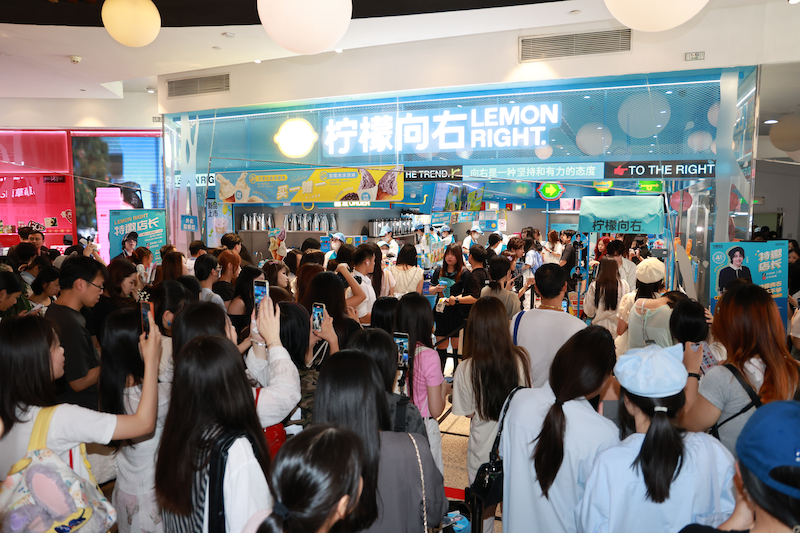
柠檬向右正式布局咖啡赛道,四周年贯彻“鲜柠檬”基因开启品类新篇
Guan Cha Zhe Wang· 2025-09-01 13:52
Core Insights - The article highlights the shift in beverage consumption among Generation Z towards healthier and more social options, with "light and healthy" becoming key attributes for brands to attract young consumers [1][12] - The event organized by the Shanghai-based tea brand Lemon Right, featuring a popular young actor as a "one-day store manager," successfully engaged the target audience and transformed the product launch and anniversary celebration into a significant offline event [3][5] Company Strategy - Lemon Right's introduction of the "Lemon + Coffee" product line marks a strategic expansion into the light coffee market, aligning with market trends and consumer demands [8][12] - The brand has built a mature business model based on product strength, franchise support, and brand visibility, focusing on continuous innovation and maintaining a balance between creativity and standardized operations [10][12] Marketing and Consumer Engagement - The event attracted over 1,000 attendees, showcasing the strong appeal of the brand and the "one-day store manager" concept among young consumers, leading to significant social media engagement and brand exposure [5][7] - The integration of product experience, emotional interaction, and social sharing in the marketing strategy has effectively enhanced brand loyalty and consumer connection [5][12] Product Performance - The new coffee products received overwhelmingly positive feedback, with sales of the "Duck Shit Fragrance Lemon Coffee" increasing by 416% year-on-year, indicating strong market demand [7] - Lemon Right's focus on creating enjoyable experiences alongside quality products has established a dual-driven model of "product + emotion," injecting fresh vitality into the new tea beverage competition [7][12] Future Outlook - The brand aims to continue exploring the possibilities of combining lemon, tea, and coffee, while maintaining its commitment to healthy drinking options, positioning itself as a leader in the evolving beverage market [12]