
禁塑

Search documents
前东家已上市,他携昌亚股份二冲IPO,可降解赛道落后半步难追
Sou Hu Cai Jing· 2026-01-15 10:34
Core Viewpoint - The article focuses on the journey of Changya Co., Ltd., a company that started from humble beginnings and has secured significant orders from major clients like KFC and Haidilao, as it attempts to navigate the challenges of going public amid the plastic restriction wave [1]. Company Background - Changya Co., Ltd. was founded by Xu Jianhai, a former engineer with a diverse career trajectory, who transitioned from a stable job in a research institute to entrepreneurship, initially facing significant challenges [4][6]. - The company began with a focus on plastic bags and films but pivoted to manufacturing plastic straws, targeting the high-end markets in Europe and the United States [6][8]. Financial Performance - From 2020 to 2022, Changya's revenue grew from 512 million yuan to 919 million yuan, nearly doubling, with over 95% of sales coming from international markets, particularly the U.S. [8]. - However, the net profit showed significant volatility, dropping from 73.04 million yuan to 53.49 million yuan before rebounding to 125 million yuan, influenced by currency fluctuations and rising raw material costs [10][12]. Market Challenges - The company faces challenges due to its reliance on external factors, such as raw material prices and currency exchange rates, which significantly impact profitability [12]. - The ongoing global trend towards plastic restrictions poses a long-term threat to Changya, as its revenue is still heavily dependent on traditional plastic products, with biodegradable products accounting for only 3.96% of revenue [14]. Competitive Landscape - Competitors have already begun to establish themselves in the green product market, with companies like Fuling and Jialian Technology making significant strides in biodegradable and alternative materials [14].

70后卖房造吸管,“啃下”肯德基、海底捞,如今撑得起一个IPO吗?
3 6 Ke· 2026-01-09 13:08
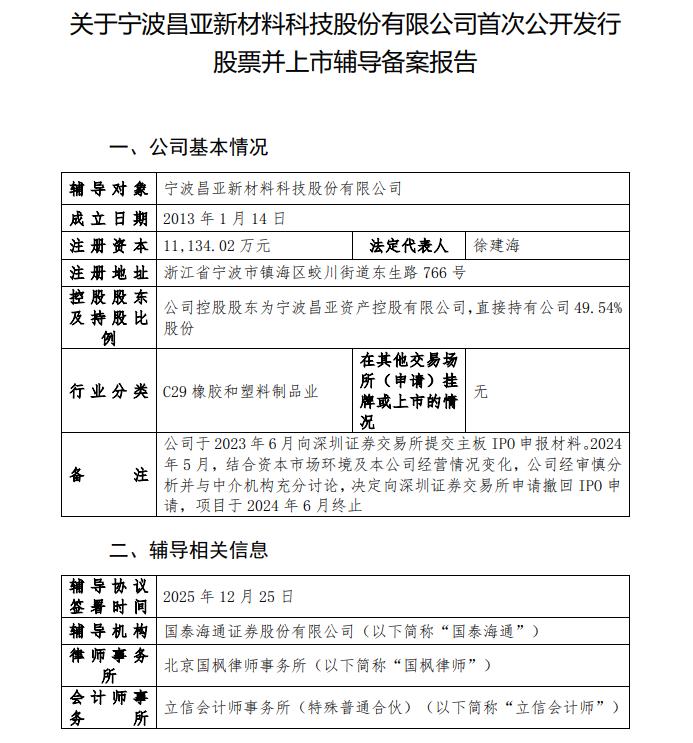
Core Viewpoint - Ningbo Changya New Materials Technology Co., Ltd. (Changya Co.) is attempting to re-enter the capital market with a new IPO application after previously withdrawing its application in 2024, facing significant industry changes and survival challenges [1][19]. Company Overview - Changya Co. was established on January 14, 2013, and is primarily engaged in the production of disposable food containers, including straws and boxes [2]. - The company is controlled by Ningbo Changya Asset Holding Co., which holds 49.54% of its shares [2]. - The company previously submitted an IPO application to the Shenzhen Stock Exchange in June 2023 but withdrew it in May 2024 due to changes in market conditions and operational circumstances [2]. Founder Background - The founder, Xu Jianhai, is a 70s engineer who started the company after selling his house for over 1 million yuan, initially producing plastic bags and films before pivoting to straws targeting the European and American markets [3][4][7]. Market Position and Clientele - Changya Co. has established a strong presence in the overseas market, with major clients including KFC, Burger King, and Walmart, contributing significantly to its revenue [7][9]. - From 2020 to 2022, the company's revenue grew from 512 million yuan to 919 million yuan, nearly doubling in three years, with over 95% of sales coming from international markets, particularly the U.S. [10][12]. Financial Performance - The company's revenue figures for 2020, 2021, and 2022 were 512 million yuan, 623 million yuan, and 919 million yuan, respectively, while net profits fluctuated from 73 million yuan to 125 million yuan, with a notable drop in 2021 [10][12]. - The gross profit margins were 25.89%, 17.83%, and 21.22% for the same years, indicating volatility influenced by exchange rates and raw material costs [10][12]. Challenges and Industry Trends - Changya Co. faces challenges from rising raw material prices and exchange rate fluctuations, which directly impact its gross margins [12][14]. - The global trend towards "plastic restrictions" poses a significant threat, as the company heavily relies on plastic products, with over 90% of its revenue coming from plastic food containers [14][15]. - Competitors like Fuling and Jialian Technology are advancing in biodegradable products, which could further challenge Changya Co.'s market position [16][18]. Future Outlook - The company is attempting to capitalize on the current IPO window but must navigate a changing competitive landscape and increasing environmental regulations [19]. - Without a clear strategy for product diversification and adaptation to eco-friendly materials, Changya Co. may struggle to achieve higher valuations in the future [19].

“禁塑”五年,绿色生活培育起绿色产业
Xin Lang Cai Jing· 2025-12-12 14:13
Core Viewpoint - Hainan Province has effectively implemented a comprehensive "plastic ban" over the past five years, fostering a green lifestyle and cultivating a green industry, with significant advancements in biodegradable materials and regulatory frameworks [1][5][6]. Regulatory Framework - Hainan was the first province in China to legislate a "plastic ban," establishing a comprehensive system that includes local legislation, a tracking platform, and collaborative enforcement [1][5]. - The "Regulations on Prohibiting Disposable Non-degradable Plastic Products" was first enacted on December 1, 2020, and has since been revised to enhance supervision and operational clarity [2][6]. Industry Development - The biodegradable materials industry in Hainan has seen substantial growth, with a total production capacity of 60,000 tons/year for biodegradable raw materials, 34,500 tons/year for modified materials, 57,100 tons/year for film bags, and 45,000 tons/year for dining utensils [3][7]. - As of November 2023, the total production and sales volume of biodegradable products reached 27,600 tons, with a total output value of 427 million yuan, reflecting year-on-year growth of 23.29% and 19.92%, respectively [3][7]. Public Awareness and Compliance - The implementation of the "plastic ban" has led to a significant reduction in plastic usage in various sectors, with over 80% market share of alternatives in nine key industries [3][7]. - Continuous efforts are being made to enhance public awareness, improve the quality and reduce the cost of alternatives, and strengthen comprehensive regulation to ensure the success of the "plastic ban" initiative [4][9].
海南首创全域“禁塑”制度体系
Hai Nan Ri Bao· 2025-12-12 03:13
Core Viewpoint - The "plastic ban" initiative is a landmark project for the ecological civilization construction in Hainan Province and serves as a pioneering project for the Hainan Free Trade Port [1] Group 1: Legislative Actions - Hainan Province has taken the lead in implementing local legislation to comprehensively ban single-use plastic products [1] - The province has established a negative list for banned plastic products and created a traceable management platform for fully biodegradable products, marking several national firsts [1] Group 2: Regulatory Improvements - On December 1, 2020, Hainan Province implemented the "Regulations on Prohibiting Single-Use Non-Degradable Plastic Products" [1] - The regulations were revised last year to address shortcomings in the current "plastic ban" efforts, emphasizing problem-oriented approaches and enhancing regulatory responsibilities for government departments and producers [1]
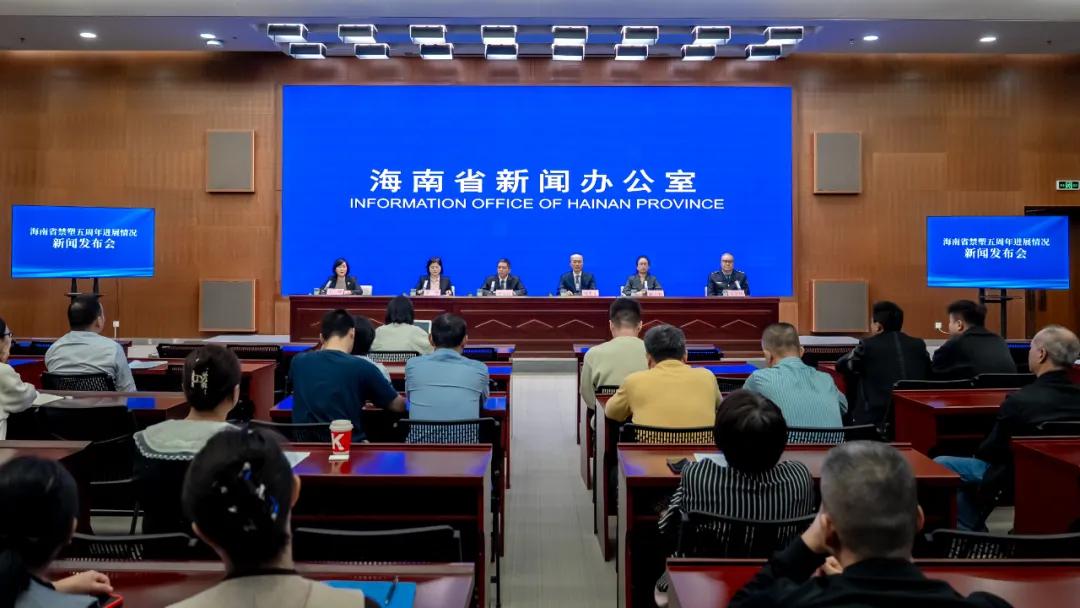
我省实施全面“禁塑”以来,各项工作有力有序展开——“禁塑”五年,绿色生活培育起绿色产业
Hai Nan Ri Bao· 2025-12-12 01:27
Group 1 - The core viewpoint of the article emphasizes the implementation of a comprehensive "plastic ban" system in Hainan, which includes legislation, public mobilization, and industry layout to combat "white pollution" [1][2] - Hainan is the first province in China to implement a "plastic ban" through local legislation, showcasing its innovative approach to environmental protection and industry transformation [1][2] - Since the full implementation of the "plastic ban" in 2020, Hainan has developed a regulatory framework and innovative supervision mechanisms to ensure effective enforcement and public compliance [2][3] Group 2 - The "plastic ban" regulations have been revised to enhance the clarity of responsibilities and improve the operational effectiveness of supervision and enforcement [2] - Hainan has established a significant biodegradable materials industry, with production capacities for various biodegradable products, indicating a growing market and industry scale [3] - As of November 2023, the total production and sales of biodegradable products in Hainan reached 27,600 tons, with a total output value of 427 million, reflecting a year-on-year growth of 23.29% and 19.92% respectively [3][4] Group 3 - The government plans to continue advancing source control, enhancing comprehensive supervision, promoting the quality and cost-effectiveness of alternatives, and increasing public awareness of the "plastic ban" [5] - The ongoing efforts aim to contribute to the construction of a national ecological civilization pilot zone and provide solutions for global plastic pollution management [5]
5年来全省累计办理“禁塑”类案件3.9万宗
Hai Nan Ri Bao· 2025-12-12 01:20
Core Insights - The province of Hainan has implemented a comprehensive "plastic ban" for five years, resulting in the handling of 39,000 cases related to plastic restrictions and the confiscation of nearly 200 million prohibited plastic products [1] - The total production and sales of biodegradable products in Hainan reached 27,600 tons with a value of 427 million yuan, marking year-on-year increases of 23.29% and 19.92% respectively [1] - The next phase will transition from "banning plastics" to "managing plastics," focusing on source reduction and establishing a comprehensive recycling and utilization system for plastic waste [2] Group 1 - Hainan has achieved significant milestones in its "plastic ban" initiative, including legislation, local standards, and a traceability management platform for biodegradable products [1] - The province plans to develop a "plastic management" work plan to enhance the governance of plastic pollution across its entire lifecycle, from production to disposal [2] - The initiative aims to promote green practices in various sectors, including encouraging the use of alternative products and implementing green packaging in the logistics industry [2] Group 2 - Hainan will foster a collaborative environment for plastic pollution management by enhancing public awareness and promoting green consumption [3] - The province encourages industries to sign commitment letters and establish monitoring systems to promote self-regulation [3] - Community involvement in public actions against plastic pollution will be encouraged to create a societal consensus on the importance of plastic waste management [3]
海南省塑料行业协会执行会长周鸿勋:多家企业期待海南“禁塑”市场潜力进一步释放
Hai Nan Ri Bao· 2025-12-12 01:09
Core Viewpoint - The "plastic ban" initiative in Hainan is a key focus for the local plastic industry association, which aims to promote the development of alternative products and enhance the industry scale while addressing public concerns about the transition to biodegradable alternatives [1][2]. Group 1: Industry Development - The Hainan plastic industry association is actively promoting the development of the biodegradable alternatives industry, focusing on establishing a well-structured supply chain for these products [1]. - There is a growing optimism among enterprises regarding the market potential for "plastic ban" alternatives, with many companies looking to seize opportunities in Hainan [1]. - The public's awareness and acceptance of the "plastic ban" and its alternatives have improved, with many supermarkets and restaurants adopting biodegradable products [1]. Group 2: Future Initiatives - The industry association plans to leverage its role as a bridge between government and industry to develop product standards and enhance product quality [2]. - There will be a focus on promoting collaboration among industry chain enterprises and fostering self-regulation and healthy competition within the industry [2].
海南这五年:全域禁塑成效明显
Zhong Guo Xin Wen Wang· 2025-12-11 11:39
Core Viewpoint - Hainan's comprehensive plastic ban has shown significant results over the past five years, establishing a replicable and promotable plastic pollution management scheme that aligns with the province's ecological and free trade zone development goals [1][2]. Regulatory Framework - Hainan has developed a regulatory framework for banning plastic, dynamically adjusting the range of prohibited single-use non-degradable plastic products and issuing three batches of banned product lists [1][2]. - The province has implemented a closed-loop management system covering all industries, sectors, and processes related to plastic pollution [1]. Enforcement and Compliance - Over the past five years, Hainan has handled 39,635 cases related to plastic bans, seizing nearly 200 million prohibited plastic products [2]. - The average market share of alternatives in nine key industries has reached 80.2%, with significant compliance in public institutions and tourist areas [2]. Industry Impact - The commerce sector is identified as the main battleground for plastic bans, with a focus on e-commerce platforms and agricultural markets [2]. - Hainan has conducted 407 joint enforcement inspections, resulting in the interception of over 137,000 boxes of prohibited plastic products [2]. Biodegradable Materials Development - Hainan is leveraging its unique policy advantages to develop a full-chain biodegradable materials industry, focusing on local resource utilization [3]. - Currently, 22 production enterprises have established a complete industrial chain, with a total output of 27,600 tons and a year-on-year growth of 23.29% in production volume [3]. Future Directions - Hainan plans to expand its plastic ban efforts into a comprehensive plastic pollution management system covering the entire lifecycle of plastic products [4]. - Initiatives include promoting green office practices, encouraging low-carbon packaging in the express delivery industry, and exploring the use of bamboo products as alternatives to plastic [4].
海南禁塑五年成效亮眼,将推动“禁塑”向“治塑”发展
Xin Lang Cai Jing· 2025-12-11 10:10
Core Viewpoint - Hainan Province has made significant progress in its plastic ban initiative over the past five years, establishing a unique and replicable plastic pollution management system, and plans to upgrade from "plastic ban" to "plastic governance" in the future [3][10]. Legislative and Regulatory Framework - Hainan was the first in China to implement regulations banning single-use non-degradable plastic products on December 1, 2020, with a revision scheduled for September 27, 2024 [3][10]. - The province has created a comprehensive set of local standards for biodegradable plastics and established a traceability management platform for biodegradable products [3][10]. Industry Development - Hainan has developed a nascent biodegradable materials industry, with annual production capacities of 60,000 tons for raw materials, 34,500 tons for modified materials, 57,100 tons for film bags, and 45,000 tons for dining utensils [4][11]. - As of November, the total production and sales of biodegradable products reached 27,600 tons, with a total output value of 427 million yuan, reflecting year-on-year growth of 23.29% and 19.92%, respectively [4][11]. Enforcement and Compliance - The province has established a national key laboratory for the quality safety evaluation and research of degradable materials, and has processed 39,635 cases related to the plastic ban, seizing nearly 200 million banned plastic products [6][13]. - Hainan has implemented a multi-department joint enforcement mechanism and enhanced regulatory efficiency through digital tools, including a port inspection system [14]. Economic Support and Market Integration - Over the past five years, Hainan has organized more than 300 supply-demand matching activities to facilitate procurement for businesses, and has invested 23 million yuan to support the plastic ban in agricultural markets [7][14].
马来西亚槟城9月起落实“无塑料袋”政策
Zhong Guo Xin Wen Wang· 2025-08-31 08:43
Core Points - From September 1, Penang, a well-known tourist city in Malaysia, will implement a "Daily No Plastic Bag" policy [1] - This policy prohibits the use of plastic bags in supermarkets, convenience stores, restaurants, and pharmacies, even if customers are willing to pay [1] - Only traditional markets and open dining centers are temporarily allowed to continue using plastic bags, but they are required to gradually reduce their usage [1] Summary by Sections - **Policy Implementation** - The "No Plastic Bag" policy will take effect on September 1, 2023, in Penang [1] - Consumers and tourists will not receive plastic bags at various retail and dining establishments [1] - **Historical Context** - Penang began promoting plastic reduction measures in 2009, becoming the first state in Malaysia to charge for plastic bags [1] - The state has progressively increased the fees for plastic bags and restricted their usage over the years [1] - **Preparation for Policy** - Since February 2023, Penang has encouraged the cessation of plastic bag usage and distributed free eco-friendly bags to foster a habit of bringing shopping bags [1]