私募信贷违约率

Search documents
报道称软件股敞口巨大,美国PE公司遭遇新一轮抛售
Hua Er Jie Jian Wen· 2026-02-03 01:53
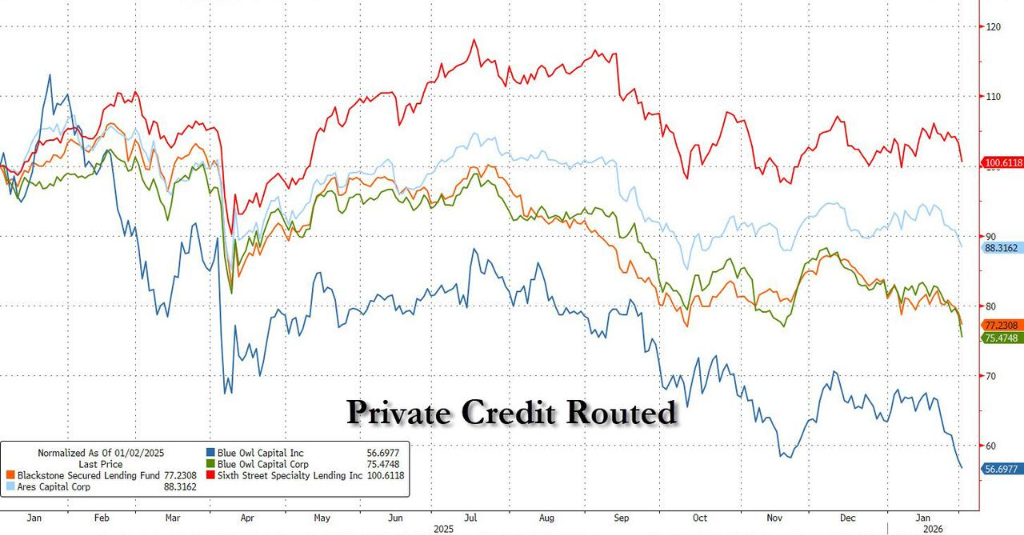
Core Viewpoint - The software industry is facing significant risks, leading to a sell-off of U.S. publicly traded private equity (PE) and business development companies (BDC) due to concerns over the valuation of billions in private software debt [1][5]. Group 1: Market Reaction - On February 3, following reports from Goldman Sachs and Barclays, there was a notable sell-off in the market, with Blue Owl Capital's stock dropping approximately 5% and other industry leaders like Ares Capital and Sixth Street Specialty Lending declining over 3% [2]. - A report from Goldman Sachs indicated that hedge funds are rapidly rotating out of software stocks, marking the highest net sell-off in the tech sector since September 2024, with software stocks leading the decline [4]. Group 2: Impact on Private Credit Institutions - The sell-off has severely impacted private credit institutions that finance software companies, with a software stock index plummeting 15% in January, the largest monthly drop since October 2008 [5]. - Barclays analysts highlighted that software constitutes about 20% of BDC portfolios, making them particularly sensitive to declines in software equity and credit valuations, with total exposure estimated at $100 billion [7]. Group 3: Concerns Over Default Rates - UBS strategists warned that if AI leads to the large-scale elimination of traditional software companies, default rates in U.S. private credit could soar to as high as 13% [9]. - Apollo Global Management has already begun reducing its software exposure from 20% to below 10%, indicating a cautious approach towards the software sector [9]. Group 4: Market Sentiment and Analyst Opinions - Despite the prevailing panic, some analysts believe the market may be overreacting, as there is no new fundamental information to justify the declines [12]. - Recent negative news, including significant withdrawals from funds like Blue Owl and TCP Capital Corp., has heightened investor anxiety ahead of the earnings season, leading to a preemptive market downturn [12].

私募信贷市场警报频传:官方低违约率背后,影子违约率已飙升至6%
智通财经网· 2025-08-22 03:37
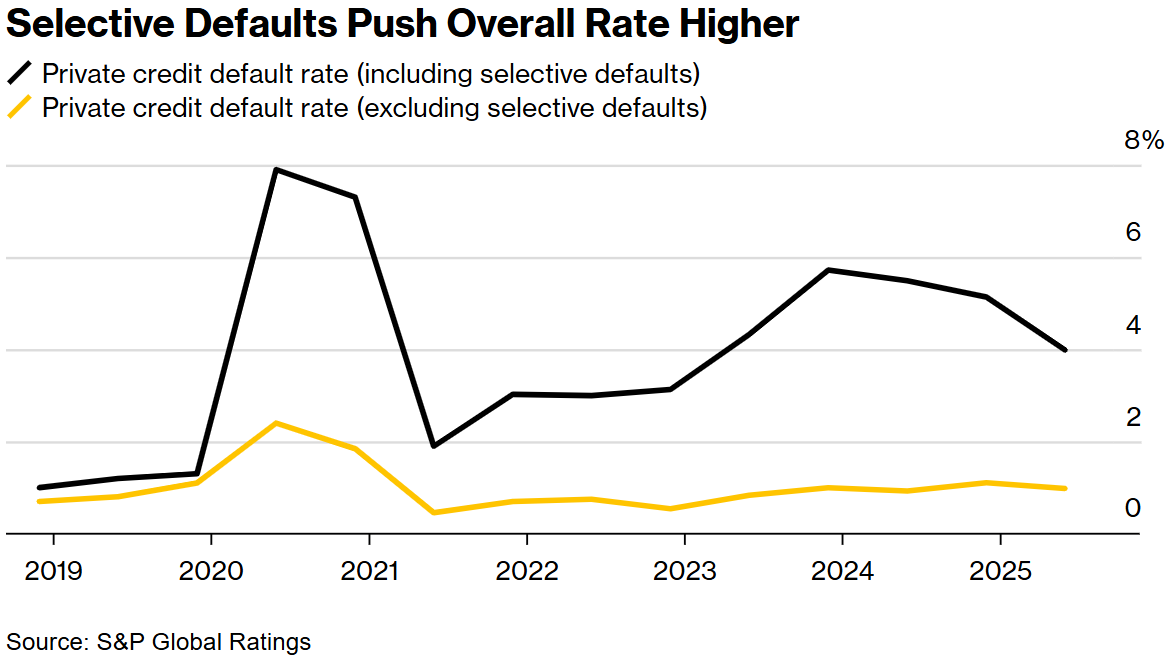
Core Viewpoint - The private credit market, valued at $1.7 trillion, is facing increasing default warnings, raising concerns among analysts about the underestimated risks in one of Wall Street's most profitable businesses [1] Group 1: Default Rates and Market Conditions - The current default rate in the private credit market is between 2% and 3%, but when including "non-accrual loans," the rate rises to 5.4%, which is comparable to the syndicated loan market [1] - The official default rate for private credit increased from 2.9% to 3.4% in the second quarter, while the "shadow default rate" reached 6%, significantly higher than 2% in 2021 [4] - Analysts from various firms note that the concentration of low credit rating borrowers and rising recent default rates indicate ongoing challenges in the market [5] Group 2: Investment Trends and Fundraising - Despite a slowdown in fundraising, private credit funds still attract investors with returns exceeding 8%, although the amount raised this year is only $70 billion, the smallest share of alternative asset inflows since at least 2015 [1] - Analysts express concerns that rapid capital commitments may lead to lower underwriting standards, which could amplify losses during economic downturns [1] Group 3: Borrower Behavior and Risk Management - Borrowers are utilizing arrangements that allow them to defer cash interest payments until debt maturity, which can mask default risks [4] - The reputation of private credit for low default rates is based on narrow definitions of default, and if broader definitions are applied, the actual rate of non-compliance would be significantly higher [4] - Different credit rating agencies and consulting firms monitor borrower groups differently, complicating the overall market assessment [4] Group 4: Market Sentiment - Some market participants remain optimistic, citing that declining interest rates alleviate pressure on highly leveraged companies, and the interest coverage ratio within loan portfolios remains healthy [8] - The sentiment suggests that robust companies with strong cash flows can withstand current interest rate levels [8]