
科教产融合

Search documents
“双高协同”打造江苏科产融合新范式
Xin Lang Cai Jing· 2026-02-05 23:24
Core Viewpoint - Jiangsu province is pioneering a "dual high synergy" strategy to integrate industry and academia, enhancing innovation and driving high-quality development through a structured framework of collaboration between high-tech zones and universities [1][8]. Group 1: Industry-Academia Collaboration - Jiangsu has established a "five-in-one" integration development system, which includes one industry direction, one innovation platform, one leading talent, one transformation fund, and several benchmark projects [1]. - The province has achieved precise pairing between 18 high-tech zones and 37 universities, breaking down barriers to innovation factor flow [1][3]. - The collaboration model emphasizes the integration of educational foundations, technological breakthroughs, and talent-driven initiatives to reshape the province's development [1]. Group 2: Innovation Platforms and Projects - The Nanjing Normal University and Changzhou High-tech Zone have initiated a partnership focusing on synthetic biology, aiming to replace chemical methods with biological processes for producing non-natural amino acids [2]. - Jiangsu has built 58 industrial innovation platforms, covering technology research and development, concept verification, pilot testing, and industrial incubation [3]. - The Jiangsu province has seen significant project engagement, with 1,602 enterprises and 1,206 experts collaborating on 342 research projects, totaling over 1.5 billion yuan in investment [6]. Group 3: Talent Development and Ecosystem - Universities are adapting their curricula to align with industry needs, with initiatives like the "Tianzhun Class" at Suzhou University, which customizes training for students [7]. - The province has appointed 143 "technology vice presidents" and 81 "industry professors" to foster collaboration between academia and industry [7]. - The free flow of talent has led to a significant retention of graduates in Jiangsu, with nearly one-third of recent graduates from Nanjing University choosing to stay in the region for employment [8].
新质生产力如何激发北京科技创新动能?
Zhong Guo Xin Wen Wang· 2026-01-27 09:54
Core Viewpoint - The discussion at the Beijing Municipal Political Consultative Conference focused on developing new productive forces to promote high-quality economic growth in the capital, emphasizing the integration of technology and culture through artificial intelligence [1]. Group 1: Innovation and Collaboration - The need for a unified innovation chain in the Beijing-Tianjin-Hebei region was highlighted, with suggestions to establish "university-research institution-leading enterprise" innovation alliances and set up joint funds and laboratories [2]. - Recommendations were made to optimize the innovation layout of universities, with research universities focusing on fundamental research and application-oriented universities concentrating on applied research and technology transfer [2]. - The importance of integrating innovation spaces into urban planning was stressed, particularly in the development of new university campuses, to create a comprehensive innovation ecosystem [2]. Group 2: Artificial Intelligence Development - The artificial intelligence industry in China is expected to enter a new phase of policy benefits and accelerated growth, with Beijing needing to maintain its leading position amid new opportunities and challenges [3][5]. - A proposal was made to establish a city-level "industry innovation digital platform" and a database integrating talent, enterprise, industry, innovation, and capital chains for comprehensive monitoring of the AI industry [5]. - The establishment of a collaborative platform between universities and research institutions was suggested to enhance the synergy between academia and industry [5]. Group 3: AI and Cultural Integration - The integration of generative artificial intelligence with the cultural industry was discussed, with suggestions for developing AI-driven cultural products and creating intelligent reading spaces in communities and schools [6]. - A call for the establishment of a "Generative AI + Culture" innovation alliance and technology transfer center was made to facilitate collaboration between cultural enterprises and universities [6]. - The importance of international collaboration in AI and culture was emphasized, with proposals for cross-border exchanges and joint laboratories focusing on AI technology in cultural applications [6].


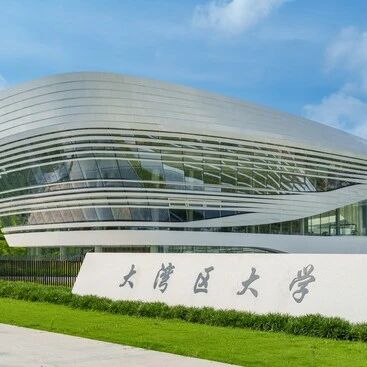
大湾区大学,来了!
证券时报· 2025-12-06 10:47
Core Viewpoint - The establishment of the Greater Bay Area University aims to support the development of new productivity in Dongguan and the Greater Bay Area through innovative educational models that integrate universities with scientific facilities, key research institutions, and leading technology enterprises [1][2]. Group 1: University Establishment and Structure - The Greater Bay Area University is a public higher education institution established by the Guangdong Provincial Government and supported by the Dongguan Municipal Government, with approval from the Ministry of Education in June [2]. - The university opened in August with an initial enrollment of 80 students, offering five undergraduate programs including Mathematics, Physics, Materials Science, Computer Science, and Industrial Engineering [2]. Group 2: Educational Philosophy and Curriculum - The university aims to cultivate students who are "solid in foundation, broad in vision, integrated in knowledge and action," utilizing experimental classes and a dual-mentor system combining academic and enterprise guidance [2]. - The university has developed differentiated talent training programs for disciplines such as Science and Engineering, implementing a category-based admission system [2]. Group 3: Campus and Facilities - The university's planning includes two campuses covering a total area of approximately 2000 acres, with a total construction area of about 1 million square meters [2]. - The Songshan Lake campus has a building area of approximately 247,700 square meters, while the Coastal Bay campus covers about 750,000 square meters, supporting functions in education, scientific research, and international cooperation [2].
创新研究生教育机制 推进新质生产力发展
Xin Hua Ri Bao· 2025-10-09 23:06
Core Viewpoint - The development of new quality productivity, driven by technological innovation, is essential for high-quality growth, with Jiangsu aiming to establish itself as a globally influential center for industrial and technological innovation [1] Group 1: Talent Development - The essence of new quality productivity is innovation-driven, requiring high-quality innovators, entrepreneurs, and practitioners [2] - Graduate education must align with Jiangsu's high-quality development needs by systematically optimizing the talent cultivation system [3] - Current graduate training faces challenges such as disconnection from industry needs and insufficient innovation practice capabilities [2][3] Group 2: Integration of Education and Industry - Research universities play a crucial role in basic research and technological breakthroughs, yet there are inefficiencies in the connection between the innovation chain and the industrial chain in Jiangsu [4] - To enhance the transformation of scientific achievements, universities should build a deep integration system between education and industry [5] - Establishing high-level platforms for industry-academia collaboration is essential for fostering innovation and practical skills among graduate students [5] Group 3: Collaborative Ecosystem - The development of new quality productivity relies on a vibrant and open collaborative innovation ecosystem [6] - Graduate education must actively construct and integrate into a broader collaborative innovation ecosystem [7] - Key areas for breakthrough include regional collaborative innovation communities, international cooperation, and fostering a culture of innovation [7]