协同创新生态

Search documents
汽车及新能源汽车2025年产量升至全国首位 安徽全省一盘棋发力汽车产业(经济聚焦·关注汽车产业)
Ren Min Ri Bao· 2026-02-02 22:04
Core Viewpoint - Anhui Province is rapidly developing its automotive industry, particularly in the electric vehicle sector, aiming for a production target of 3.6865 million vehicles by 2025, with 1.7941 million being electric vehicles, both leading the nation [2][3]. Group 1: Industry Growth and Development - The automotive industry in Anhui has grown significantly, with production increasing from 1.161 million vehicles in 2020 to a projected 3.6865 million in 2025, moving from eighth to first in national rankings [3][4]. - The province has attracted seven major vehicle manufacturers and over 3,000 automotive parts companies, with total revenue from the automotive industry expected to exceed 1.5 trillion yuan in 2024, marking a growth of over 20% for two consecutive years [5][6]. Group 2: Government Support and Investment - The local government has played a crucial role in supporting the automotive industry, exemplified by a 7 billion yuan investment in NIO to stabilize its funding and attract other manufacturers like BYD and Volkswagen [5][6]. - The establishment of the "Automobile Office" by the Anhui Provincial Development and Reform Commission aims to provide comprehensive support for the automotive industry, enhancing market efficiency [6]. Group 3: Collaborative Innovation - A framework agreement was signed among major local car manufacturers, including Chery and NIO, to promote collaborative innovation in vehicle and key component development, resource sharing, and localized chip development [9]. - Chery has established a global network of R&D centers and invests approximately 20 billion yuan annually in research, focusing on engine efficiency and innovation [10].


在“AI三次方”中探索未来
Xin Lang Cai Jing· 2026-01-17 07:27
Core Insights - The article discusses the establishment of the Fudan University Artificial Intelligence Innovation and Industry Research Institute, also known as AI3, which focuses on "AI for Science" and aims to create a collaborative environment for exploring unknowns in AI technology [3][4]. Group 1: AI3 Institute Overview - AI3 is a collaborative platform that integrates academia and industry, emphasizing a shift from traditional models of cooperation to a more exploratory approach where both parties work together to identify and solve problems [3][5]. - The institute has formed partnerships with various enterprises, including the establishment of a joint research center with Infinite Light, focusing on the intersection of AI and finance [3][4]. Group 2: Investment and Collaboration - Infinite Light has committed 12 million yuan over three years to support the exploratory research at AI3, highlighting a long-term vision rather than immediate returns [4]. - The collaboration involves a three-way partnership between banks, academic teams, and industry experts to explore AI applications in core financial operations, enhancing understanding of future customer needs and technological advancements [4][5]. Group 3: Innovation Ecosystem - The joint laboratory serves as an incubator for innovation, fostering a collaborative ecosystem that combines academic insights, engineering expertise, and real-world data [5][6]. - The latest achievement from this collaboration is the "NovaInspire" platform, which aims to revolutionize research methodologies by providing intelligent algorithms for rapid experimental design and collaboration among research teams [6][7]. Group 4: Future Vision - The director of AI3, Qi Yuan, likens the laboratory's mission to the early days of the automotive industry, emphasizing the importance of imagination and creativity in developing future technologies [7].

专家解读:长三角发展的“四重机遇”与一体化密码
Zhong Guo Xin Wen Wang· 2025-12-23 09:25
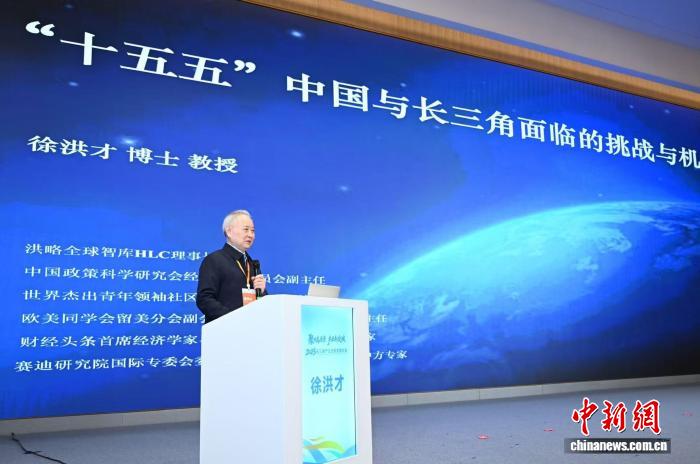
Core Insights - The Yangtze River Delta (YRD) is entering a period of "fourfold opportunities" as it approaches the 14th Five-Year Plan, emphasizing the need for collaborative innovation ecosystems, institutional openness, infrastructure improvement, and innovative regional cooperation mechanisms [1][3]. Group 1: Fourfold Opportunities - The YRD is experiencing a convergence of national strategic initiatives, industrial cluster development, rich scientific and technological resources, and accelerated open economy growth [3]. - The region's strategic position is increasingly prominent as it leads China's economic development while balancing regional growth [1]. Group 2: Collaborative Innovation - There is a strong emphasis on leveraging the YRD's technological innovation resources to establish cross-regional collaborative innovation mechanisms [3]. - Initiatives include the joint development of major scientific infrastructure and a collaborative plan focusing on key sectors such as integrated circuits, artificial intelligence, and biomedicine [3][4]. Group 3: Institutional Openness - The YRD provinces and cities are encouraged to pioneer institutional openness in areas such as rules, regulations, management, and standards, aligning with international high-standard trade rules [4][5]. - Efforts to eliminate hidden barriers to the free flow of resources are essential, particularly in technology transactions and talent evaluation [5]. Group 4: Infrastructure Development - Infrastructure connectivity is identified as a foundational element for YRD integration, with a call to accelerate the construction of a world-class port and airport network [5]. - The development of digital infrastructure and collaborative platforms for computing power is also highlighted as a priority [5]. Group 5: Shared Benefits and Cost Mechanisms - The establishment of various forms of benefit-sharing and cost-sharing mechanisms is recommended to promote collaborative advantages in the YRD [5]. - The success of collaborative industrial funds should be leveraged to create a metropolitan area industrial innovation fund [5].
2025全球医疗科技创新生态大会落幕,波士顿科学携手生态伙伴共倡“源头创新”
Zhong Guo Xin Wen Wang· 2025-11-13 13:05
Core Viewpoint - The conference aimed to bridge the gap between laboratory innovations and clinical applications in China's healthcare sector, promoting a shift from global imports to indigenous innovations in medical technology [1][6]. Group 1: Conference Highlights - The "2025 Global Medical Technology Innovation Ecosystem Conference" was successfully held in Shanghai, gathering nearly 30 industry leaders from government, top hospitals, research institutions, and leading medical technology companies [1]. - A joint initiative titled "Gathering Global Wisdom to Promote Medical Technology Co-creation" was launched, addressing the low clinical outcome translation rates in the industry and proposing several core action plans for future ecological collaboration [1]. Group 2: Collaborative Innovation - Boston Scientific's Greater China President emphasized the importance of building an open innovation platform, integrating global expertise with local innovations to enhance China's medical innovation on the world stage [2]. - The focus is on expanding the vision from single disease management to comprehensive disease management, aligning with the "Healthy China 2030" initiative [2]. Group 3: Key Challenges in Medical Device Innovation - Two main challenges in the domestic cardiovascular medical device innovation market were identified: the difficulty of innovation translation and the need for a systematic value assessment of medical innovations [4][5]. - The complexity of medical device innovation requires effective interdisciplinary collaboration, which is currently hindered by the relative independence of doctors, engineers, and scientists [4]. Group 4: Future Directions - Boston Scientific aims to integrate into China's healthcare system as a vibrant co-builder, moving from local manufacturing to deepening research and co-creating a medical ecosystem [3]. - The company is advocating for a scientific evaluation system to measure the comprehensive value of innovative technologies, which could lead to a healthier innovation ecosystem in China [5].

创新研究生教育机制 推进新质生产力发展
Xin Hua Ri Bao· 2025-10-09 23:06
Core Viewpoint - The development of new quality productivity, driven by technological innovation, is essential for high-quality growth, with Jiangsu aiming to establish itself as a globally influential center for industrial and technological innovation [1] Group 1: Talent Development - The essence of new quality productivity is innovation-driven, requiring high-quality innovators, entrepreneurs, and practitioners [2] - Graduate education must align with Jiangsu's high-quality development needs by systematically optimizing the talent cultivation system [3] - Current graduate training faces challenges such as disconnection from industry needs and insufficient innovation practice capabilities [2][3] Group 2: Integration of Education and Industry - Research universities play a crucial role in basic research and technological breakthroughs, yet there are inefficiencies in the connection between the innovation chain and the industrial chain in Jiangsu [4] - To enhance the transformation of scientific achievements, universities should build a deep integration system between education and industry [5] - Establishing high-level platforms for industry-academia collaboration is essential for fostering innovation and practical skills among graduate students [5] Group 3: Collaborative Ecosystem - The development of new quality productivity relies on a vibrant and open collaborative innovation ecosystem [6] - Graduate education must actively construct and integrate into a broader collaborative innovation ecosystem [7] - Key areas for breakthrough include regional collaborative innovation communities, international cooperation, and fostering a culture of innovation [7]
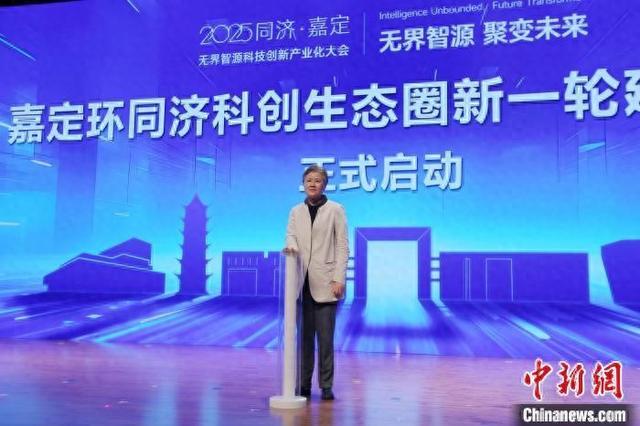
同济大学携手上海嘉定打造环同济知识经济圈2.0
Zhong Guo Xin Wen Wang· 2025-05-27 12:04
Group 1 - The "2025 Tongji·Jiading Unbounded Intelligence Source Technology Innovation Industrialization Conference" was held in Jiading District, Shanghai, focusing on new energy vehicles, smart transportation, and artificial intelligence [1][2] - Tongji University announced the establishment of the "Jiading Ring Tongji Knowledge Economy Circle 2.0" to enhance collaboration and innovation in technology transfer and production capacity [1][4] - The conference marks the beginning of a new round of construction for the Jiading Ring Tongji Knowledge Economy Circle, emphasizing the importance of university-industry collaboration [2][5] Group 2 - Jiading District aims to strengthen its role as a hub for high-end manufacturing and a center for scientific innovation, promoting significant technological achievements [2][5] - The conference highlighted the need to break down disciplinary barriers and create a collaborative innovation network among government, industry, and academia [4][5] - The Jiading Ring Tongji Knowledge Economy Circle is planned to cover approximately 30 square kilometers, focusing on technology innovation, industry cultivation, and urban quality improvement [5] Group 3 - The 2025 Jiading Science and Technology Festival was launched, themed "Technology Makes Life Better," to foster a culture of science and innovation in the district [7] - The event showcased ten major technological innovation application scenarios, focusing on new automotive technologies, integrated circuits, and biomedicine [7] - Several joint research institutions between universities and enterprises were established, along with the launch of various innovation projects and competitions [7]