管理红利

Search documents
重点公司 2025 年拿地质量评估:向精准投资和管理红利要利润
Changjiang Securities· 2026-03-08 09:59
Investment Rating - The report maintains a "Positive" investment rating for the real estate industry [12] Core Insights - The land market in 2025 is characterized by a reduction in total volume but an increase in quality, indicating a shift from scale expansion to structured improvement. The focus is on precise investment and management to drive profits [6][22] - The average net profit margin for key companies in land acquisition is expected to stabilize between 5% and 10% in 2025, with companies like Jianfa, China Resources, and China Overseas potentially showing better performance [3][8] - The investment strategies of real estate companies have shifted from a broad "net-casting" approach to a more defensive focus on safety and efficiency, with a significant portion of land investment concentrated in six core cities [6][30] Summary by Sections Land Market Overview - The land market shows a narrowing decline in transaction volume, with a significant drop in the area and value of residential land transactions across 300 cities, down 13% and 10% year-on-year respectively. However, the decline is less severe than in previous years [23][24] - The average transaction premium rate for land reached over 15% in March, reflecting a temporary surge in market activity before returning to a more rational state [6][23] Methodology for Land Quality Assessment - A new evaluation tool for land quality has been developed, utilizing an entropy method to score 60 major cities and categorize them into four tiers based on location and planning attributes. This helps in assessing land quality and investment potential [7][40][41] Key Company Analysis - Key companies have shown improved granularity and prudence in investment decisions compared to previous upcycles. The report highlights that about 70-80% of land payments are focused on the six core cities, indicating a strategic shift towards safer investments [8][30] - Companies like China Resources, Jinmao, and Jianfa are expected to have stronger profitability from their acquired land, while others like Binjiang and Greentown have smaller land acquisition volumes but higher certainty in profit realization [8][9] Investment Recommendations - The report suggests focusing on value-oriented companies with strong balance sheets and excellent product delivery capabilities, such as China Resources and Jianfa, as well as companies like Greentown and Jinmao that are improving through refined management practices [9]






最早喊出「活下去」的「打工皇帝」,没等到大结局
3 6 Ke· 2026-01-14 22:59
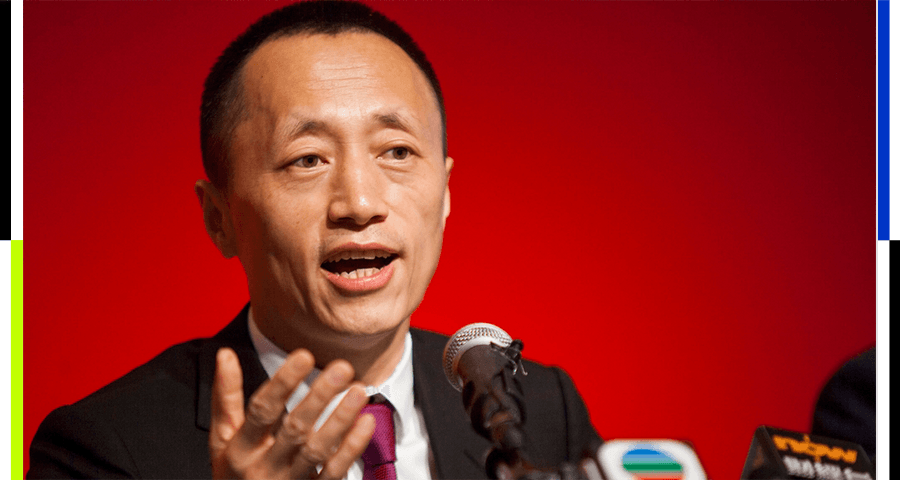
Core Viewpoint - The retirement of Yu Liang marks the end of a significant era for Vanke, as he has been a key figure in the company and the real estate industry for over 35 years, navigating both rapid growth and challenging downturns [3][6]. Company Overview - Vanke announced Yu Liang's resignation due to reaching retirement age, effective January 8, 2026, after he served as Chairman since June 2017 [3]. - Yu Liang's departure is seen as a signal of Vanke's completion of a phase of "soft landing" amid ongoing challenges in the real estate sector [3]. - Under Yu's leadership, Vanke's sales grew from 3 billion to 700 billion, but the company faced significant losses, including a record loss of 49.478 billion in 2024 [4][6]. Industry Context - Yu Liang has been a vocal figure in the industry, coining terms like "black iron era" to describe the current challenging phase for real estate, emphasizing the need for companies to adapt and survive [4][16]. - He initiated self-rescue measures for Vanke, including asset sales and a focus on cash flow management, as the company struggled with debt and market conditions [4][16]. - The real estate sector is undergoing a transformation, with Vanke shifting its focus from residential development to becoming a "city service provider," diversifying into commercial and logistics sectors [15][16]. Leadership and Strategy - Yu Liang's strategic approach included aggressive acquisitions and a focus on operational efficiency, which helped Vanke become the first Chinese real estate company to exceed 100 billion in sales by 2010 [14]. - His leadership style was characterized by a blend of idealism and pragmatism, which was crucial during both the company's rapid growth and subsequent market adjustments [8][10]. - Despite achieving significant milestones, Yu Liang's tenure ended amid a challenging market environment, reflecting the broader struggles within the real estate industry [16][17].


内卷时代,上市公司如何突出重围
Sou Hu Cai Jing· 2025-07-15 08:40
Group 1: Market Trends in China - The era of China's rise is characterized by a shift from East to West, emphasizing the importance of embracing artificial intelligence and improving management efficiency in a stock economy [1] - As of June 25, 2025, there are 5,421 listed companies in A-shares, with 3,803 (70%) having a market capitalization of less than 10 billion RMB, indicating a significant presence of small-cap companies [1] - The number of IPOs has decreased sharply, with only 100 expected in 2024, while delistings have also increased, reflecting a changing regulatory environment [1] Group 2: Characteristics of the US Capital Market - The number of listed companies in the US has decreased from 8,884 in 1997 to 5,437 by the end of 2024, with an average annual decline of about 300 companies due to mergers, bankruptcies, and delistings [2] - The top seven companies in the US account for 30.2% of the total market capitalization, highlighting a trend towards concentration and dominance by leading firms [2] - Traditional venture capital and private equity are nearly extinct, with industrial capital taking the lead in mergers and acquisitions, focusing on post-investment empowerment [2] Group 3: Strategies for Chinese Listed Companies - Companies must reassess their customer-centric approach, as evidenced by the success of Hong Kong-listed consumer brands that have seen significant market capitalization increases [3][6] - Strategic reduction is essential; companies like Shenghong Technology have thrived by focusing on high-value clients and cutting low-margin customers, resulting in increased revenue and profit margins [7] - Companies should concentrate on their core business and avoid diversification pitfalls, as demonstrated by the success of Li Shufu's automotive ventures [9] Group 4: Management and Growth Strategies - Internal growth relies on strategic insight, organizational strength, marketing capabilities, and financial management, which are crucial for enhancing efficiency and profitability [10] - Huawei's impressive growth, with revenues reaching 862.1 billion RMB in 2024, is attributed to its investment in consulting firms to optimize its management practices [11] - Companies like Luxshare Precision have successfully expanded through a series of acquisitions, becoming a major player in the electronics supply chain [14] Group 5: Capital Utilization for Expansion - Aier Eye Hospital has effectively used a merger fund model to accelerate its expansion, leveraging limited capital to achieve significant growth in its network of eye hospitals [18] - The management dividend era emphasizes the need for professional expertise, as companies that fail to evolve will fall behind in a competitive landscape [19] - Companies must adopt a customer-centric approach, focus on strategic reduction, and utilize capital effectively for sustainable growth [20]