管线价值

Search documents
从单药博弈到系统制胜:创新药投资的“能力锚”与“全球局”
雪球· 2025-11-01 03:55
Core Viewpoint - The essence of innovative drug investment is a "high risk, high return" probability game, focusing on the value realization cycle of potential blockbuster drugs [2] - The success of a single drug is merely a "probability event," while the "system capability" of a company is crucial for navigating cycles and enhancing success rates [2][3] Pipeline Worship Rejection - The value of a pipeline is ultimately defined by the company's capabilities, rather than the pipeline itself [4] - For small innovative drug companies, the core value is concentrated in 1-2 key pipelines, while for larger companies and MNCs, the match between "pipeline thickness" and "capability boundaries" is key to determining value [5] - The "false precision" of pipeline valuation is meaningless; the success rate of a drug from clinical trials to approval is only about 10% [6] Company and Platform Capabilities - Company capabilities serve as a "risk hedging tool" for pipelines, enhancing the success probability and value ceiling of drugs [7] - The core of a pipeline is "sustainability" rather than "quantity," as evidenced by the growth history of overseas MNCs [8] Chinese Characteristics of Capability - The "low cost + strong sales" model of companies like Heng Rui is a unique product of China's innovative drug industry stage, based on industry advantages [10] - The model's boundaries do not apply to overseas markets, where MNCs focus on breakthrough innovations and global sales platforms [11] Evolution of Capabilities - The direction of capability evolution is shifting from "cost advantages" to "innovation + integration," as the market landscape changes [12][13] Global Perspective on Big Pharma Logic - Comparing domestic and foreign MNCs clarifies the boundaries between "single drug competition" and "system victory," with both relying on system capabilities rather than single drug dependence [15][16] Investment Framework Upgrade - The complete framework for innovative drug investment should adapt to "stage matching + capability focus," recognizing the value of single drug competition while not idolizing pipelines [18] - For small innovative drug companies, the focus remains on "single drug value inflection points," while for large companies and MNCs, the emphasis is on "capability inflection points" [18] Incremental Options to Enhance Long-term Value - Three incremental options can significantly enhance investment elasticity: improvements in payment terms, overseas value realization, and merger integration [19] - Caution is advised against companies that focus solely on pipeline stories or lack clear capability boundaries for overseas expansion [19] Conclusion - The essence of innovative drug investment is balancing "probability and value," with small companies focusing on "single drug success" and large companies on "capability-driven success" [21] - The development of China's innovative drugs is transitioning from "single drug breakthroughs" to "system competition," with future winners being those that can upgrade local advantages to global innovation and integration capabilities [21]



丹诺医药IPO背后隐忧:9.32亿元负债压顶,54%采购依赖药明康德
Hua Xia Shi Bao· 2025-08-07 00:17
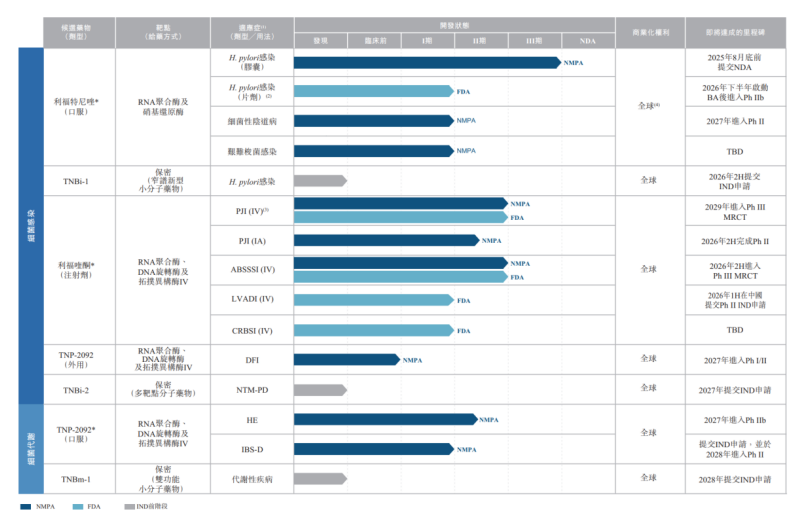
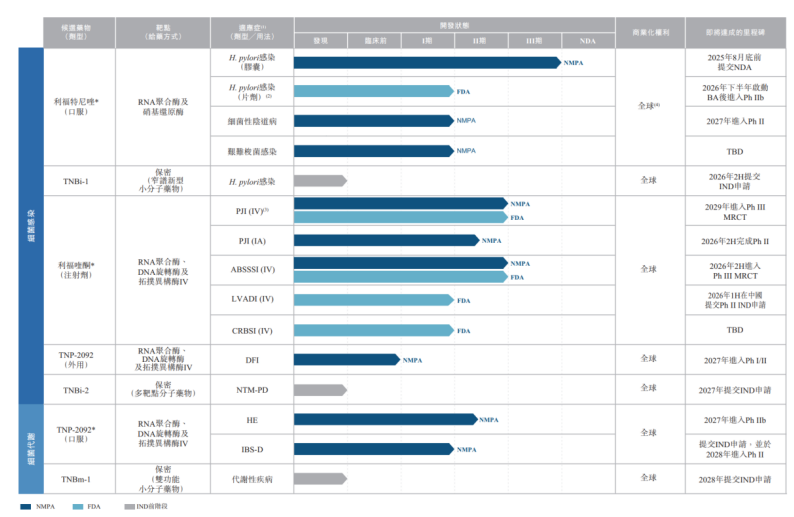
Core Viewpoint - Danuo Pharmaceutical is seeking to raise funds through an IPO on the Hong Kong Stock Exchange, primarily for research, development, and commercialization of its core products, as well as for operational expenses and building its own manufacturing facility [1][3]. Financial Performance - Danuo Pharmaceutical has reported cumulative losses of 376 million RMB, with net losses of 192 million RMB, 146 million RMB, and 38 million RMB for the years 2023 to the first quarter of 2025 [3]. - The company has a high R&D expenditure, with over 80% of its total operating expenses allocated to R&D, leading to significant financial pressure [3][5]. - As of March 2025, the company had only 146 million RMB in cash, while its net current liabilities reached 932 million RMB, indicating a reliance on external capital for ongoing operations [3][4]. R&D Pipeline - Danuo Pharmaceutical has established a pipeline of seven innovative assets, including three core products: TNP-2198 for Helicobacter pylori infection, TNP-2092 injection for implant-related bacterial infections, and TNP-2092 oral formulation for gut microbiome-related diseases [5][6]. Commercialization Challenges - The commercialization of TNP-2198 faces risks, including a tight timeline for obtaining market approval by the end of 2026, with potential penalties if deadlines are not met [6][7]. - The company relies on contract development and manufacturing organizations (CDMOs) for production, with its own facility not expected to be operational until 2028, posing risks to product supply [8]. Supplier Dependency - Danuo Pharmaceutical has a significant dependency on WuXi AppTec, which is both a major supplier and a shareholder, with procurement from this supplier accounting for 53.5% of total purchases in the first quarter of 2025 [9][11]. - The high concentration of procurement from a single supplier raises concerns about the company's independence and the fairness of related transactions [11][13]. Market Outlook - The ability of Danuo Pharmaceutical to transition from a research-focused entity to a commercially viable company will depend on its capacity to manage ongoing losses, successfully commercialize its core products, and navigate regulatory scrutiny regarding its supplier relationships [13].

丹诺医药IPO背后重重隐忧:9.32亿元负债压顶 54%采购依赖药明康德|创新药观察
Hua Xia Shi Bao· 2025-08-06 17:45
Core Viewpoint - Danuo Pharmaceutical is seeking to go public on the Hong Kong Stock Exchange, aiming to raise funds primarily for research, development, registration, and commercialization of its core products, as well as for the development of other candidates and operational expenses [1][3]. Financial Performance - Danuo Pharmaceutical has accumulated losses of 376 million RMB, with R&D expenses exceeding 80% of total expenditures [3]. - The company reported net losses of 192 million RMB, 146 million RMB, and 38 million RMB for the years 2023 to Q1 2025, respectively [3]. - As of March 2025, the company had only 146 million RMB in cash, while current liabilities reached 932 million RMB, indicating significant financial pressure [3][4]. R&D Investment - The R&D expenditure for core products accounted for 90.7%, 82%, and 65.3% of total R&D expenses from 2023 to Q1 2025, respectively [3]. - R&D costs are a critical driver for innovation but also pose substantial financial strain on the company [3][6]. Product Pipeline - Danuo Pharmaceutical has three core products in its pipeline, including TNP-2198 for Helicobacter pylori infection and TNP-2092 for multi-target treatment of bacterial infections [6][8]. - The company plans to submit a New Drug Application (NDA) for TNP-2198 by August 2025, with an expected approval by the end of 2026 [8]. Commercialization Challenges - The commercialization of TNP-2198 faces risks, including the potential for the agreement with Yuan Da Life Sciences to be terminated if the product does not receive market approval by the end of 2026 [7][8]. - Even if the product is approved, challenges such as price negotiations and competition may hinder revenue generation [8]. Supply Chain Dependency - Danuo Pharmaceutical relies heavily on WuXi AppTec, which is both a major supplier and a shareholder, raising concerns about independence and fair pricing [9][12]. - The company’s procurement from its top five suppliers increased significantly, with WuXi AppTec accounting for 53.5% of total procurement in Q1 2025 [9][12]. Regulatory and Market Concerns - The dual role of WuXi AppTec as a supplier and shareholder may attract regulatory scrutiny regarding the independence and fairness of transactions [15]. - The ongoing losses, the timeline for core product commercialization, and the reliance on external manufacturing partners will be focal points for regulatory inquiries and market attention [15].