
线上经济

Search documents
数字经济,武汉新机遇!
Sou Hu Cai Jing· 2025-10-15 07:38
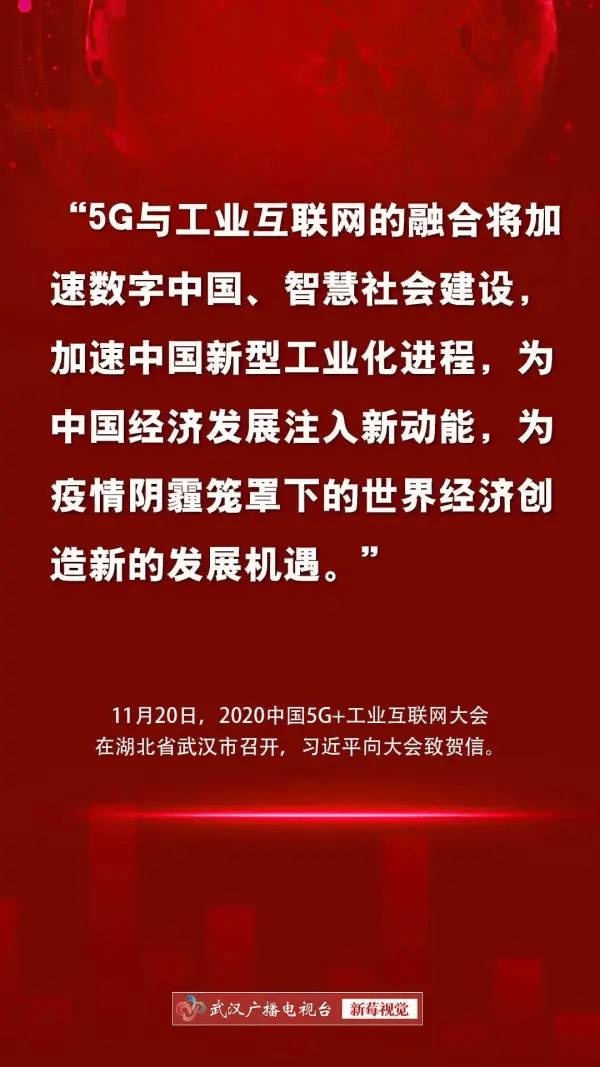
Core Points - The 2020 China 5G + Industrial Internet Conference was held in Wuhan, with President Xi Jinping sending a congratulatory message, highlighting the significance of the event for promoting digital economy development in the region [1][4] - Wuhan aims to leverage the conference to enhance its digital economy and contribute to high-quality economic development, reflecting the central government's expectations for the city [4] - The city has established itself as a hub for digital economy with over 20 national-level projects and a significant presence of top data economy enterprises [4][5] Digital Economy Development - In 2020, Wuhan established a Digital Economy Development Committee to promote the integration of new technologies with the real economy, urban governance, and social welfare [6] - The city plans to enter a comprehensive phase of digital economy development in 2021, focusing on five new digital infrastructures, seven new digital industries, and three new integrations [6][8] - The digital economy is projected to account for half of Wuhan's GDP in the next three years [6] Infrastructure and Technology - Wuhan has built over 25,000 5G base stations, achieving high-quality coverage in urban areas, and is expanding its data center capacity significantly [15][19] - The city is implementing a "573" project to enhance digital governance and has developed a smart city platform that integrates data from 20 departments [13][19] - The industrial internet sector in Wuhan has seen over 16 billion identification registrations, with the city being recognized as a national model for new industrialization [19] Education and Smart City Initiatives - Wuhan has been designated as a national "Smart Education Demonstration Zone" and has implemented online education solutions during the pandemic to ensure continuity for 1.04 million students [22] - The city is advancing its smart city initiatives with a focus on infrastructure, data sharing, and integrated governance systems [24][27] Online Economy Promotion - Wuhan's government has introduced policies to promote the online economy, including recognition for key enterprises and platforms that meet specific revenue criteria [28][32] - The city plans to support online economy enterprises with subsidies and rewards for achieving significant milestones [32][33] Future Plans - Wuhan aims to host the China 5G + Industrial Internet Conference annually and plans to support over ten outstanding industrial internet platforms this year [34] - The city is focused on overcoming technological barriers in digital transformation and enhancing cybersecurity measures in the digital economy [37]

港股互联网行业策略报告:全球变局下的复盘与审视,哪些方向值得坚守?
EBSCN· 2025-05-07 07:30
Group 1: Market Overview - The Hong Kong stock market has been more reliant on valuation-driven fluctuations compared to the US market, with a CAGR of -1.6% over the past decade and a maximum drawdown of 49.9%[12] - The Hang Seng Index experienced a peak increase of 19.9% following the DeepSeek AI asset revaluation, primarily driven by valuation uplift[16] - The Hang Seng Technology Index's maximum drawdown reached 74.1% since its inception, indicating significant volatility in the tech sector[12] Group 2: Key Stock Recommendations - Alibaba (BABA) is expected to see marginal improvements in its e-commerce business, with a potential recovery in take rates and profit stability[3] - Tencent Holdings (0700.HK) is projected to benefit from strong game performance during the Spring Festival and AI-driven advertising revenue growth[3] - NetEase (9999.HK) remains resilient with no tariff impact on its gaming segment, while Kuaishou (1024.HK) shows stable fundamentals[3] Group 3: Sector Insights - The gaming market is anticipated to grow significantly in early 2025, driven by long-standing games and the Spring Festival, with Tencent and NetEase as key players[33] - The advertising sector is expected to see cautious growth in Q1 2025, influenced by policy changes and AI integration, particularly for Tencent[34] - E-commerce competition remains intense, with Alibaba expected to improve its monetization capabilities amidst a recovering consumer sentiment[41] Group 4: Risks and Challenges - Geopolitical risks, underperformance in gaming revenue, and intensified competition in the e-commerce sector pose significant threats to market stability[3] - The overall advertising market growth is projected to be cautious, with potential impacts from macroeconomic conditions and policy changes[36]