
经济发展趋势

Search documents
0.2%、0.1%,上涨!从10月份CPI和PPI数据透视经济发展趋势
Yang Shi Wang· 2025-11-09 06:39
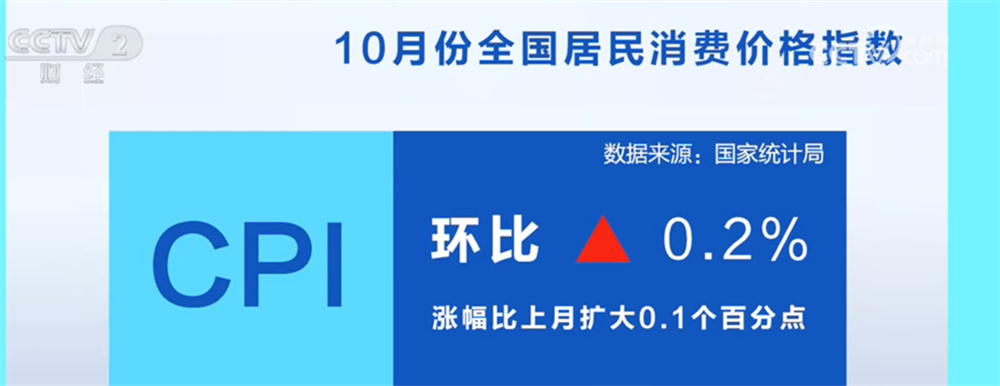
Group 1 - In October, the Consumer Price Index (CPI) increased by 0.2% month-on-month and year-on-year, driven by policies to expand domestic demand and the impact of the National Day and Mid-Autumn Festival holidays [1][3] - The CPI's month-on-month increase of 0.2% represents an expansion of 0.1 percentage points compared to the previous month, with significant price increases in accommodation, air tickets, and travel services due to heightened travel demand during the holidays [3] - The core CPI, excluding food and energy prices, rose by 1.2% year-on-year, marking the highest increase since March 2024 and continuing a trend of six consecutive months of growth [3] Group 2 - The Producer Price Index (PPI) saw a month-on-month increase of 0.1%, marking the first rise of the year, influenced by improved supply-demand relationships in certain domestic industries and the transmission of international commodity prices [6] - Key industries such as photovoltaic equipment manufacturing, battery manufacturing, and automotive manufacturing experienced a narrowing of year-on-year price declines, indicating a positive shift in market conditions [6] - The construction of a modern industrial system and the orderly release of consumption potential have led to price increases in industries such as non-ferrous metal smelting and rolling processing, electronic materials manufacturing, and shipbuilding [6]

洞察经济趋势 把握投资机遇
Qi Huo Ri Bao Wang· 2025-10-29 01:19
Group 1 - The core viewpoint is that China's economy is transitioning from a high export and investment model to one driven by consumption and technology, with supportive policies expected to stimulate domestic demand [2] - Yang Delong predicts ten economic trends for the future, including a slowdown in the growth of the US and European economies, a continued easing of monetary policy in China, and an increase in capital market investments from residents [1] - The Chinese government is expected to implement more policies to support the real estate market, leading to stabilization in the sector [1] Group 2 - The capital market in China is currently undervalued, with significant opportunities in consumption, new energy, and technology sectors [2] - The ongoing shift of household savings into capital markets is anticipated to create unprecedented development opportunities for the Chinese capital market [2] - Yang Delong emphasizes the importance of value investing, suggesting that investors focus on advantageous industries and companies to support the real economy [2]
用电量连续破万亿千瓦时 怎么看?
Ren Min Ri Bao Hai Wai Ban· 2025-10-09 00:40
Core Insights - The total electricity consumption in China exceeded 1 trillion kilowatt-hours in both July and August, marking a significant milestone in energy usage and reflecting economic growth trends [1][2][4] Group 1: Electricity Consumption Data - In July, total electricity consumption reached 10,226 billion kilowatt-hours, a year-on-year increase of 8.6%, while in August, it was 10,154 billion kilowatt-hours, up 5% year-on-year [1][2] - The electricity consumption of the primary industry in July was 17 billion kilowatt-hours, growing by 20.2%, while the secondary industry consumed 5,936 billion kilowatt-hours, with a growth rate of 4.7% [2][3] - The tertiary industry saw an electricity consumption of 2,081 billion kilowatt-hours in July, with a year-on-year increase of 10.7% [2] Group 2: Factors Driving Electricity Consumption - High temperatures across the country have led to increased electricity loads, with the maximum national electricity load reaching 1.465 billion kilowatts in July, a historical high [4][5] - Economic recovery and policies promoting consumption have contributed to the rise in electricity usage, with manufacturing electricity consumption in August increasing by 5.5%, the highest for the year [5][6] - The growth in electricity consumption is also driven by the recovery in high-tech and equipment manufacturing sectors, with all sub-sectors showing positive growth [5][6] Group 3: Energy Supply and Stability - The stable electricity supply is attributed to strong energy self-sufficiency and robust operational capabilities, with over 90% of the consumption increase being supported by domestic energy production [7][8] - The establishment of a comprehensive energy supply and storage system has enhanced the ability to manage electricity supply during peak demand periods [8] - The national energy emergency support system has been developed to ensure reliable electricity supply, with no major power outages reported during peak usage [8]
美联储主席鲍威尔:在了解经济可能的发展趋势后再调整政策
news flash· 2025-06-24 12:53
Core Viewpoint - The Federal Reserve Chairman Jerome Powell indicated that the Fed is in a favorable position to further understand potential economic trends before making policy adjustments [1] Group 1 - The Federal Reserve is currently assessing economic developments before implementing any changes to its policies [1]