
网格治理

Search documents
上海金山一场“揭榜”大赛破解基层治理难题
Zhong Guo Qing Nian Bao· 2025-12-11 13:17
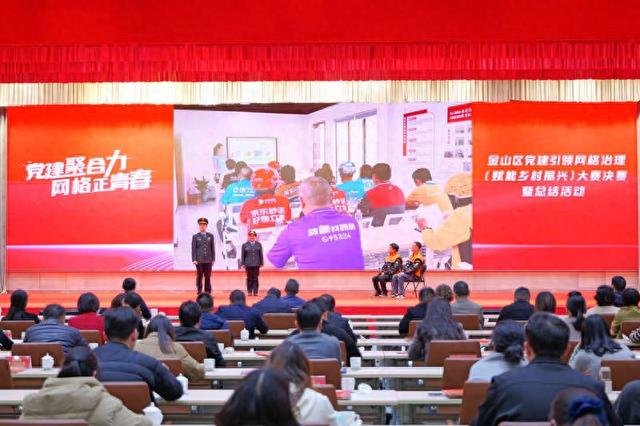
Core Insights - The article highlights the transformative impact of a competition focused on grid governance in Shanghai's Jinshan District, which has led to significant improvements in local agricultural sales and community management [1][3]. Group 1: Competition Overview - The competition titled "Building Strength through Party Building: Youth in Grid Governance" involved 37 grid teams and 43 social organizations, aiming to develop effective governance practices that can be replicated [1][3]. - The competition utilized a "demand-oriented" approach, allowing social teams to address real community issues identified through a collaborative process [5]. Group 2: Community Impact - In Lvxing Town, a student team from Shanghai University of International Business and Economics used new media technology to enhance farmers' sales channels through live streaming, contributing to rural revitalization [4]. - The "Love Resides in Unity" organization helped increase sales of a local product by over 30% through volunteer-led promotional events [4]. - The "Loving Heart Charity" organization provided standardized tools for volunteer management, transitioning from a "person-based" to a "self-governed" system in community service [5]. Group 3: Governance Framework - Jinshan District has developed a "six-dimensional" work system to support grassroots governance, providing a clear roadmap for effective management [5]. - The competition exemplifies the practical value and governance effectiveness of the Party-led "six-dimensional" work system, illustrating how grassroots initiatives can enhance community welfare [5].

网格治理暖人心 平山村破解拆迁融城治理难题
Zhen Jiang Ri Bao· 2025-11-18 23:36
Core Viewpoint - The article highlights the successful implementation of a grid governance system in Ping Shan Village, which has facilitated the integration of relocated villagers into urban life, ensuring their needs are met and enhancing their overall well-being [1][2][3] Group 1: Governance Structure - Ping Shan Village has established a three-tier governance matrix of "village (community) - grid - micro-grid," effectively dividing the original village into 11 grids and 21 micro-grids to ensure comprehensive governance coverage [1] - The governance model emphasizes the involvement of community leaders and enthusiastic volunteers, forming a "micro-grid service team" that connects with 15-20 households each [1] Group 2: Community Services - The service team utilizes WeChat for real-time communication and regular home visits, collecting over 140 requests related to employment assistance, elderly care, and conflict resolution, achieving a feedback resolution rate of 98% [2] - Special services are provided for vulnerable groups, including the elderly and disabled, with monthly home visits for essential services like haircuts, bathing, and meal delivery [2] Group 3: Administrative Support - A "micro-grid agent service model" has been introduced to assist villagers with administrative tasks, allowing them to handle matters without needing to travel, with a list of 12 frequently required services clearly outlined [2] - The agent team has successfully processed over 80 administrative requests, streamlining the service delivery to the villagers [2]
普陀45个综合网格“一格一策” 建立破解“一类事”数据库 “服务对象”逐渐成了“治理伙伴”
Jie Fang Ri Bao· 2025-07-20 02:14
Core Insights - The article highlights the effectiveness of "grid governance" in Putuo District, evidenced by a 9.1% increase in work order resolution rates and a 6.2% rise in satisfaction rates compared to the same period last year [1] Group 1: Grid Governance Implementation - Putuo District initiated a party-led grid governance model on February 25, establishing a goal system for effective grid operation [1] - The district has categorized grids into four types based on regional characteristics and public needs, enhancing targeted governance [2] - A "dual grid leader" system has been implemented to ensure that governance efforts align with the specific needs of each grid [2] Group 2: Community Engagement and Resource Allocation - The district has deployed 1,883 on-site personnel and 1,493 support staff across 45 grids, including recent graduates and volunteers, creating a diverse governance force [3] - New employment groups are actively participating in community governance, reporting issues and enhancing local governance efficiency [3] Group 3: Systematic Improvement and Cross-Department Collaboration - The governance approach has shifted from a rigid departmental focus to a more integrated perspective, allowing for quicker resolution of complex issues [4][5] - A robust support system at the district level facilitates collaboration among various departments to address common challenges [5][6] Group 4: Data-Driven Decision Making - The district has developed a digital management platform that integrates various data sources to enhance governance decision-making [7] - A case database is being established to transition from solving individual issues to addressing broader categories of problems, improving overall governance efficiency [8]
“阿大葱油饼”焕新记(干部状态新观察·走进一线探作风)
Ren Min Ri Bao· 2025-06-04 21:56
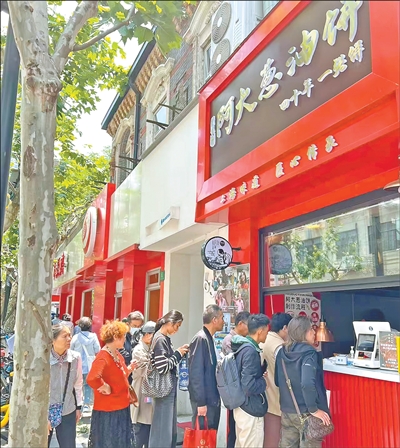
Core Viewpoint - The reopening of "Wu Gencun A Da Scallion Pancake" in Shanghai has generated significant customer interest but has also led to complaints regarding oil smoke emissions and pedestrian congestion, highlighting the challenges of balancing business operations with community impact [1][2]. Group 1: Business Operations - "A Da Scallion Pancake" was once a top street food brand in Shanghai, but it faded from public attention after closing three years ago [1]. - The new store, opened by Wu Gencun's son, Wu Zhiyong, has quickly attracted long queues, leading to a limit of five pancakes per customer due to high demand [1]. - The business faced immediate complaints from nearby residents and merchants about oil smoke and traffic congestion caused by long queues [1][2]. Group 2: Community and Regulatory Response - Local authorities, including the street party and community office, recognized the need to balance the interests of the business and the residents [2]. - A comprehensive approach was taken to address the complaints, involving multiple departments to resolve the issues of oil smoke and pedestrian congestion [5][6]. - The solution included raising the height of the smoke exhaust pipe and implementing measures to manage customer queues and non-motorized vehicle parking [5][6]. Group 3: Governance and Coordination - The integration of various governance grids in Shanghai aims to enhance urban management efficiency by breaking down departmental silos [4][9]. - The establishment of 865 comprehensive governance grids in Shanghai facilitates coordinated efforts among different departments to address community issues effectively [9]. - The approach emphasizes the importance of direct communication and collaboration among departments to resolve complex urban challenges, referred to as "three-cross" issues [7][10].
幸福在“网格”间拔节生长(前沿观察)
Ren Min Ri Bao· 2025-05-27 22:40
Core Viewpoint - The news highlights the transformative impact of grassroots "grid" management in Heilongjiang Province, enhancing community services and governance through the integration of party organizations and local resources [2][9]. Group 1: Community Engagement and Services - Grid workers play a crucial role in providing timely assistance to families, as demonstrated by the case of a grid worker helping a family secure school enrollment for their child [1]. - The establishment of a community structure involving party organizations and grid party branches has led to effective volunteer services, benefiting over 600 individuals [2]. - The integration of community resources has resulted in tangible improvements, such as the installation of streetlights in previously dark areas, enhancing residents' safety and satisfaction [3]. Group 2: Resource Allocation and Governance - The initiative of "all police down to the grid" has seen over 7,800 police officers and assistants engage directly with communities, fostering closer relationships and improving crime reporting [5][6]. - The integration of various professional services into the grid system has transformed governance from a singular approach to a multi-faceted collaboration, involving 29,000 personnel across different sectors [6][7]. - The establishment of a grid-based discussion mechanism has allowed local leaders to address community concerns effectively, leading to the addition of over 5,000 public parking spaces in response to residents' needs [8]. Group 3: Economic Development and Agricultural Support - The grid system is being utilized to promote rural revitalization, with initiatives like cooperative farming leading to increased income for local farmers, exemplified by a village's success in the goose farming industry [9][10]. - The establishment of 218 cooperatives and the integration of over 1.4 million acres of land have significantly enhanced agricultural productivity and community engagement [10]. - The ongoing efforts to connect local governance with economic development are creating a supportive environment for community growth and satisfaction [10].