葱油饼

Search documents
藏在烟火气里的消费升级
Xin Lang Cai Jing· 2026-02-23 18:39
Group 1 - The core observation of the Spring Festival consumption market is that consumer psychology is becoming more rational, with a willingness to pay for quality products and services [1] - There is a notable shift from traditional home-cooked items to purchasing ready-made products from markets and restaurants, exemplified by a 399 yuan gift package containing ten ready-to-eat items [1] - Consumers are prioritizing stable flavors and convenience over merely saving money, indicating a shift in purchasing behavior towards quality and experience [1] Group 2 - The trend reflects a broader consumption upgrade, where low-price competition is seen as unsustainable, and focusing on product quality is viewed as the long-term strategy [2] - Consumers are increasingly willing to pay a premium for better performance and experience, as seen in the consumer electronics market, where higher-priced phones continue to sell well [2] - The optimization and upgrading of consumption structure indicate that consumer demand remains, but it has become more rational and value-oriented [2]


6天亏光90万,我劝普通人别做梦
创业家· 2026-02-13 10:10
Core Viewpoint - The article discusses the pitfalls and challenges faced by ordinary entrepreneurs in the food and beverage industry, highlighting the disparity between perceived opportunities and actual business viability [5][6][8]. Group 1: Entrepreneurial Challenges - Many entrepreneurs are drawn into the food and beverage sector by the allure of quick profits, but often find themselves in financially unsustainable situations [7][19]. - Examples include a young man who invested 1 million in a tea building but only made 800 yuan daily, leading to significant losses [19][24]. - A bakery owner in Shandong spent 20 million on equipment and renovations but only achieved a daily revenue of 1,000 yuan, resulting in substantial debt [22][24]. Group 2: Misleading Business Models - The article highlights the prevalence of "fast recruitment companies" that exploit aspiring entrepreneurs by promoting seemingly lucrative franchise opportunities without proper vetting [47][49]. - Many individuals fall victim to scams, believing in low investment and high returns, only to face financial ruin [61][49]. - The narrative includes a case where a woman lost 90 million after being misled into opening a franchise without any operational support from the headquarters [43][46]. Group 3: Cultural and Market Misalignment - The article emphasizes the disconnect between cultural aspirations and market realities, as seen in the case of a restaurant owner who focused on brand culture rather than product viability [11][13]. - Entrepreneurs often overlook essential business metrics such as gross margin and customer traffic, leading to poor decision-making [41][57]. - The rise of social media and influencer culture has exacerbated unrealistic expectations among aspiring business owners, pushing them towards high-risk ventures [61][53].

6天亏光90万,我劝普通人别做梦
Xin Lang Cai Jing· 2026-02-07 03:26
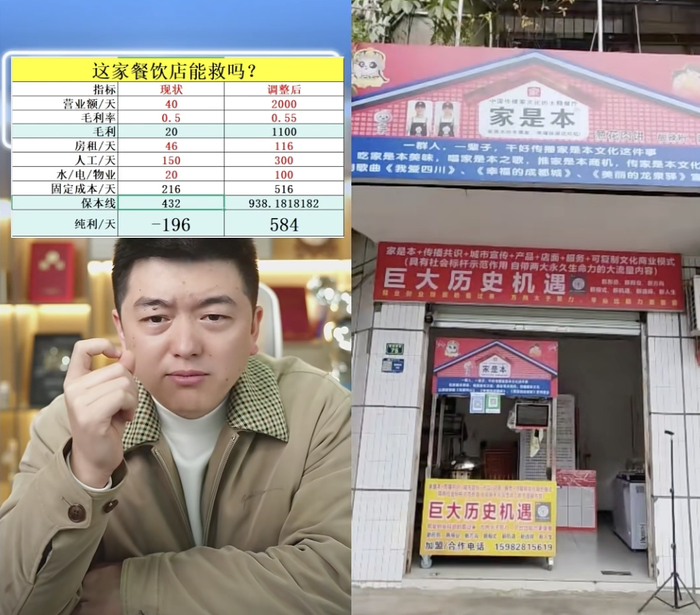
Core Viewpoint - The article discusses the rise and fall of various food entrepreneurs, highlighting the pitfalls of the food and beverage industry, particularly in the context of misguided investments and unrealistic expectations driven by social media and influencer culture [2][39]. Group 1: Business Concepts and Strategies - The "家是本" restaurant in Chengdu has gained popularity through a unique branding approach that emphasizes cultural significance, yet struggles with actual sales, averaging only 40-50 yuan per day and incurring monthly losses of 6,000 yuan [7][8]. - The owner believes that the restaurant serves as a vehicle for brand culture rather than a traditional business, aiming to attract investors rather than focusing on immediate profitability [7][8]. - The article illustrates various entrepreneurs who have invested heavily in impractical business models, such as a six-story milk tea building and a bakery styled as a hair salon, leading to significant financial losses [8][10][12]. Group 2: Entrepreneurial Pitfalls - Many entrepreneurs are lured by the promise of quick success and high returns, often falling victim to scams or poorly conceived business ideas, such as the "fourth-generation hamburger" concept that resulted in rapid financial losses [12][14][36]. - The article emphasizes the prevalence of "fast recruitment companies" that exploit aspiring entrepreneurs by charging high franchise fees without delivering on promises of support or success [36][39]. - A recurring theme is the lack of market research and understanding among these entrepreneurs, leading to misguided decisions and ultimately, financial ruin [46][47]. Group 3: Social Media Influence - The rise of social media has created a culture where individuals are more willing to invest in unproven business ideas, driven by the allure of success stories shared online [39][46]. - The article notes that many entrepreneurs, despite being cautious in other aspects of life, become overly optimistic when it comes to starting their own businesses, often ignoring red flags [39][46]. - The influence of social media and the desire for quick financial success contribute to a cycle of investment in high-risk ventures, resulting in widespread financial losses among aspiring business owners [39][46].
5个行业闷声发财:就在我们身边看似不起眼,却躺着赚钱
Sou Hu Cai Jing· 2025-11-09 13:36
Core Insights - The article highlights the resilience of certain industries that continue to thrive despite economic downturns and the ongoing pandemic, revealing hidden profit opportunities in seemingly mundane sectors [1][6]. Group 1: Eyewear Industry - The eyewear industry is characterized by high profit margins, with frame costs ranging from a few dozen to over a hundred yuan, while retail prices can reach hundreds or even thousands of yuan [1]. - Average gross profit margins for eyewear stores are reported to be at least 45%, although high rent and labor costs can compress net profit margins [1]. Group 2: Breakfast Industry - The breakfast industry, despite its labor-intensive nature, offers significant profit potential, as illustrated by a couple selling scallion pancakes, where the cost per pancake is less than 0.5 yuan, but the selling price is around 3 yuan [3]. - If they sell 1,000 pancakes daily, their income can reach 2,500 yuan, indicating a lucrative return on their efforts [3]. Group 3: Vegetable Retail Industry - Vegetable vendors face demanding work hours but can achieve substantial profits, with purchasing costs often only a few cents to a couple of yuan per kilogram, while selling prices can range from 5 to over 10 yuan per kilogram [5]. - Strategic location near large residential areas can enhance profitability for vegetable shops, despite costs associated with spoilage and rent [5]. Group 4: Funeral Industry - The funeral industry is known for its high profit margins, particularly in the sale of funeral services and products, such as urns that can be sold for thousands to tens of thousands of yuan, despite their low purchase cost [5]. - The sale of burial plots also presents significant profit opportunities, with prices for a one-square-meter plot often exceeding tens of thousands of yuan [5]. Group 5: Recycling Industry - The recycling industry, often overlooked, presents lucrative opportunities, as waste materials can be sold at multiples of their purchase price after processing [5]. - For instance, scrap metal from old wires can be sold for a higher price after extraction, and old mobile phones can yield profits when resold to repair shops [5]. Conclusion - The article concludes that despite challenging economic conditions, there are numerous "quietly profitable" industries that can provide substantial earnings for operators willing to engage in them [6].

长沙星级酒店“摆摊Plus”来了
Chang Sha Wan Bao· 2025-08-11 12:47
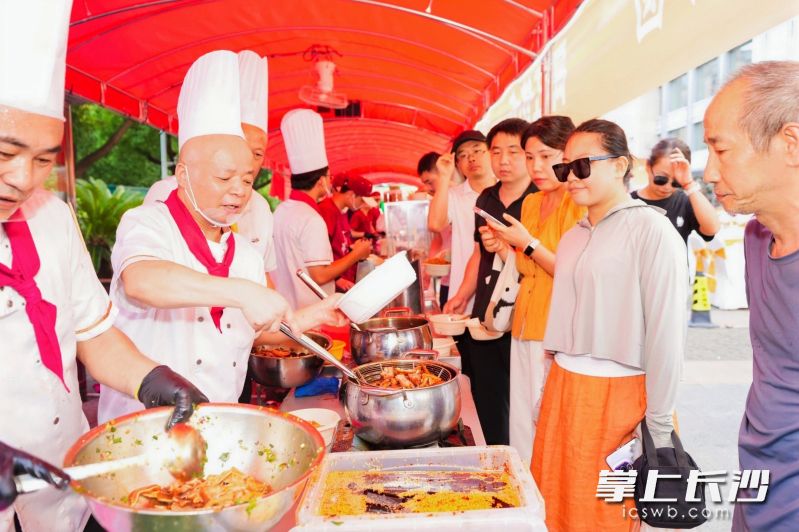
Core Insights - The article highlights the trend of high-end hotels and traditional restaurants in Changsha adopting street food vending as a strategy to attract customers and adapt to changing consumer preferences [1][3][6] Group 1: Industry Transformation - Five-star hotels are engaging in street vending, creating a new dining experience that combines traditional cuisine with modern cultural elements [1][5] - The "Huatian Small Lu" event at Huatian Hotel features local delicacies and live performances, enhancing customer engagement and experience [3][5] - Traditional restaurants like Xujiji Seafood and Ice Fire Tower are also participating in street vending, offering affordable prices and attracting local residents [6][8] Group 2: Consumer Experience - Customers are enjoying the combination of dining and entertainment, with many expressing satisfaction with the new casual dining atmosphere [3][5] - The average spending at these events is reported to be under 100 yuan per person, making it an attractive option for consumers [5] - The shift from high-end dining to street food options is making gourmet food more accessible to everyday consumers, integrating high-end brands into daily life [8][9] Group 3: Business Strategy - The street vending approach allows high-end restaurants to gather customer feedback and optimize their menus and services based on consumer preferences [9] - While profit margins from street vending may be low, the focus is on building brand awareness and customer loyalty through direct engagement [9] - The trend reflects a broader strategy of high-end dining establishments to reach a wider audience and adapt to the evolving food service landscape [8][9]
“阿大葱油饼”焕新记(干部状态新观察·走进一线探作风)
Ren Min Ri Bao· 2025-06-04 21:56
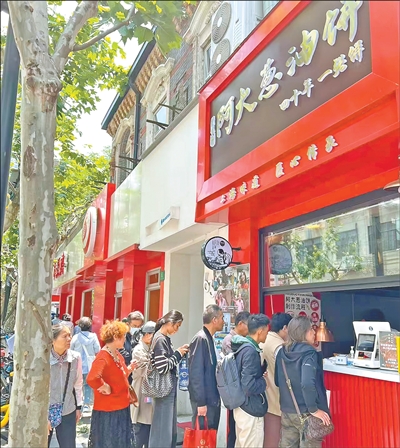
Core Viewpoint - The reopening of "Wu Gencun A Da Scallion Pancake" in Shanghai has generated significant customer interest but has also led to complaints regarding oil smoke emissions and pedestrian congestion, highlighting the challenges of balancing business operations with community impact [1][2]. Group 1: Business Operations - "A Da Scallion Pancake" was once a top street food brand in Shanghai, but it faded from public attention after closing three years ago [1]. - The new store, opened by Wu Gencun's son, Wu Zhiyong, has quickly attracted long queues, leading to a limit of five pancakes per customer due to high demand [1]. - The business faced immediate complaints from nearby residents and merchants about oil smoke and traffic congestion caused by long queues [1][2]. Group 2: Community and Regulatory Response - Local authorities, including the street party and community office, recognized the need to balance the interests of the business and the residents [2]. - A comprehensive approach was taken to address the complaints, involving multiple departments to resolve the issues of oil smoke and pedestrian congestion [5][6]. - The solution included raising the height of the smoke exhaust pipe and implementing measures to manage customer queues and non-motorized vehicle parking [5][6]. Group 3: Governance and Coordination - The integration of various governance grids in Shanghai aims to enhance urban management efficiency by breaking down departmental silos [4][9]. - The establishment of 865 comprehensive governance grids in Shanghai facilitates coordinated efforts among different departments to address community issues effectively [9]. - The approach emphasizes the importance of direct communication and collaboration among departments to resolve complex urban challenges, referred to as "three-cross" issues [7][10].
为什么打工人创业总是失败?因为你缺少这样的一万元
Sou Hu Cai Jing· 2025-05-17 03:25
Group 1 - The article emphasizes the importance of focusing on small details in business, which can lead to significant success and competitive advantage [4][10][29] - It highlights examples of entrepreneurs and companies that achieved remarkable results by addressing minor issues, such as a fried chicken shop stabilizing its product quality and a photo studio increasing its bookings through simple innovations [3][9][27] - The narrative suggests that true business success lies in solving customer problems rather than merely offering products, indicating a shift from "what I can do" to "what I can solve" [15][18] Group 2 - The article references historical examples, such as Kodak's failure to adapt to digital technology and the success of 7-11 through strategic product placement, illustrating how neglecting details can lead to downfall while attention to them can foster growth [8][5][12] - It discusses the concept of "white elephant index" introduced by Elon Musk at SpaceX, which aims to minimize costs by redesigning expensive components, showcasing a commitment to efficiency and detail [21][23] - The piece concludes with the notion that the legacy of businesses is built on their ability to execute small tasks effectively, as demonstrated by various successful companies throughout history [24][26][29]