
网络餐饮监管

Search documents
市场监管总局发布两项新规 外卖商户须有实体经营门店
Xin Lang Cai Jing· 2026-02-26 17:41
Core Viewpoint - The new regulations from the State Administration for Market Regulation aim to eliminate "ghost kitchens" and "shadow merchants" in the food delivery industry by mandating that all delivery merchants must have a physical storefront and that their business operations must align with their qualifications [1][2]. Group 1: Regulatory Changes - The new regulations require that delivery merchants possess a real physical store, and their business activities and addresses must match their qualification certificates [3][9]. - The regulations enhance the responsibilities of food delivery platforms, mandating them to conduct thorough checks on merchant qualifications and to ensure compliance with food safety standards [2][5]. - Penalties for non-compliance have been significantly increased, with fines for platforms and merchants reaching up to 200,000 yuan, and additional penalties for serious violations based on the previous year's revenue [3][6]. Group 2: Food Safety Management - Platforms are now required to establish dedicated food safety management teams, including a food safety director and staff, to oversee compliance and risk management [5][6]. - Merchants must implement internal risk control mechanisms, transitioning from reactive to proactive food safety management [6][10]. - The regulations emphasize the importance of real-time verification of merchant qualifications, requiring platforms to conduct checks at least every six months to ensure ongoing compliance [10][12]. Group 3: Cross-Regional Supervision - The new regulations introduce a collaborative enforcement mechanism to address the challenges of cross-regional supervision, allowing market regulation departments to coordinate across regions for better enforcement [7][11]. - Platforms are required to report their merchant information to local market regulation departments biannually, enhancing transparency and oversight [11][12]. - The regulations aim to streamline the process of evidence collection and case investigation across regions, improving the efficiency of enforcement actions [12].
大幅提升违法违规惩戒力度,涉网络餐饮新规破解跨地域监管难题
Xin Lang Cai Jing· 2026-02-26 12:29
Core Viewpoint - The new regulations for online food service operators, effective June 1, significantly increase penalties for violations, with fines reaching up to 200,000 yuan, and introduce innovative measures to address jurisdictional challenges in cross-regional food service regulation [1][2]. Group 1: Regulatory Changes - The new regulations enhance the penalty framework for platforms and merchants, allowing fines to reach up to 200,000 yuan for violations [1]. - In cases of severe violations by platform leaders, fines can be imposed based on the previous year's revenue, ranging from one to ten times that amount [1]. Group 2: Jurisdictional Innovations - The regulations introduce a dual jurisdiction model, where the primary jurisdiction is based on the registered location of the platform, supplemented by the jurisdiction of the provincial market regulatory department where the violation occurs [1]. - This model aims to resolve disputes over jurisdiction in cross-regional regulation, ensuring continuous oversight of platform responsibilities [1]. Group 3: Information Transparency - The regulations require platforms to report the operating qualifications and identity information of online food service providers to provincial market regulatory departments biannually, enhancing local oversight [2]. - To address challenges in cross-regional case investigations, the regulations empower market regulatory departments to request electronic data and technical monitoring records from platforms and service providers, improving the efficiency of evidence collection [2].
外卖骑手“随手拍”,扒开“幽灵外卖”的“画皮”
Xin Lang Cai Jing· 2026-01-24 14:30
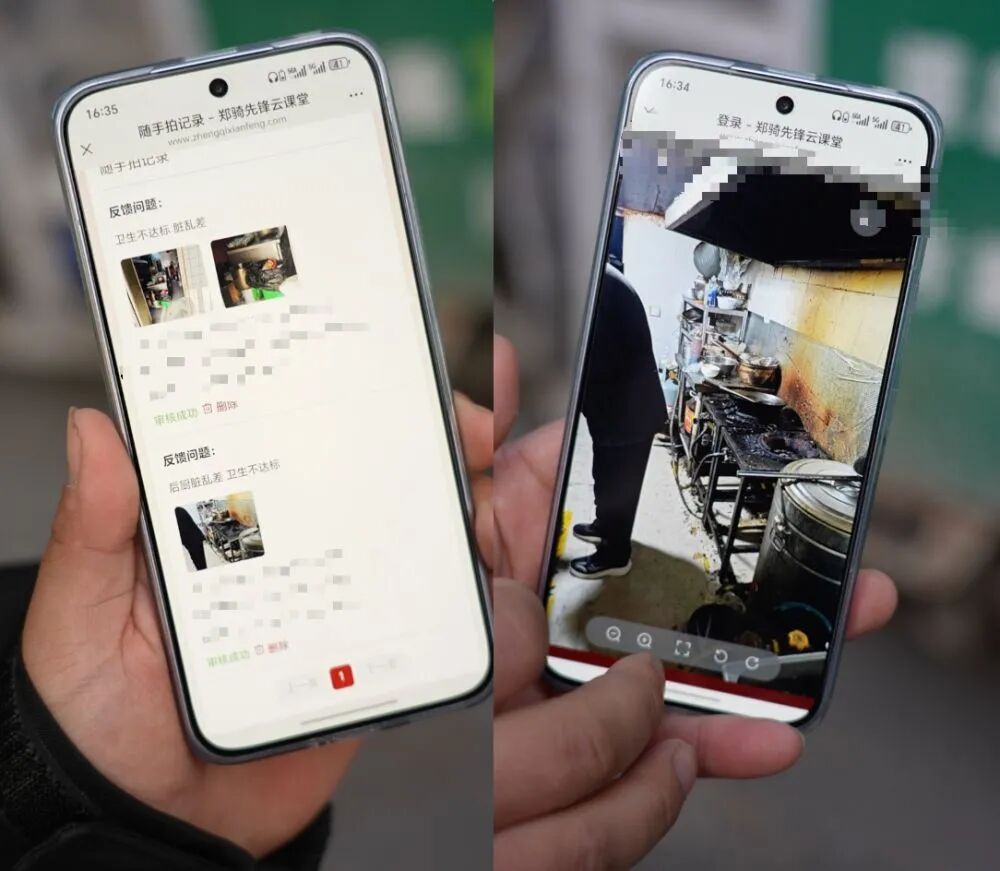
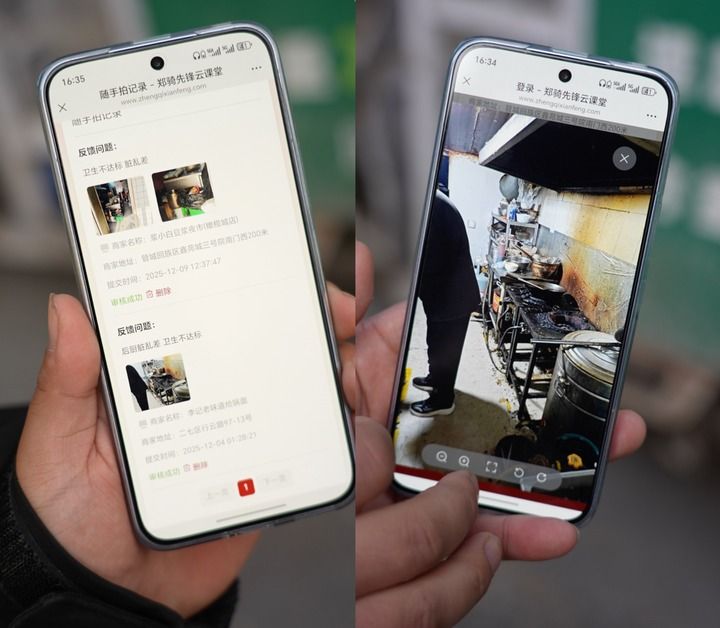
Core Viewpoint - The article highlights the issue of "ghost takeout" in Zhengzhou, where unlicensed food vendors operate under the guise of legitimate businesses, posing significant food safety risks and consumer deception [1][3][7]. Group 1: Food Safety Concerns - "Ghost takeout" refers to businesses that lack a physical dining space or have closed down but continue to operate by renting licenses or using fake addresses, misleading consumers with attractive online representations while maintaining unsanitary conditions [7]. - Recent inspections revealed alarming conditions in these establishments, including dirty kitchens, unqualified staff, and the use of pre-packaged meals falsely marketed as freshly prepared [5][6][10]. Group 2: Regulatory Measures - The Zhengzhou Market Supervision Administration has launched the "Zhengqi Pioneer Snapshot" platform, encouraging delivery riders to report unsanitary conditions or licensing issues, with rewards for verified reports [3][9][10]. - Since the platform's launch, it has received 75 reports, leading to effective enforcement actions against non-compliant vendors [10][11]. Group 3: Community Involvement - The initiative leverages the extensive network of over 60,000 delivery riders in Zhengzhou, transforming them into a mobile monitoring force to enhance food safety oversight [13][14]. - The integration of digital technology, such as AI monitoring systems, aims to provide real-time surveillance of food preparation areas, moving towards a more comprehensive regulatory framework [14]. Group 4: Future Outlook - As the Spring Festival approaches, the demand for food delivery is expected to surge, prompting increased efforts to ensure food safety through community engagement and technological advancements [14].

外卖骑手“随手拍”,扒开“幽灵外卖”的画皮
Xin Hua Wang· 2026-01-23 02:01
Core Viewpoint - The phenomenon of "ghost takeout" poses significant food safety risks and is a pressing issue in many cities, prompting regulatory bodies to enhance oversight and enforcement measures [3][9]. Group 1: Regulatory Actions - The Central Committee and State Council have mandated stricter food safety regulations, particularly targeting "ghost takeout" and requiring criminal prosecution for serious violations [3][9]. - Zhengzhou's market supervision bureau has launched the "Zhengqi Pioneer Snapshot" platform, utilizing big data to engage delivery riders in reporting violations [3][9][11]. - The "Snapshot" initiative has led to the identification of numerous unsanitary food establishments, with riders acting as mobile monitors [9][10]. Group 2: Issues with "Ghost Takeout" - "Ghost takeout" refers to businesses that operate without a physical dining space or have closed down, yet continue to function by using fake addresses and licenses [7][9]. - Many of these establishments are found in residential areas, often lacking proper hygiene and food safety standards, as evidenced by unsanitary kitchen conditions [5][6][7]. - The prevalence of "ghost takeout" is exacerbated by the use of misleading marketing tactics, such as fake photos and claims of fresh ingredients [6][7]. Group 3: Impact of Delivery Riders - Delivery riders are crucial in identifying and reporting food safety violations, with the "Snapshot" platform incentivizing them to report issues by offering monetary rewards [9][10]. - The initiative has resulted in a significant number of reports, with 75 cases logged since its launch, showcasing the effectiveness of involving riders in regulatory efforts [10][11]. - The integration of delivery riders into the regulatory framework represents a novel approach to enhancing food safety oversight in the rapidly growing online food delivery sector [11][14]. Group 4: Technological Innovations - Zhengzhou has implemented a "visual monitoring" platform that connects kitchen surveillance systems to regulatory authorities, allowing for real-time oversight of food safety practices [15]. - The city aims to achieve comprehensive monitoring coverage by increasing the number of connected surveillance devices, enhancing the ability to track compliance with food safety standards [15].
余杭网络餐饮监管持续探新路
Hang Zhou Ri Bao· 2025-05-13 02:50
Group 1 - The core idea of the articles revolves around the innovative food safety measures implemented in Yuhang District, particularly the "Sunshine Kitchen" initiative, which enhances transparency in online food ordering through real-time kitchen monitoring [1][2] - The "Sunshine Kitchen" project utilizes IoT devices to connect kitchen surveillance videos with online ordering platforms, allowing consumers to see the cooking process and ensuring food safety [1] - Yuhang District has established a collaborative governance model for online food services, integrating grid inspectors, third-party agencies, and market regulatory departments to enhance oversight and accountability [1] Group 2 - The district has introduced a "whistleblower" system involving delivery riders as food safety monitors, enabling them to report food safety violations in real-time [2] - The market regulatory department responds promptly to reports from delivery riders, initiating investigations and ensuring corrective actions are taken [2] - Future plans include exploring long-term mechanisms such as food safety liability insurance and credit reward and punishment systems to strengthen food safety governance [2]