
网络食品销售

Search documents
新闻1+1丨新规“亮剑”,如何守护“舌尖上的安全”?
Yang Shi Wang· 2026-02-27 22:25
Core Viewpoint - The National Market Supervision Administration of China has introduced two significant new regulations targeting online food delivery and sales, aiming to enhance food safety and consumer protection in the digital marketplace [1] Group 1: Highlights of the New Regulations - The new regulations further specify platform responsibilities, mandating the appointment of food safety directors and supervisors, and prohibiting the outsourcing of food safety responsibilities [3] - They strengthen the responsibilities of online operators, requiring them to have a physical store and to disclose operational information in real-time [3] - The regulations aim to improve regulatory efficiency by enhancing cross-regional collaboration and increasing administrative penalties for violations [3] Group 2: Addressing "Ghost Merchants" - The new regulations are expected to effectively curb the phenomenon of "ghost merchants" by emphasizing the platform's obligation to conduct substantive reviews during merchant onboarding [4] - Platforms are required to demand more information disclosure regarding businesses that do not offer dine-in services, providing consumers with better information [6] - The regulations clarify the cooperation between regulatory bodies in the merchant's registered location and the location of the violation, addressing previous regulatory gaps [6][9] Group 3: Cross-Regional Regulatory Challenges - The regulations address the conflict between the regional nature of business registration and the nationwide nature of business operations, emphasizing the responsibilities of both the registration and operational locations [7] - By separating the regulatory responsibilities, the regulations leverage the strengths of both localities to enhance overall regulatory effectiveness [9] Group 4: Addressing Misleading Practices in Live Streaming - The regulations specify that exaggerated claims made during live streaming must be monitored in real-time using techniques like screen recording and semantic analysis [12] - Depending on the severity of the misleading behavior, penalties may range from warnings and point deductions to civil, administrative, or even criminal liabilities for serious consequences [12] Group 5: Responsibilities of Platforms Post-Regulation - Platforms must recognize the critical nature of food safety and make necessary investments to ensure compliance with the new regulations [15] - Investing in food safety can enhance consumer trust, potentially offsetting costs and improving business efficiency [15]

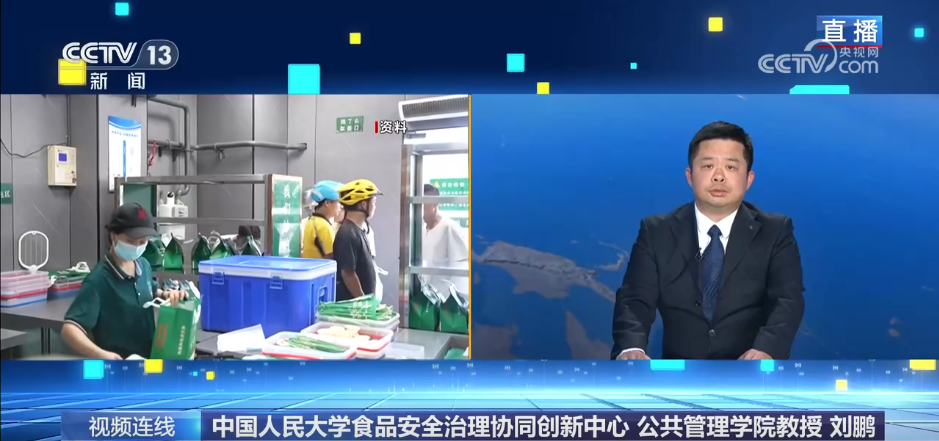
网店名称须与实体门面招牌名称一致
Xin Lang Cai Jing· 2026-02-27 07:05
Core Viewpoint - The newly released regulations by the State Administration for Market Regulation aim to address food safety issues in the rapidly growing online food delivery market, which is projected to exceed 1.4 trillion yuan, accounting for approximately 24% of the total revenue in the catering industry [1][2]. Group 1: Regulations on Food Safety Responsibilities - The regulations require online food service providers to ensure that the names of their online stores match their physical storefronts and to display their operating qualifications and actual business addresses prominently on their main pages [1][2]. - Platforms must also ensure that food service providers without dine-in services display a "No Dine-in" label on their main pages and synchronize this information on the provider list page [1]. Group 2: Addressing "Ghost Restaurants" - The regulations specifically target "ghost restaurants," which operate without proper qualifications and use fraudulent means to appear as legitimate businesses. Platforms are mandated to conduct substantive reviews of the food business licenses of online food service providers to ensure compliance [2]. - Online platforms are required to verify the actual business addresses and operating qualifications of registered food vendors at least every six months to ensure accuracy [2]. Group 3: Consumer Protection Measures - The regulations stipulate that online food sales platforms must provide a complaint and reporting link prominently on the main pages of food sellers to facilitate consumer complaints regarding food safety issues [2]. - The information displayed by online food sellers regarding food origin, ingredients, functions, applicable demographics, inspections, certifications, quality, and standards must be truthful and not misleading, and should not imply any disease prevention or treatment claims [3].
外卖和网售食品重磅新规来了!
Xin Hua She· 2026-02-27 01:47
Core Viewpoint - The recent regulations by the State Administration for Market Regulation aim to strengthen the accountability of online food service operators and food sales entities regarding food safety [1] Group 1: Regulations for Online Food Service Operators - The regulation for online food service operators mandates that businesses exclusively providing takeout services must prominently display a "No Dine-in" sign on their main page [1] - Online platforms are required to verify the food business licenses and operational qualifications of takeout merchants against data held by provincial market regulation departments, and those that do not comply cannot be provided platform services [1] Group 2: Regulations for Online Food Sales Operators - The regulation for online food sales operators requires platform companies to conduct real-name registration of sellers and perform substantive reviews of their operational qualifications, with updates to be verified every six months [1] - Online sellers are held responsible for the safety of the food they sell, prohibited from selling food that is illegal to produce or operate, and must not promote disease prevention or treatment functions, nor engage in false or misleading commercial advertising [1]
市场监管总局:畅通外卖维权渠道,倡导“外卖小哥”参与社会监督
2 1 Shi Ji Jing Ji Bao Dao· 2026-02-27 01:02
Core Viewpoint - The National Market Supervision Administration has released two regulations aimed at enhancing food safety responsibilities for online food service providers and sellers, ensuring consumer protection and informed decision-making [2][3]. Group 1: Consumer Rights Protection - The regulations emphasize the importance of consumer rights by requiring online food service providers and sellers to prominently display their business qualifications and ensure the accuracy of this information [3][4]. - These measures are designed to enhance consumer confidence in online food purchases, allowing consumers to make informed choices [3]. Group 2: Food Safety Risk Management - Both regulations mandate platform providers to establish mechanisms for "intelligent monitoring, risk assessment, and rapid response" to better manage food safety risks in online operations [4]. - The regulations outline specific prohibitions for food service providers, such as using spoiled or contaminated food, processing food outside designated areas, and outsourcing food preparation [4]. Group 3: Complaint and Reporting Mechanisms - The regulations require platform providers to include complaint and reporting links on the main pages of online food sellers, facilitating consumer reporting of food safety issues [4]. - Upon receiving complaints, platform providers are obligated to address them promptly, and food sellers must include complaint handling in their food safety risk management [4]. Group 4: Role of Delivery Personnel - The regulations encourage delivery personnel to participate in social supervision by reporting any observed food safety violations by online food service providers to platform providers and regulatory authorities [5].
新华解码丨针对“幽灵外卖”、虚假宣传等顽疾 两部新规提出哪些新举措?
Xin Hua Wang· 2026-02-27 00:50
Core Viewpoint - The new regulations aim to address issues such as "ghost takeout," false advertising, and the lack of accountability in online food delivery services, emphasizing the responsibility of platforms to ensure food safety and transparency [1]. Group 1: Regulatory Measures - The newly released regulations require online food delivery platforms to ensure that the names of online food service providers match their physical storefronts and to display their operating qualifications and actual addresses prominently [2]. - Platforms must also indicate "no dine-in" status for providers that do not offer this service, ensuring that consumers are aware of the service limitations [2]. Group 2: Addressing "Ghost Takeout" - "Ghost takeout" refers to unlicensed operators who misrepresent themselves as legitimate businesses through fraudulent means [3]. - The regulations mandate that platforms conduct substantive reviews of the food business licenses of their listed providers and verify that the information matches reality, preventing the use of false or borrowed credentials [3]. - Platforms are required to verify the actual operating addresses and qualifications of food vendors at least every six months to ensure compliance [3]. Group 3: Consumer Accountability - To enhance consumer protection, the regulations require platforms to provide visible links for complaints and reports on the main pages of food sellers, ensuring that consumer issues are addressed promptly [4]. Group 4: Penalties and Compliance - The new regulations significantly increase penalties for violations, with fines reaching up to 200,000 yuan, and personal fines for platform leaders can be imposed based on their previous year's income if intentional violations occur [5]. - Online food sellers must provide accurate information regarding product origins, ingredients, and certifications, prohibiting misleading advertising and claims related to disease prevention or treatment [5].
市场监管总局发布两项新规 外卖商户须有实体经营门店
Xin Lang Cai Jing· 2026-02-26 17:41
Core Viewpoint - The new regulations from the State Administration for Market Regulation aim to eliminate "ghost kitchens" and "shadow merchants" in the food delivery industry by mandating that all delivery merchants must have a physical storefront and that their business operations must align with their qualifications [1][2]. Group 1: Regulatory Changes - The new regulations require that delivery merchants possess a real physical store, and their business activities and addresses must match their qualification certificates [3][9]. - The regulations enhance the responsibilities of food delivery platforms, mandating them to conduct thorough checks on merchant qualifications and to ensure compliance with food safety standards [2][5]. - Penalties for non-compliance have been significantly increased, with fines for platforms and merchants reaching up to 200,000 yuan, and additional penalties for serious violations based on the previous year's revenue [3][6]. Group 2: Food Safety Management - Platforms are now required to establish dedicated food safety management teams, including a food safety director and staff, to oversee compliance and risk management [5][6]. - Merchants must implement internal risk control mechanisms, transitioning from reactive to proactive food safety management [6][10]. - The regulations emphasize the importance of real-time verification of merchant qualifications, requiring platforms to conduct checks at least every six months to ensure ongoing compliance [10][12]. Group 3: Cross-Regional Supervision - The new regulations introduce a collaborative enforcement mechanism to address the challenges of cross-regional supervision, allowing market regulation departments to coordinate across regions for better enforcement [7][11]. - Platforms are required to report their merchant information to local market regulation departments biannually, enhancing transparency and oversight [11][12]. - The regulations aim to streamline the process of evidence collection and case investigation across regions, improving the efficiency of enforcement actions [12].
外卖和网售食品重磅新规来了!构建“互联网+明厨亮灶”公示体系
智通财经网· 2026-02-26 13:36
Core Viewpoint - The State Administration for Market Regulation (SAMR) has introduced two new regulations aimed at enhancing food safety in online food delivery and sales, emphasizing the responsibility of network operators to ensure both quality and safety in food services [3][5][11]. Group 1: New Regulations Overview - The two regulations are titled "Regulations on the Supervision and Management of Food Safety Responsibilities of Online Catering Service Operators" and "Regulations on the Supervision and Management of Food Safety Responsibilities of Online Food Sales Operators" [3][5]. - These regulations aim to create a comprehensive responsibility network, ensuring that the flow of customers is matched by quality [3][5]. Group 2: Key Features of the Regulations - The regulations emphasize the platform's responsibility, requiring online food delivery platforms to conduct thorough checks on merchant qualifications, manage information disclosure, and handle issues effectively [6][7]. - Merchants are required to have real physical stores, and their operational details must align with their qualifications [6][7]. - The regulations introduce strict penalties for violations, with fines reaching up to 200,000 yuan, and potential personal fines for platform leaders in severe cases [7][10]. Group 3: Enhancements in Consumer Protection - The regulations mandate clear information disclosure, ensuring that consumers can easily verify the authenticity of merchant information and food safety [12][18]. - A visual public disclosure system is established, encouraging merchants to share their food preparation processes online [12][19]. - Platforms are required to provide technical support to ensure that information is accurately displayed and accessible to consumers [13][19]. Group 4: Addressing "Ghost Restaurants" - The regulations tackle the issue of "ghost restaurants" by requiring platforms to conduct real-name registrations and substantive checks on merchant qualifications [14][15]. - Platforms must verify merchant qualifications against data held by market regulation authorities to prevent unqualified entities from operating [14][15]. - Regular updates and checks on merchant information are mandated to ensure ongoing compliance [15][16]. Group 5: Cross-Regional Regulatory Challenges - The regulations introduce a dual jurisdiction model, allowing both the platform's registration location and the location of the violation to have regulatory authority [16][17]. - An information sharing mechanism is established to facilitate cross-regional regulatory cooperation [16][17]. - A collaborative enforcement mechanism is created to ensure timely and effective handling of violations across different regions [17][18]. Group 6: Special Campaigns Against False Advertising - A nationwide campaign will be launched to combat false advertising in online food sales, focusing on misleading claims about food products [25][26]. - The campaign will target various forms of false advertising, including exaggerated health claims and misleading product information [25][26]. - Platforms will be held accountable for ensuring that their merchants do not engage in deceptive practices [26][27].
市场监管总局将启动网络食品和保健食品销售虚假宣传专项整治行动
Xin Lang Cai Jing· 2026-02-26 12:28
Core Viewpoint - The State Administration for Market Regulation (SAMR) will launch a six-month nationwide campaign starting in March to combat false advertising in online food and health food sales [1] Group 1: Key Actions - The campaign will focus on three types of illegal activities: 1. Strictly cracking down on various forms of false advertising [1] 2. Strictly addressing illegal advertising practices [1] 3. Strictly targeting illegal activities by platform organizations [1]
剑指“幽灵外卖”、虚假宣传等顽疾 两项新规守护“舌尖安全”
Yang Shi Xin Wen Ke Hu Duan· 2026-02-26 12:19
Core Viewpoint - The article discusses new regulations issued by the State Administration for Market Regulation aimed at enhancing the accountability of online food service operators and food sales platforms regarding food safety [1] Group 1: Regulations for Online Food Service Operators - The new regulation mandates that online food service providers, specifically those offering delivery services without dine-in options, must prominently display a "No Dine-In" sign on their main page [1] - It requires food delivery platforms to verify the business licenses and operational qualifications of food service providers against data held by provincial market regulation departments, prohibiting services to those whose information does not match [1] Group 2: Regulations for Online Food Sales Operators - The regulation stipulates that platform companies must conduct real-name registration of sellers and perform substantive reviews of their operational qualifications, with a requirement to update this information every six months [1] - It holds online sellers responsible for the safety of the food they sell, prohibiting the sale of foods that are illegal to produce or operate, as well as any misleading or false commercial promotions regarding disease prevention or treatment [1]
拟出台规定压实网络食品交易平台和企业责任 市场监管总局向社会公开征求意见
Ren Min Ri Bao· 2025-08-13 22:15
Core Viewpoint - The State Administration for Market Regulation has drafted a regulation to enhance the supervision and management of online food safety, focusing on the responsibilities of platform enterprises and food sales companies [1] Group 1: Regulation Overview - The draft regulation titled "Supervision and Management Regulations for Third-Party Platforms and Online Food Sales Enterprises to Implement Food Safety Responsibilities" consists of 23 articles [1] - The regulation aims to strengthen the management requirements for online food safety from multiple dimensions, including personnel allocation, operational mechanisms, supervision, and legal responsibilities [1] Group 2: Public Participation - The public can provide feedback on the draft regulation from August 12 to September 11 through the State Administration for Market Regulation's official website or via email and postal mail [1] - Specific instructions for submitting opinions are provided, including the need to indicate the subject of the feedback clearly [1]