美元结构性贬值

Search documents
美银:美元的结构性贬值更可能源自欧洲
Sou Hu Cai Jing· 2026-02-16 07:55
Core Viewpoint - The current state of the US dollar is unstable, with a focus on the situation in Europe as key to understanding potential structural sell-offs of the dollar [1] Group 1: Dollar Stability - The US dollar is experiencing instability despite global attention on countries reducing reliance on dollar-denominated assets [1] - The emphasis should be on Europe, where holdings are primarily in stocks and the hedging ratio is low [1] Group 2: Market Trends - Currently, there are no significant signs of large-scale withdrawals from stock funds [1] - Over time, incremental funds are more likely to flow towards non-US markets, which may face higher hedging ratio risks [1]
金价回调,水贝市场人气反升!黄金麻将半日被抢空
Di Yi Cai Jing· 2026-02-04 07:14
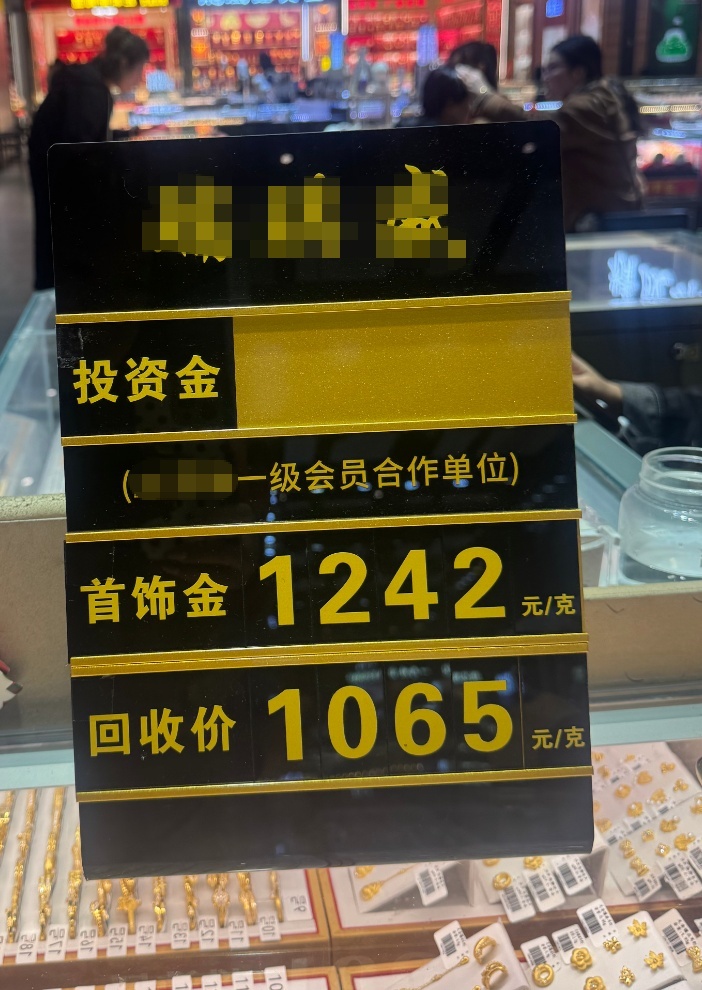
Core Viewpoint - The domestic gold market has experienced significant volatility due to fluctuations in international gold prices, with a notable "roller coaster" effect observed recently [1][2]. Price Fluctuations - London gold prices fell from a peak of $5,598 per ounce on January 29 to a low of $4,402 per ounce by February 2, marking a decline of 9.25% and 4.52% respectively, before rebounding over 5% on February 3 [2]. - In the domestic market, the price of gold jewelry in Shenzhen's Shui Bei market dropped from 1,398 yuan per gram on January 29 to 1,223 yuan per gram on February 2, before recovering to 1,242 yuan per gram [2]. Consumer Behavior - The recent price adjustments, combined with the upcoming Spring Festival, have led to increased foot traffic in the Shui Bei gold market, with some vendors reporting customer numbers doubling compared to typical weekends [4]. - Consumers are increasingly opting for "emotional gold" jewelry with high processing fees and lower weights, shifting away from traditional gold bars [7][9]. Market Dynamics - Many customers are choosing to sell their existing gold for new purchases, with a notable increase in inquiries about gold recycling services [5][7]. - The market is seeing a trend where customers prefer to exchange old jewelry for new designs rather than simply liquidating their gold holdings [7]. Future Outlook - Analysts predict that gold prices may face short-term adjustments due to profit-taking pressures, but the long-term outlook remains positive, supported by factors such as structural depreciation of the dollar and ongoing geopolitical tensions [10][11]. - The potential impact of U.S. trade policy changes and persistent debt risks are expected to reinforce gold's position as a preferred asset for hedging against inflation and market volatility [11].

“特朗普2.0”百日美元或创1973年以来最差纪录!高盛:真正冲击5月中旬爆发,美元将进入长期结构性贬值
Mei Ri Jing Ji Xin Wen· 2025-04-28 08:00
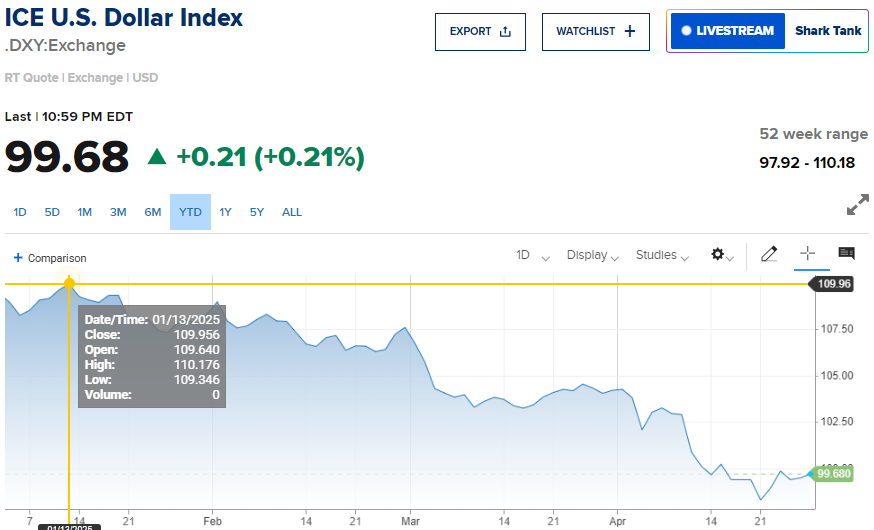
Core Viewpoint - The US dollar index has declined nearly 9% since Trump's return to the White House, potentially marking the worst performance in the first 100 days of a presidency since 1973, with Goldman Sachs warning of a long-term structural depreciation of the dollar [1][2][3]. Group 1: Economic Indicators - Goldman Sachs reports that while current "hard data" in the US remains strong, the negative impacts of tariff policies on the economy may not become apparent until mid-May or early June [1][3]. - The dollar index was reported at 99.68 points, having briefly fallen below 98, marking a three-year low [2]. Group 2: Investor Sentiment - Non-US investors currently hold $22 trillion in US assets, with half of that in unhedged stocks, indicating that a reduction in US exposure could lead to significant dollar depreciation [2][9]. - Shah emphasizes that the dollar's weakness is likely to be structural, as it serves as a natural adjustment mechanism to tariffs and economic uncertainties [3][5]. Group 3: Long-term Trends - Shah notes that the influx of private capital into US assets, which has historically supported a strong dollar, may be reversing, leading to a potential decline in demand for US assets [5][15]. - The dollar's actual value is currently above its historical average, suggesting a potential depreciation of 25% to 30% if non-US investors reduce their exposure [9]. Group 4: Policy Uncertainty - High levels of policy uncertainty and low consumer and business confidence contribute to market risk aversion, with Goldman Sachs estimating a 45% probability of a US recession in the next 12 months [16][19]. - Despite recent tariff pauses, many tariffs remain in place, and significant reductions are unlikely, which could prolong economic challenges [16][19].