美国通用会计准则(GAAP)

Search documents
债市不能忍了?穆迪警告:美国科技巨头利用会计准则“隐藏数百亿美元潜在负债”
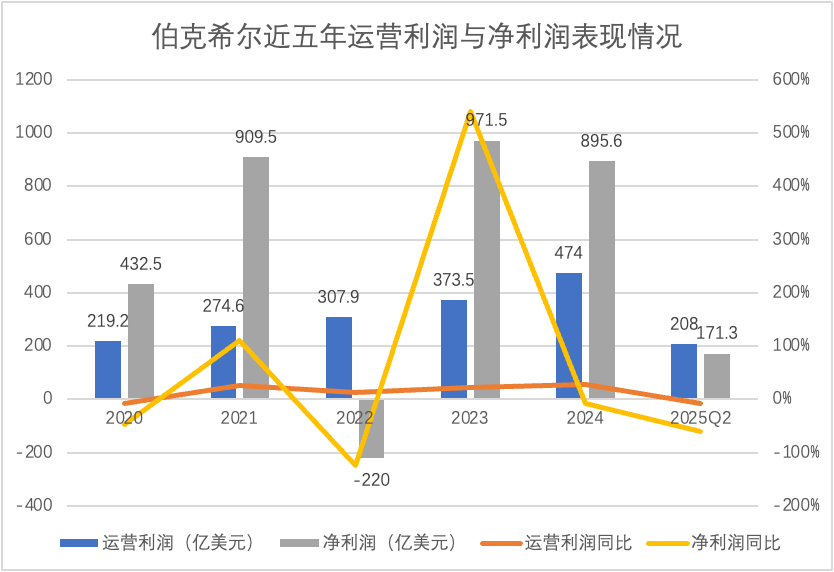
Hua Er Jie Jian Wen· 2026-02-23 23:59
Core Viewpoint - The current US Generally Accepted Accounting Principles (GAAP) allow major tech companies to hide potential liabilities amounting to hundreds of billions of dollars while aggressively building AI data centers, leading to a lack of transparency regarding their financial health [1][2]. Group 1: Accounting Standards and Implications - Moody's warns that the limitations of existing accounting standards enable tech firms to obscure significant liabilities related to AI data center construction [1]. - Companies can avoid recognizing costs associated with leasing data centers by structuring short-term leases and providing guarantees for potential losses, creating a "grey area" in accounting [2][3]. - The criteria for recognizing lease renewals and guarantees are set so that many potential liabilities do not appear on the balance sheet, leading to a misleading representation of financial obligations [3][4]. Group 2: Case Study of Meta - Meta's planned Hyperion facility in Louisiana exemplifies this issue, where the company has provided a guarantee of up to $28 billion without recording any related liabilities on its balance sheet [3]. - The lease agreement allows for a short initial term of four years with options to renew for up to 20 years, complicating the assessment of future liabilities [3][4]. - Meta claims that the likelihood of needing to recognize these guarantees is not "reasonably certain," thus avoiding the need to account for them as liabilities [3]. Group 3: Moody's Response - In response to the increasing use of off-balance-sheet financing, Moody's plans to implement stricter evaluation standards for assessing credit ratings of tech companies [5]. - The agency will conduct its own probability assessments to determine which future liabilities should be considered, potentially leading to adjustments in reported debt levels [5]. - This approach indicates that even if companies comply with accounting standards, they may still face scrutiny from rating agencies regarding their actual debt levels, impacting their credit ratings and financing costs [5].

美股上市前的“财务大考”:如何确保财报符合美国GAAP准则?
Sou Hu Cai Jing· 2026-01-07 05:54
Core Viewpoint - The pathway to listing on the US capital market is attractive but fraught with regulatory and compliance challenges, particularly regarding adherence to GAAP, which is crucial for investor trust and long-term market performance [1] Group 1: Importance of GAAP Compliance - The US capital market is known for its strict regulations and transparency, with a core requirement that all listed companies must prepare financial reports in accordance with GAAP [2] - Differences between local accounting standards and GAAP can pose significant challenges for non-US companies, potentially leading to delays or failures in the listing process due to compliance issues [2] Group 2: Core Challenges and Solutions in GAAP Compliance - Revenue Recognition: Companies must adhere to the "five-step model" under ASC 606, focusing on customer contracts and the timing of revenue recognition, which can be complex for tech and service-oriented firms [4] - Expense Classification and Asset Treatment: GAAP has strict conditions for capitalizing R&D expenses, requiring clear differentiation between capitalizable and expense items to maintain the integrity of financial statements [5] - Asset Measurement and Impairment Testing: Companies must follow fair value principles for asset measurement and conduct regular impairment tests, especially during economic fluctuations, to reflect the robustness of financial reporting [6] Group 3: Systematic Solutions for Compliance - Many companies are opting for professional consulting teams to navigate the complex compliance landscape, with firms like Xunshi International offering comprehensive services from diagnosis to delivery [8] - Initial diagnosis and gap analysis help identify differences between GAAP and local standards, providing a detailed impact analysis and adjustment plan [8] - Ongoing support includes collaboration with audit firms to ensure efficient audit processes and continuous compliance post-listing [8]


伯克希尔单季利润因何降59%?
Hu Xiu· 2025-08-06 12:05
Core Viewpoint - Berkshire Hathaway, led by Warren Buffett, is experiencing a decline in performance ahead of his retirement as CEO by the end of 2025, with significant drops in revenue and net profit reported for the first half of 2025 [1][2]. Financial Performance - For the first half of 2025, Berkshire reported operating revenue of $182.2 billion, a year-on-year decrease of 12.94%, and a net profit attributable to shareholders of $17.13 billion, down 60.47% [2]. - In Q2 2025, net profit attributable to shareholders fell 59.24% to $12.37 billion [2]. - The stock prices of Berkshire's A and B shares dropped by 2.65% and 2.9%, respectively, following the earnings report, with a total market capitalization of $996.11 billion [2]. Investment Activities - Analysts noted a lack of significant investment activities, potential large acquisitions, and stock buybacks in Q2, which contributed to disappointment in performance [3]. - A major factor in the profit decline was a $3.76 billion impairment loss on its 27% stake in Kraft Heinz, alongside a 73.49% drop in investment income to $4.97 billion due to declines in key holdings like Apple [3]. Business Segment Performance - Berkshire's operating profit for the first half of 2025 was $20.8 billion, down 8.8%, with Q2 operating profit at $11.16 billion, a decrease of 3.8% [5]. - The insurance segment faced challenges, with Q2 after-tax profit down 11.98% to $1.992 billion, while other sectors like railroads and energy showed stable growth [5]. Market Conditions and Strategic Outlook - The company expressed concerns over the impact of international trade tensions and tariffs on its diversified operations and equity investments, indicating potential adverse effects on future performance [8]. - Berkshire's clothing and toy segments reported revenue declines of 11.7%, 10.1%, and 38.5% due to tariff-related issues [9]. - Despite a significant drop in stock prices, Berkshire did not repurchase any shares in the first half of 2025, marking four consecutive quarters without buybacks, while cash reserves slightly decreased to $344.1 billion [9]. Leadership Transition - Warren Buffett announced his retirement as CEO, with Greg Abel set to take over, raising questions about potential changes in investment strategy under new management [12]. - UBS remains optimistic about Berkshire's future, raising target prices for both A and B shares, indicating confidence in the company's resilience despite current uncertainties [12].