老派生活

Search documents
阅文IP研究院 | 2025年度最值得关注的年轻人趋势
腾讯研究院· 2026-02-06 08:04
Core Insights - The article highlights the evolving mindset of young people in 2025, who are actively redefining their lives and rejecting traditional success models, leading to a diverse set of trends in entertainment, lifestyle, and social interactions [6]. Group 1: Entertainment Content - The film "浪浪山小妖怪" achieved a box office of 1.7 billion, ranking sixth for the year, reflecting a shift in audience engagement where entertainment serves as a mirror to their realities [11]. - The novel "没钱修什么仙" ranked in the top three of the male frequency monthly ticket list, showcasing a trend where fantasy genres are intertwined with real-life financial struggles [12]. - "大奉打更人" continues to be popular a year after its conclusion, indicating a sustained interest in narratives that blend modern knowledge with fantasy elements [13]. Group 2: Lifestyle Trends - Young people are embracing "old-school" lifestyles, finding comfort in simplicity and authenticity as a form of resistance against the pressures of modern life [55]. - The concept of "玄学GPU" reflects a growing interest in blending traditional beliefs with modern technology, where AI is used for fortune-telling and personal insights [86]. - The trend of "全民手搓AI" indicates that young individuals are becoming creators rather than just consumers, utilizing AI tools to express their creativity [74]. Group 3: Social Relationships - The shift towards practical knowledge sharing is evident, with young people preferring actionable insights over traditional teachings, as seen in the rise of AMA sessions with industry leaders [92]. - The trend of "明星变身人形快递" shows a desire for celebrities to engage in more practical, relatable interactions with fans, moving away from idolization to mutual support [97]. - Young individuals are increasingly valuing authenticity and reciprocity in relationships, focusing on genuine connections rather than superficial engagements [89].

年轻人集体倒退,开始迷恋“老派生活”
虎嗅APP· 2025-12-28 14:40
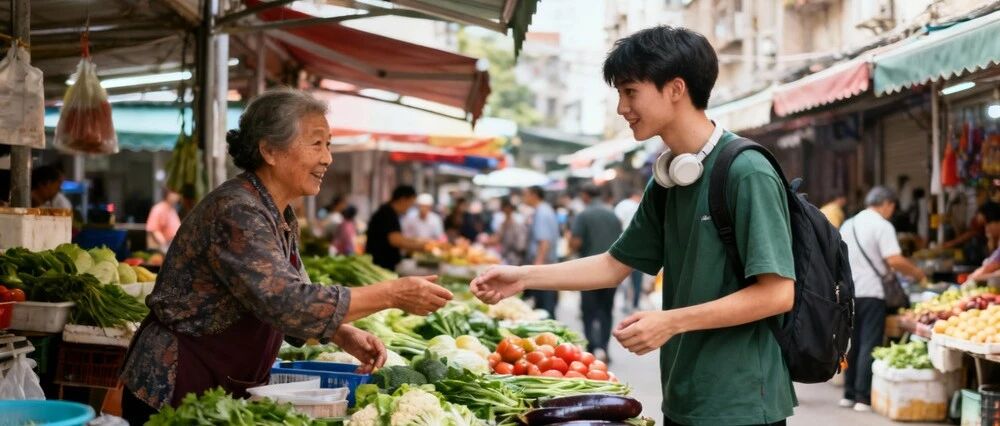
Core Viewpoint - The article discusses the resurgence of "old-fashioned" lifestyles among young people in 2025, emphasizing a return to simpler, more meaningful activities and experiences in the face of modern distractions and technology [4][8][10]. Group 1: Lifestyle Changes - Young people are increasingly engaging in traditional activities such as knitting, painting, and visiting local markets, reflecting a desire to slow down and appreciate life at a more leisurely pace [8][10]. - The concept of "old-fashioned living" is seen as a form of rebellion against the fast-paced, technology-driven lifestyle that dominates contemporary society [8][10]. Group 2: Market and Community Engagement - The article highlights the importance of local markets, where personal interactions and community connections are valued over the convenience of online shopping [11][14]. - The experiences shared by individuals in local markets reveal a wealth of knowledge and cultural practices that cannot be replicated through online platforms [14][15]. Group 3: Travel and Exploration - The narrative includes personal accounts of spontaneous travel to nearby towns, emphasizing the joy of exploration without rigid planning, which aligns with the "old-fashioned" approach to life [16][20]. - The exploration of places like Li Zhuang showcases the blend of historical significance and local culture, enhancing the travel experience beyond mere sightseeing [20][27]. Group 4: Seasonal Living - The article describes the concept of "cat winter" in Northeast China, where people embrace a slower, more relaxed lifestyle during the harsh winter months, focusing on home and family [29][30]. - This seasonal approach to living highlights the joy found in simple pleasures and the importance of community during challenging times [30][34]. Group 5: Culinary Traditions - The discussion of traditional foods, such as "nang" from Xinjiang, emphasizes the cultural significance and simplicity of local cuisine, contrasting with the more commercialized versions found in urban settings [36][40]. - The article points out that traditional foods are often more affordable and accessible, reflecting a deep connection to local culture and community values [41][45].
年轻人为何过起了“老派生活”?
Hu Xiu· 2025-09-21 07:05
Group 1 - The article discusses the collective nostalgia surrounding the cancellation of paper train tickets, highlighting how these tickets symbolize significant life moments for many individuals [1][22][23] - The term "old-fashioned" has gained popularity, with discussions around "old-fashioned boyfriends," "old-fashioned dating," and "old-fashioned living," reflecting a shift in perception towards valuing these traits [2][5][6] - In a fast-paced world, people are seeking to anchor themselves through "old-fashioned" practices, which represent reliability and sincerity amidst the chaos of modern life [4][9][15] Group 2 - The article emphasizes that "old-fashioned" is increasingly viewed positively, as individuals express a desire for deeper emotional connections and stability in relationships, contrasting with the transient nature of modern interactions [7][19][21] - The rise of "situationships" illustrates a trend where individuals prefer non-committal relationships, reflecting a broader societal shift towards uncertainty and a lack of commitment [18][20] - The nostalgia for tangible items like paper tickets serves as a reminder of past experiences and emotional connections, prompting individuals to seek out "old-fashioned" hobbies and practices as a means of grounding themselves in a rapidly changing world [24][32][34] Group 3 - The article posits that the return to "old-fashioned" practices is not merely a longing for the past but a way to create a sense of order and security in the present and future [28][30][36] - Young people are actively engaging in "old-fashioned" lifestyles as a form of resistance against the overwhelming pace of modern life, seeking to reclaim a sense of authenticity and emotional depth [26][35] - The concept of "old-fashioned" living is framed as a small sanctuary where individuals can cultivate a sense of safety and belonging amidst the uncertainties of contemporary existence [25][31][36]