黑土地保护

Search documents
研之有理|科学制定黑土地保护规划和路径
Xin Lang Cai Jing· 2026-02-21 22:20
Core Viewpoint - The protection of black soil is crucial for ensuring food security and promoting high-quality agricultural development, as highlighted in the "14th Five-Year Plan" and the strategic importance of black soil protection in Heilongjiang Province [1][2]. Group 1: Planning and Implementation - Black soil protection will be integrated into the overall planning system, with specific goals, spatial layouts, and policy guarantees outlined in the "14th Five-Year Plan" [2]. - The plan aims to shift from fragmented measures to a systematic layout, focusing on improving soil quality and addressing soil erosion as binding indicators [2]. Group 2: Multi-Stakeholder Collaboration - Effective black soil protection requires collaboration among government, agricultural enterprises, farmers, and social forces to create a comprehensive and sustainable protection framework [3]. - The government will lead the coordination efforts, breaking down administrative barriers and establishing a shared resource system [3]. Group 3: Technological Support - Technological innovation is essential for black soil protection, with a focus on biotechnological and engineering solutions to address protection challenges [4]. - The promotion of precision fertilization techniques and the development of resilient crop varieties are key strategies for improving soil health and productivity [4]. Group 4: Long-term Mechanisms - A long-term support mechanism for black soil protection is necessary, including the establishment of legal frameworks and financial support systems [6]. - The plan emphasizes the importance of dynamic monitoring and the integration of black soil protection into fiscal budgets at various government levels [6].
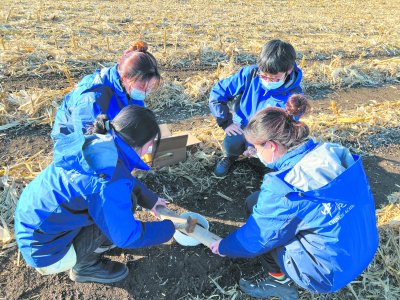
吉林有效遏制黑土地变薄变瘦趋势
Ren Min Ri Bao· 2026-01-31 12:50
Group 1 - The core viewpoint of the article highlights that Jilin Province aims to achieve a total grain output of 871.6 billion jin by 2025, with increases in total output, yield per unit area, and sown area [1] - Jilin plans to construct 9.1 million mu of high-standard farmland and improve the average thickness of black soil to 20.6 cm, along with an increase in organic matter content to 27 g/kg [1] - The province's agricultural development strategy during the 14th Five-Year Plan emphasizes prioritizing rural development, with grain production reaching new highs and the area of high-standard farmland built in the last three years equaling the total of the previous ten years [1] Group 2 - The implementation of the "Black Soil Granary" technology campaign's second phase aims to enhance soil quality and promote the iterative upgrade of the "Pear Tree Model" and comprehensive utilization of western saline-alkali land [1] - Jilin plans to establish a robust mechanism for the construction, operation, and management of high-standard farmland, with a goal to build an additional 10 million mu this year [1] - The integration of water and fertilizer projects with high-standard farmland initiatives is set to be planned and executed together, with an additional 10 million mu expected to be added this year [1]
多所高校成果,入选中国十大科技进展
Xin Lang Cai Jing· 2026-01-26 11:15
Core Insights - The 2025 China and World Top Ten Scientific Advances were announced, highlighting significant achievements in various fields of science and technology [2][13]. Group 1: China's Top Ten Scientific Advances - The "artificial sun" EAST achieved a world record of 1 billion degrees Celsius for 1066 seconds, marking a major leap in fusion energy research [14]. - DeepSeek launched a new AI model R1, which matches the performance of OpenAI's models while significantly reducing training costs and being fully open-source [15]. - A thorium-based molten salt reactor was built, achieving thorium-uranium fuel conversion and demonstrating the feasibility of using thorium resources in nuclear energy [15]. - A high-precision AI diagnostic tool for predicting liver cancer recurrence was developed, achieving an accuracy rate of 82.2% and featured on the cover of Nature [16]. - The "North Brain No. 1" wireless brain-computer interface was successfully implanted, enabling patients with speech impairments to communicate effectively [17]. - A novel target for Parkinson's disease was discovered, providing new hope for treatment and drug development [18]. - The "Zu Chongzhi No. 3" superconducting quantum computer was built, outperforming the fastest supercomputers by a factor of 10 trillion [19]. - New hydrogen production technology was developed, eliminating CO2 emissions and achieving high hydrogen yield [20]. - Significant breakthroughs in black soil protection technology were reported, supporting sustainable agricultural practices [21]. - A new ultra-wideband optoelectronic integrated system for 6G communication was developed, enabling high-speed wireless communication across a wide frequency range [22]. Group 2: World Top Ten Scientific Advances - Brain-computer interfaces allow patients to express emotions through speech and song, translating thoughts into language in real-time [23]. - An integrated chip system combining electronics, photonics, and quantum technology was created [23]. - The largest black hole merger event was detected, challenging existing black hole formation models [23]. - The highest energy neutrino ever detected was found, being 20 times more energetic than previous detections [23]. - The first visible "time crystal" was created [23]. - Transgenic pig organ transplants set a new record for survival time [23]. - Ground-based telescopes detected signals from 13 billion years ago [23]. - The largest cosmic map to date was produced [23]. - The most detailed brain map was created, describing numerous neurons and their activities [23]. - "Deep Thinking" announced AI test scores equivalent to gold medal levels in international mathematics competitions [23].


多领域捷报频传 经济发展“新”动力更足
Yang Shi Wang· 2026-01-26 08:08
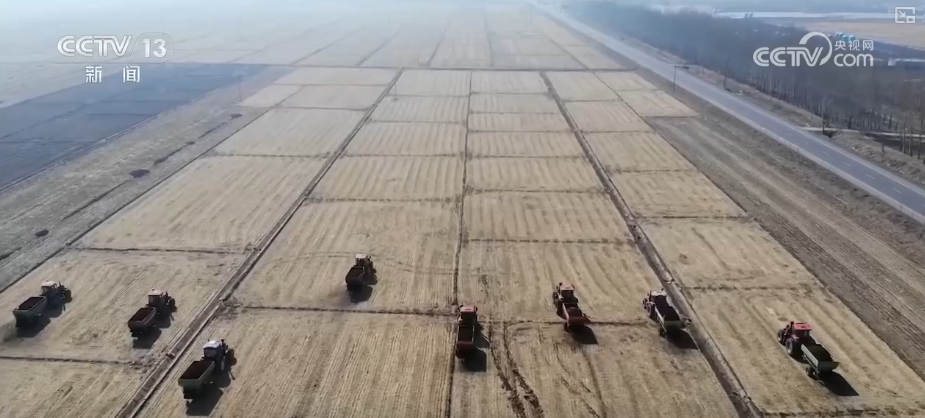
Group 1: Agricultural Practices - In 2025, the Northeast region will implement 112 million acres of protective tillage for black soil, with 290 counties involved, 37 of which will exceed 1 million acres [1] - Protective tillage is a sustainable agricultural technique that maintains soil quality by minimizing tillage and covering the surface with straw, effectively protecting the black soil layer [1] - Since the initiation of the action plan in 2020, a total of 17.97 billion yuan has been invested, achieving 51.6 million acres of protective tillage, which has proven effective in maintaining soil fertility and improving sowing quality [1] Group 2: Biodiversity Conservation - The evaluation of 145 national nature reserves in the Yangtze River Economic Belt shows significant progress in the protection of rare and endangered species since the 14th Five-Year Plan [2] - The population of wild animals has been increasing, with notable examples including the Yangtze finless porpoise and giant pandas, whose numbers have risen significantly [2] - The region has also seen the successful cultivation of over 200,000 rare seedlings and the protection of various key wild plant species, enhancing biodiversity [2] Group 3: Hydrogen Energy Development - As of now, there are 27,000 hydrogen fuel cell vehicles in operation, with the establishment of a "hydrogen corridor" in Southwest China facilitating logistics across multiple provinces [3][4] - The hydrogen corridor, spanning approximately 400 kilometers, is designed for the transportation of various minerals and utilizes domestically developed fuel cell technology [3] - This initiative is expected to promote the large-scale application of hydrogen energy in transportation, addressing economic viability and operational costs [4] Group 4: Advanced Materials in Solar Energy - A breakthrough in the mass production of high-end materials, specifically polyolefin elastomers, has been achieved in Xinjiang, reducing reliance on imports for strategic emerging industries like solar energy [5][6] - Polyolefin elastomers combine the properties of plastic and rubber, making them essential for various applications, including solar energy [6] - The new production process is more environmentally friendly, with a 40% reduction in overall energy consumption, and is projected to reach a total capacity of over 300,000 tons by the end of 2026 [6]
向“好”向“新”向“绿”,新突破!多领域捷报频传 经济发展“新”动力更足
Yang Shi Wang· 2026-01-26 07:29
Group 1: Agricultural Practices - In 2025, the Northeast region will implement protective tillage on 1.12 million acres of black soil [2] - There are 290 counties (cities, districts, banners, and farms) involved in the protective tillage project, with 37 counties exceeding 1 million acres [3] - Protective tillage is a sustainable agricultural technique that protects the black soil layer by minimizing soil disturbance and maintaining surface straw cover [5] Group 2: Government Initiatives - The Ministry of Agriculture and Rural Affairs and the Ministry of Finance launched the Northeast Black Soil Protective Tillage Action Plan (2020-2025), promoting protective tillage technology in suitable areas [7] - Over the past six years, the central government has invested a total of 17.97 billion yuan, achieving a cumulative protective tillage area of 51.6 million acres [7] Group 3: Biodiversity and Environmental Protection - The Yangtze River Economic Belt has seen significant improvements in ecological protection, with rare and endangered species being effectively preserved [8] - The population of wild animals in the region has been increasing, with notable growth in species such as the Yangtze finless porpoise and giant pandas [11] Group 4: Hydrogen Energy Development - The number of hydrogen fuel cell vehicles in China has reached 27,000, with the "Hydrogen Corridor" in Southwest China officially connecting key regions [15][17] - The "Hydrogen Corridor" spans approximately 400 kilometers and is primarily used for transporting minerals, featuring vehicles with a 130 kW fuel cell system [18] Group 5: Advanced Material Production - A breakthrough in the large-scale production of high-end materials, specifically polyolefin elastomers, has been achieved in Xinjiang, reducing reliance on imports [24][25] - The new production process is more environmentally friendly, with a 40% reduction in overall energy consumption compared to international standards [27]
黑土地保护需因地制宜
Xin Lang Cai Jing· 2026-01-19 22:17
Core Insights - The research led by the Northeast Institute of Geography and Agricultural Ecology of the Chinese Academy of Sciences indicates that black soil protection and utilization technology models are regionally suitable and should be selected based on specific areas [1] Group 1: Research Findings - The project team integrated 105 papers and 1104 field trial data to assess the impact of fertilization management, tillage methods, and planting systems on crop yields, revealing an overall average yield increase of 36.9% for corn and soybeans due to soil management measures [1] - The combination of chemical and organic fertilizers showed the most significant effect, with a yield increase of 42.2%, while deep tillage and rotary tillage increased yields by 18.8% and 17.1%, respectively [1] - No-till farming showed limited effectiveness in the cold and wet conditions of Northeast China, with only a 2.2% yield increase [1] Group 2: Crop Rotation and Soil Management - The study found that corn-soybean rotation is more advantageous than monoculture, with specific regions like southern Heilongjiang, northern Jilin, and eastern Sanjiang Plain showing significant yield potential [2] - The impact of straw return on crop yield was quantified, with an overall yield increase of about 5%, where straw covering averaged a 5% increase and straw mixed with soil averaged a 4% increase [2] - Different soil management measures exhibit spatial variability in their applicability across Northeast black soil areas, with deep tillage and crop rotation being widely applicable, while no-till is effective only in limited regions [2]
五常 技术赋能增单产 粮食总产创新高
Xin Lang Cai Jing· 2026-01-12 22:07
Core Insights - The article highlights the strategic focus of Wuchang City on becoming an agricultural powerhouse by enhancing grain production and ensuring food security through various initiatives and technological advancements [1][2][3][4] Group 1: Grain Production and Food Security - Wuchang City aims to achieve a total grain output of 39.6 billion jin in 2025, marking a historical high in the last decade with an increase of 1.65 billion jin year-on-year, contributing 22% to the total grain increase in Harbin City [1] - The city emphasizes the importance of maintaining stable sowing areas, ensuring that the planting area for grain crops remains above 4.3 million acres by strictly adhering to farmland protection policies [1] Group 2: Technological Advancements in Agriculture - Wuchang City focuses on enhancing grain yield through the adoption of advanced agricultural technologies, promoting precision and scientific farming practices [2] - The implementation of "one spray multiple promotions" operations over 34.45 million acres and the establishment of specialized pest control teams utilizing advanced equipment aim to achieve efficient pest management and improve crop yields [2] Group 3: Soil and Land Management - The city has designated 2.1 million acres as black soil protection demonstration areas, promoting practices such as straw return, deep plowing, and organic fertilizer application to enhance soil quality [3] - A comprehensive monitoring system for pest and disease control has been established, with 265 monitoring points and personnel to ensure early detection and response [3] Group 4: Agricultural Business Development - Wuchang City has cultivated 8,044 farmer cooperatives and 1,189 family farms, creating a network that connects large enterprises with small farmers, facilitating better market access [4] - The integration of resources and standardized practices allows smallholders to benefit from economies of scale, leading to increased income and improved quality of life for farmers [4]
长春现代农业谱振兴新篇
Xin Lang Cai Jing· 2026-01-11 05:54
Core Insights - Changchun City has prioritized national food security, implementing strategies to enhance grain production capacity, including the "storing grain in the land and technology" approach [4][9] - The city has achieved significant agricultural advancements, with a total grain crop planting area of 23.84 million acres and a comprehensive agricultural mechanization level reaching 96% [2][4] Group 1: Agricultural Development - The area of protective tillage has been maintained at over 13.57 million acres, with high-standard farmland construction covering 1.30 million acres [2][4] - Changchun's black soil area reaches 25.98 million acres, accounting for 95.72% of the cultivated land, emphasizing the importance of black soil in agricultural productivity [9] Group 2: Seed Industry and Innovation - The establishment of the national modern seed industry park in Gongzhuling has led to the development of a seed production base of 105,000 acres, producing approximately 140 million pounds of seeds annually [8] - Changchun is enhancing its seed industry innovation capabilities by building international seed research centers and biological breeding centers [6] Group 3: Agricultural Technology and Practices - The city has implemented various agricultural technologies to improve grain yield, including protective tillage and integrated water and fertilizer management [11] - Changchun is promoting a circular economy in black soil utilization through ecological techniques such as straw return and manure composting [11] Group 4: Brand Development and Market Position - Changchun is focusing on brand development in agriculture, with over 3,000 agricultural product trademarks, including 8 famous Chinese trademarks and 16 geographical indication products [13] - The total grain output in Changchun is projected to increase from 24.73 billion pounds at the beginning of the 14th Five-Year Plan to 25.99 billion pounds in 2024, with expectations to reach 26.5 billion pounds by 2025 [13]
龙江县 深耕细“治”护良田
Xin Lang Cai Jing· 2026-01-05 22:49
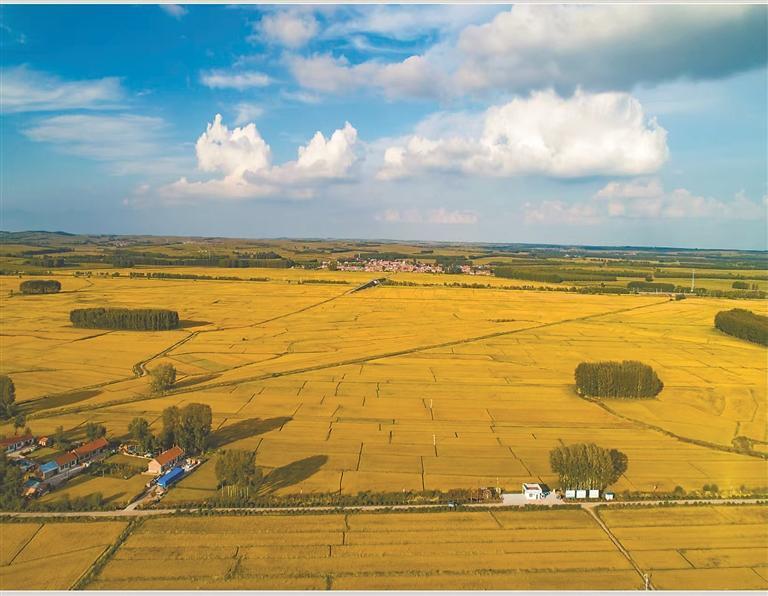
Core Viewpoint - Longjiang County has transformed its agricultural landscape through high-standard farmland construction, erosion control, and agricultural technology promotion, ensuring food security and enhancing grain production capacity [4][6]. Group 1: High-Standard Farmland Construction - Longjiang County has a total arable land area of 5.8513 million acres, with 4.9124 million acres designated as permanent basic farmland [4]. - The county has invested 863 million yuan in high-standard farmland construction, achieving 1.5037 million acres of high-standard farmland, which constitutes 30.61% of the basic farmland area [4]. - High-standard farmland has increased grain production capacity by over 15% compared to ordinary farmland, with an average cost reduction of over 200 yuan per acre [4]. Group 2: Soil and Erosion Management - Longjiang County has addressed soil erosion by managing 2,524 erosion gullies, protecting 252,900 acres of farmland and controlling water and soil loss over an area of 168,585 hectares [5]. - The county has implemented a systematic approach to erosion control, improving water retention capacity by 139,800 cubic meters [5]. Group 3: Agricultural Technology Promotion - The county has implemented the "Cang Grain in Land, Cang Grain in Technology" strategy, promoting advanced irrigation techniques over 652,600 acres, resulting in an average increase of 300 jin per acre [6]. - The "Zhinnong Lianchuang" project has integrated 5,000 acres of scattered land into contiguous fields, utilizing smart irrigation systems that save over 30% water and 20% fertilizer, leading to an average grain yield of 1,973.37 jin per acre [5][6].
在黑土扎根,助万物生长
Xin Lang Cai Jing· 2025-12-21 20:41
Core Viewpoint - The article emphasizes the importance of protecting and revitalizing the black soil in Northeast China, which is crucial for food security and agricultural sustainability. The "Black Soil Granary" technology campaign, led by the Northeast Institute of Geography and Agricultural Ecology, aims to combat soil degradation through innovative agricultural practices and community engagement [3][4]. Group 1: Technology and Research Initiatives - The "Black Soil Granary" technology campaign has formed youth task forces to address soil degradation issues, focusing on various agricultural techniques such as protective tillage and integrated farming systems [4][5]. - The task force has developed 13 technologies recognized by the Ministry of Agriculture and local authorities, published six local standards, and created four new products, showcasing significant contributions to agricultural innovation [5][6]. Group 2: Community Engagement and Training - The task force has conducted over 3,000 training sessions, impacting approximately 60 million acres, demonstrating the practical application of research in local farming practices [5][6]. - Team members actively engage with farmers, overcoming initial skepticism by demonstrating the benefits of new agricultural techniques, leading to increased crop yields and farmer acceptance [7]. Group 3: Future Goals and Vision - The task force aims to continue its mission by focusing on four key principles: staying rooted in the field, integrating advanced technologies with traditional agriculture, fostering talent in agricultural science, and promoting food security initiatives [7][8]. - The commitment to deeply connect with the land and contribute to the community's agricultural future reflects a long-term vision for sustainable farming practices [8].