能效比

Search documents
一个被英伟达掩盖的、中美AI最残酷的物理真相
虎嗅APP· 2026-01-21 10:01
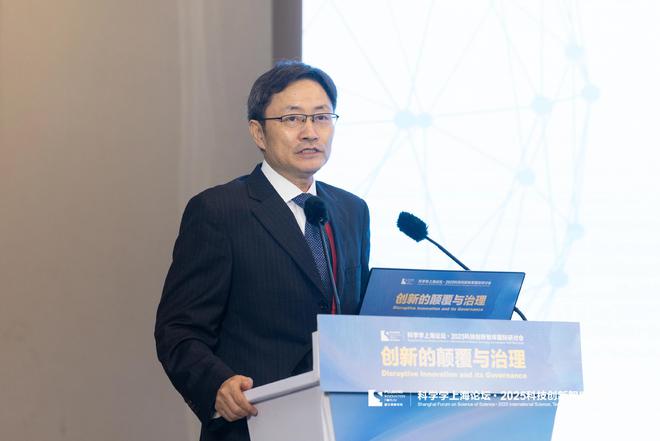
Core Viewpoint - The article discusses the contrasting energy challenges faced by the US and China in the context of AI development, highlighting that while China has a significant surplus in electricity supply, it faces efficiency issues in converting that energy into computational power, particularly due to semiconductor manufacturing limitations [4][18][22]. Group 1: Energy Supply and Demand - By 2030, the incremental electricity demand for AI development in China will only account for 1% to 5% of its new power generation capacity over the past five years, while in the US, it will consume 50% to 70% of the same [6][7]. - In 2023, the US added approximately 51 GW of new power generation capacity, whereas China added an impressive 429 GW, showcasing an 8-fold difference in capacity expansion [9][10]. Group 2: Efficiency and Cost Challenges - Despite having cheaper electricity costs (0.08 USD per kWh in China vs. 0.12 USD in the US), the energy cost for AI computation in China could be 140% higher than in the US due to lower chip efficiency [22][23]. - Chinese AI infrastructure may consume 100% more energy than US counterparts for the same computational output, highlighting a significant efficiency gap [21]. Group 3: Strategic Responses - The US is attempting to innovate its energy technology to bypass outdated grid infrastructure, focusing on decentralized solutions and nuclear energy revival [30][31]. - China is leveraging its advanced UHV transmission technology to transport surplus renewable energy from the west to eastern computational hubs, aiming to integrate AI into its energy systems [32][33]. Group 4: Future Implications - The competition in AI is not solely about chip technology but also about energy infrastructure and efficiency, with both countries facing unique challenges that will shape their technological trajectories over the next decade [47][48].


高通发布骁龙X2 Plus 瞄准主流笔记本市场|直击CES
Xin Lang Cai Jing· 2026-01-05 19:47
Core Insights - Qualcomm officially launched the Snapdragon X2 Plus processor at CES 2026, which supplements the mid-range product line following the flagship X2 Elite and X2 Elite Extreme released in September last year [2][8] - The new chip offers both 6-core and 10-core versions, utilizing the third-generation Oryon CPU architecture, paired with an 80 TOPS Hexagon NPU and the new Adreno X2-45 GPU [2][8] - The Snapdragon X2 Plus is targeted at the mid-to-high-end Windows laptop market, aiming to provide mainstream users with elite-level AI acceleration, enhanced graphics performance, and improved energy efficiency at a competitive price [9] Performance Metrics - The 10-core version of the X2 Plus shows a 35% increase in single-core performance and a 17% increase in multi-core performance compared to the previous X Plus, while the 6-core version has a 10% improvement in multi-core performance [3][10] - In reference design tests at CES, the 10-core version achieved a single-core score of 3323 and a multi-core score of 15084, significantly outperforming Intel's Core Ultra 7 256V and AMD's Ryzen AI 7 350 [3][10] - The graphics performance of the 10-core version improved by 29% in the 3DMark Steel Nomad Light test, while the 6-core version saw a 39% increase; additionally, power efficiency improved by 43%, enabling multi-day battery life [3][10] Market Positioning - The launch of the X2 Plus establishes Qualcomm's complete product stack in the Windows laptop chip market, with the X2 Elite Extreme at the top, X2 Elite in the mid-range, and X2 Plus covering the mainstream market [6][12] - Industry expectations suggest that Qualcomm may introduce a more entry-level "Snapdragon X2" version at the Computex event this summer, further expanding its price-performance coverage [6][12] - This strategic positioning is set to intensify competition in the Windows laptop market in 2026, particularly against Intel's upcoming Panther Lake and AMD's next-generation Ryzen AI chips, making this year potentially the most competitive in a decade [6][12] - Qualcomm announced that laptops featuring the X2 Plus are expected to ship in the first half of 2026, with major OEMs like Lenovo, HP, and ASUS set to unveil related products during CES [4][12]

科技部原副部长李萌:工程创新成为成就颠覆性创新更重要的形式
Di Yi Cai Jing Zi Xun· 2025-06-27 10:25
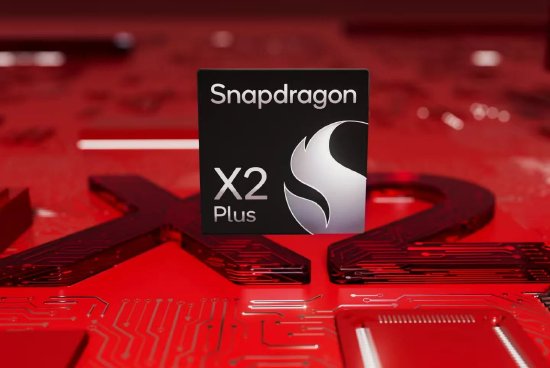
Core Insights - DeepSeek has achieved a breakthrough in developing large models with lower costs while maintaining equivalent performance, prompting industry discussions on the efficiency revolution in large models [1] - Engineering innovation is seen as a crucial driver for disruptive innovation, with DeepSeek exemplifying the potential of engineering advancements in enhancing large model development [1][3] - The future of artificial intelligence will increasingly depend on the synergy between software and hardware, particularly in fields like humanoid robotics and advanced autonomous driving [1] Group 1 - The historical context of engineering innovation is highlighted, questioning why significant innovations often arise in specific locations, such as the steam engine revolution occurring in Manchester rather than London [3] - The interplay between theoretical breakthroughs and engineering optimizations is expected to lead future disruptive innovations, with both "0 to 1" and "1 to 100" processes being significant [3] - The efficiency revolution in large models is driven by a combination of architecture, strategy, and optimal software-hardware collaboration, indicating a shift from single-dimensional to multi-faceted understanding of innovation [3][4] Group 2 - DeepSeek's approach to developing large models emphasizes low computing power and cost while achieving performance equivalence, marking a shift in industry competition logic where efficiency is paramount for disruptive innovation [4] - The pursuit of energy efficiency is becoming increasingly important, suggesting that without high performance and energy efficiency, disruptive innovation may not occur [4] - Open-source initiatives are identified as essential for supporting the ecosystem of disruptive innovation [4] Group 3 - While focusing on disruptive innovation, it is crucial to consider potential disruptive harms, as current large model technologies exhibit incomplete explainability [5] - The governance of advanced AI technologies is becoming more urgent, especially as the reasoning capabilities of large models increase, leading to concerns about their compliance with instructions [5]