能源绿色变革

Search documents
“十四五”高质量发展答卷 逐绿前行 我国构建起全球最大可再生能源体系
Yang Shi Wang· 2025-10-23 00:58
Core Insights - China is undergoing a significant transformation in its energy production and consumption patterns, focusing on green energy initiatives as part of its "14th Five-Year Plan" [1][2] - The country has established itself as a global leader in renewable energy, generating over 10 trillion kilowatt-hours of electricity annually, accounting for one-third of the world's total [1][2] Group 1: Renewable Energy Development - The transformation of barren lands into vast solar power fields and the construction of large hydropower stations along the Yangtze River represent the largest clean energy corridor globally [2] - The "14th Five-Year Plan" has led to the establishment of nine major clean energy bases, with seven located in western regions, highlighting a strategic focus on renewable energy development in less populated areas [2] Group 2: Infrastructure and Energy Transmission - The construction of 19 ultra-high voltage transmission lines over the past five years has created a super network for electricity delivery, facilitating a 70% increase in clean energy transmission from the west to the east [2] - Renewable energy now supports one-fifth of the electricity demand in the eastern and central regions of China, showcasing the effectiveness of the new energy infrastructure [2] Group 3: Energy Storage Innovations - The introduction of new energy storage technologies, such as gravity storage and compressed air, has played a crucial role in managing peak electricity demand during the summer [2] - These innovations are referred to as "giant power banks," which have become essential for stabilizing the grid during peak times [2] Group 4: Achievements in Non-Fossil Energy Consumption - China has successfully met its target of achieving a 20% share of non-fossil energy consumption as outlined in the "14th Five-Year Plan," establishing the country as a leader in the global renewable energy sector [2]
新闻联播︱“十四五”高质量发展答卷 逐绿前行 我国构建起全球最大可再生能源体系
国家能源局· 2025-10-20 23:08
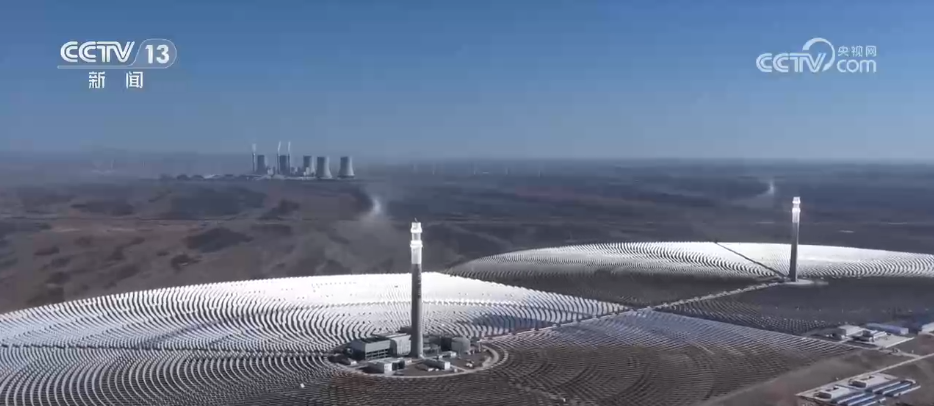
Core Viewpoint - China is undergoing a significant transformation in its energy production and consumption patterns, focusing on green energy development and achieving substantial progress in renewable energy generation since the "14th Five-Year Plan" [2][5]. Group 1: Renewable Energy Development - The transformation of barren deserts and wastelands into vast power generation fields illustrates China's commitment to green energy [2]. - The annual electricity generation from solar power in a specific area is equivalent to replacing 560,000 tons of coal [3]. - China generates over 10 trillion kilowatt-hours of electricity annually, accounting for one-third of global electricity production, with one-third of this coming from renewable sources [4]. Group 2: Infrastructure and Capacity Expansion - The construction of six large hydropower stations along the Yangtze River forms the world's largest clean energy corridor [5]. - The "14th Five-Year Plan" includes nine major clean energy bases, with seven located in western regions, highlighting the geographical focus of renewable energy development [5]. - The total area of newly added solar panels over five years could cover 530,000 football fields, and the length of newly added wind turbine blades could stretch from the easternmost to the westernmost points of China and back [5]. Group 3: Energy Transmission and Storage - The establishment of 19 ultra-high voltage transmission lines over five years has created a super network for electricity delivery, increasing the cross-regional transmission of clean energy by 70% [5]. - Renewable energy from the west now supports one-fifth of the electricity demand in the eastern and central regions [5]. - New energy storage technologies, such as gravity storage and compressed air, have been introduced in the "Five-Year Plan," playing a crucial role in managing peak electricity demand [5]. Group 4: Achievements and Goals - China has built the world's largest and most complete renewable energy industry chain, achieving the target of 20% non-fossil energy consumption as set in the "14th Five-Year Plan" [5].

10月20日晚间央视新闻联播要闻集锦
Yang Shi Xin Wen Ke Hu Duan· 2025-10-20 13:59
Group 1 - The core message emphasizes the importance of planning and implementing the goals and strategies for the "14th Five-Year Plan" to ensure decisive progress towards socialist modernization in China [2][3] - The report highlights that since the beginning of the "14th Five-Year Plan," China has been advancing towards green energy transformation, establishing the world's largest renewable energy system [3] - China's GDP grew by 5.2% year-on-year in the first three quarters, indicating a resilient and vibrant economic performance [4] Group 2 - Various regions are implementing new development concepts, focusing on coordinated regional and urban-rural development to inject strong momentum into high-quality growth [6][5] - The international community is closely watching the 20th Central Committee of the Communist Party of China, anticipating that China's high-quality development will bring new opportunities and momentum for global development [9]
硬核“十四五”丨铸就绿色奇迹 我国每3度电就有1度是绿电
Yang Shi Xin Wen Ke Hu Duan· 2025-10-20 08:31
Core Insights - China is undergoing a significant transformation in its energy production and consumption landscape, focusing on green energy development since the 14th Five-Year Plan [1][3] Group 1: Renewable Energy Generation - China generates over 10 trillion kilowatt-hours of electricity annually, accounting for one-third of global production [2] - The country has established the world's largest clean energy corridor with six major hydropower stations along the Yangtze River [3] - The cumulative grid-connected capacity of wind and solar energy in China's central and western regions has tripled [3] Group 2: Infrastructure Development - The 14th Five-Year Plan includes the construction of 19 ultra-high voltage power transmission lines, creating a super network for electricity delivery that exceeds 50,000 kilometers in total length [3] - The new energy bases established during the 14th Five-Year Plan are primarily located in western regions, with significant expansions in solar and wind energy installations [3] Group 3: Energy Storage Solutions - New energy storage capacity has increased nearly 30 times over the past five years, reaching 95 million kilowatts [4] - These energy storage systems, including lithium battery and compressed air technologies, have played a crucial role in managing peak electricity demand during extreme weather conditions [4] - The non-fossil energy consumption target of 20% set for the 14th Five-Year Plan has been achieved on schedule [4]
逐光驭风 澎湃绿能点亮万家灯火
Jing Ji Guan Cha Bao· 2025-10-20 07:22
Group 1 - China's energy production and consumption landscape is undergoing a significant transformation, with over 1/3 of global electricity generated domestically, amounting to over 10 trillion kilowatt-hours annually [1][4] - The "14th Five-Year Plan" has led to the establishment of nine major clean energy bases, with seven located in the western regions, significantly increasing the capacity of wind and solar energy [2][3] - The construction of 19 ultra-high voltage transmission lines has created a super network for electricity delivery, with a total length exceeding 50,000 kilometers, facilitating the transfer of clean energy from the west to the east [2] Group 2 - New energy storage solutions have seen a nearly 30-fold increase in capacity over five years, reaching 95 million kilowatts, effectively addressing the intermittency of renewable energy sources [3] - The non-fossil energy consumption target of 20% set in the "14th Five-Year Plan" has been achieved, establishing China as the largest and most complete new energy industry chain globally [4]
硬核“十四五” | 我国“绿电答卷”成绩亮眼:每3度电就有1度绿电
Yang Shi Wang· 2025-10-20 05:09
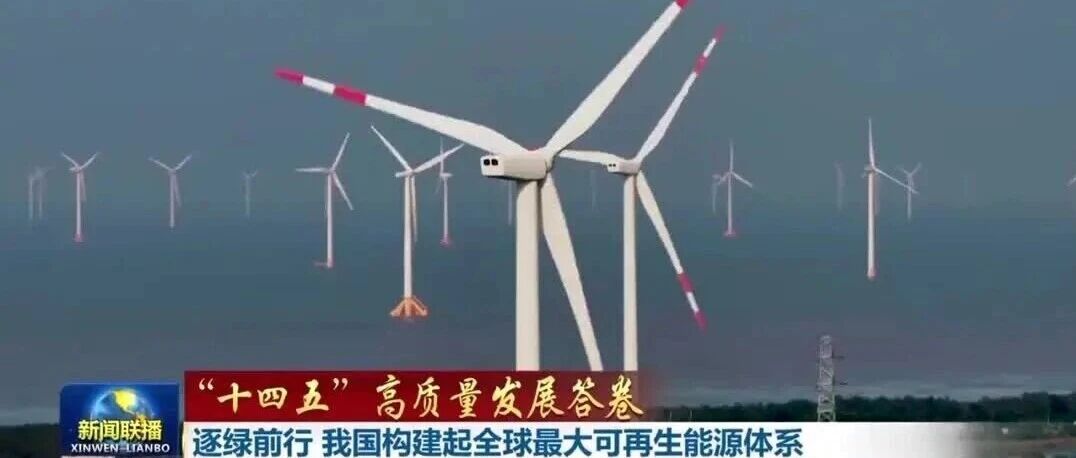
Core Insights - China's energy production and consumption patterns are undergoing a significant transformation, with a focus on green energy development since the "14th Five-Year Plan" [1] Group 1: Renewable Energy Generation - The annual electricity generation in China exceeds 10 trillion kilowatt-hours, accounting for one-third of global production [5] - The energy output from 27,000 heliostats in a solar power plant can replace 560,000 tons of coal annually [3] - The wind turbines, with 93-meter-long blades, generate enough electricity for three households for two days with each rotation [3] Group 2: Infrastructure Development - Six large hydropower stations on the Yangtze River form the world's largest clean energy corridor, while the "Shagohuang" new energy base has transformed barren land into vast solar fields [7] - The "14th Five-Year Plan" includes the construction of 19 ultra-high voltage power transmission lines, creating a super network for electricity delivery [10] - The cross-regional transmission of clean energy from the west to the east has increased by 70%, meeting one-fifth of the electricity demand in the eastern and central regions [10] Group 3: Energy Storage and Industry Growth - New energy storage technologies, such as gravity and compressed air storage, have been integrated into the energy system, participating significantly in peak summer electricity demand management [12] - China has established the world's largest and most complete new energy industry chain, achieving the target of 20% non-fossil energy consumption as outlined in the "14th Five-Year Plan" [12]