
能源补贴

Search documents
报告称南非近2000亿兰特的能源补贴大部分用于化石燃料
Shang Wu Bu Wang Zhan· 2026-01-24 14:46
Group 1 - South Africa spent nearly 200 billion rand on energy subsidies in 2025, primarily directed towards fossil fuels, hindering the country's climate goals [1] - The International Institute for Sustainable Development (IISD) reported that fossil fuel subsidies have doubled since 2018, with direct subsidies amounting to 110 billion rand in 2025, three times the amount in 2018 [1] - Over 30% of the total energy subsidy costs in 2025 are related to efforts to stabilize Eskom's financial situation [1] Group 2 - The report indicates that government transfers to Eskom, which are converted into equity, are included in the subsidy category as they provide benefits consistent with WTO definitions [2] - South Africa needs a coordinated and time-bound roadmap to review existing subsidies, enhance targeting and transparency, and guide decisions on reforms or redesigns [2] - Despite being the largest greenhouse gas emitter, Eskom is exempt from carbon tax, highlighting the need for policy adjustments [2] Group 3 - The 2025 Integrated Resource Plan aims to establish a sustainable electricity system to ensure long-term energy security, support emissions reduction, promote environmental sustainability, and drive industrial and economic growth [2] - The implementation of the plan is expected to cost 2.2 trillion rand, funding new generation capacity, infrastructure upgrades, and green industrialization projects [2] - South Africa is committed to achieving net-zero carbon emissions by 2050 [2]
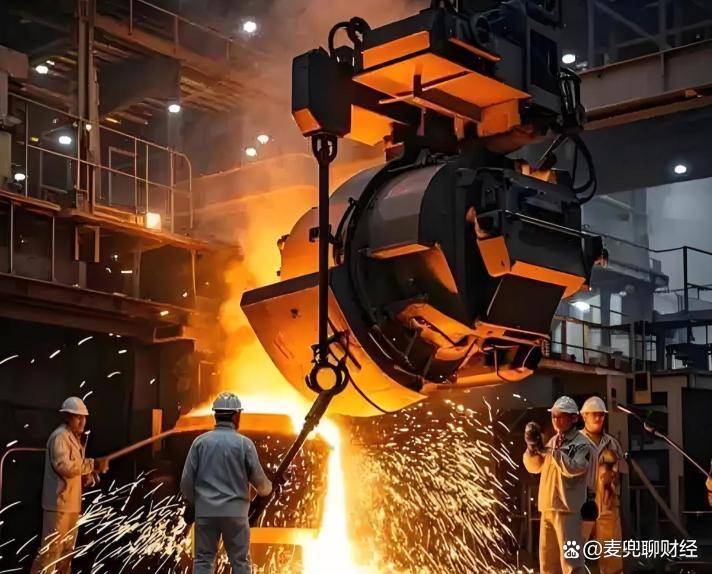
中国宣布钢铁出口重大变革!一场迟到的能源红利保卫战打响
Sou Hu Cai Jing· 2025-12-15 03:12
Core Viewpoint - The Chinese government will implement export license management for steel products starting January 1, 2026, marking the end of 16 years of free steel exports, reflecting a significant policy shift in response to environmental and economic pressures [1][3][12]. Group 1: Policy Changes - The announcement indicates a historical return to export management policies, with the last similar measure implemented in 2007 before being lifted in 2009 due to the financial crisis [12]. - The new export license management will cover 268 customs product codes, including key categories such as non-alloy pig iron, recycled steel raw materials, steel billets, hot-rolled coils, and cold-rolled sheets [10]. - The management approach will include a "one batch, one certificate" system, allowing companies to apply for export licenses starting December 15, 2025, for the year 2026 [10]. Group 2: Industry Impact - The steel industry has seen a significant increase in export volume, with 107.7 million tons exported in the first 11 months of 2025, a 6.7% year-on-year increase, and an expected annual total exceeding 115 million tons [3]. - However, the average export price has declined, leading to a "volume increase, price drop" cycle for low-value-added products, raising concerns about the sustainability of this export model [3][6]. - The steel sector is responsible for 15% of China's total carbon emissions, and the new policy aims to alleviate domestic emission pressures while transitioning to a more sustainable production model [6][20]. Group 3: Market Dynamics - The new export regulations are expected to reshape the export market, with traditional markets in Southeast Asia and the EU likely to see reduced export volumes due to dual restrictions of licenses and tariffs [17]. - Companies are anticipated to shift focus towards emerging markets in Africa and Latin America, with steel exports to Africa projected to increase by 317,000 tons in 2025, accounting for 43% of the growth [17]. - The policy is expected to redirect resources from low-end steel exports to high-end manufacturing sectors, such as new energy vehicles and aerospace, where demand for high-quality steel is strong [18][20].

美国总统特朗普签署行政命令,旨在结束对外国控制的能源补贴。
news flash· 2025-07-07 21:37
Core Viewpoint - The article discusses President Trump's executive order aimed at ending subsidies for energy controlled by foreign entities [1] Group 1: Executive Order Details - The executive order is designed to eliminate foreign control over energy subsidies, which may impact the competitive landscape of the energy sector [1] - This move is part of a broader strategy to promote domestic energy production and reduce reliance on foreign energy sources [1] Group 2: Implications for the Energy Industry - The decision could lead to increased investment in domestic energy companies, potentially boosting their market positions [1] - It may also result in a shift in energy pricing dynamics as domestic producers gain a competitive edge [1]