
自创IP

Search documents
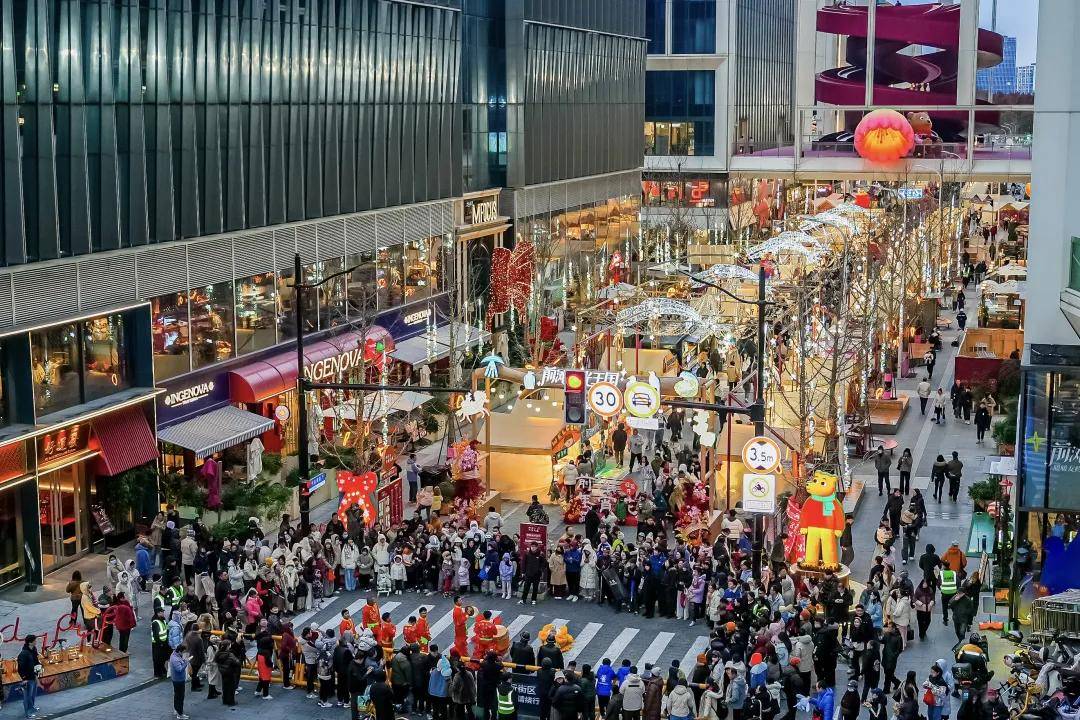
一条限时步行街,如何“走”出滨江消费新场景?
Sou Hu Cai Jing· 2026-01-06 14:40
Core Insights - The article highlights the transformation of Qianjiatang Road in the Qiantan area into a vibrant space for markets, performances, and pedestrian activities during weekends and holidays, enhancing urban cultural experiences [1][3] Group 1: Festival Economy and Consumer Engagement - The "Welcoming Flowers" New Year Flower Market from January 1 to 3 featured over a hundred brands, creating a festive atmosphere with traditional flower arrangements and cultural displays, attracting significant public interest [4][6] - The Qiantan Park Lane has hosted various large-scale markets throughout 2025, redefining consumer experiences by integrating exploration, social interaction, and cultural engagement [6] - The "Qiantan International Food Festival" during the National Day holiday successfully attracted visitors with global cuisine, demonstrating the ability to convert festive traffic into substantial sales [8] Group 2: Unique Consumption Attraction through IP Creation - Qiantan Park Lane has developed a distinctive event matrix through "self-created" and "co-created" IPs, establishing a strong presence in Shanghai's consumer landscape [9][11] - Events like the "Summer in the Lane" night market and the "Chocolate Festival" have significantly increased foot traffic and sales, showcasing the effectiveness of original IPs in driving consumer engagement [9][11] - Collaborative events with established cultural institutions, such as the "Great Artist Festival" and "Jazz Shanghai," have enhanced the area's appeal and professional influence [11] Group 3: Long-term Commercial Engine and Community Integration - Continuous high-quality operations have transformed short-term festive consumption into a long-term commercial engine, creating a new lifestyle landscape in the Qiantan area [12] - The integration of 11 unique dining establishments in the "Lane Food Street" has fostered a community-oriented consumption environment, enhancing the area's social atmosphere [14] - The introduction of over 30 first stores at Jingyao Qiantan has created a diverse consumer matrix, extending operational hours and boosting nighttime economic activity [16]

“借来的灵魂终不如自己的”,IP如何点石成金
Jie Fang Ri Bao· 2025-10-18 13:07
Core Insights - The article highlights the significant impact of intellectual property (IP) on sales in the Chinese toy industry, emphasizing that 91.4% of licensed businesses believe IP licensing drives sales, with 22.7% reporting sales doubling compared to 2023 [2] - The Chinese toy market is projected to surpass 155 billion yuan in retail sales in 2024, reflecting a 10.7% increase from 2023, indicating a robust growth trajectory for licensed products [2] Group 1: Market Trends - During the National Day holiday, the average daily foot traffic at Jing'an Joy City exceeded 100,000, with sales reaching over 92 million yuan, driven by the popularity of My Little Pony merchandise [1] - The diversification of product offerings by companies like Card Game has led to a decrease in reliance on collectible card sales, which dropped from 95.1% in 2022 to 81.5% in 2024 [3][4] - The retail sales of Card Game's stationery business reached 513 million yuan in 2024, capturing a 24.3% market share, indicating successful cross-industry expansion [3] Group 2: IP Strategy - Card Game holds 69 licensed IPs, including popular franchises like Ultraman and Harry Potter, which allows for a diversified revenue stream and mitigates risks associated with relying on a single IP [6][7] - The revenue contribution from Card Game's top five core IPs has decreased from 98% in 2022 to 86% in 2024, showcasing a healthier distribution of income across multiple IPs [7] - The licensing market is characterized by high costs, with top IPs commanding substantial upfront fees and sales royalties, which can limit the ability of smaller companies to diversify their IP portfolios [6] Group 3: Consumer Behavior - A survey indicates that 63.4% of consumers plan to increase their budget for licensed products in 2024, reflecting a growing enthusiasm for IP-related merchandise [2] - The success of new products, such as the plush My Little Pony, is attributed to effective marketing strategies that resonate with younger consumers [4] Group 4: Long-term IP Development - The article emphasizes the importance of developing original IPs, as seen with Card Game's success in creating its own IPs like the Three Kingdoms series, which has gained significant traction in the market [9] - Companies are encouraged to adopt a long-term perspective in IP development, focusing on building emotional connections with consumers rather than seeking quick profits [12][13]
“借来的灵魂终不如自己的” IP如何点石成金
Jie Fang Ri Bao· 2025-10-17 00:49
Group 1 - The core idea of the articles emphasizes the importance of IP (Intellectual Property) in driving sales and consumer engagement in the toy industry, particularly in China, where the market for licensed products is rapidly growing [2][6][10] - During the National Day holiday, a significant increase in foot traffic and sales was observed at Jing'an Joy City, highlighting the success of the My Little Pony pop-up event organized by the licensed card game company, Kayo [1][4] - A survey by the China Toy and Baby Products Association indicates that 91.4% of licensed merchants believe IP licensing boosts sales, with 22.7% reporting sales increases of over 100% compared to the previous year [2][6] Group 2 - Kayo's revenue diversification strategy is evident, with only 81.5% of its total revenue in 2024 coming from trading card games, down from 95.1% in 2022, indicating a shift towards toys, stationery, and other products [3][4][7] - The company has successfully entered the stationery market, achieving a 24.3% market share in the domestic entertainment stationery sector, with retail sales reaching 5.13 billion yuan in 2024 [3][6] - Kayo's strategy of holding multiple IPs, including popular franchises like Ultraman and Harry Potter, allows it to mitigate risks associated with reliance on a single IP, as 76% of its current revenue comes from IPs expiring after 2028 [6][7] Group 3 - The articles highlight the necessity for companies to create their own IPs rather than solely relying on licensed ones, as self-created IPs can provide unique market advantages and emotional connections with consumers [9][10][12] - The success of Kayo's original IP, such as the Three Kingdoms series, demonstrates the potential for cultural content to resonate with both domestic and international audiences when presented innovatively [9][14] - The importance of long-term planning and emotional engagement in IP development is emphasized, with successful examples showing that sustained investment in content and consumer interaction is crucial for maintaining IP popularity [10][12][13]