
花卉产业高质量发展

Search documents
繁花怒放
Jing Ji Ri Bao· 2026-02-06 07:25
Core Insights - The Chinese flower industry is projected to reach a market size of 100 billion yuan by the end of 2025, with a stable planting area of 1.3899 million hectares and over 5.34 million direct employees, solidifying China's position as the world's largest flower producer [1] - The industry is evolving into a "beautiful economy," integrating economic value and cultural significance, as highlighted by President Xi Jinping's emphasis on developing the entire industry chain [1][2] Industry Foundation - The Chinese flower industry has developed a robust foundation over 40 years, rooted in complete industrial resources from seed quality to modern facilities, which serves as a stabilizing force against market fluctuations [2] - The core competitiveness lies in the seed industry, with over 3,700 flower germplasm resources preserved in Gansu province, indicating a rich genetic heritage [2] Innovation and Technology - A breakthrough moment is emerging with the introduction of over a thousand new flower varieties featuring "Chinese style" at the upcoming 2025 Rose Innovation Conference in Yunnan [3] - Advanced breeding techniques, including gene editing, are significantly reducing breeding cycles from 8-10 years to a much shorter timeframe, aiming to establish unique advantages in certain areas [3] Regional Development - Yunnan province is recognized as a "kingdom of fresh-cut flowers," with a projected planting area of 200,000 acres and an output of 22.1 billion stems by 2025, contributing over 100 billion yuan to the industry [4] - The industry has formed seven major production clusters across China, including regions in Yunnan, Guangdong, Shandong, and Gansu, each specializing in different types of flowers [4] Market Dynamics - The national production layout ensures stable supply, with different regions specializing in various flower types, thus enhancing China's competitive edge in the global market [5] - The modernization of production facilities, such as smart greenhouses, is improving efficiency and profitability, with some companies reporting a 50% increase in per-acre returns compared to traditional methods [5] Consumer Trends - The flower market is witnessing a shift from seasonal gifts to everyday items, with consumers increasingly viewing flowers as a means of self-expression [10] - The rise of "self-purchase" consumption patterns is expanding the market, with subscription models like "one flower a week" becoming popular [24] Policy Support - The Chinese government has issued strategic guidelines to promote high-quality development in the flower industry, aiming for sales to reach 300 billion yuan by 2025 and over 700 billion yuan by 2035 [11][12] - Local governments are implementing targeted support policies, including financial subsidies for new variety research and facility upgrades [13][14] Challenges - The industry faces structural challenges, including an oversupply of low-end products and a shortage of high-end offerings, leading to price volatility and market instability [19][20] - There is a significant reliance on imported flower varieties, with 65.06% of flower bulbs imported, indicating a need for domestic innovation in the seed industry [17][18] Future Trends - The flower industry is transitioning from a "beautiful industry" to a "happy industry," integrating deeper into national development narratives and enhancing quality of life [22][29] - The focus on green development and sustainable practices is becoming a core competitive advantage, with initiatives aimed at reducing plastic waste and promoting eco-friendly production methods [23]
今年白云年花销售额有望突破7000万元
Guang Zhou Ri Bao· 2026-01-30 02:19
Core Viewpoint - The flower industry in Baiyun District of Guangzhou is a significant contributor to the city's annual flower market, with a projected production of 20 million pots for the 2026 Spring Festival, of which 6 million pots will come from Baiyun, accounting for 30% of the total [2]. Group 1: Industry Overview - Baiyun District is a traditional flower production area in Guangzhou, with a flower industry output value of approximately 470 million yuan in 2025, covering an area of about 12,000 acres [5]. - The district produced around 6.13 million stems of cut flowers and 30.1 million pots of potted plants in 2025, establishing itself as a core region for flower production and distribution in Guangzhou [5]. - Baiyun's flower sales reached a record high of 66 million yuan last year, with expectations to exceed 70 million yuan this year [5]. Group 2: Product Highlights - The main flower varieties in Baiyun include Phalaenopsis orchids, Shima peach blossoms, kumquats, and rose begonia, with over 100 cultivated varieties of Phalaenopsis orchids [5]. - The Shima peach blossom is known for its high yield and long flowering period, with a stable planting area of around 1,000 acres and an annual output exceeding 200,000 trees [5]. - Baiyun's kumquats include varieties like golden kumquat and four-season kumquat, which have high market recognition [5]. Group 3: Market Expansion - Baiyun's flower sales extend beyond the district to cover the entire Guangzhou area and cities in the Guangdong-Hong Kong-Macao Greater Bay Area, with exports to major cities like Shanghai and Beijing [6]. - The flower products, particularly Phalaenopsis orchids, are gaining popularity in overseas markets, especially in Southeast Asia, with kumquats receiving orders from Singapore for the first time this year [6]. Group 4: Industry Innovation - The Baiyun District has established a modern agricultural demonstration park for Phalaenopsis orchids, attracting over 30 enterprises and forming a complete industrial chain from research to sales [7]. - New sales models such as live streaming and new retail collaborations are becoming prevalent, with live streaming accounting for about 90% of sales for some companies [7]. - The "Guangzhou Flower Industry High-Quality Development Three-Year Action Plan (2024-2026)" aims to position Baiyun as a base for high-end ornamental plants and export bonsai, emphasizing the district's role in leading the flower industry towards high-quality development [7][8].

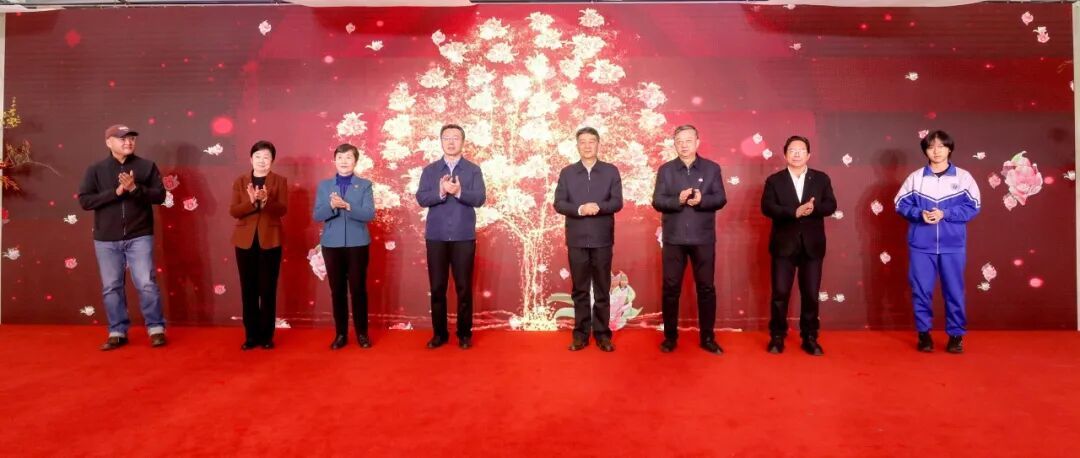
2026北京家庭园艺嘉年华暨迎春年宵花展盛大启幕,共绘“花园城市”新春画卷
Huan Qiu Wang· 2026-01-19 03:06
Core Viewpoint - The 2026 Beijing Family Gardening Carnival and Spring Festival Flower Exhibition aims to enhance urban beauty and improve quality of life, running from January 18 to March 10, 2026, and coinciding with major holidays such as New Year's Day, Spring Festival, and Lantern Festival [1] Group 1: Event Overview - The event is organized by multiple governmental and cultural bodies, creating a national flower industry exchange platform to attract renowned flowers for sale in Beijing, featuring popular products like "Instant Bloom" and "Good Market" flower gifts [4] - The event includes 23 flower markets, 100 key parks, 100 gardening stations, 400 key flower shops, and 600 online merchants, forming a comprehensive network to engage citizens and visitors [6] Group 2: Main Venues and Activities - Two main venues are established: the Beijing Flower Trading Center in Fengtai District and the Beijing Flower World in Changping District, hosting various exhibitions and promotional activities [9] - The event showcases flowers from 27 leading enterprises across 10 major flower production areas in China, promoting regional flower culture and collaboration [11] Group 3: Consumer Engagement and Innovation - The event introduces an integrated online and offline sales model, allowing citizens to browse and purchase flowers through platforms like the "Beijing Flowers" mini-program, Meituan, and JD.com [17] - A new flower price index prediction and warning system has been launched, covering 1,887 flower varieties and providing timely market information to stabilize prices [18] Group 4: Thematic Experiences and Cultural Integration - Various themed exhibitions and activities are organized, including orchid exhibitions and a "Peach Blossom Charm" event, enhancing the festive atmosphere and cultural experience [23][25] - The event promotes the integration of flower culture with traditional customs, offering unique experiences such as "Daytime Flower Viewing and Nighttime Lantern Tours" [25] Group 5: Conclusion and Invitation - The 2026 Beijing Family Gardening Carnival not only enriches the festive spirit but also deepens the integration of the flower industry with urban life, inviting citizens to enjoy the beauty of flowers and enhance their living spaces [27]
清风为伴产业兴 | “鲜花经济”托起幸福生活
Zhong Yang Ji Wei Guo Jia Jian Wei Wang Zhan· 2025-05-06 00:24
Core Insights - The Lijiang Modern Flower Industry Park has an annual output value of approximately 100 million yuan, producing 39.56 million stems of roses and 900,000 stems of colored calla lilies, employing around 4,400 people [1] - The park utilizes smart greenhouse and soilless cultivation technologies, contributing to the development of various sectors including agriculture, natural resources, and tourism [1] - The local disciplinary inspection and supervision bodies are actively involved in ensuring the integrity and transparency of the project, focusing on land transfer, project implementation, and fund usage [2] Group 1 - The flower industry park is one of five agricultural innovation demonstration parks in Yunnan Province, showcasing advanced agricultural practices [1] - The park's development involves multiple departments, indicating a complex project with significant funding and personnel [1] - The local disciplinary committee has implemented comprehensive supervision measures to prevent corruption and ensure project compliance [2] Group 2 - The local community has been encouraged to publicly disclose information regarding land transfers and fund management to enhance transparency and accountability [2] - The establishment of collaborative mechanisms among various supervisory bodies aims to create a concentrated oversight framework [2] - The flower industry has stimulated local economic activities, leading to the development of related products and services, thereby increasing residents' income [3]
中国的“春城” 世界的“花都”--云南昆明着力打造世界一流花卉产业中心
Zhong Guo Chan Ye Jing Ji Xin Xi Wang· 2025-04-22 00:49
Core Insights - Yunnan province, particularly Kunming, is a major hub for the fresh cut flower industry, supplying 70% of the flowers in China, and is focused on enhancing its brand and quality standards to become a world-class flower industry center [1][2] Group 1: Industry Development Strategies - Kunming has implemented a three-year action plan for high-quality development in the flower industry, addressing 73 practical issues related to breeding, quality management, and brand promotion, resulting in a 200% increase in planting area and production, and a 40% increase in the proportion of high-quality flowers [1] - The city has established a "Quality Loan" initiative to help companies convert intangible assets like quality and brand recognition into tangible credit assets [1] Group 2: Brand and Quality Management - Kunming is leveraging its green ecological advantages to promote brand development, with initiatives like the "Quality Strong City Yunnan Flower Quality Improvement" live-streaming event, and several districts recognized for their flower industry excellence [2] - The city has developed a comprehensive quality management system, including technical specifications for fresh cut flower circulation and a consumer rights protection mechanism, ensuring quality inspection and grading before auction and electronic settlement [3] Group 3: Market Position and Export - Kunming's flower products are exported to over 60 countries, with fresh cut flowers accounting for more than 40% of China's total exports in this category [3] - The Douyin Flower Market is recognized as the largest professional market in Asia and the second largest in the world, with a transaction volume of 14.176 billion stems and a transaction value exceeding 11.574 billion yuan [3] Group 4: Standardization and Quality Improvement - The city has established a standardized system for production, packaging, and transportation of flowers, leading to the creation of over 60 national and local standards, with several standards being nationally leading [4] - A benchmarking initiative has been launched to compare and analyze product standards, resulting in 14 enterprise standards reaching international advanced levels [4]