范围3排放

Search documents
全球化工行业脱碳陷入两难
Zhong Guo Hua Gong Bao· 2025-11-19 02:40
Core Viewpoint - The global chemical industry faces a dilemma in decarbonization, as trade turmoil and a persistently weak market force companies to cut capital expenditures, while achieving 2030 emission reduction targets and moving towards net-zero emissions by 2050 requires substantial investment [1][2]. Group 1: Current State of Decarbonization - The decarbonization process in the chemical industry is significantly lagging, with absolute emissions increasing by 6% from 2019 to 2023, and emission intensity remaining stable at 1.3 million tons of CO2 equivalent [2]. - The International Energy Agency (IEA) estimates that emission intensity needs to be reduced to 920,000 tons of CO2 equivalent by 2030, and an 85% reduction in annual emissions is required by 2050, alongside a projected 70% growth in industry size [2]. - PwC forecasts that investments related to decarbonization will need to reach between $1.5 trillion and $3.3 trillion by 2050 [2]. Group 2: Investment Challenges - Despite commitments from major companies like BASF and Dow Chemical to invest over $1 billion annually in sustainability, economic downturns are squeezing the space for decarbonization investments [3]. - The American Chemistry Council (ACC) reports that high interest rates, tariff barriers, and geopolitical risks are causing a slowdown in capital expenditure growth, with projections of a 3.9% increase to $39 billion in 2024, followed by a decrease of 1.6% in 2025 [2][3]. Group 3: Project Delays and Policy Issues - Significant projects, such as Dow Chemical's $6.5 billion "Net Zero Pathway" ethylene plant in Alberta, Canada, have been indefinitely stalled due to industry downturns, rising construction costs, and tariff uncertainties [4]. - The cancellation of $3.7 billion in emission reduction funding by the U.S. Department of Energy has exacerbated the situation, affecting key projects in hydrogen and molecular recycling [4]. - BASF has indicated that core decarbonization technologies, such as electric heating cracking furnaces, will not be scalable until after 2030 [4]. Group 4: Emission Accounting Challenges - The lack of stable policies and difficulties in managing Scope 3 emissions (i.e., emissions from the supply chain) are major institutional barriers to decarbonization [5]. - The SEC's 2024 climate disclosure rules do not include Scope 3 emissions, which account for 75% of total industry emissions, leading to potential investment stagnation of $77.5 billion [5]. - The complexity of the value chain and data inaccuracies hinder effective management of Scope 3 emissions, as demonstrated by the limited impact of reducing emissions from 1,000 core suppliers [5]. Group 5: Market Demand Issues - Insufficient market demand poses a significant barrier to the transition towards decarbonization, with companies like BASF noting a lack of demand for green products [6]. - Dow's CEO has acknowledged that while customers recognize low-carbon products, their willingness to pay a "green premium" is limited, especially in a downturn where cost control is prioritized [6]. Group 6: Future Outlook - Despite optimism among major companies regarding the 2030 targets, data reveals a stark reality: since 2020, the top 12 chemical companies have only reduced direct and indirect carbon emissions by 8.7%, with a mere 2.1% reduction in supply chain emissions [7]. - To resolve the decarbonization dilemma, the industry needs a collaborative effort across policy, technology, and market sectors to create a stable incentive mechanism, accelerate technology maturity, and cultivate green demand [7].

港股上市物流企业ESG报告盘点,绿色运输与包装成为降碳关键环节
Sou Hu Cai Jing· 2025-06-10 07:39
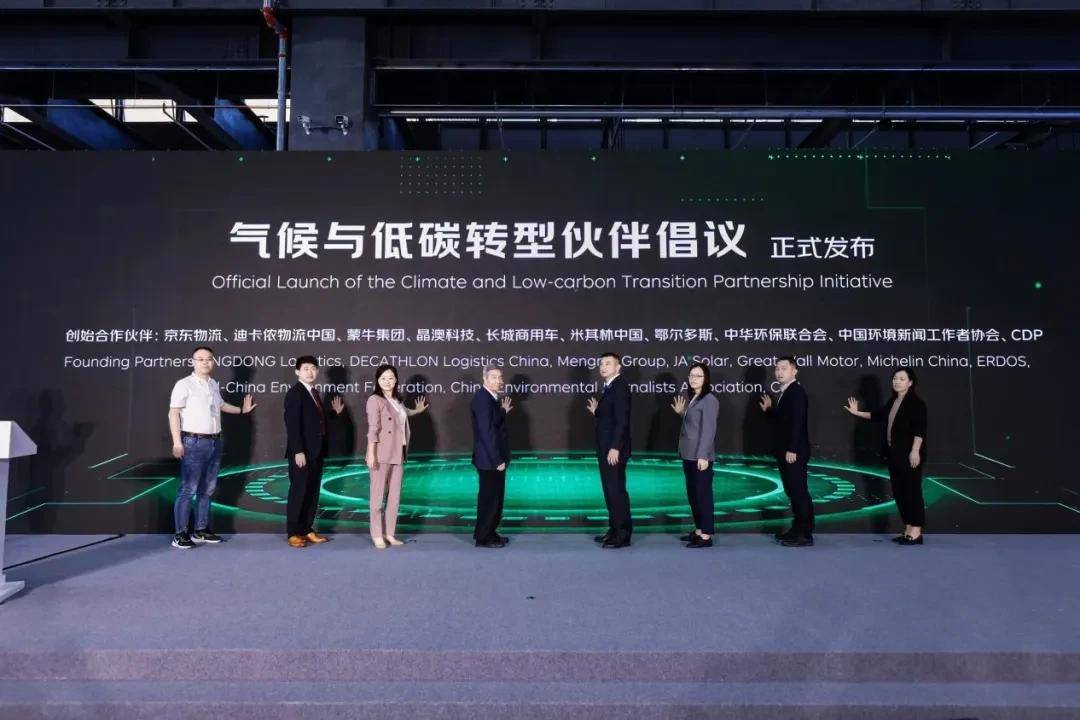
Core Viewpoint - The express delivery industry in China is experiencing significant growth but faces challenges from climate change, necessitating effective climate adaptation actions and risk management strategies [1][2]. Group 1: Climate Change Impact and Industry Response - The express delivery sector is increasingly recognizing the challenges and opportunities posed by climate change, integrating climate risk management into corporate governance frameworks [1][2]. - From January 1, 2025, listed companies in Hong Kong will be required to disclose information related to greenhouse gas emissions, financial impacts, and risk management [1][17]. Group 2: Carbon Reduction Achievements - Major logistics companies such as JD Logistics, SF Express, Jitu Express, ZTO Express, and YTO Express have made significant carbon reduction achievements and launched various carbon reduction plans [2][40]. - JD Logistics has set a target to increase its annual procurement of renewable electricity by 100% by 2030 compared to 2019 levels, aiming for a 50% reduction in total carbon emissions across scopes 1, 2, and 3 [8][9]. Group 3: Specific Carbon Reduction Initiatives - JD Logistics has implemented a series of initiatives, including the use of over 10,000 self-operated new energy vehicles and the first large-scale use of hydrogen fuel trucks in the industry, reducing diesel consumption by approximately 600,000 liters annually [5][10]. - SF Express has achieved a carbon reduction of over 660,000 tons through green packaging and has invested in 1,918 reusable packaging containers, achieving over 1 billion cycles of use [26][27]. Group 4: Green Packaging and Transportation - The express delivery industry is focusing on green packaging and transportation, with JD Logistics promoting the use of X-series boxes that reduce raw material usage by 5% to 25%, resulting in a carbon reduction of 12,164 tons annually [24][39]. - Jitu Express has introduced biodegradable packaging materials and circular transit bags, significantly reducing carbon emissions associated with packaging [35][38]. Group 5: Future Goals and Collaborations - Companies are setting ambitious future goals, with SF Express aiming for net-zero emissions across its value chain by 2050 and JD Logistics committing to a net-zero target from 2023 to 2050 [14][31]. - The "Climate and Low-Carbon Transition Partnership Initiative" launched by JD Logistics aims to foster cross-industry collaboration for green upgrades across the entire supply chain [9][12].